Layla Zulfa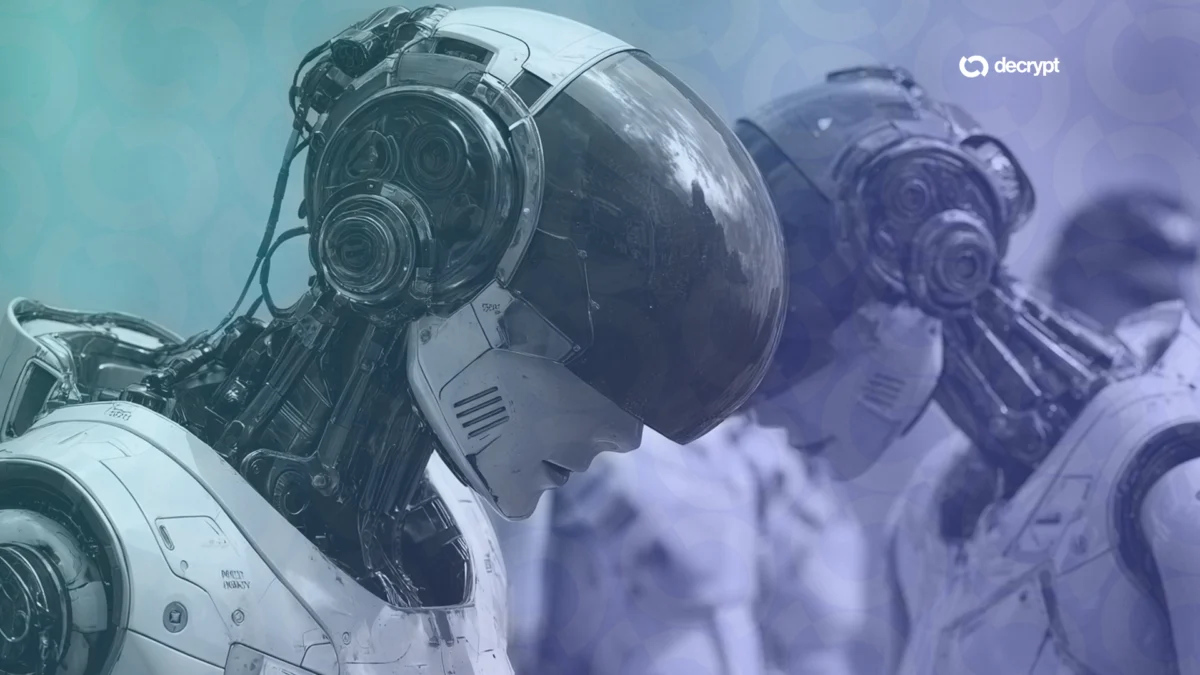
The United States Federal Communications Commission (FCC) has significantly expanded its regulatory "Covered List," effectively banning the import and sale of a wide array of foreign-made advanced robotic devices and connected power inverters. This sweeping measure, announced earlier this week, targets technology primarily originating from China, citing "unacceptable security risks" to American national infrastructure and the privacy of its citizens. While the initial announcement focused on high-profile humanoid and quadruped robots, subsequent clarifications reveal that the ban encompasses a much broader category of consumer and industrial electronics, including common household items like high-end robot vacuum cleaners and autonomous lawnmowers.
The decision follows a comprehensive review by a White House-convened interagency group, which determined that these internet-connected devices could serve as vectors for espionage, data theft, or the disruption of critical systems. By adding these products to the Covered List, the FCC is exercising its authority to deny equipment authorization—a mandatory certification for any electronic device intended for the U.S. market. Without this authorization, manufacturers cannot legally import, market, or sell new models within the United States.
The Scope of the "Advanced Robotic" Designation
The definition of "advanced robotic devices" under this new regulation is notably broad, moving beyond the experimental humanoid robots often seen in research laboratories. According to technical specifications confirmed by the FCC, the ban applies to any robotic device that meets three specific criteria: it weighs more than 4.4 pounds (approximately 2 kilograms), possesses the ability to connect to the internet, and is equipped with sensors that allow it to "view" or map its environment.
This criteria effectively captures a vast segment of the modern robotics market. It includes:
- Humanoid and Quadruped Robots: Advanced bipedal machines and "robot dogs" used for inspection, delivery, or research.
- Domestic Maintenance Robots: High-end robot vacuum cleaners (such as those utilizing LiDAR or camera-based navigation), autonomous floor scrubbers, and robotic lawnmowers.
- Commercial Delivery Robots: Autonomous "last-mile" delivery bots used in urban environments and on corporate campuses.
- Industrial Automation: Mobile robotic platforms used in warehouses and manufacturing facilities that rely on wireless connectivity for fleet management.
The inclusion of robot vacuums—a staple in millions of American homes—highlights the government’s concern over "indoor mapping" data. Modern autonomous vacuums use Simultaneous Localization and Mapping (SLAM) technology to create detailed 3D floor plans of homes and offices. Security agencies argue that if this data is transmitted to servers in adversarial nations, it could be used for intelligence purposes or to identify vulnerabilities in the private residences of government officials and corporate leaders.
Security Implications of Connected Power Inverters
In addition to mobile robotics, the FCC has placed a heavy emphasis on "connected power inverters." These devices are critical components of modern energy infrastructure, responsible for converting direct current (DC) electricity—generated by solar panels or stored in batteries—into the alternating current (AC) used by the electrical grid and household appliances.
National security agencies warned that internet-connected inverters represent a significant "soft target" for cyber warfare. If a foreign entity were to gain unauthorized access to a large network of smart inverters, they could theoretically orchestrate a synchronized shutdown or surge, leading to localized or regional power grid instabilities. Furthermore, these devices often collect granular data on energy consumption patterns, which could be exploited to monitor the activity levels of sensitive facilities or private citizens.
FCC Chairman Brendan Carr emphasized the strategic necessity of the move, stating, "Following President Trump’s leadership, the FCC will continue to do our part to secure America’s critical supply chains and, with today’s action, the FCC is acting in lockstep with our national security agencies."
Chronology of U.S. Tech Restrictions
The addition of robotics and inverters to the Covered List is the latest chapter in a multi-year effort by the U.S. government to decouple critical infrastructure from Chinese technology. The timeline of these restrictions illustrates a hardening stance toward foreign-made electronics:
- 2019: The Department of Commerce places Huawei on the Entity List, restricting its access to U.S. technology.
- 2020: The Secure and Trusted Communications Networks Act is signed into law, establishing the framework for the FCC’s "Covered List."
- 2021: The FCC officially designates Huawei, ZTE, Hytera, Hikvision, and Dahua as threats to national security.
- 2022: The FCC bans the authorization of new telecommunications and video surveillance equipment from the aforementioned companies.
- 2023: Federal agencies begin investigating the risks posed by Chinese-made "smart" cranes at U.S. ports.
- 2024 (Present): The FCC expands the ban to include advanced robotics and power inverters, citing the convergence of AI, mobility, and data collection.
Impact on Consumers and Retailers
For current owners of foreign-made robots, the FCC’s action does not necessitate the immediate disposal of their devices. The restrictions are prospective, meaning they apply only to future models seeking FCC approval. Devices that have already received authorization and are currently in use or sitting on retail shelves are not affected by the ban.
Retailers may continue to sell their existing inventory of previously approved models. However, the long-term outlook for brands heavily reliant on Chinese manufacturing—such as Roborock, Ecovacs, and various DJI-adjacent robotics firms—is uncertain. As these companies develop new iterations of their products, they will find the U.S. market closed to them unless they undergo a rigorous and potentially prohibitive "Conditional Approval" process.
The "Conditional Approval" pathway requires manufacturers to receive a security clearance from the Department of Defense (for robotics) or the Department of Homeland Security (for power inverters). These agencies must determine that the specific product does not pose an unacceptable risk. Given the current geopolitical climate, industry analysts suggest that such approvals will be rare and difficult to obtain for companies with significant ties to the Chinese state.
Geopolitical Context: The Race for Robotic Supremacy
The FCC’s action comes at a time when China is aggressively positioning itself as the global leader in the "robot economy." The Chinese government has identified humanoid robotics as a "future industry" on par with semiconductors and electric vehicles.
In June 2024, Alibaba unveiled its Qwen-Robot AI software platform, designed to provide a "brain" for a new generation of versatile humanoid machines. Simultaneously, companies like Unitree have been flooding the global market with low-cost quadruped and humanoid robots, often priced at a fraction of their Western counterparts like Boston Dynamics’ "Spot."
The U.S. government views the proliferation of these low-cost, highly capable machines as a "Trojan Horse" scenario. By dominating the market early, Chinese firms could establish a massive footprint of sensors and data-collection nodes across American soil. The ban is seen by many as a protective measure to ensure that the U.S. robotics industry—led by firms like Agility Robotics, Figure, and Boston Dynamics—can compete on a domestic playing field that prioritizes security over cost.
Industry Reactions and Economic Analysis
While national security advocates have praised the move, some industry groups have expressed concern over the potential for increased costs and slowed innovation. China currently accounts for a significant portion of the global supply chain for sensors, motors, and batteries used in robotics.
"The challenge for U.S. companies will be reshoring or ‘friend-shoring’ the manufacturing of these components," said a robotics industry analyst. "In the short term, we may see a price hike in autonomous consumer goods as manufacturers pivot away from Chinese components to comply with the spirit of these new regulations."
Furthermore, the power inverter market is currently dominated by a few large players, several of whom have significant manufacturing operations in China. Solar installers in the U.S. may face supply constraints if major inverter brands are unable to get their next-generation "smart" products authorized for sale.
Conclusion and Future Outlook
The FCC’s decision to ban advanced robotic devices and power inverters marks a significant escalation in the use of regulatory lists to achieve national security objectives. It signals a shift from targeting specific telecommunications firms to targeting entire categories of technology that are deemed "inherently risky" due to their data-collection capabilities and connectivity.
As the line between "consumer toy" and "surveillance tool" continues to blur, the U.S. government appears committed to a policy of "zero trust" regarding hardware from strategic competitors. For the robotics industry, this means that the next decade will likely be defined not just by advancements in AI and mobility, but by the ability of manufacturers to prove the integrity and sovereignty of their data and supply chains.
The move also sets a precedent that could soon extend to other "connected" sectors, such as autonomous vehicles and smart city infrastructure, as the United States seeks to build a "clean" technology ecosystem free from the influence of foreign adversaries. For now, the "Roomba ban" serves as a stark reminder that in the age of the Internet of Things, even the most mundane household chore is inextricably linked to the complexities of global geopolitics.