
 Nila Kartika Wati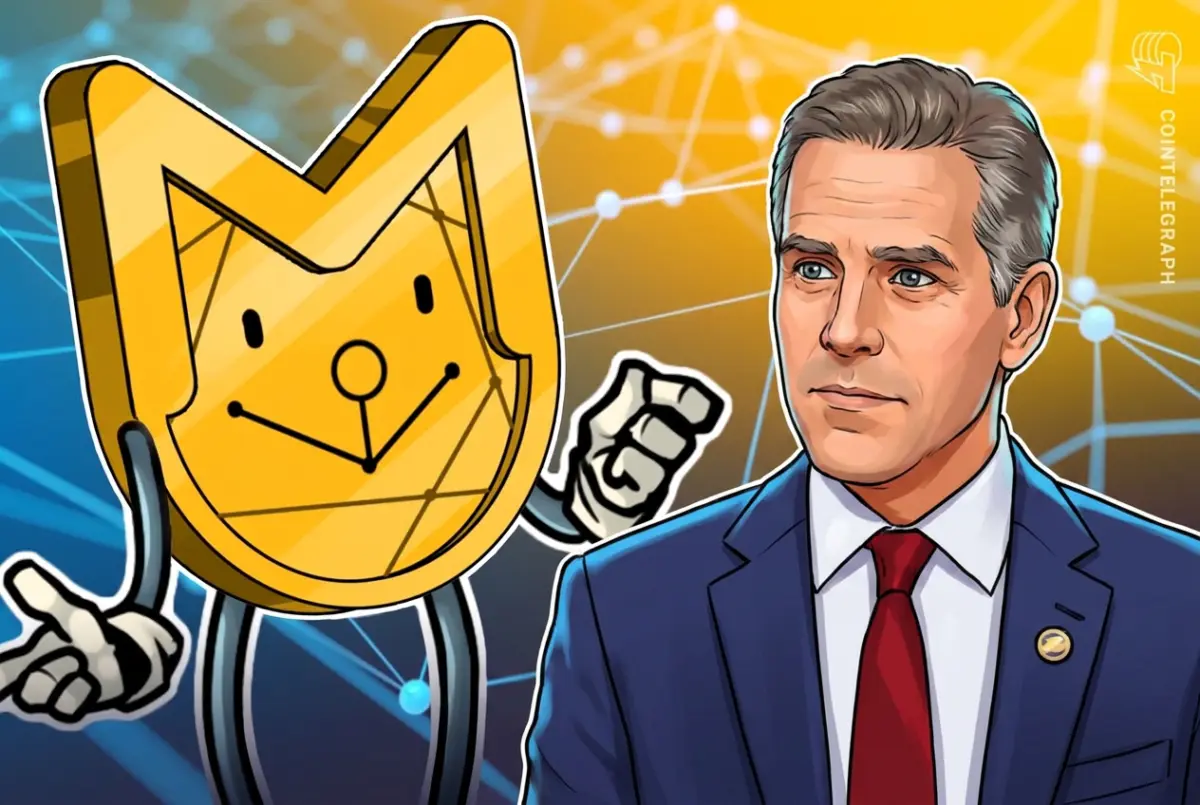
Hunter Biden, son of former US President Joe Biden, has released a comprehensive accounting of the $LAPTOP memecoin he was instrumental in launching last month, a digital asset controversially named after the contents of his infamous laptop. The detailed disclosure, shared via a series of X posts on Wednesday, aimed to provide transparency regarding the token’s initial performance and the distribution of its gains, while simultaneously intensifying a burgeoning crypto-political feud with the Trump family.
The $LAPTOP Launch and Initial Market Dynamics
The $LAPTOP memecoin, launched on September 9, swiftly captured attention, not only for its provocative namesake but also for its rapid and volatile market activity. According to the blockchain data provided by Biden, alongside a "launch report" prepared by Delaware-based intelligence consultancy Groom Lake and published on the memecoin’s official website (laptoptoken.com), the initial trading period was characterized by a sharp price surge followed by an equally dramatic decline. Biden himself observed that the price charts "looked like every celebrity rug ever" shortly after its debut.
The data confirmed that the 300 million tokens held in wallets associated with the project’s founders have remained unmoved since launch, signaling adherence to a stated lock-up commitment. However, the report highlighted significant financial activity from two unnamed "professional trading firms" hired by the project, referred to as market makers. These firms appeared to be the primary beneficiaries of the initial price peak, withdrawing substantial funds within moments of the token reaching its highest value of approximately $317.
Specifically, the report detailed that one market maker reaped $686,000 from liquidity positions on decentralized exchanges. The second market maker garnered an even more substantial profit, taking in "about $2.18 million more than it spent" through its trading activities. The swiftness of these withdrawals was particularly notable: the Groom Lake report stated, "The money for sellers was pulled right after the peak. Eighty-four seconds after the price topped out, Market Maker 1 withdrew its money. The cash available to people trying to sell near the current price dropped from $16,157 to zero." This rapid depletion of liquidity for sellers is a hallmark characteristic often associated with "pump and dump" schemes, where early investors or insiders liquidate holdings after a speculative price increase, leaving later investors with significant losses.
Hunter Biden’s Motivations and Public Stance
In his series of X posts, Hunter Biden elucidated his motivations behind the unconventional venture. He framed the $LAPTOP memecoin as a deliberate act of "trolling every grift" in the cryptocurrency space, explicitly referencing similar projects associated with his father’s political opponents. "Here’s why I did this. Trump’s coin was max extraction, and I wanted to troll every grift like it," Biden stated. He emphasized a commitment to transparency, citing the team’s lock-up of founder tokens and the publication of a MiCA (Markets in Crypto-Assets) disclosure – a nod to European Union crypto regulations, even though $LAPTOP operates in a largely unregulated US market for memecoins. This reference to MiCA, while not legally binding for the project, was presented as an effort to differentiate $LAPTOP from less scrupulous ventures by signaling an intent towards greater regulatory adherence and investor protection.
Biden also expressed an initial hope that the project "could help some charities I care about too," indicating a charitable allocation of 5% of the tokens. Beyond altruism, a strong undercurrent of political antagonism permeated his statements. He explicitly stated an incentive to continue the project "just to piss off Don and Eric," referring to Donald Trump Jr. and Eric Trump, sons of former President Donald Trump. This sentiment extended to "every [Key Opinion Leader] who called it a scam because we refused to pay them," highlighting a contentious relationship with crypto influencers who often promote new tokens for a fee. The founder memecoins, Biden affirmed, are slated to remain locked for six months post-launch, with the team committed to burning any unclaimed tokens from airdrops, another measure intended to demonstrate long-term commitment and reduce circulating supply.
The Enduring Shadow of the Laptop Controversy
The very genesis of the $LAPTOP memecoin is inextricably linked to the highly publicized and politically charged controversy surrounding Hunter Biden’s laptop. Discovered in a Delaware repair shop in 2019, the laptop’s contents became a focal point of intense media scrutiny and Republican criticism ahead of the 2020 US Presidential election, where his father, Joe Biden, was running against then-President Donald Trump. The laptop allegedly contained sensitive personal and business information, with Republicans leveraging its purported contents to raise questions about Hunter Biden’s international business dealings and potential influence peddling.
The controversy has persisted, with the laptop continuing to be invoked by numerous right-wing figures as a symbol of alleged corruption. Hunter Biden himself has filed multiple lawsuits concerning the laptop, citing privacy law violations, underscoring the ongoing legal and personal ramifications of the incident. By naming a memecoin after this highly sensitive and public aspect of his life, Biden has effectively re-appropriated a narrative weaponized against him, transforming it into a satirical, albeit financially risky, digital asset.
The Broader Context of Politically-Charged Memecoins
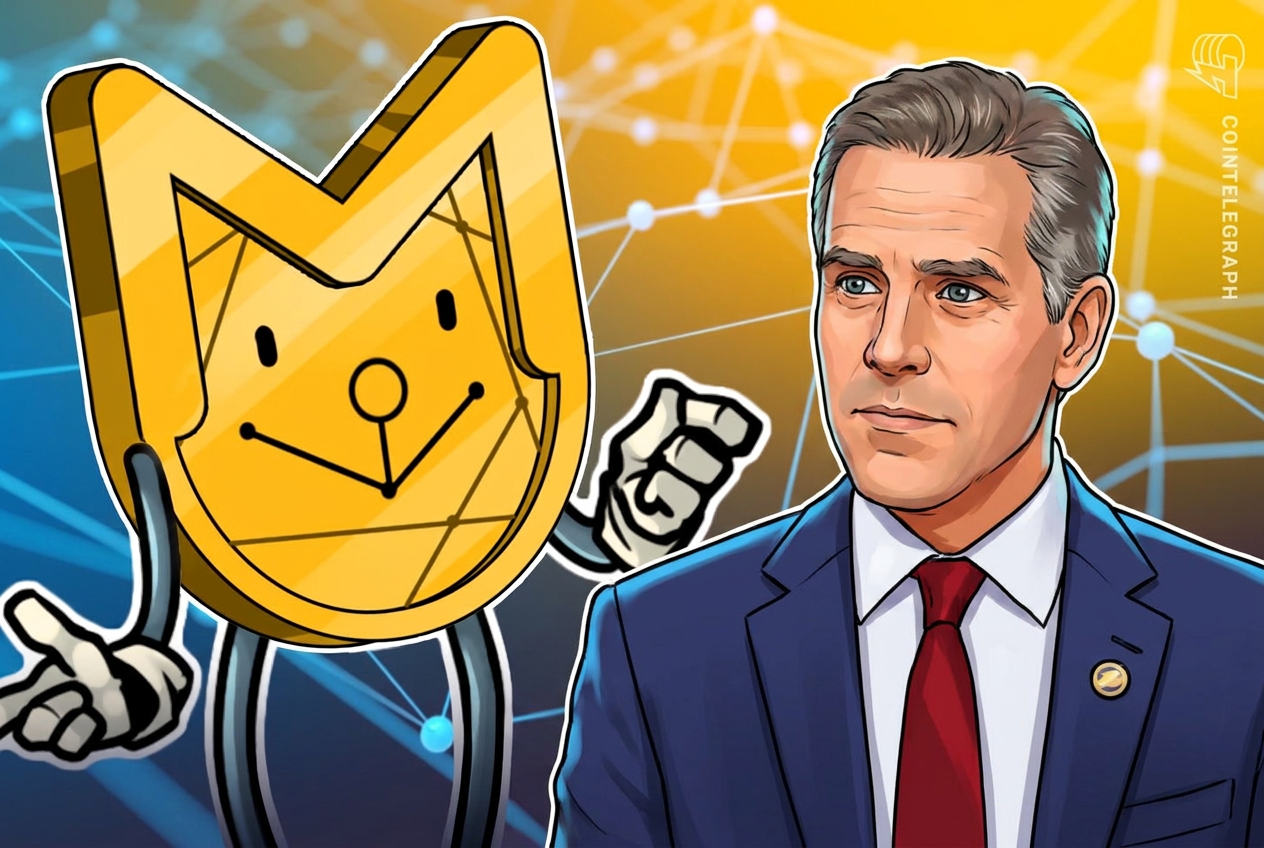
The $LAPTOP memecoin does not exist in a vacuum but is part of a growing, contentious trend of political figures and their affiliates engaging with the cryptocurrency market, particularly through memecoins. Memecoins are cryptocurrencies often based on internet memes, viral jokes, or cultural phenomena, characterized by extreme volatility, lack of fundamental utility, and highly speculative trading. Their value is primarily driven by community sentiment, social media hype, and often, the endorsements of prominent figures. This environment is ripe for "pump and dump" schemes and "rug pulls," where developers or insiders abandon a project after inflating its price, leaving investors with worthless tokens.
Hunter Biden has been a vocal critic of the Trump family’s forays into crypto. In August, he lambasted the Trump family crypto company, World Liberty Financial, calling it "corruption at a scale we’ve never seen." This criticism highlights a tit-for-tat dynamic playing out in the digital asset space between the two political families.
Former President Donald Trump himself has ventured into the memecoin arena with Official Trump ($TRUMP). This token, launched "shortly before taking office in January 2025" (implying a launch in 2024), has faced its own share of "rug pull" and corruption accusations. The nonprofit consumer advocacy organization Public Citizen recently estimated that investors in the $TRUMP memecoin have collectively lost a staggering $3.2 billion since its launch. This figure underscores the immense financial risks associated with these highly speculative, politically-branded digital assets.
Adding to the controversy, the group behind the $TRUMP memecoin announced last week that former President Trump is scheduled to appear at his gold club in Washington, D.C., for a dinner event on November 22. The event is set to host three unnamed speakers and the top 185 token holders, further blurring the lines between political engagement, celebrity endorsement, and financial speculation. Such events raise questions about potential conflicts of interest, ethical considerations, and the use of financial incentives to rally political support.
Regulatory Scrutiny and Investor Protection
The emergence and proliferation of politically-linked memecoins, exemplified by $LAPTOP and $TRUMP, are poised to draw increased scrutiny from regulatory bodies worldwide. In the United States, the Securities and Exchange Commission (SEC) and the Commodity Futures Trading Commission (CFTC) have been grappling with how to classify and regulate digital assets. Memecoins, with their often vague utility and reliance on marketing hype, frequently skirt existing definitions, creating a regulatory gray area.
The rapid price fluctuations, the significant profits reaped by market makers, and the substantial losses incurred by retail investors in these projects underscore the urgent need for clearer regulatory frameworks. While Hunter Biden’s reference to a "MiCA disclosure" might indicate an aspiration for transparency, the absence of comprehensive US regulation for memecoins leaves investors largely unprotected against market manipulation, fraudulent schemes, and outright scams. The "celebrity rug pull" phenomenon, where public figures promote tokens that subsequently collapse, highlights the vulnerability of unsophisticated investors drawn in by the allure of quick profits or allegiance to a political figure.
The fact that these tokens are directly tied to prominent political figures adds another layer of complexity. Questions arise about whether such ventures constitute unregistered securities offerings, potential conflicts of interest for public officials, and the broader implications for financial market integrity. Regulators may be forced to address how to differentiate between political satire, genuine financial innovation, and predatory schemes in the decentralized finance (DeFi) space.
The Future of Politically-Charged Tokens
The phenomenon of politically-charged memecoins marks a new frontier in the intersection of finance, politics, and digital culture. It represents a novel method for public figures to engage with their base, generate revenue, and even conduct political "trolling" in the digital realm. As the 2024 US Presidential election cycle intensifies, it is plausible that this trend could escalate, with more candidates or their affiliates launching similar tokens.
However, the significant financial losses reported, coupled with the inherent volatility and lack of regulation, pose considerable risks to investors and could further tarnish the public perception of the wider cryptocurrency market. Critics often portray crypto as a "wild west" riddled with scams, and high-profile incidents involving political figures only serve to reinforce this narrative. The ethical implications for public figures engaging in such speculative ventures, especially when they may be perceived as leveraging their influence for personal or political gain, will continue to be a subject of intense debate.
Ultimately, Hunter Biden’s detailed accounting of the $LAPTOP memecoin, while framed as an act of transparency and defiance, underscores the ongoing complexities and controversies surrounding digital assets. It highlights the precarious balance between innovation, speculation, and the critical need for investor protection in an evolving financial landscape increasingly influenced by political machinations and internet culture. The ongoing "crypto war" between the Biden and Trump camps in the digital asset space is likely to remain a potent symbol of this complex and often chaotic intersection.









