admin
admin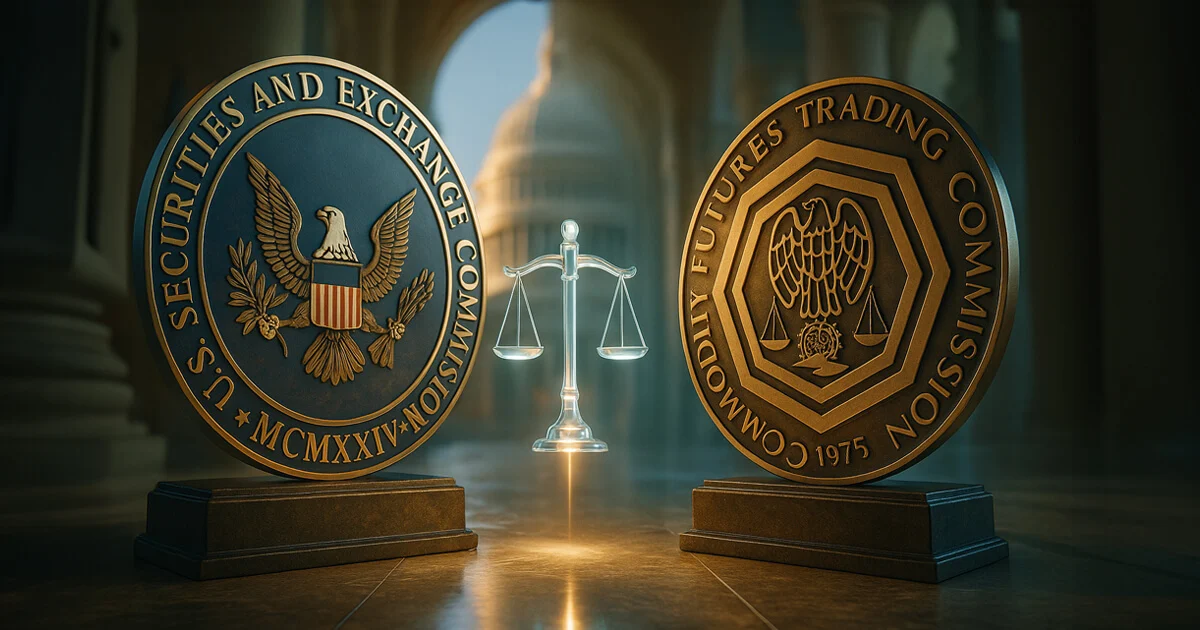
The long-standing jurisdictional battle over digital assets in the United States has reached a critical juncture, with competing drafts emerging from the Senate poised to redefine the regulatory landscape for cryptocurrencies. After years of debate and stalled legislative efforts, two powerful Senate committees have unveiled distinct proposals that could significantly shift authority between the Securities and Exchange Commission (SEC) and the Commodity Futures Trading Commission (CFTC), impacting everything from Bitcoin spot markets to the classification of digital tokens. This development follows the House of Representatives’ passage of the Digital Asset Market Clarity Act of 2025 earlier this summer, a bill that has yet to gain traction in the Senate.
The emergence of these two Senate drafts signals a renewed congressional push for regulatory order in the burgeoning digital asset space. One proposal, originating from the Senate Agriculture Committee, leans towards expanding the CFTC’s purview, while the other, from the Senate Banking Committee, carves out new authority for the SEC over specific types of digital assets and clarifies pathways for tokens to transition out of securities classification. The implications of these competing visions are profound, potentially reshaping how digital assets are categorized, traded, and regulated within the U.S. financial system, and offering much-needed clarity for market participants, investors, and innovators.
The Agriculture Committee’s Draft: Empowering the CFTC for Digital Commodities
The Senate Agriculture Committee’s bipartisan market structure discussion draft, championed by Senators John Boozman and Cory Booker, presents a framework that would significantly enhance the CFTC’s oversight capabilities. This proposal aims to classify "digital commodities" and bring their spot markets under the direct regulatory purview of the CFTC, mirroring the commission’s existing authority over traditional commodity markets. The draft outlines a comprehensive registration process for exchanges, brokers, and dealers operating within this space, ensuring that participants adhere to established regulatory standards.
Under this proposed legislation, intermediaries would be mandated to utilize qualified custodians for asset safekeeping and to segregate customer assets. These measures are designed to prevent conflicts of interest, particularly those arising from affiliations between trading platforms and other entities within the digital asset ecosystem. Furthermore, the draft allows for joint rulemaking between the CFTC and the SEC in instances where entities operate under both jurisdictions or require dual registration. However, certain complex areas, such as decentralized finance (DeFi) protocols, are designated for further deliberation, acknowledging the unique challenges they present to traditional regulatory models.
This approach builds upon the principles of the House-passed Clarity Act, with a clear objective: to bring U.S. cryptocurrency spot markets under the supervision of the CFTC. If enacted, platforms facilitating Bitcoin spot trading, for example, would be required to register as digital-commodity exchanges. This registration would entail adherence to new capital requirements, stringent custody rules, and enhanced retail investor protections, aligning them with the regulatory expectations of established commodity markets.
A significant benefit of this proposed structure would be the potential for standardized data sharing across trading venues. This could substantially improve market surveillance capabilities, a crucial element for the stability and integrity of markets, and a factor that has been closely watched by issuers of exchange-traded funds (ETFs). While the spot market oversight for digital assets like Bitcoin would shift to the CFTC, ETFs themselves would likely remain under the SEC’s jurisdiction, illustrating the nuanced division of responsibilities envisioned by this draft.
The practical impact of moving Bitcoin spot oversight to the CFTC would be a shift in the operational logic of exchanges. Instead of primarily focusing on investor disclosures as the SEC might, these platforms would operate under commodity-exchange principles, emphasizing transparent reporting and robust market surveillance. This could provide traders and analysts with a clearer picture of market quality, liquidity, and potential manipulation, fostering greater confidence in the market. Despite the expanded role for the CFTC, the SEC would retain its authority over instruments classified as securities and over crypto derivatives like futures contracts, suggesting a continued, albeit redefined, dual oversight model.

The Banking Committee’s Draft: The SEC’s "Ancillary Asset" Pathway
In parallel, the Senate Banking Committee has put forth its own legislative proposal, known as the Responsible Financial Innovation Act. This draft takes a different tack, focusing on digital assets that exhibit characteristics of both securities and commodities. A key innovation in this bill is the introduction of the term "ancillary asset," defined as a "fungible digital commodity" distributed through an arrangement that also constitutes an investment contract.
This framework explicitly grants the SEC authority to oversee these "ancillary assets." Issuers would be required to provide comprehensive disclosures regarding token distributions, the governance structures of their projects, and any associated risks. Crucially, the bill sets a two-year deadline for the SEC to finalize a formal rule defining what constitutes an "investment contract" in the context of digital assets. This could provide much-needed clarity on the Howey Test, a long-standing legal precedent used to determine investment contract status, which has been a source of ambiguity in the crypto space.
Furthermore, the Banking Committee’s draft introduces a "decentralization certification process." This mechanism would allow a digital asset project to transition away from securities classification once its network control falls below certain predefined thresholds, indicating sufficient decentralization. This provision offers a potential pathway for tokens initially launched under SEC oversight to eventually operate under a different regulatory regime, provided they meet objective criteria for distributed governance.
This "graduation" mechanism addresses a significant challenge that has plagued the digital asset industry since the early days of projects like The DAO. It provides a structured, conditional escape route for tokens associated with "active projects," such as Ethereum. A token could commence its lifecycle subject to SEC disclosure requirements and investor protections, but then, as its network matures and becomes more decentralized, it could effectively "graduate" from being considered a security. This injects a much-needed layer of predictability into the regulatory journey of digital assets.
The Banking Committee’s proposal compels the SEC to articulate, in writing and through formal rulemaking, what constitutes sufficient decentralization, rather than relying on case-by-case enforcement actions. This is a significant step towards providing the industry with clear guidelines.
Under this model, practical distinctions between different types of digital assets would become more pronounced. Bitcoin, with its established decentralized nature, would likely continue to be treated as a digital commodity under the CFTC’s jurisdiction. Tokens that have clear ties to specific enterprises or development teams would likely fall under the SEC’s "ancillary asset" regime until they can demonstrate sufficient decentralization through the proposed certification process. Centralized exchanges would find themselves navigating both regulatory frameworks simultaneously. They would need to register as CFTC digital-commodity exchanges for their spot crypto trading operations, while also remaining subject to SEC oversight for any security tokens they list.
The combined effect of these requirements could necessitate U.S. platforms to implement dual registration processes, adhere to heightened capital reserve mandates, and enhance the transparency of their trading books to satisfy the distinct requirements of both agencies. This could lead to a more robust and secure trading environment, but also impose significant compliance burdens.
Navigating the Uncertainties and Implications
A significant unknown in the ongoing legislative process is the timeline for implementation. While the Banking Committee’s draft sets specific deadlines for rulemaking, the Agriculture Committee’s proposal leaves key questions open-ended, relying on future coordination rules and public consultations. Both proposals acknowledge that their effectiveness will depend on future collaboration between the agencies and input from the public and industry stakeholders before any rules are finalized and implemented. The House version of the Clarity Act has already passed, but the Senate proposals are still very much in discussion, and opposition from various factions within both parties has already surfaced.

These two Senate drafts currently serve as crucial working documents for developers, traders, and investors seeking to understand the evolving U.S. regulatory landscape. Firstly, they offer a glimpse into how U.S. spot trading venues might be structured and operated under a CFTC-led regime, emphasizing market integrity and data transparency. Secondly, they illustrate a potential pathway for token projects to transition away from securities classification and provide exchanges with a blueprint for rebuilding internal compliance structures to manage dual regulatory oversight.
While these drafts do not yet provide the definitive clarity their titles suggest, they clearly map out the next stages of the complex regulatory tug-of-war between different government agencies and industry stakeholders. In a market where the classification of a digital asset can profoundly influence its liquidity, custody arrangements, and compliance obligations, understanding which agency will ultimately draw the regulatory lines first could prove to be as valuable as any sophisticated on-chain analytics or market intelligence.
The broader implications of these legislative efforts extend beyond mere jurisdictional assignments. They signal a maturing understanding in Congress of the complexities of digital assets and a desire to foster innovation while mitigating risks. The debate over whether a digital asset is a commodity or a security has been a persistent source of legal uncertainty and enforcement actions, impacting the growth and development of the U.S. crypto industry.
The Senate Agriculture Committee’s approach, by focusing on the commodity-like characteristics of many digital assets, aims to provide a clearer path for spot market participants. This could encourage more institutional participation and enhance market liquidity, as seen in traditional commodity markets. The emphasis on registration, capital requirements, and qualified custodians would bring a new level of oversight that proponents argue is necessary for consumer protection and market stability.
Conversely, the Senate Banking Committee’s focus on "ancillary assets" and the decentralization certification process addresses the dynamic nature of many blockchain projects. By acknowledging that a digital asset can evolve and potentially shed its securities status, this framework offers a more nuanced approach that aligns with the technological progression of the industry. The mandate for the SEC to define "investment contract" in this context is particularly significant, as it could provide much-needed clarity for a wide range of digital assets and the projects behind them.
The existence of two distinct, yet potentially complementary, legislative proposals suggests a willingness among some lawmakers to find common ground and craft a comprehensive regulatory framework. The interplay between these drafts and the existing House legislation will be closely watched. Lawmakers will need to reconcile the differing approaches to ensure a cohesive and effective regulatory system.
Industry stakeholders have largely welcomed the increased legislative activity, viewing it as a positive step towards regulatory certainty. However, concerns remain regarding the potential compliance costs and the complexity of navigating dual regulatory regimes. The specific definitions within these bills, the rulemaking processes that follow, and the ultimate interpretation by regulatory agencies will all play a critical role in shaping the future of digital asset regulation in the United States.
The ongoing legislative debate underscores the critical need for a clear and consistent regulatory framework for digital assets. The path forward will likely involve compromise and careful consideration of the diverse nature of digital assets and their underlying technologies. The coming months will be pivotal in determining whether Washington can finally settle the SEC vs. CFTC turf war and establish a predictable environment for innovation and investment in the digital asset economy.