Nila Kartika Wati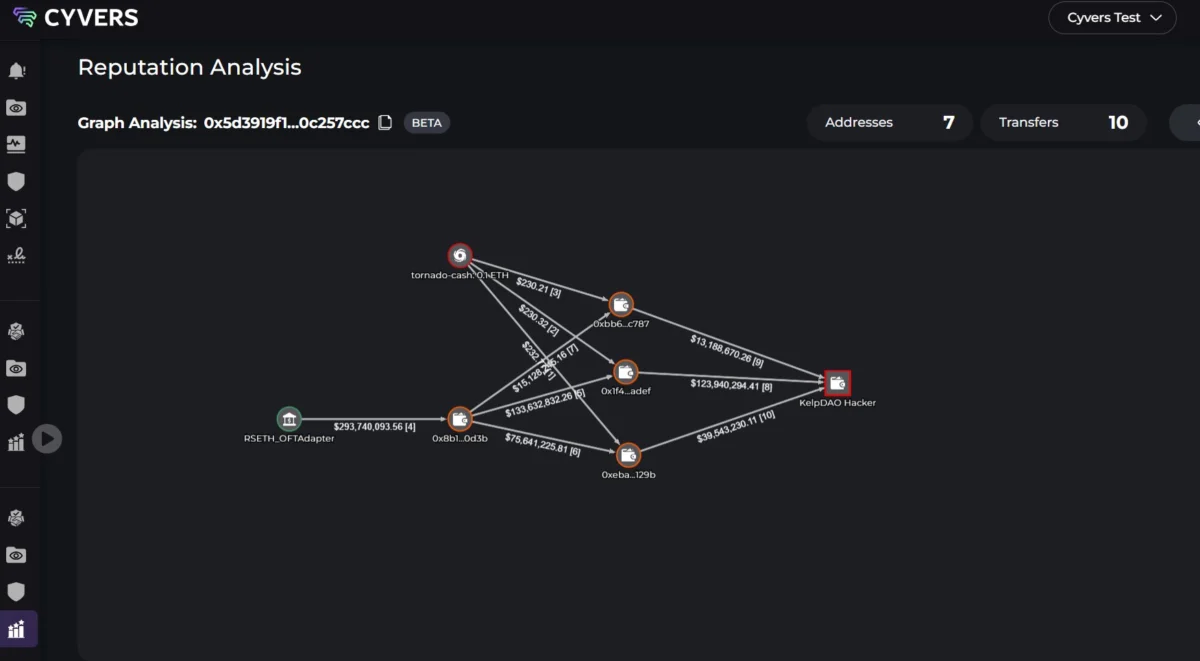
The recent exploit of the Kelp liquid restaking protocol, which resulted in a staggering loss of approximately $293 million, has cast a stark light on the inherent risks associated with non-isolated lending and intricate integrations within the decentralized finance (DeFi) ecosystem. Industry executives and blockchain security firms are emphasizing that such vulnerabilities are not isolated incidents but rather critical points of potential contagion, capable of rippling across numerous interconnected protocols and jeopardizing the stability of the broader digital asset landscape. This incident underscores a persistent challenge for DeFi: balancing the benefits of composability and innovation with robust security measures to prevent systemic risks.
The cyberattack, which occurred on a Saturday, targeted Kelp, a prominent platform in the rapidly evolving liquid restaking sector. Following the breach, Kelp promptly initiated an investigation and paused the smart contracts governing its restaking token (rsETH) in an effort to contain the damage and understand the exploit’s full scope. The swift action, though necessary, highlighted the immediate and severe impact of such security breaches on platform operations and user trust. The loss of nearly $300 million marks one of the largest single exploits in the first quarter of 2026, contributing significantly to an already alarming trend of rising crypto hack losses.
The Mechanics of Contagion: Non-Isolated Lending and Cross-Chain Vulnerabilities
According to Michael Egorov, the founder of the Curve Finance DeFi protocol, the root cause of such widespread impact often lies in the design of DeFi lending platforms. Egorov points out that "non-isolated lending" exposes users to risks stemming from every single token accepted as collateral on a platform. He referenced earlier versions of the Aave lending protocol as an example, where a vulnerability in one collateral asset could potentially undermine the entire lending pool. This interconnectedness, while fostering capital efficiency and innovation, simultaneously creates a single point of failure that attackers can exploit to devastating effect.
Egorov further elaborated on the critical role of rigorous due diligence in preventing such incidents. He advised DeFi teams to meticulously vet prospective digital assets, ensuring that tokens do not feature single points of failure or unmitigated attack surfaces before they are approved as lending collateral. This proactive approach is crucial in a sector where the failure of one component can rapidly compromise others.
A pivotal factor in the Kelp exploit was identified as its reliance on cross-chain bridging architecture. This technology, designed to facilitate the transfer of assets between different blockchain protocols, has long been a source of concern for security experts due to its inherent complexity and expanded attack surface. Egorov issued a stern warning: "Cross-chain is hard and potentially risky. Only use cross-chain infrastructure when absolutely necessary, and do it really carefully." This advice underscores the precarious nature of inter-blockchain communication, where vulnerabilities in a bridge can act as a gateway for attackers to drain funds from otherwise secure protocols.
A Detailed Timeline of the Exploit and Its Fallout

The Kelp exploit unfolded rapidly, demonstrating the speed at which vulnerabilities can be leveraged and contagion can spread within the DeFi ecosystem.
- Saturday (Exact Date Unspecified but likely mid-March 2026, given Q1 reporting): The Kelp liquid restaking protocol was identified as the target of a sophisticated cyberattack. Attackers exploited a vulnerability, later linked to its cross-chain bridging architecture, to drain approximately $293 million from the platform.
- Immediately Post-Attack: Kelp DAO, the governing body behind the protocol, detected the unauthorized withdrawals. They swiftly moved to pause smart contracts for their rsETH token, effectively freezing further transactions and preventing additional losses. An internal investigation was initiated to ascertain the precise nature of the exploit and potential recovery mechanisms.
- Hours Following Detection: Blockchain security firms, including Cyvers, began tracking the movement of stolen funds. Their analysis quickly revealed that the exploit was not confined to Kelp alone, but had initiated a "cross-protocol contagion event."
- Subsequent Days: At least nine other prominent DeFi protocols and platforms were identified as being directly affected by the Kelp incident. These included major players like Aave, Fluid, Compound Finance, SparkLend, and Euler. These platforms, which had integrated rsETH or had lending markets exposed to it, took immediate mitigation actions. These actions ranged from freezing rsETH markets to implementing emergency governance proposals to insulate their systems from the fallout. The coordinated response, while necessary, showcased the deep interdependence of DeFi protocols.
The Contagion Effect: A Web of Interconnectedness
Blockchain security firm Cyvers highlighted the cascading nature of the Kelp exploit, stating, "This was not just a protocol exploit. It immediately became a cross-protocol contagion event." This assessment underscores a critical characteristic of DeFi: its composability. While composability, the ability to seamlessly integrate different DeFi protocols like Lego blocks, is a cornerstone of its innovation, it also means that a failure in one block can destabilize an entire structure.
Cyvers’ CEO, Deddy Lavid, further articulated this challenge: "The challenge is no longer just preventing exploits at the contract level, but understanding how fast they can cascade across integrated protocols." This perspective shifts the focus from isolated bug hunting to a more holistic understanding of systemic risk within the DeFi landscape. The firm’s analysis, which included a visual map of fund transfers, illustrated how the stolen assets moved through various DeFi platforms, creating a complex web of interconnected financial exposure.
The affected protocols’ responses varied but generally aimed at minimizing further damage. Aave, for instance, likely froze any markets where rsETH was used as collateral or borrowed against, preventing further liquidations or withdrawals related to the compromised asset. Similar actions were taken by Compound Finance, Fluid, and other platforms, demonstrating a collective effort to ring-fence the damage.
Broader Context: A Troubling Trend in DeFi Security
The Kelp exploit is not an isolated incident but rather part of a disturbing trend of increasing security breaches in the Web3 space. The first quarter of 2026 alone witnessed crypto hacks, code exploits, and scams reaching a staggering total of $482 million in losses. This figure represents a significant increase over previous periods, signaling a growing sophistication among attackers and persistent vulnerabilities within the nascent industry.
Just in the week preceding the Kelp attack, the Drift Protocol decentralized exchange suffered a $280 million hack, illustrating the diverse vectors through which malicious actors can target DeFi platforms. Furthermore, reports indicate that at least 12 other crypto platforms and DeFi protocols experienced hacks earlier in the same month, painting a grim picture of the ongoing battle against cybercriminals in the decentralized world. These incidents range from smart contract vulnerabilities to oracle manipulation, flash loan attacks, and even domain hijacking, as seen with the DAO behind CoW Swap urging users to stay off its platform after a reported "hijacking."

The cumulative effect of these exploits is a growing erosion of trust among users and a potential deterrent for institutional adoption, both critical for DeFi’s long-term growth.
Industry Response and the Path Forward
In the wake of the Kelp exploit and the broader trend of rising losses, the DeFi community is facing increasing pressure to bolster its security infrastructure. Michael Egorov emphasized that such incidents, while detrimental, serve as "a learning experience for DeFi." He believes the sector can leverage these painful lessons to "grow and implement better cybersecurity protections."
Key areas for improvement include:
- Enhanced Auditing: More rigorous and frequent third-party security audits for all smart contracts, especially those involved in lending, staking, and cross-chain operations. These audits must go beyond basic code reviews to include economic security analysis and potential attack vectors.
- Improved Risk Management Frameworks: Protocols need to develop more sophisticated risk assessment models that account for systemic risks, not just individual protocol vulnerabilities. This includes stress testing scenarios involving collateral asset de-pegs or exploits.
- Isolated Lending Pools: A shift towards more isolated lending pools where the risk of one asset’s compromise does not immediately jeopardize the entire platform. While this might reduce capital efficiency in some cases, it significantly enhances security.
- Secure Cross-Chain Solutions: Investing in and developing more robust and battle-tested cross-chain bridging technologies. This could involve multi-party computation (MPC) solutions, zero-knowledge proofs, or more decentralized validator sets with strong economic incentives for honest behavior.
- Rapid Response Mechanisms: Establishing industry-wide protocols and communication channels for rapid response to exploits, including coordinated freezing of compromised assets and information sharing among protocols. Initiatives like the "SEAL 911" team of white hats, formed to fight crypto hacks in real-time, represent a promising step in this direction.
- User Education: Empowering users with better understanding of the risks associated with various DeFi protocols, especially those involving newer, less battle-tested technologies like liquid restaking and cross-chain bridges.
Long-Term Implications for DeFi
The Kelp exploit, alongside other recent incidents, carries significant long-term implications for the decentralized finance sector.
- Increased Scrutiny: Regulators worldwide are already grappling with how to oversee the rapidly evolving crypto space. Repeated, large-scale exploits will undoubtedly intensify this scrutiny, potentially leading to more stringent regulations on smart contract auditing, risk disclosures, and operational security for DeFi protocols.
- Evolution of Decentralization: The need for rapid response and centralized pausing of smart contracts, as seen with Kelp, challenges the core tenet of decentralization. This may lead to debates about the optimal balance between decentralization and necessary emergency controls in a volatile environment.
- Trust and Adoption: Sustained high-profile hacks erode user confidence, which is vital for mainstream adoption. For DeFi to truly flourish and attract institutional capital, it must demonstrate a consistent ability to protect user funds and maintain robust security standards.
- Innovation vs. Security Trade-off: The incident highlights the ongoing tension between pushing the boundaries of financial innovation and ensuring the fundamental security of user assets. Protocols will increasingly need to prioritize security and resilience over simply being first to market with new features.
- Maturity of the Ecosystem: Ultimately, these exploits, while costly, are part of the maturation process of a new financial paradigm. Each incident provides invaluable data and lessons that, if properly absorbed, can lead to the development of more resilient, secure, and sustainable decentralized financial systems. The industry’s ability to learn, adapt, and implement these lessons will determine its long-term viability and success.
The Kelp protocol exploit serves as a powerful reminder that while DeFi offers unprecedented opportunities for financial innovation, it also presents complex and interconnected risks. The path forward demands a concerted effort from developers, security experts, and the wider community to build a more secure and resilient ecosystem capable of withstanding the relentless pressure from malicious actors. The future of decentralized finance hinges on its capacity to transform these costly learning experiences into foundational pillars of trust and security.