
 James Watt
The August 2026 Lido Poolside Tokenholder Update, a critical quarterly gathering for the Lido DAO community, delivered a comprehensive overview of the protocol’s performance, strategic initiatives, and future outlook. Key discussions revolved around the H1 2026 financials, significant product advancements across its core staking offerings, Lido Earn, and the nascent Wisp platform, alongside an in-depth analysis of prevailing staking market conditions and the hotly debated EIP-8363 Ethereum issuance proposal. This update underscored Lido’s resilience in a challenging market and its proactive approach to long-term growth and decentralization.
Lido’s Enduring Role in Ethereum’s Liquid Staking Landscape
Lido Finance has firmly established itself as the preeminent liquid staking protocol on Ethereum, providing a crucial service that allows users to stake their ETH without locking assets or maintaining complex infrastructure. At its core, Lido offers a streamlined and secure pathway for users to participate in Ethereum’s proof-of-stake consensus, receiving stETH (staked ETH) in return. This liquid derivative token grants stakers the flexibility to engage across the broader Decentralized Finance (DeFi) landscape, unlocking capital efficiency that would otherwise be dormant. The utility of stETH extends across numerous DeFi applications, from lending and borrowing platforms to liquidity pools, significantly enhancing the capital efficiency for Ethereum stakers.
Beyond its foundational stETH offering, the Lido ecosystem has strategically expanded its modular infrastructure to support tailored staking setups via stVaults, catering to diverse user needs and risk appetites. It also offers DeFi-native yield strategies through its EarnETH and EarnUSD products, designed to provide enhanced returns within the DeFi ecosystem. A notable new venture highlighted in the update is Wisp, a privacy-first AI harness, signaling Lido’s ambitious exploration into new technological frontiers, with further innovative bets anticipated by year-end. This diversification strategy reflects a forward-looking approach to capture value beyond core staking.
The governance of the Lido protocol resides with the Lido DAO, a decentralized autonomous organization powered by LDO tokenholders. Through a robust governance process, LDO holders wield significant influence, setting protocol parameters, approving vital upgrades, managing the Lido DAO Treasury’s strategic allocations, defining overarching goals, and authorizing grants for its network of Foundations. These include Lido Labs, Lido Ecosystem, and Lido Alliance Foundations, which collectively operate as DAO-adjacent entities. Their primary mandate is to bolster the Lido DAO ecosystem, with all material actions requiring explicit approval from LDO tokenholders, as stipulated by the Foundations’ bylaws. This decentralized governance model ensures community-driven development and strategic direction, fostering a robust and adaptive ecosystem. All protocol fees generated are directed to the Lido DAO Treasury, while product-line revenues from innovative ventures like Earn and Wisp contribute as surplus, after covering operational expenses approved through the annual Ecosystem Grant (EGG) program. This structured financial flow supports sustainable growth and ongoing innovation.
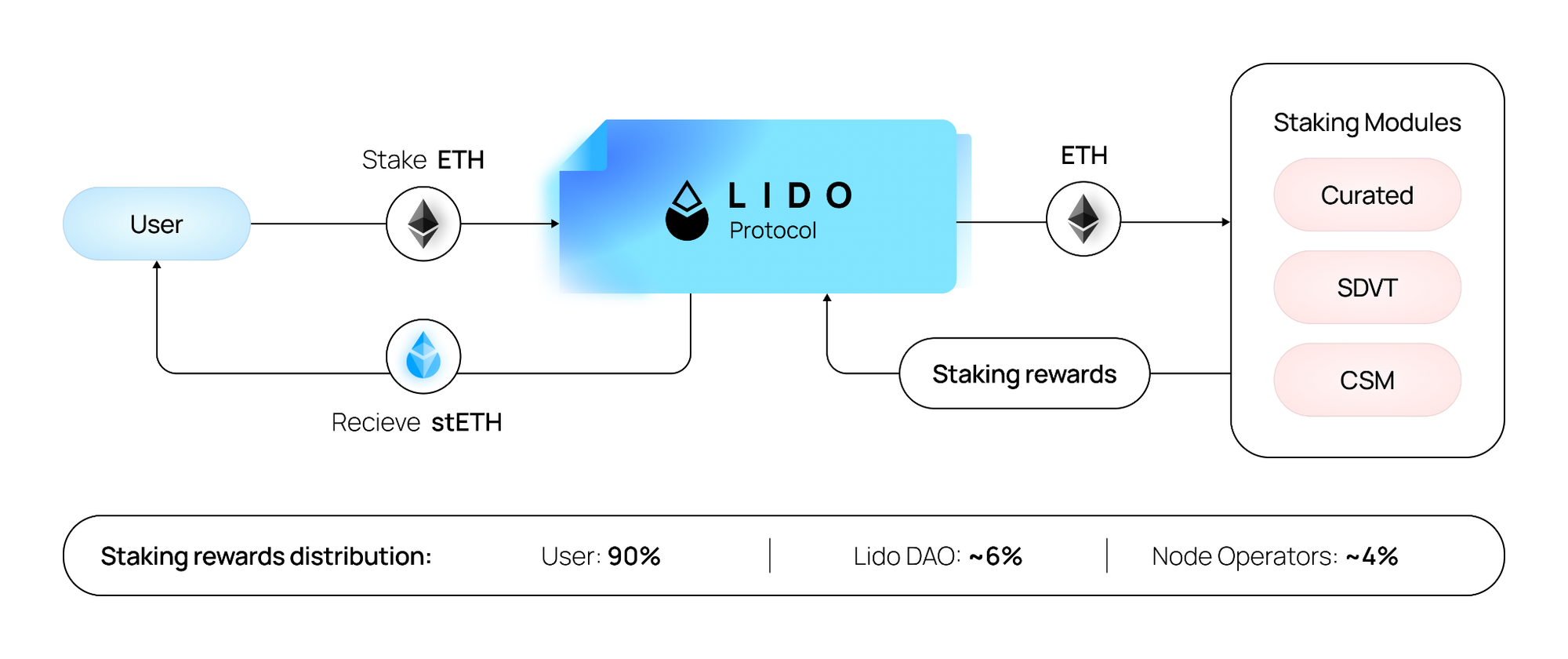
The operational bedrock of the Lido protocol remains consistent and efficient, a model that has proven reliable through various market cycles. Users initiate the process by depositing ETH into the protocol, subsequently receiving stETH, which immediately provides liquidity. This deposited ETH is then intelligently allocated through the Staking Router into various Staking Modules, managed by a diverse and vetted network of Node Operators. Ethereum staking rewards generated through these operations flow back into the Lido protocol. A significant 90% of these rewards are distributed directly to stakers, approximately 4% (varying slightly by Staking Module and operator performance) is allocated to compensate Node Operators for their crucial infrastructure services, and the remaining portion is channeled into the Lido DAO Treasury. This transparent and equitable distribution model underpins the protocol’s economic sustainability and value proposition for its participants, fostering trust and long-term engagement.
H1 2026 Financial Overview: Resilience Amidst Market Headwinds
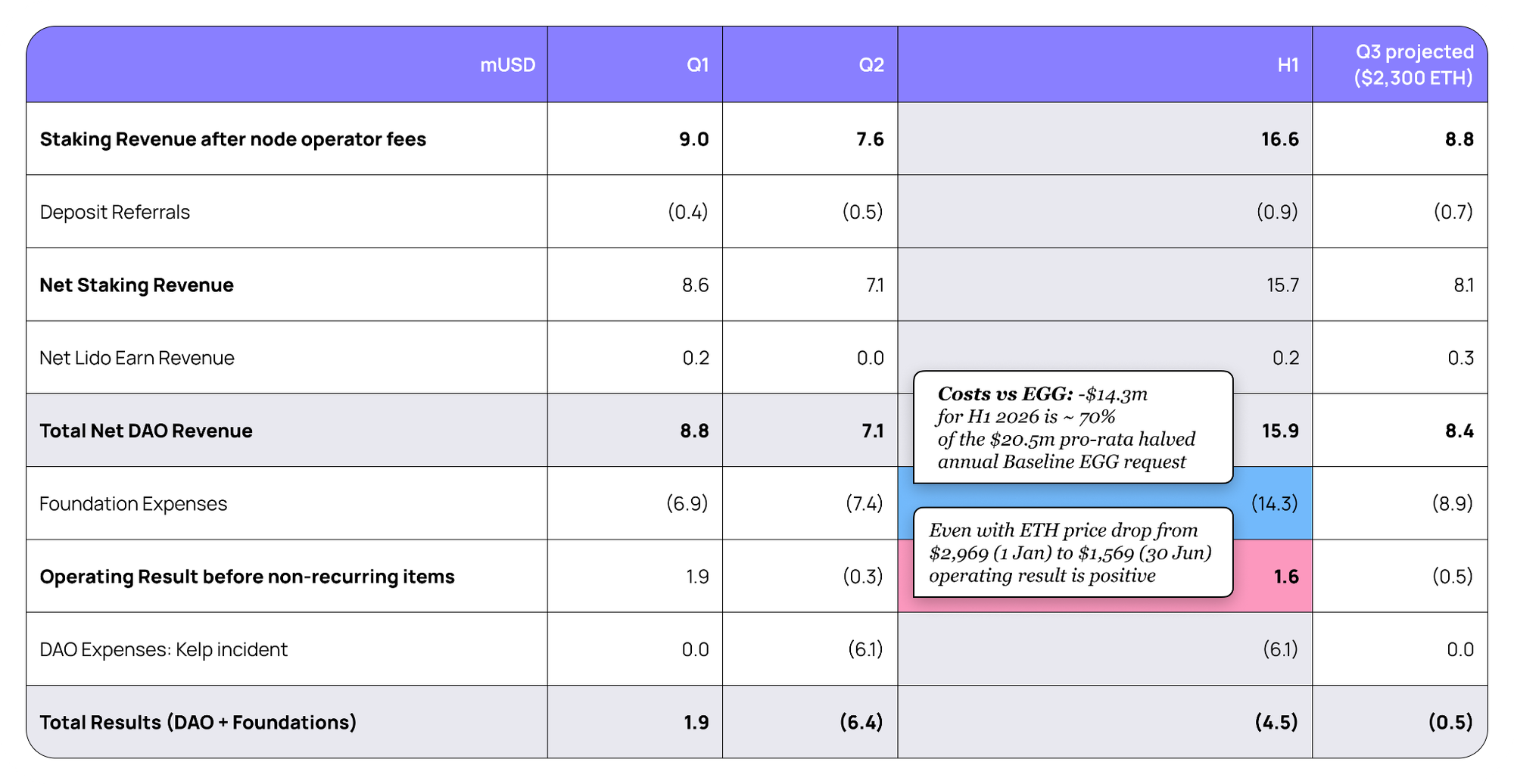
The Lido DAO concluded the first half of 2026 with a commendable positive operating result before non-recurring items, a testament to its operational resilience amidst significant market volatility. This achievement is particularly noteworthy given that the price of Ethereum (ETH) experienced a substantial 47% decline over the period, plummeting from $2,969 on January 1st to $1,569 by June 30th. Such a steep market correction typically poses severe challenges for crypto-native protocols, yet Lido’s ability to maintain a positive financial footing stemmed from a combination of sustained revenue strength from its core staking operations and a disciplined, more conservative approach to spending than initially projected. This fiscal prudence proved instrumental in safeguarding the DAO’s financial health and demonstrating its maturity in financial management.
Breaking down the H1 2026 performance by product line reveals a nuanced picture. Core staking operations demonstrated remarkable robustness, generating a significant $6.73 million in operating result after accounting for all associated operational expenses, on a total revenue of $15.7 million. This strong performance in the staking segment underscored the fundamental demand for liquid staking services, even in a bearish market environment characterized by lower ETH/USD valuations. The consistent yield generation from Ethereum’s proof-of-stake mechanism, combined with Lido’s dominant market position and efficient node operator network, allowed this segment to thrive. This highlights the foundational strength of Lido’s primary service offering.
However, the newer product lines presented expected developmental phase financials. The Lido Earn platform, designed for DeFi-native yield strategies, recorded an operating loss of ($7.12) million for H1 2026. This figure reflects the significant investment required for product development, market penetration, and critically, the resource allocation for mitigation and user support following the previously reported LayerZero/Kelp incident. This incident, likely a security exploit or a significant technical malfunction in an integrated service, necessitated substantial efforts to ensure user asset safety and platform integrity, impacting short-term profitability. Similarly, the "New Bets" category, encompassing innovative ventures like Wisp and other undisclosed projects in their early stages, incurred an operating loss of ($0.91) million. These losses are characteristic of nascent projects requiring substantial research, development, and market validation before achieving profitability, representing strategic investments in future growth. Despite these investments, the overall operating surplus from core staking was robust enough to ensure the DAO’s financial stability, demonstrating a strategic balance between maintaining core profitability and funding future innovation.
Further details on the DAO’s comprehensive H1 2026 financial report are publicly available at lido.fi/ldo-hub/reports/h1-2026, offering full transparency into its financial health and operational metrics. These reports are crucial for tokenholders and the broader community to understand the DAO’s economic performance and strategic direction.
Treasury Management and LDO Supply Dynamics
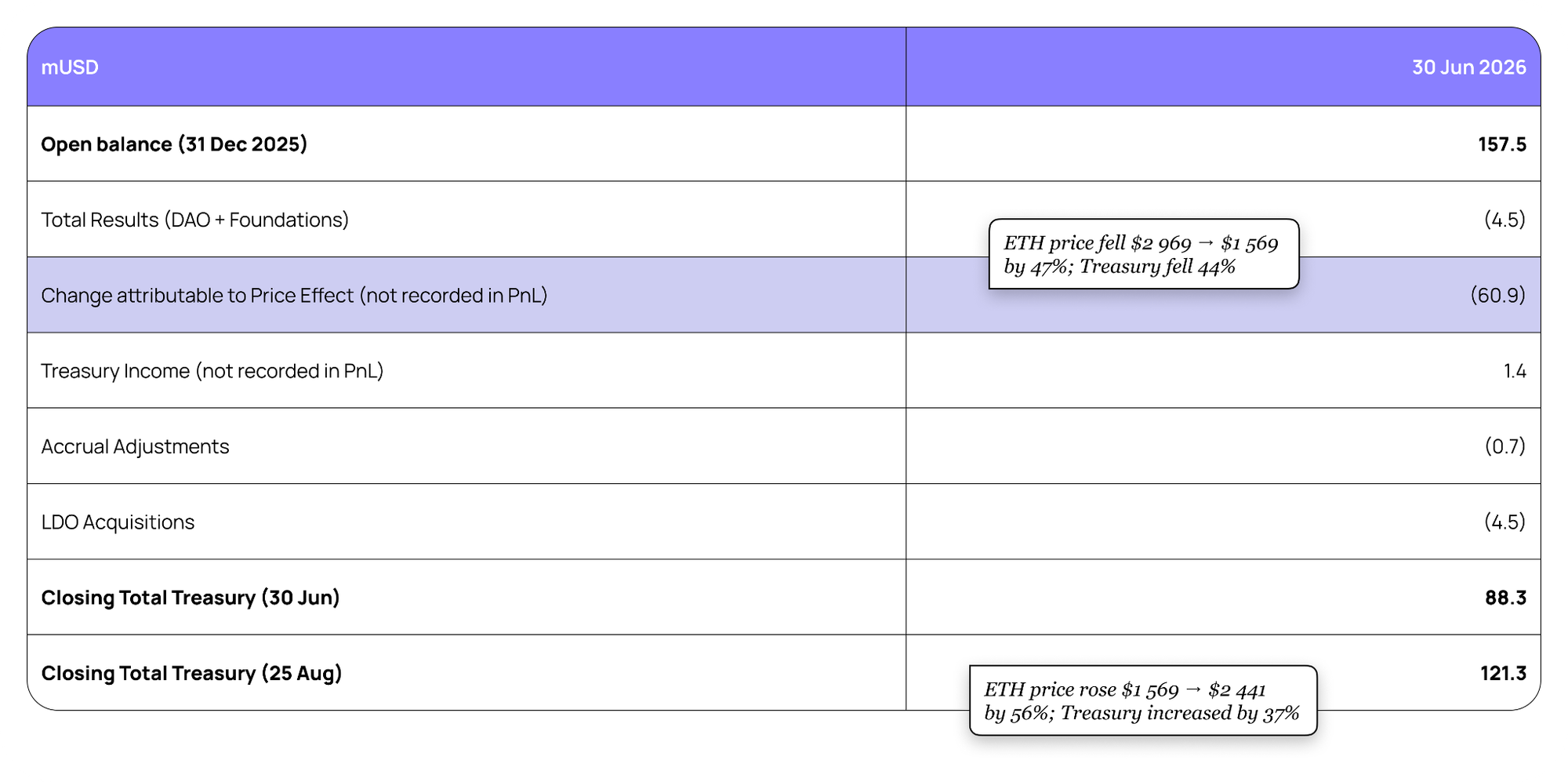
The Lido DAO Treasury, a critical component of the protocol’s long-term sustainability, maintains a diversified asset base designed to weather market fluctuations and fund ongoing operations and strategic initiatives. As of H1 2026, the treasury held a mix of assets including ETH, stablecoins, and LDO tokens. While specific figures were not detailed in the public recap, the overall positive operating result suggests that the treasury’s strategic reserves remain robust, enabling it to support the ecosystem’s development, ensure protocol security, and fund grant programs without immediate liquidity concerns. Strategic treasury management is paramount for Lido DAO, particularly in a volatile cryptocurrency market, allowing for the execution of long-term goals and contingency planning without undue reliance on short-term market performance. This proactive management includes considerations for asset diversification, risk exposure, and liquidity needs.
Regarding the LDO supply, the native governance token of the Lido DAO, its dynamics are carefully managed through the governance process. The supply mechanisms are designed to align incentives, reward participation, and support the decentralized governance structure. While specific changes in LDO supply were not detailed, the token’s distribution and vesting schedules play a crucial role in maintaining a healthy and liquid market for governance participation. The DAO continually evaluates the economic model of LDO to ensure it effectively supports the protocol’s growth and decentralization objectives, balancing inflation with community incentives and long-term value accrual.
Strategic Product Evolution and Market Positioning
Lido’s strategic outlook for its product suite is informed by a detailed understanding of the evolving staking market, segmenting participants into distinct categories. Analysis of market segments reveals Lido’s dominant position in "simple liquid staking," catering to individual users seeking straightforward ETH staking solutions, and a meaningful presence among "APR Maxis," who prioritize maximizing staking yields. This segment includes sophisticated DeFi users who leverage stETH across various protocols for compounded returns. However, the update identified "exchange and institutional staking" as key areas with significant room for growth. This strategic focus highlights Lido’s ambition to expand its reach beyond retail participants, tapping into the burgeoning demand for regulated, compliant, and enterprise-grade liquid staking solutions, which represents a massive untapped market.
A notable trend highlighted was the evolution of the Lido Core: DAO Take Rate. This rate, representing the portion of staking rewards allocated to the DAO Treasury and Node Operators, has seen a gradual









