James Watt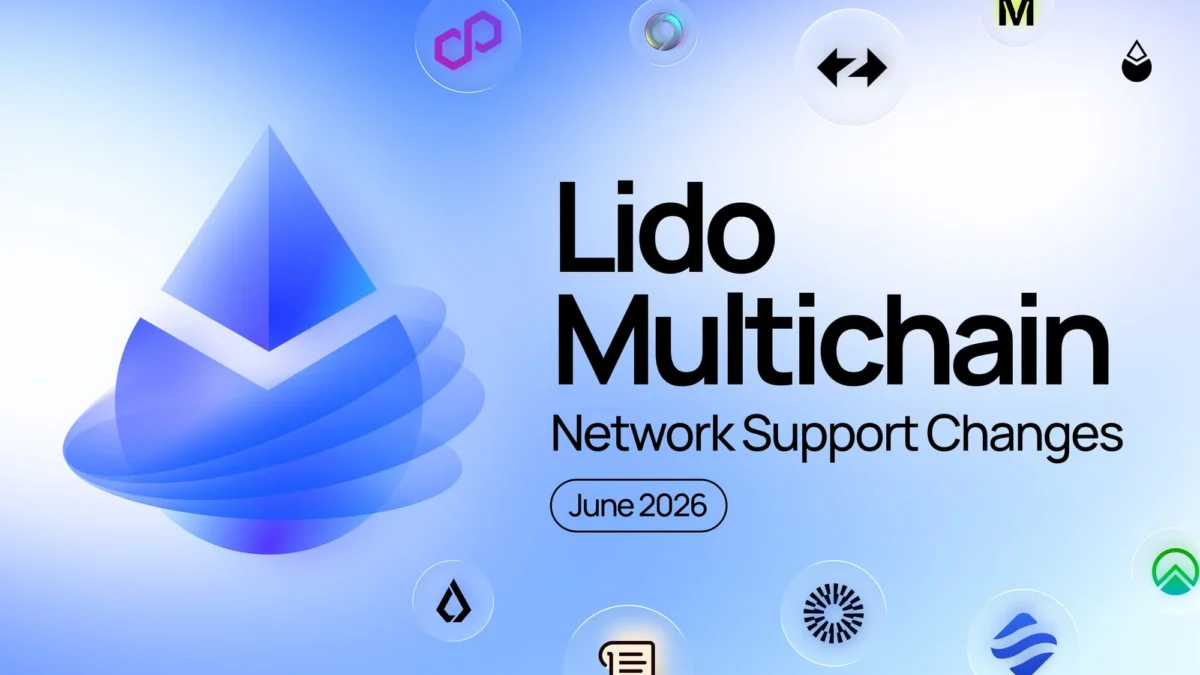
In a significant strategic realignment, the Lido Decentralized Autonomous Organization (DAO) has officially revoked the canonical status of wrapped staked Ethereum (wstETH) bridge endpoints across nine distinct blockchain networks. Following a conclusive Snapshot vote by the Lido DAO, the networks affected by this decision include zkSync Era, Mode, Scroll, Mantle, Swell, Zircuit, Soneium, Polygon PoS, and Lisk. This move underscores a concerted effort by the Lido DAO to concentrate its substantial resources on ecosystems demonstrating the most robust and meaningful adoption of wstETH, optimizing its operational efficiency and long-term sustainability.
For holders of wstETH on any of these now-de-canonicalized networks, the paramount message from the Lido DAO is one of reassurance: all funds remain secure and fully accessible, requiring no immediate action. The revocation is explicitly a governance-led decision concerning resource allocation and strategic focus, rather than a technical impairment. It does not disable any underlying bridge infrastructure, invalidate any existing wstETH tokens, or in any way impede a holder’s ability to retain, transfer, or bridge their wstETH back to the Ethereum mainnet or to other supported networks.
Understanding Canonical Recognition: The Seal of Official Support
To fully grasp the implications of this decision, it is crucial to understand what "canonical recognition" entails within the context of the Lido Multichain program. When a bridge endpoint and its associated token contract receive formal recognition as canonical through Lido DAO governance, they are essentially designated as the official wstETH deployment for that specific network. This designation is far more than a mere label; it signifies a robust commitment from Lido DAO contributors to provide comprehensive, active support.
This support encompasses a critical suite of services vital for security, reliability, and user confidence. These include continuous active monitoring of the bridge and token contract, rigorous security oversight to identify and mitigate potential vulnerabilities, a dedicated incident response mechanism for any unforeseen issues, proactive integration support for ecosystem partners, and consistent, ongoing communication with the community and developers on the recognized network. Maintaining such a high level of dedicated support across a burgeoning number of networks demands considerable resources—both human capital and technical infrastructure. The recent governance decision reflects the DAO’s strategic imperative to deploy these valuable resources where they yield the greatest impact and foster the most significant user engagement.
The Strategic Rationale: Focusing Resources for Sustainable Growth
The Lido Multichain program, an ambitious initiative to expand the utility and reach of wstETH across the broader blockchain ecosystem, has been a cornerstone of Lido’s strategy since its inception. As the program has matured, the governance body has continuously evaluated its efficacy and resource deployment. The decision to revoke canonical status from these nine networks stems from an ongoing assessment that, for one or more reasons, these particular chains no longer meet the threshold of "meaningful adoption" for wstETH that justifies the extensive support package associated with canonical recognition.
While specific metrics for each network were not publicly detailed in the immediate announcement, the underlying principle is economic and strategic efficiency. Canonical recognition carries a suite of ongoing costs that, while essential for official deployments, can become unsustainable if distributed across too many low-adoption environments. These costs include the continuous monitoring of bridge integrity and token contract health, the proactive measures involved in security oversight, the rapid deployment of incident response teams when necessary, and the provision of dedicated user support channels. By concentrating these resources on networks where wstETH has achieved significant traction and demonstrated robust utility, the Lido DAO aims to maximize the value generated by its efforts, ensure the highest standards of security and support where it matters most, and foster sustainable growth for the entire Lido ecosystem. This approach is consistent with a mature decentralized organization’s responsibility to its stakeholders to manage its collective treasury and contributor efforts judiciously.
Impact on Holders: Funds Remain Secure, Optionality Preserved
The most critical takeaway for individuals holding wstETH on zkSync Era, Mode, Scroll, Mantle, Swell, Zircuit, Soneium, Polygon PoS, and Lisk is the unwavering assurance that their assets are safe and fully accessible. The revocation of canonical status is purely a governance and resource management decision; it introduces no technical changes to the underlying smart contracts or bridge mechanisms. The functionality of these contracts remains intact, meaning holders can continue to interact with their wstETH as they always have.
This includes the ability to hold the tokens in their wallets, transfer them to other addresses on the same network, or bridge them back to the Ethereum mainnet or other canonically supported networks using the existing infrastructure. There is no deadline for such actions, and any decision to move wstETH is entirely optional, driven by individual preference rather than necessity. The existing bridges continue to operate, and the wstETH tokens themselves retain their intrinsic value, representing staked ETH on the Ethereum beacon chain.
However, a crucial nuance exists for holders who have deployed their wstETH into third-party DeFi protocols—such as lending markets, liquidity pools, or yield farming strategies—on these affected networks. These positions are governed by the specific smart contracts of those external protocols, not directly by Lido contributors. While the revocation does not inherently invalidate these positions or directly affect their functionality, it means that Lido contributors will no longer provide active monitoring, security oversight, or dedicated support for wstETH on these chains. Consequently, it is advisable for holders with such DeFi exposures to independently review their positions and assess any potential implications, as the official Lido safety net for these particular deployments has been withdrawn. This shift places a greater onus on individual users and the third-party protocols themselves to maintain due diligence and vigilance.
Chronology of Lido’s Multichain Program and the Path to Reassessment
The Lido Multichain program represents a significant phase in Lido’s evolution, initiated to expand the reach and utility of wstETH beyond the Ethereum mainnet. The program sought to integrate wstETH into the burgeoning Layer 2 (L2) ecosystems and other compatible sidechains, recognizing the potential for increased liquidity, enhanced capital efficiency, and broader DeFi composability. Over time, as various networks emerged and matured, Lido DAO engaged in a series of governance votes to grant canonical status to wstETH deployments on a select group of chains, including those now subject to revocation.
These initial endorsements were often based on projected growth, strategic partnerships, and the overall promise of the respective network ecosystems. The process typically involved thorough due diligence on bridge security, technical integration feasibility, and alignment with Lido’s broader vision. As the blockchain landscape rapidly evolves, with new L2s and scaling solutions continually emerging, the competitive environment for adoption and liquidity has intensified. This dynamic environment necessitates periodic reassessments of resource allocation to ensure that the DAO’s efforts remain impactful and aligned with its strategic objectives. The recent Snapshot vote reflects such a reassessment, marking a mature step in the DAO’s governance lifecycle, where initial expansion efforts are refined based on real-world adoption data and strategic resource optimization. The specific date of the Snapshot vote’s conclusion, while not explicitly stated in the source, indicates a recent and deliberate decision by the DAO, reflecting ongoing governance activity.
Official Perspectives and Broader Market Context
While no direct quotes from specific Lido DAO representatives were provided, the official communication surrounding this decision strongly emphasizes user safety, strategic efficiency, and transparent governance. The message is clear: the Lido DAO is committed to prudent resource management to ensure the long-term health and security of the wstETH ecosystem. This pivot highlights a broader trend within the decentralized finance (DeFi) space, where projects are increasingly evaluating the sustainability of their multi-chain strategies. The initial exuberance for widespread multi-chain deployment is giving way to a more pragmatic approach, prioritizing depth of integration and meaningful user activity over sheer breadth.
The liquid staking token (LST) market, with wstETH as a dominant player, continues to be a critical component of the broader DeFi landscape. LSTs allow users to stake their ETH while retaining liquidity, enabling them to participate in other DeFi protocols. The total value locked (TVL) in Lido’s wstETH often exceeds $30 billion, making it one of the largest protocols in DeFi. This substantial scale underscores the importance of efficient resource allocation. The decision to de-canonicalize on certain networks signals that even major players like Lido are not immune to the economic realities of maintaining infrastructure and support across a fragmented ecosystem. It reinforces the idea that LSTs, while offering significant advantages, require robust underlying support and adoption to thrive on any given chain.
For the affected networks—zkSync Era, Mode, Scroll, Mantle, Swell, Zircuit, Soneium, Polygon PoS, and Lisk—this decision could have varied implications. While the technical functionality of wstETH bridges remains, the withdrawal of official Lido monitoring, marketing, and ecosystem development support might necessitate these networks or their communities to step up their own efforts if they wish to retain significant wstETH liquidity or attract future integrations. It could also prompt a re-evaluation by DeFi protocols operating on these chains regarding their reliance on wstETH. However, many of these networks have diverse ecosystems and other LSTs, so the overall impact might be localized rather than systemic.
Lido’s Evolving Governance and Future Outlook
Looking ahead, this governance decision also ushers in a new operational framework for similar future actions. The same DAO vote that approved these revocations also authorized the Network Expansion Committee (NEC) to handle comparable revocations in the future. This move aims to streamline the governance process by reducing the operational overhead associated with requiring a full DAO-wide vote for every such adjustment. To maintain transparency and uphold the principles of decentralized governance, any future revocation by the NEC will require unanimous committee support and a public announcement on the Lido forum, explaining the rationale in detail.
This delegation of authority to the NEC signifies a maturation in Lido’s governance structure, balancing the need for agility in a fast-paced environment with the foundational principles of transparency and community oversight. It allows for more responsive management of the Multichain program while ensuring that significant decisions are still subject to rigorous internal review and public scrutiny. Furthermore, the Lido DAO has established a clear pathway for any affected network seeking renewed canonical recognition in the future. Such networks can re-apply through the NEC, adhering to the endorsement principles and criteria in place at that time. This provision demonstrates that the current revocation is not necessarily permanent but rather a dynamic adjustment based on current conditions and strategic priorities, leaving room for future re-engagement should adoption metrics or strategic alignment evolve.
In summary, the Lido DAO’s decision to revoke canonical status for wstETH on nine networks is a strategic recalibration, reflecting a mature approach to resource management within a dynamic and competitive blockchain landscape. It underscores a commitment to efficiency, security, and sustainability, ensuring that Lido’s significant resources are deployed where they can generate the most value and foster robust, meaningful adoption of its flagship liquid staking token. While the immediate focus is on reassuring holders of the safety of their funds, the broader implications highlight the ongoing evolution of multi-chain strategies and the increasing importance of demonstrable adoption for sustained support in the decentralized ecosystem.
The information provided on this page is for general informational purposes only and does not constitute financial or legal advice. Bridging and participation in decentralized finance involve significant risks, including but not limited to smart contract vulnerabilities, market volatility, and potential loss of funds. Individuals should conduct their own thorough research and seek advice from qualified professionals before participating in any blockchain-related activities. For more detailed information, please refer to Lido’s official Terms of Use and the Lido FAQ.