James Watt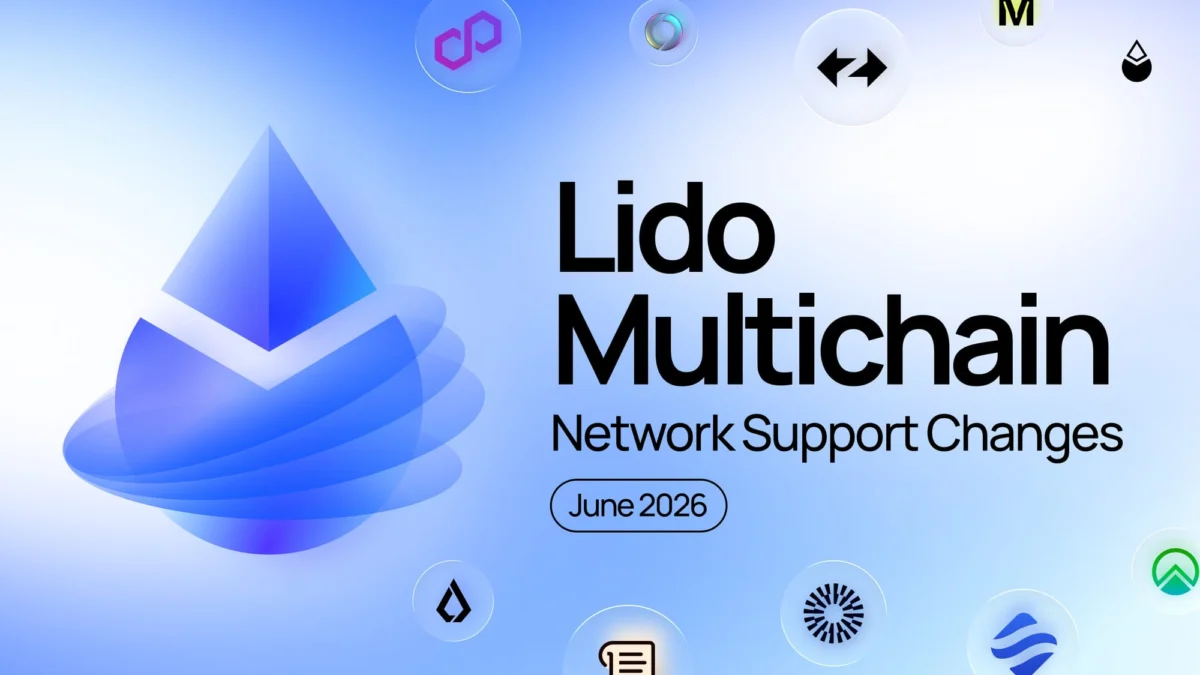
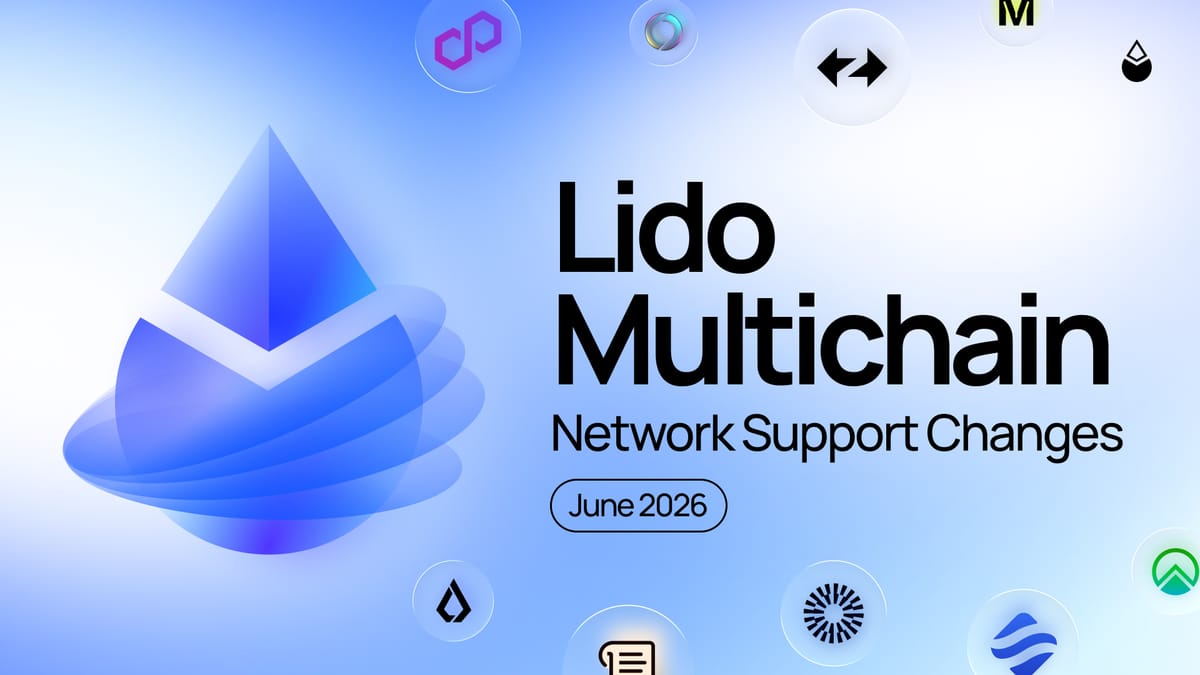
In a significant strategic realignment, the Lido DAO has officially moved to revoke the canonical status of wstETH bridge endpoints across nine distinct blockchain networks: zkSync Era, Mode, Scroll, Mantle, Swell, Zircuit, Soneium, Polygon PoS, and Lisk. This pivotal decision, enacted following a recently concluded Snapshot vote in June 2026, signals a focused effort by the leading liquid staking protocol to concentrate its resources and support on ecosystems demonstrating robust and meaningful adoption of its wrapped staked Ethereum (wstETH) token. While the announcement marks a recalibration of Lido’s multichain strategy, the DAO has unequivocally reassured all holders that their funds on these networks remain secure, fully accessible, and require no immediate action. The revocation is a governance-led strategic choice, not a technical disablement, ensuring the underlying bridge infrastructure and token functionality persist unchanged.
Understanding Canonical Recognition in the DeFi Landscape
To fully grasp the implications of this decision, it is crucial to understand what "canonical recognition" entails within the decentralized finance (DeFi) ecosystem, particularly for a prominent asset like wstETH. When a bridge endpoint and its associated token contract receive formal canonical recognition through Lido DAO governance, they are officially designated as the legitimate and supported wstETH deployment on a specific blockchain network. This designation extends far beyond a mere label; it signifies a comprehensive commitment from Lido contributors to provide active monitoring, rigorous security oversight, swift incident response capabilities, dedicated integration support, and continuous communication.
The importance of this status cannot be overstated. In a multichain world fraught with bridge exploits and fragmented liquidity, official canonical status provides a crucial layer of trust and security. It assures users, developers, and integrated protocols that the wstETH they interact with on a recognized network is indeed the official, DAO-backed version, subject to Lido’s stringent standards and active vigilance. Maintaining this elevated level of support across numerous, diverse networks, however, demands substantial financial, technical, and human resources. The decision to revoke canonical status for the nine aforementioned networks stems directly from the DAO’s strategic assessment that these resources must be concentrated where they yield the most significant value and impact, aligning with the actual adoption patterns of wstETH.
The Evolution of Lido’s Multichain Vision
Lido Finance, as the dominant liquid staking protocol for Ethereum, has played a transformative role in enabling users to stake their ETH while maintaining liquidity through its stETH and wstETH tokens. As the broader blockchain landscape evolved with the proliferation of Layer 2 solutions and independent sidechains, the demand for cross-chain compatibility for key DeFi assets like wstETH surged. Lido’s multichain program was a direct response to this demand, aiming to extend the utility and reach of wstETH across a wider array of ecosystems. This expansion was driven by the vision of a more interconnected DeFi world, where users could leverage their staked Ethereum across various dApps and networks without needing to unstake.
The initial phase of this expansion saw wstETH deployed on numerous networks, each receiving canonical recognition to foster trust and facilitate integrations. This proactive approach allowed Lido to explore potential growth avenues and establish early footholds in nascent ecosystems. However, as the market matured and competition intensified, it became clear that not all networks would achieve the same level of organic adoption for wstETH. The costs associated with maintaining canonical support — including the continuous security audits, proactive monitoring for bridge vulnerabilities, technical support for developers integrating wstETH, and marketing efforts to drive awareness — began to outweigh the benefits on certain chains where adoption remained limited. This led to a natural re-evaluation of the strategy, culminating in the recent governance vote. The strategic pivot reflects a broader trend in the DeFi space, where protocols are increasingly prioritizing efficiency and sustainability over unchecked expansion.
The Decision: A Strategic Recalibration
The recent Snapshot vote, which concluded in June 2026, was the culmination of extensive discussions within the Lido DAO community regarding the sustainability and effectiveness of its multichain strategy. The proposal to revoke canonical status for zkSync Era, Mode, Scroll, Mantle, Swell, Zircuit, Soneium, Polygon PoS, and Lisk was not a punitive measure but a pragmatic one. The primary rationale articulated by Lido contributors and supported by the DAO was the need to focus resources where wstETH has achieved "meaningful adoption."
While specific metrics for "meaningful adoption" were not exhaustively detailed in the public announcement, industry observers widely infer that such thresholds typically involve a combination of factors: significant Total Value Locked (TVL) for wstETH on the network, robust transaction volumes, a diverse ecosystem of integrated DeFi protocols utilizing wstETH, and a substantial number of active users. For one or more of these reasons, the nine affected networks did not meet the established threshold. This strategic pruning allows Lido to allocate its significant operational budget and developer bandwidth more effectively, strengthening its position on high-performing chains and enhancing the security posture for those deployments.
This decision also highlights the dynamic nature of DAO governance. Unlike traditional corporate structures, decentralized autonomous organizations like Lido DAO are designed to be agile and responsive to evolving market conditions and internal assessments. The ability to collectively decide on resource allocation and strategic direction is a core tenet of decentralization, ensuring the protocol remains aligned with its long-term objectives and the interests of its token holders.
Implications for Existing wstETH Holders
A central message from the Lido DAO is the unequivocal reassurance to all wstETH holders on the affected networks: your funds are safe, and no immediate action is required. The revocation of canonical status is purely a governance and resource allocation decision; it is not a technical action that disables any existing bridge contract, invalidates any wstETH token, or alters the fundamental functionality of the underlying smart contracts.
Holders of wstETH on zkSync Era, Mode, Scroll, Mantle, Swell, Zircuit, Soneium, Polygon PoS, and Lisk will retain full access to their tokens. They can continue to hold, transfer, or bridge their wstETH back to Ethereum or to other canonically supported networks using the existing infrastructure, exactly as they could before the vote. There is no deadline or mandatory requirement to move funds. This distinction is critical for maintaining user confidence and preventing unnecessary panic within the community.
However, a nuanced consideration arises for users whose wstETH is currently deployed within third-party DeFi protocols, such as lending markets, liquidity pools, or yield farming strategies, on these networks. While these positions are not directly affected by the Lido DAO’s vote—as they are governed by the respective third-party protocols—Lido contributors will no longer actively monitor or provide direct support for wstETH on these chains. This shift implies that users engaging in such activities should conduct their own thorough due diligence and regularly review the status and security of their positions, as the direct oversight and incident response mechanisms from Lido will cease for these specific deployments. This increased personal responsibility underscores the fundamental principle of "do your own research" (DYOR) within the DeFi space.
Why the Change? Driving Efficiency and Focus
The decision to revoke canonical status is rooted in a comprehensive evaluation of resource allocation and the long-term sustainability of the Lido Multichain program. Maintaining canonical recognition for a growing number of networks incurs substantial ongoing costs. These costs are multifaceted and include:
- Security Oversight and Monitoring: Continuous auditing, real-time monitoring for potential vulnerabilities in bridge contracts, and proactive threat intelligence gathering are resource-intensive.
- Incident Response: Developing and maintaining a robust incident response framework, including dedicated teams ready to act in case of exploits or bugs, requires significant investment.
- Integration Support: Providing technical assistance and documentation for developers looking to integrate wstETH into their dApps on various chains demands dedicated support staff.
- User Support: Addressing user queries and issues related to wstETH on diverse networks requires a scalable and responsive support infrastructure.
- Ecosystem Development and Marketing: Efforts to foster adoption, build partnerships, and market wstETH on each network also consume considerable resources.
By concentrating these valuable resources on networks where wstETH has achieved genuinely meaningful adoption and demonstrated strong organic growth, Lido aims to enhance the security, reliability, and overall user experience for its most impactful deployments. This strategic focus is expected to lead to a more efficient allocation of the DAO’s treasury, allowing for greater investment in core protocol development, security enhancements, and expansion on high-potential chains. In a competitive and rapidly evolving multichain landscape, such disciplined resource management is paramount for sustained success and innovation.
Looking Ahead: The Role of the Network Expansion Committee (NEC)
To streamline future governance processes related to multichain strategy, the same DAO vote that authorized the current revocations also established the Network Expansion Committee (NEC). This new committee is empowered to handle similar revocations in the future, thereby reducing the operational overhead associated with requiring a full DAO-wide vote for every such decision.
The creation of the NEC signifies a move towards more agile and specialized governance, allowing the DAO to delegate specific operational responsibilities while maintaining transparency and accountability. To ensure checks and balances, any future revocation initiated by the NEC will require unanimous committee support and a public forum announcement clearly explaining the rationale behind the decision. This mechanism aims to strike a balance between efficiency and decentralized oversight, preventing arbitrary decisions and ensuring community awareness.
Furthermore, the Lido DAO has outlined a clear path for any of the affected networks that may wish to regain canonical recognition in the future. Should a network demonstrate significant growth and renewed interest in wstETH adoption, it can re-apply through the NEC, adhering to the endorsement principles and criteria in place at that time. This provision allows for flexibility and acknowledges that ecosystem dynamics can change, offering a potential pathway for re-engagement based on future performance and commitment.
Broader Industry Implications
Lido DAO’s decision to strategically prune its multichain support carries significant implications for the broader DeFi industry. It sets a precedent for other large protocols navigating the complexities of a fragmented blockchain landscape. As more protocols embrace multichain strategies, the challenges of maintaining security, liquidity, and support across numerous networks become increasingly apparent. This move by Lido highlights the importance of:
- Strategic Resource Allocation: Protocols cannot afford to spread their resources too thinly. Focused efforts on high-potential ecosystems are crucial for long-term sustainability.
- Data-Driven Governance: Decisions regarding multichain support should be based on quantifiable metrics of adoption and engagement, rather than simply launching on every available chain.
- Security-First Approach: By concentrating security oversight, Lido reinforces the paramount importance of safeguarding user assets, even if it means scaling back on less-adopted deployments.
- Evolving Decentralized Governance: The establishment of the NEC demonstrates how DAOs are maturing, delegating specific operational tasks to specialized committees to enhance efficiency without sacrificing decentralization.
This strategic pivot may encourage other protocols to critically evaluate their own multichain footprints, potentially leading to similar consolidations across the industry. It underscores a growing maturity in the DeFi space, moving beyond a "land grab" mentality towards a more sustainable and efficient model of growth. While the multichain future remains bright, Lido’s recent actions suggest that success will increasingly depend on strategic focus and disciplined resource management.
In conclusion, the Lido DAO’s decision to revoke canonical wstETH status for nine networks is a calculated, forward-looking move designed to enhance the protocol’s efficiency, security, and long-term impact. While marking a shift in strategy, it steadfastly prioritizes the safety of user funds and provides clear pathways for future engagement. As the DeFi landscape continues to evolve, such strategic realignments will likely become more common, shaping a more focused and resilient multichain ecosystem.
The information provided on this page is for general informational purposes only and does not constitute financial or legal advice. Bridging and participation in DeFi protocols involve significant risks, and individuals should conduct their own thorough research and seek advice from qualified professionals before participating. For more detailed information, please refer to Lido’s Terms of Use and the Lido FAQ.