admin
admin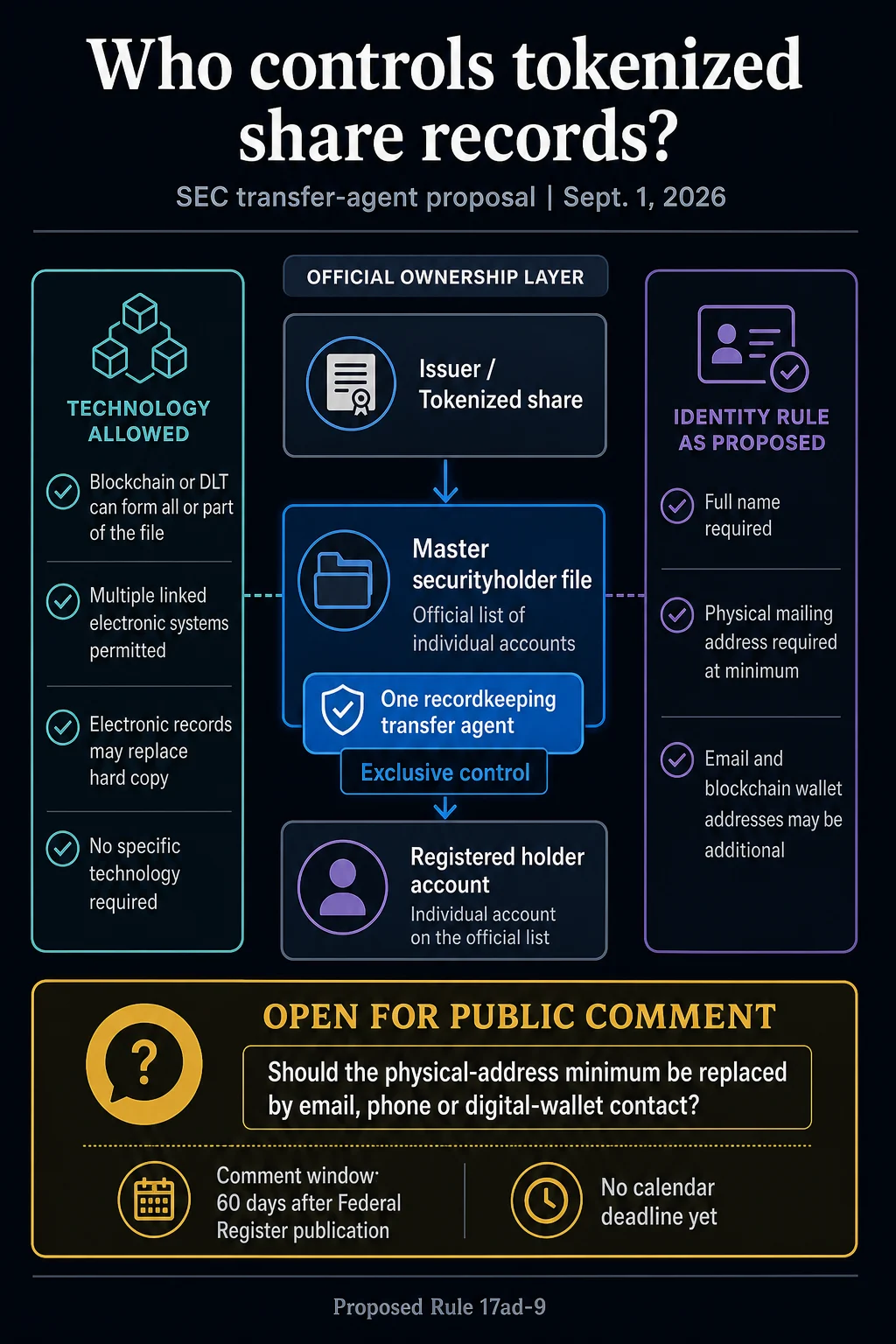
The U.S. Securities and Exchange Commission (SEC) has put forth a groundbreaking proposal that could fundamentally reshape how Wall Street tracks ownership of company shares. In a move that signals a significant embrace of modern financial technology, the SEC is considering allowing blockchain and other distributed ledger technologies (DLTs) to become an integral part of the official master securityholder file, while crucially retaining the oversight and control of regulated transfer agents. This initiative, detailed in a proposed rule amendment published on September 1st, represents the most substantial revision to transfer agent regulations since their inception in the late 1970s and early 1980s, potentially paving the way for tokenized securities to become more deeply embedded within the established framework of share ownership verification.
The proposal directly addresses the burgeoning landscape of tokenized assets, aiming to integrate them beyond mere parallel digital representations or supplementary records. By allowing DLTs to serve as the primary or a component of the master securityholder file, the SEC is acknowledging the growing prevalence of blockchain in securities offerings and transfers. This regulatory shift could accelerate the adoption of digital securities by providing a clearer pathway for their integration into the core infrastructure that governs legal ownership.
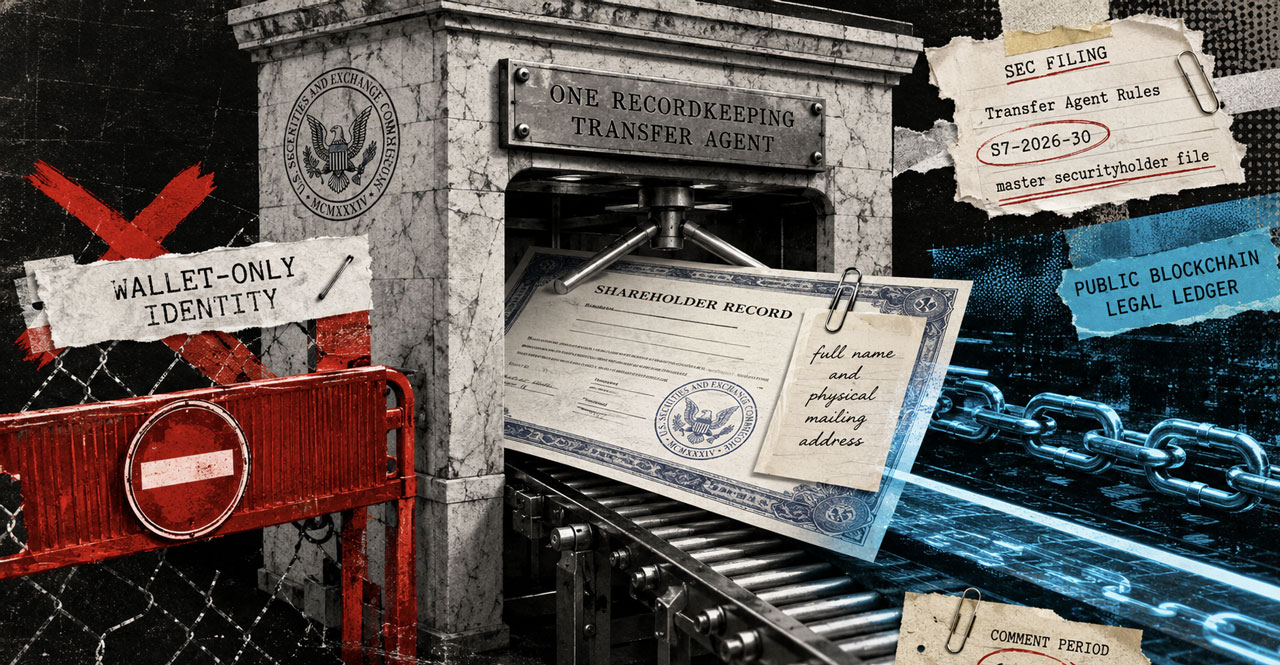
Under the proposed framework, a single, registered transfer agent would continue to hold exclusive authority and responsibility for maintaining the accuracy, security, and availability of the official shareholder file to regulators. This stipulation ensures that while technology may evolve, the chain of accountability remains firmly anchored with established financial intermediaries. SEC Chairman Paul Atkins highlighted the proposal’s responsiveness to the evolving market, stating that it reflects the increasing reliance on electronic communications and blockchain technology in the securities industry. The broader rewrite also seeks to modernize existing regulations by transitioning from paper-based requirements to electronic recordkeeping standards and updating reporting mechanisms to encompass tokenization and distributed ledger usage.
Industry participants have reacted positively to the proposal. Securitize, a registered transfer agent that has been a proponent of integrating blockchain infrastructure for digital securities, views the SEC’s initiative as a validation of its long-held advocacy. The company, which manages over $4 billion in tokenized real-world assets, has consistently argued for the incorporation of public blockchains into securities recordkeeping, with transfer agents retaining their supervisory role over official ownership records. Securitize emphasized that such modernization should aim to elevate industry standards, not dilute them, and sees the regulatory shift and growing digital securities adoption as a significant tailwind for the sector.
Embracing Distributed Ledgers in Official Recordkeeping
The SEC’s proposed rule amendment formalizes a direction that SEC staff had previously indicated through guidance. For some time, registered transfer agents have been permitted to utilize distributed ledger technology for their official master securityholder files without needing to maintain a separate, off-chain duplicate, provided they adhere to existing regulatory mandates. This has allowed transaction data, encompassing details such as wallet addresses, asset balances, ownership percentages, and purchase histories, to reside on-chain. Crucially, sensitive personal identification information has been kept in separate, secure systems, maintaining a balance between technological innovation and privacy.
The new proposal seeks to codify this approach directly within the transfer agent regulatory framework. While DLT integration is encouraged, it is not mandated. Transfer agents will retain the discretion to choose the technology best suited for maintaining their records, whether it be a conventional database or a distributed ledger. The core requirement remains that the system, regardless of its underlying technology, must be secure, up-to-date, and accessible to regulators.
Furthermore, the SEC is proposing enhancements to Form TA-2, which transfer agents use for reporting. These changes would necessitate disclosures regarding securities that utilize distributed ledgers, as well as information about tokenization agents and platforms involved in such arrangements. This increased transparency aims to provide regulators with a clearer view of the evolving digital securities ecosystem and the entities operating within it. Importantly, the proposal clarifies that technology providers, by facilitating the use of blockchain for shareholder records, would not automatically assume the regulatory responsibilities traditionally held by transfer agents.
Navigating the Future of Shareholder Identity
Despite the significant stride towards integrating blockchain, the SEC’s proposal stops short of enabling a fully wallet-native corporate ownership system. The drafted framework continues to mandate that the master securityholder file must contain a shareholder’s full legal name and contact information, including a physical mailing address. This means that while a digital wallet address can be a component of the identifying information linked to a tokenized security, it will not entirely supersede traditional identity verification requirements under the current proposal.
However, the SEC is actively seeking public input on this critical aspect of digital identity. Among the key questions posed for public comment is whether transfer agents should be relieved of the obligation to collect shareholders’ full names and physical mailing addresses. The agency is soliciting feedback on the potential consequences of eliminating these traditional identification requirements for other securities laws and for market participants. This open-ended question suggests a potential future avenue for further modernization, where email addresses or digital wallet identifiers might, under certain circumstances, suffice in facilitating on-chain securities trading, a concept previously explored by Commissioner Hester Peirce.
The SEC’s current stance appears to draw a deliberate line between modernizing the infrastructure for recording legal share ownership and overhauling the established identity systems that underpin it. Under the proposed rules, blockchain technology could indeed become the authoritative infrastructure for recording who legally owns shares. Nevertheless, the regulated transfer agent is positioned to remain the essential gatekeeper, bridging the gap between on-chain ownership records and identifiable, regulated shareholders.
The period for public comment on this pivotal proposal will remain open for 60 days following its official publication in the Federal Register. As of September 1st, the SEC had not yet provided a definitive publication date, leaving the industry to anticipate the formal commencement of this crucial dialogue. This proposed rule change marks a pivotal moment in the intersection of traditional finance and emerging technologies, signaling a deliberate and measured approach by regulators to harness the potential of blockchain while ensuring market integrity and investor protection. The implications for capital markets, the future of asset management, and the operational frameworks of financial intermediaries are substantial, suggesting a transformative era ahead for securities ownership and recordkeeping.