
 James Watt
The August 2026 Lido Poolside Tokenholder Update offered a comprehensive overview of Lido DAO’s financial performance for the first half of 2026, alongside critical product developments, an analysis of the evolving staking market, and a proactive stance on the proposed EIP-8363 issuance discussion. This quarterly update, presented to LDO tokenholders and the broader community, underscored the protocol’s resilience and strategic agility in navigating a volatile cryptocurrency landscape. Despite a significant downturn in Ethereum’s price, Lido DAO reported a positive operating result, a testament to its robust operational model and disciplined financial management. The session also provided a forward-looking perspective, detailing new product initiatives and a strategic approach to managing potential shifts in Ethereum’s monetary policy. For those unable to attend, a full recording of the session and the detailed Lido DAO H1 2026 report are publicly available, ensuring transparency and accessibility for all stakeholders.
Lido Protocol: A Foundation in Liquid Staking
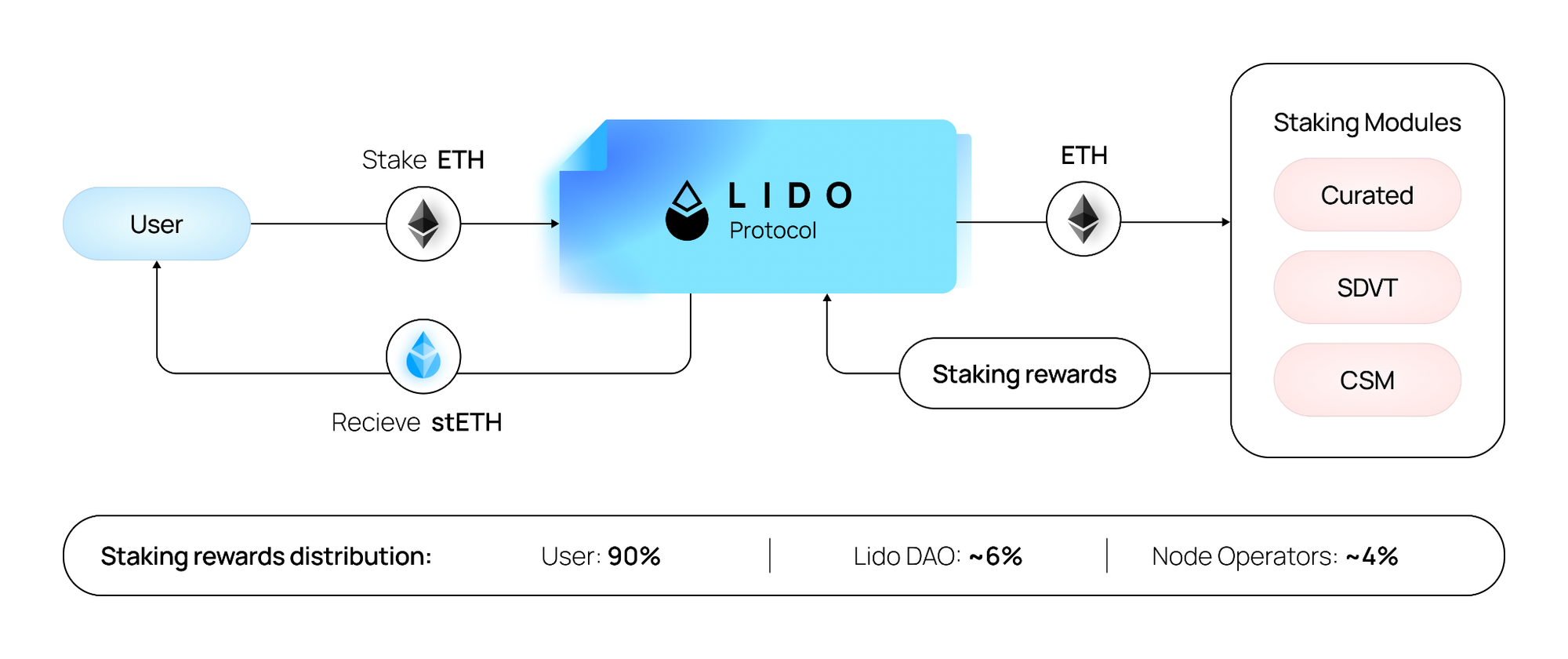
At its core, Lido stands as the preeminent liquid staking protocol on the Ethereum network, offering users a streamlined and secure method to stake their ETH. The protocol’s innovative design allows users to deposit ETH and receive stETH (staked ETH) in return. This liquid token is not merely a receipt; it’s a dynamic asset that can be deployed across the vast decentralized finance (DeFi) ecosystem, unlocking liquidity and yield opportunities that would otherwise be inaccessible to traditional stakers. This fundamental mechanism has been a cornerstone of Lido’s success, democratizing access to Ethereum staking rewards.
Beyond its foundational liquid staking offering, the Lido ecosystem has strategically diversified its infrastructure. It provides modular solutions such as stVaults, enabling custom staking setups tailored to specific user needs. Furthermore, Lido has ventured into DeFi-native yield strategies through EarnETH and EarnUSD, offering distinct pathways for users to generate returns on their assets. A notable new entrant to the ecosystem is Wisp, a privacy-first AI harness, signaling Lido’s ambitious expansion into adjacent technological domains. These "new bets," with others anticipated by the end of the year, illustrate a clear strategy to broaden the protocol’s utility and revenue streams beyond its core staking operations.
The governance of the Lido protocol is orchestrated by the Lido DAO, a decentralized autonomous organization composed of LDO tokenholders. This decentralized structure empowers tokenholders to actively participate in the protocol’s evolution, setting critical parameters, approving essential upgrades, and meticulously managing the Lido DAO Treasury’s allocations. Through a transparent governance process, tokenholders define strategic goals and authorize grants that fuel the activities of the Lido Labs, Lido Ecosystem, and Lido Alliance Foundations. These Foundations, operating as DAO-adjacent entities, are instrumental in supporting the broader Lido DAO ecosystem, with all significant actions requiring explicit approval from LDO tokenholders, as stipulated by their bylaws. This intricate governance framework ensures that the protocol remains community-driven and aligned with the interests of its stakeholders. All protocol fees generated, along with product-line revenue from initiatives like Earn and Wisp, flow into the Lido DAO Treasury, providing a sustainable financial backbone for ongoing development and operations after covering expenses approved via the annual Ecosystem Grant (EGG).
Navigating Market Headwinds: H1 2026 Financial Performance
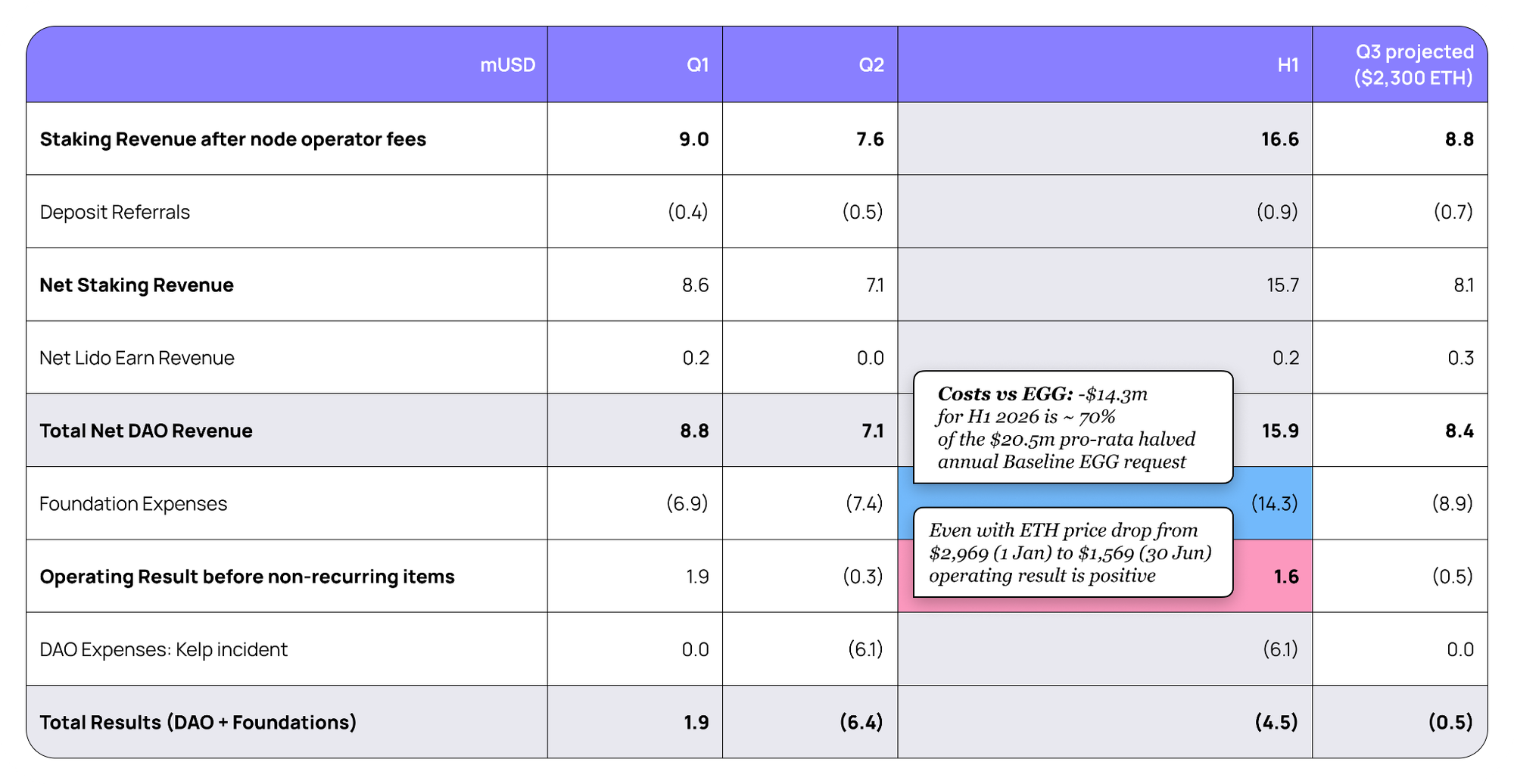
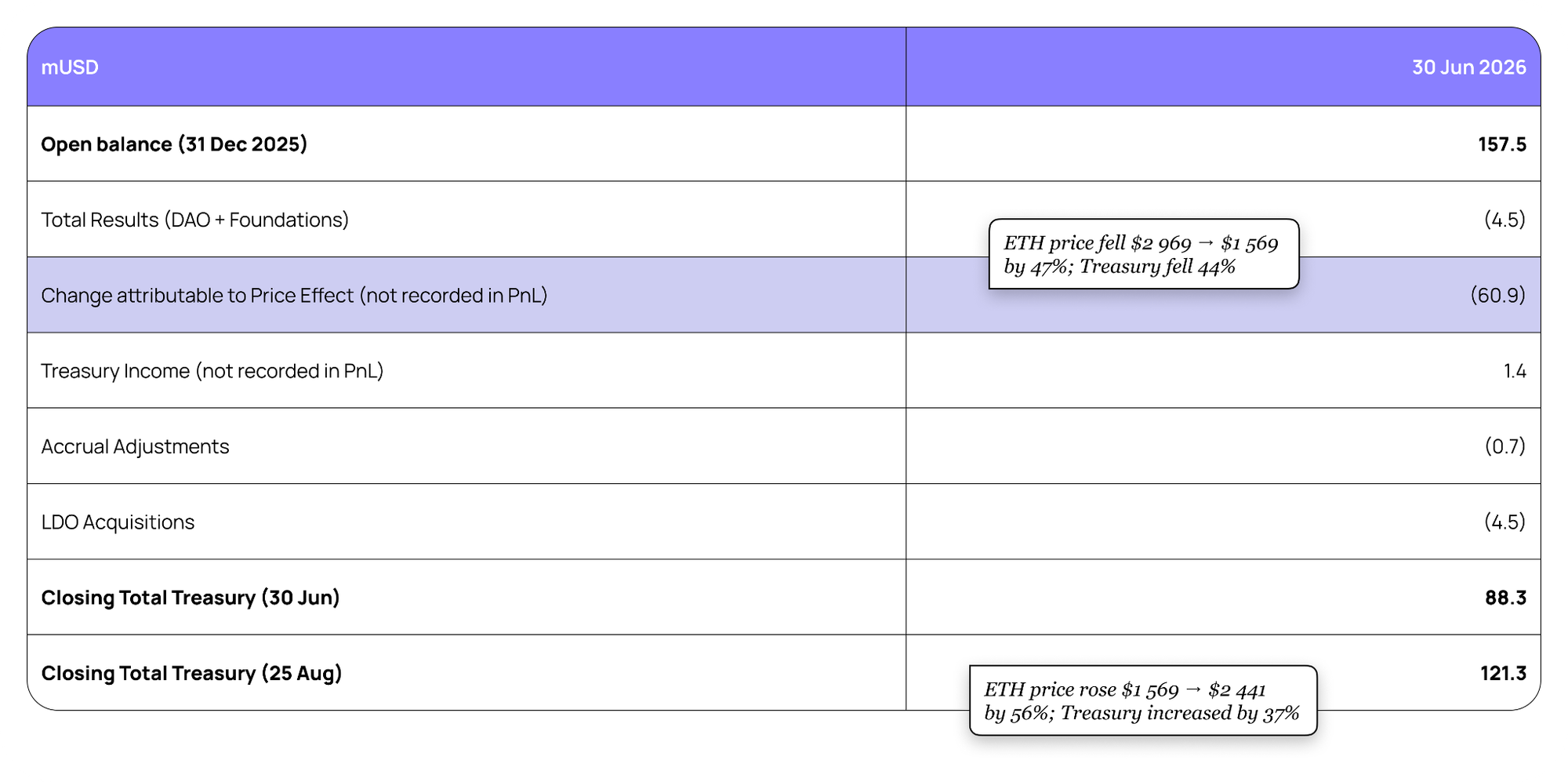
The first half of 2026 presented a challenging macroeconomic environment for the cryptocurrency market, with Ethereum (ETH) experiencing a substantial price decline. From January 1st, 2026, when ETH stood at $2,969, the asset depreciated by a notable 47% to $1,569 by June 30th. Despite this significant market contraction, Lido DAO successfully concluded H1 2026 with a positive operating result before accounting for non-recurring items. This achievement was primarily attributed to the continued strength of its core revenue streams and a more conservative approach to spending than initially projected, reflecting prudent financial management in adverse conditions.
A deeper dive into the financial statements reveals the robustness of Lido’s core staking operations. Staking activities alone generated $15.7 million in revenue, leading to a healthy $6.73 million operating result after all associated operational expenses. This performance is particularly noteworthy given the depressed ETH/USD price throughout the period, highlighting the underlying efficiency and demand for Lido’s liquid staking services. However, not all segments of the ecosystem mirrored this success. The Lido Earn product line recorded an operating deficit of $7.12 million, largely impacted by the ramifications of the LayerZero/Kelp incident. Similarly, "New Bets," representing nascent initiatives, incurred a deficit of $0.91 million as they continued their development and market entry phases. The overall H1 2026 performance, therefore, showcased a strong core business capable of offsetting initial losses from developing new ventures and recovering from unexpected external events.
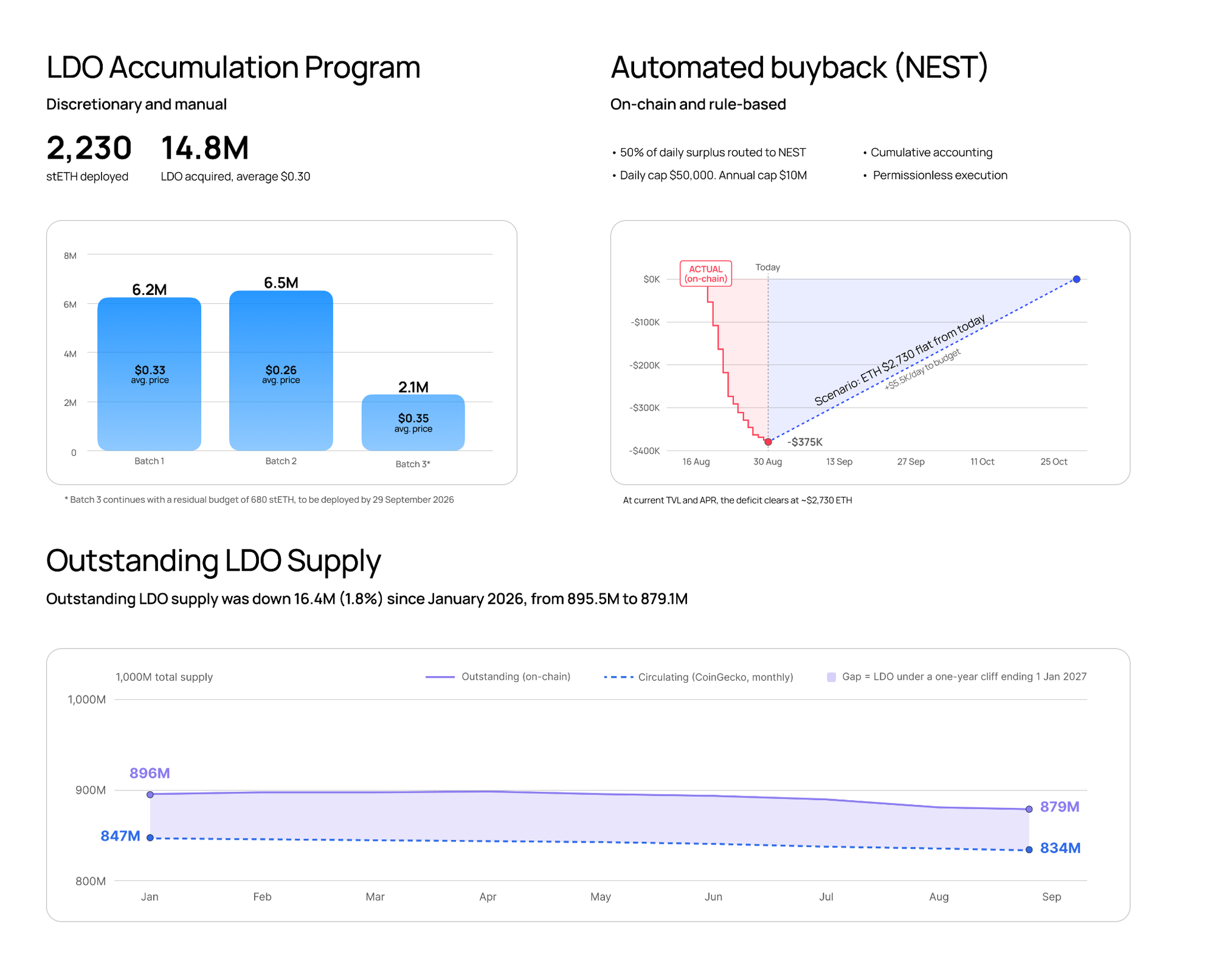
The DAO’s Treasury position and the dynamics of LDO supply were also key points of discussion, presented through detailed charts that illustrate the organization’s financial health and tokenomics. While specific figures were not detailed in the public summary, the presentation underscored the DAO’s commitment to maintaining a stable and well-managed treasury, essential for its long-term sustainability and ability to fund future initiatives. The strategic management of LDO supply is also critical for maintaining the health of the governance model and incentivizing long-term participation within the ecosystem.
Strategic Product Evolution and Market Expansion
Lido’s product strategy in H1 2026 focused on reinforcing its market leadership while actively pursuing new growth vectors. An analysis of staking market segments revealed that Lido maintains a dominant position in "simple liquid staking" and holds a significant share among "APR Maxis"—users primarily driven by maximizing annual percentage rates. The primary areas identified for future growth lie within the "exchange" and "institutional staking" sectors, representing substantial untapped potential for the protocol. Penetrating these segments requires tailored solutions, enhanced security measures, and compliance frameworks, areas where Lido is actively investing resources.
A notable development has been the evolution of the Lido Core DAO Take Rate. This rate, representing the percentage of staking rewards allocated to the DAO, increased from 4.97% in December 2025 to 6.11% across January to July 2026, further rising to 6.18% for July to August, with an anticipated 6.25% in September. This incremental increase was driven by a combination of strategic adjustments, including optimizations in staking router allocations, enhancements in node operator performance incentives, and the introduction of new fee structures within specific staking modules. Looking ahead, the DAO anticipates further adjustments with the planned mainnet release of the 0x02 CSM (Curated Staking Module) in October 2026, which is expected to feature a 2% node operator fee. Additionally, the ValMart mainnet release in Q2 2027 is poised to introduce fee competition within the Curated Module, potentially driving the take rate even higher through market efficiencies and competitive dynamics among node operators.
In the realm of institutional staking, while specific updates were not detailed in the summary, the emphasis on this segment underscores a strategic shift towards attracting larger, more sophisticated capital. This involves developing robust infrastructure, compliance solutions, and dedicated support channels to meet the stringent requirements of institutional players.
The Lido Earn product line, despite its H1 losses, demonstrated a robust recovery following the LayerZero/Kelp incident. This incident, likely involving a significant security vulnerability or exploit within a connected DeFi protocol, highlighted the inherent risks of interconnected ecosystems. The advanced recovery efforts indicate a swift and effective response from the Lido team, likely involving enhanced security audits, improved risk management frameworks, and closer collaboration with ecosystem partners. The lessons learned from this incident are crucial for fortifying the protocol against future risks and building greater trust within the DeFi community.
Perhaps the most intriguing new product update concerned Wisp, Lido’s privacy-first AI harness. Having gone live in August, Wisp’s free tier is now openly accessible, marking a significant step in Lido’s diversification strategy. Wisp is designed to offer programmatic access to private inference and harness capabilities, promising a new era of secure and private AI interactions. The ambitious roadmap for Wisp includes the development of an API for programmatic access, a dedicated Windows sandbox and desktop client for Windows 11 and above, native mobile applications, and specialized cloud and shared workspaces following ongoing B2B discussions. Furthermore, a workflow marketplace of pre-built automations for sectors like accounting, operations, and legal is in development, positioning Wisp as a versatile tool for both individual and enterprise users. Wisp is currently available for Linux and macOS users via usewisp.io, with regular updates shared on its official X (formerly Twitter) account, @usewisp_io.
The EIP-8363 Issuance Debate: A Critical Juncture for Ethereum
A significant portion of the update was dedicated to the ongoing and critical debate surrounding Ethereum’s staking issuance, specifically the proposed EIP-8363, titled "Tapered Issuance Burn." This proposal suggests a mechanism to taper validator rewards towards zero as the staked share approaches 50% of the total ETH supply. With the current staked share just over 34%, this proposal, submitted for inclusion in the upcoming Hegota upgrade on August 4th, could profoundly impact the economics of Ethereum staking. If implemented, EIP-8363 could compress staking rewards across the entire market, directly affecting the profitability for stakers and, by extension, liquid staking protocols like Lido.
Lido contributors have been actively engaged in this debate, maintaining a consistent and principled position. While not fundamentally opposed to changes in Ethereum’s issuance policy, the DAO has expressed significant concerns regarding the timing and completeness of such a move. Specifically, Lido advocates for a more thorough exploration of the potential consequences on Ethereum’s network security and the economic viability of node operators before concrete monetary-policy proposals are finalized. The DAO’s consolidated position, publicly available on the Ethereum Magicians forum, emphasizes the need for comprehensive research and consensus to ensure the long-term health and decentralization of the network.
Lido DAO acknowledges that EIP-8363 does not introduce an entirely new risk but rather crystallizes a long-considered variable within the Ethereum ecosystem. Lido’s staking revenue, when measured in dollar equivalent, is intrinsically linked to three primary variables: ETH price, network issuance rates, and Lido’s market share. The H1 2026 performance, where staking operations remained profitable despite a 47% drop in ETH price, underscores the protocol’s ability to withstand volatility in these factors. The current protocol roadmap and revenue projections are already built upon the assumption that these variables will remain inherently volatile.
In response to this persistent volatility, and well in advance of the EIP-8363 proposal, Lido DAO has been diligently working to reduce its exposure to these external factors. This proactive strategy is two-fold: first, by optimizing the protocol to run leaner and more efficiently, thereby reducing operational costs; and second, by strategically growing revenue streams beyond traditional staking. The core measures underpinning this strategy include the continuous optimization of staking operations, aggressive growth initiatives for Earn and Wisp, and stringent cost management across all DAO and Foundation activities. These efforts are designed to ensure Lido’s long-term sustainability and adaptability, irrespective of potential changes in Ethereum’s issuance policy.
Forward Outlook and Strategic Initiatives
Looking ahead, Lido DAO presented a scorecard comparing H1 2026 performance against its initial 2026 targets. Recognizing the dynamic market conditions, these targets were revised mid-year to reflect a more realistic outlook. Beyond the scored targets, a continuous emphasis remains on driving down the cost of running staking operations, a crucial element of the "running leaner" strategy.
Lido Labs, the research and development arm of the DAO, is actively developing two new products targeting "non-ETH low-risk DeFi." While details remain under wraps, this initiative signals a clear strategic intent to diversify Lido’s offerings beyond the Ethereum ecosystem and into broader DeFi applications, particularly those focused on stability and capital preservation. This expansion aligns with the strategy of growing revenue beyond staking and mitigating reliance on ETH-specific market dynamics.
The Q&A segment of the update provided further insights into the DAO’s operational philosophy and future planning. When questioned about the $6 million cost incurred by the DAO due to the Kelp incident, Lido representatives highlighted significant enhancements in risk management protocols. These changes include more rigorous due diligence processes for new integrations, increased monitoring of third-party dependencies, and the establishment of clearer emergency response frameworks to minimize future financial exposure. Regarding the projection of a negative Q3, the DAO acknowledged the possibility and indicated proactive planning for scenarios where ETH prices might remain suppressed for extended periods. While a specific breakeven ETH price was not disclosed, the focus remains on operational efficiency and revenue diversification to weather prolonged bear markets. The reduced spending mentioned earlier in the update resulted in significant cost savings, achieved through optimizing team structures, streamlining operational processes, and prioritizing essential development initiatives. These reductions, while involving strategic trade-offs, were deemed necessary for maintaining financial health without compromising critical long-term objectives. Finally, Lido’s performance during the "fall of restaking" was addressed, indicating that while the broader restaking narrative experienced challenges, Lido’s core liquid staking model remained robust, underscoring its foundational stability amidst emerging, more experimental DeFi trends.
The next Lido Poolside call, scheduled for September 17th, promises to be a landmark event. It will feature Joseph Lubin, founder of Consensys and chairman of SharpLink, alongside Joseph Chalom, CEO of SharpLink. They will discuss SharpLink’s significant $200 million ETH staking allocation, which is being routed through Lido. This institutional commitment represents a powerful validation of Lido’s security, reliability, and market leadership, signaling growing confidence from major players in the traditional and crypto finance sectors. It further reinforces Lido’s strategic focus on expanding its institutional footprint, a key growth area identified in its H1 2026 review.
The Lido Poolside community calls are held monthly, with Tokenholder Update sessions conducted quarterly. Stakeholders are encouraged to subscribe via Luma for timely updates on upcoming events and to remain engaged with the continuous evolution of the Lido DAO ecosystem. These regular communications are vital for maintaining transparency and fostering a well-informed community.
Disclaimer: This material is for informational purposes only and does not constitute investment, legal, business, financial, or tax advice. No representation or warranty, express or implied, is made as to its accuracy, completeness, or timeliness. No information in this material should be interpreted as a recommendation or relied upon as a guarantee of any specific outcome. Past performance is not indicative of future results. Any opinions or forward-looking statements reflect the current judgment of the Foundations as of the date of this publication and are subject to change without notice. Parties should conduct their own independent evaluation before making any decisions.









