James Watt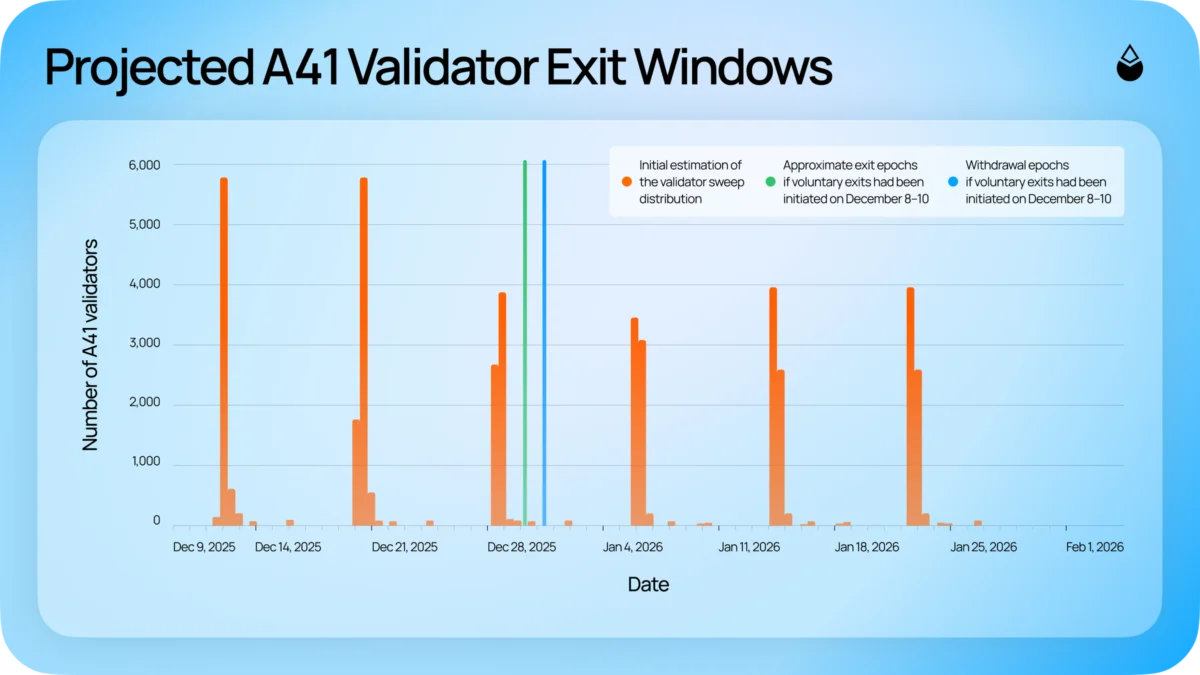
In a significant demonstration of sophisticated operational management within the decentralized finance ecosystem, Lido Finance, a leading liquid staking protocol, successfully facilitated the coordinated exit of 6,918 Ethereum validators, representing over 220,000 ETH, from its platform. This intricate process, undertaken in response to Node Operator A41’s decision to wind down its validator operations, was executed between December 2025 and January 2026, setting a new benchmark for efficient, large-scale validator transitions. The meticulously planned strategy, combining voluntary exits, batch execution, and sweep-cycle-aware timing, drastically minimized staking reward loss, transforming a potentially disruptive event into a case study for best practices in Ethereum staking.
Background: The Evolving Landscape of Ethereum Staking

Ethereum’s transition to a Proof-of-Stake (PoS) consensus mechanism with the Merge, followed by the Shanghai/Capella upgrade enabling withdrawals, fundamentally reshaped the staking landscape. Under PoS, validators are crucial for securing the network by proposing and attesting to new blocks, for which they earn rewards. Lido Finance emerged as a pivotal player in this ecosystem, offering a liquid staking solution that allows users to stake ETH without locking assets or maintaining complex infrastructure. Through a network of professional Node Operators (NOs), Lido aggregates staked ETH, distributing it across diverse validator sets.
The ability for stakers and Node Operators to efficiently exit validators is a cornerstone of a healthy and flexible staking economy. However, large-scale exits present unique challenges due to Ethereum’s built-in queue mechanisms and validator sweep cycles. The exit queue manages the rate at which validators can leave the active set, while the sweep cycle dictates when a validator’s accumulated rewards and principal balance become available for withdrawal. Navigating these parameters optimally is critical to avoid unnecessary "dead time" where validators are no longer earning rewards but have not yet completed their withdrawal, leading to foregone staking revenue.
The Genesis of A41’s Exit and Lido’s Strategic Response

The catalyst for this complex operation came in December 2025, when A41, a valued Lido Curated Node Operator, publicly announced its intention to cease validator operations. As part of this wind-down, A41 also communicated its decision to conclude its participation within the Lido network, requesting to deprecate all associated infrastructure by January 31, 2026. This presented Lido with a tight deadline: manage the graceful exit of nearly 7,000 validators (approximately 2.51% of Lido’s total deposited validators at the time) within a span of just 52 days.
Upon receiving A41’s announcement, Lido contributors swiftly initiated the necessary governance processes. The Lido DAO (Decentralized Autonomous Organization) approved a proposal to set A41’s targetValidatorsCount parameter to 0. This critical parameter directs Lido’s allocation mechanism to cease depositing new ETH to A41 and, crucially, signals that exit requests should be directed towards validators managed by this specific Node Operator. The decision marked the formal commencement of the wind-down protocol.
Navigating Network Realities: Key Parameters and Initial Challenges
Before devising an exit strategy, the Lido Analytics workstream meticulously analyzed several critical Ethereum network parameters that would directly influence the exit timeline and the potential protocol cost associated with validator withdrawals. These included:
- Exit Queue: The queue that validators enter when they signal their intention to exit. Its length dictates the waiting time before a validator is fully "exited" from the active set.
- Activation Queue: The queue for new validators joining the network. While not directly impacting exits, its length affects the overall network churn and the speed at which exited ETH can be re-staked.
- Churn Limit: A protocol-level parameter that caps the number of validators that can enter or exit the active set per epoch, preventing sudden, destabilizing shifts.
- Validator Sweep Cycle: A sequential process where the Ethereum blockchain periodically checks validators, starting from index 0, to identify those eligible for withdrawal. This cycle dictates when a validator’s funds become available after it has exited the active set.
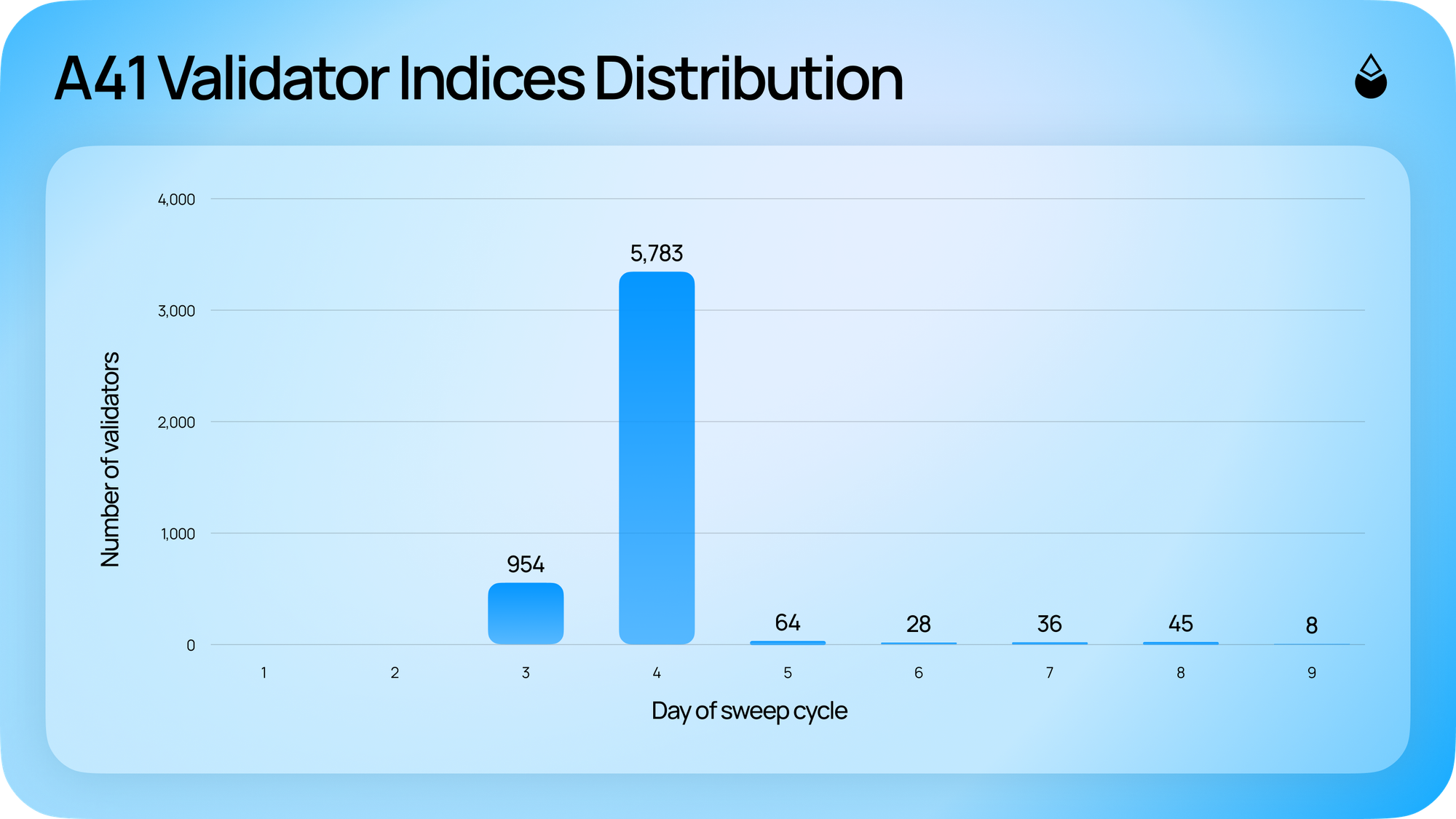
A significant challenge was the distribution of A41’s validators. The majority of the 6,918 validators were clustered within a similar index range. This concentration meant that, without careful planning, a large portion of A41’s validators would enter the sweep pipeline at roughly the same point in the cycle, around the transition from the third to the fourth day of the sweep. Poorly timed exits could result in extended periods where validators were no longer earning rewards but were still waiting to be "skimmed" (processed for withdrawal), leading to substantial reward losses.
Strategic Modeling and Optimization for Minimal Impact
To meet A41’s aggressive wind-down timeline and minimize financial impact on the Lido protocol and its stakers, the Lido Analytics workstream undertook extensive modeling and scenario planning.
Organic Exit Capacity Analysis:
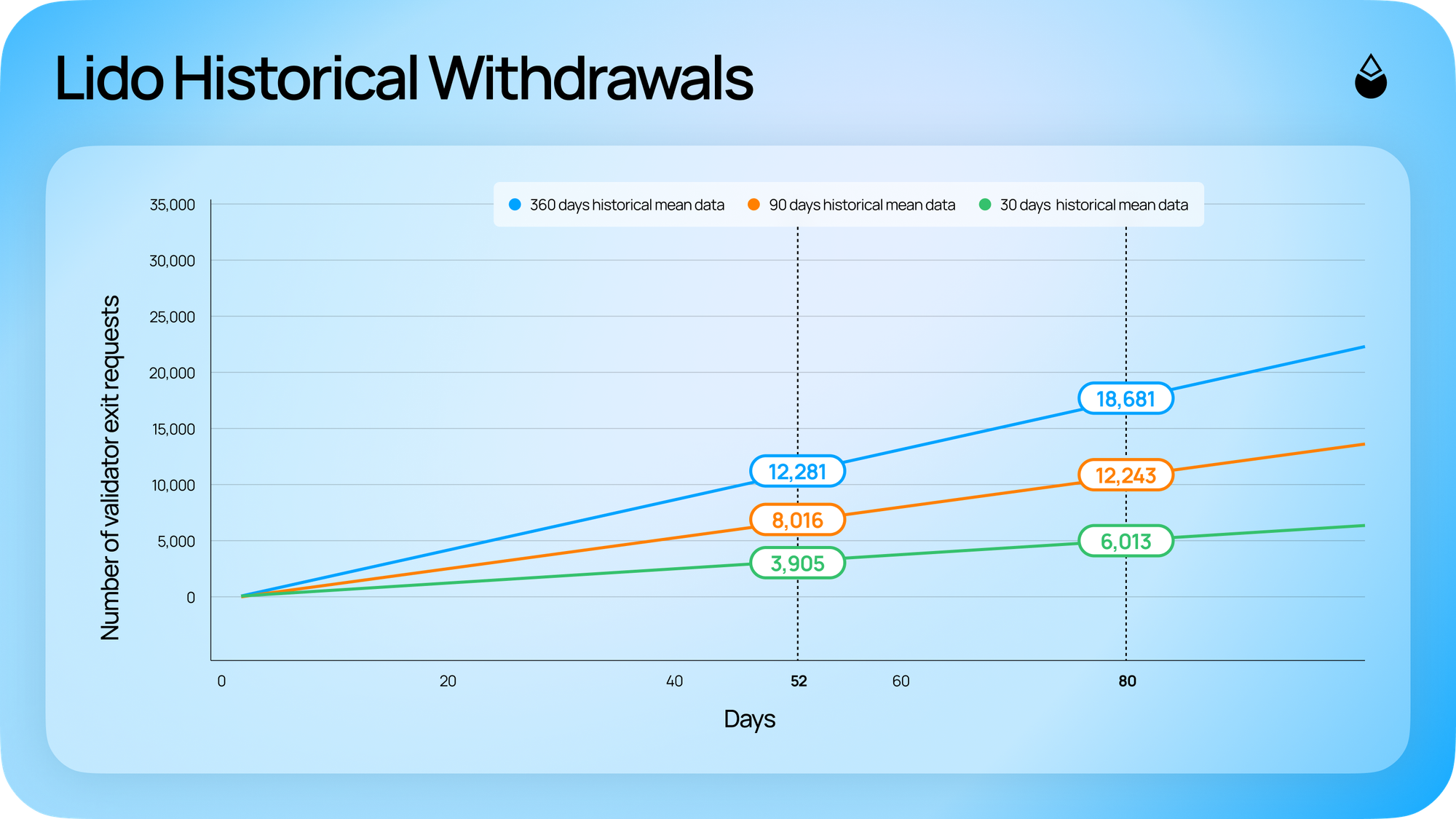
The first step involved evaluating whether A41’s validators could exit organically through user-initiated withdrawals. Analyzing 30-day historical Lido withdrawal data and conducting 1,000 simulations, contributors estimated that an organic exit of the entire A41 validator set would take approximately 80 days. This timeline significantly exceeded the 52-day deadline of January 31, 2026. Longer historical datasets yielded higher projections, but these were deemed less representative of current network conditions. This analysis unequivocally demonstrated that relying solely on organic exits was not a viable solution, necessitating a proactive approach involving voluntary exits.
Optimizing for Reward Preservation:
The core objective became to minimize the time validators spent in a non-earning state between signaling their exit and having their funds processed for withdrawal. A baseline scenario, assuming all A41 validators immediately initiated an exit, projected an estimated missed reward of approximately 78 ETH, or 10.5% of the daily protocol rewards at the time. This substantial figure underscored the need for a highly optimized strategy.
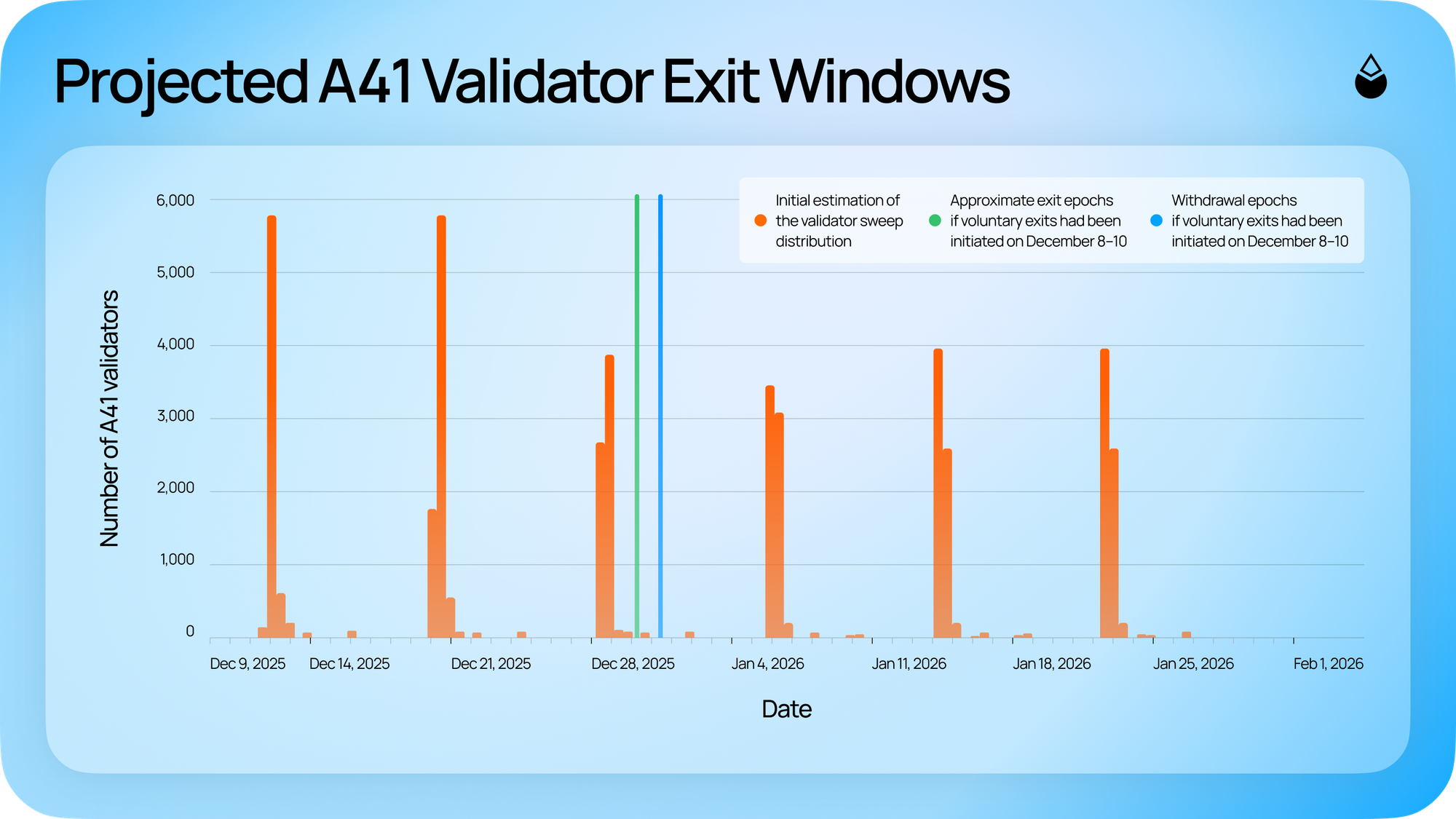
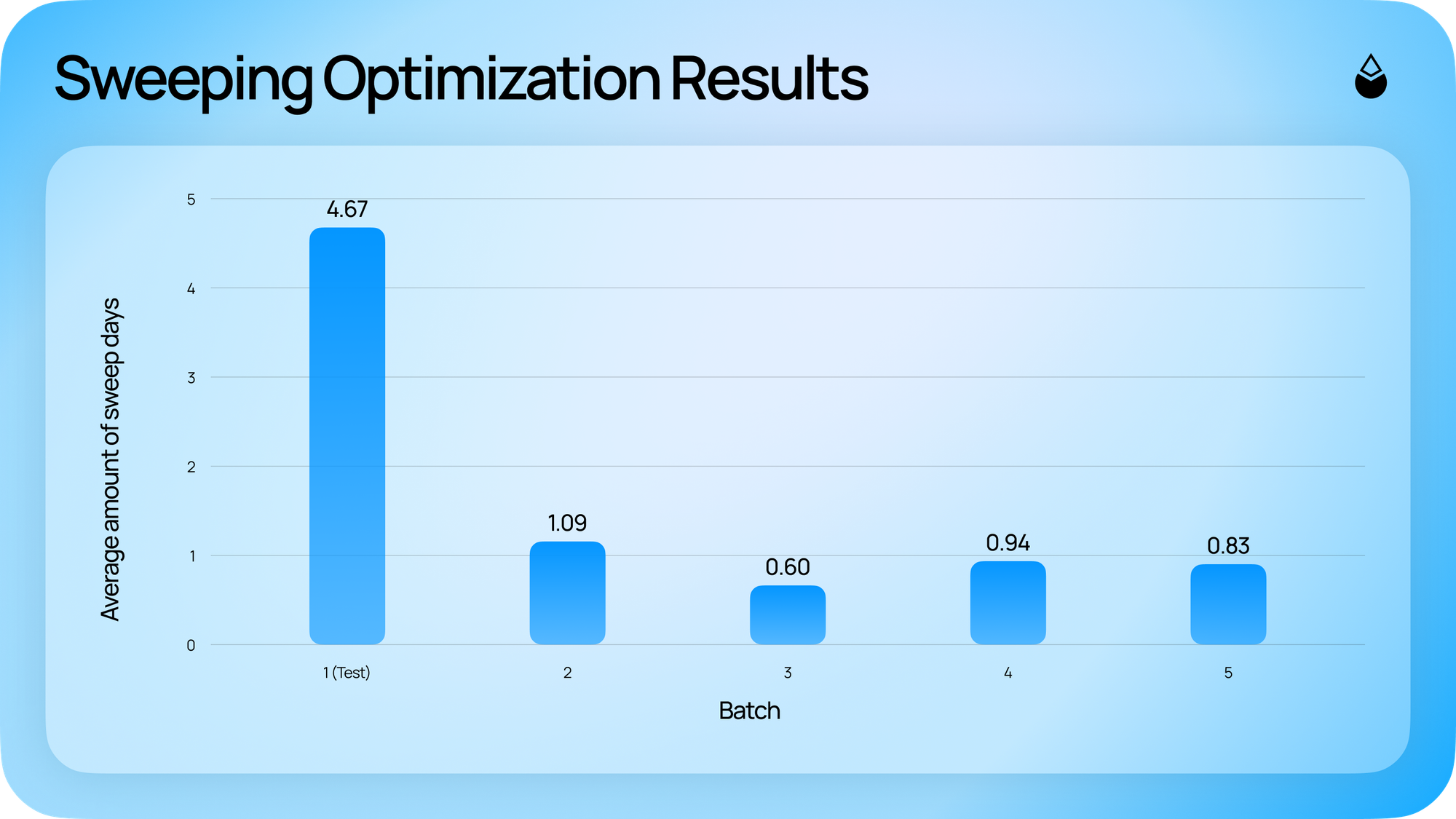
Based on the concentrated validator index distribution and current sweep cycle duration, Lido Analytics contributors modeled a range of potential exit windows. The key optimization objective was to precisely align the timing of voluntary exit requests with the validator sweep cycle, thereby minimizing the delay gap between a validator becoming withdrawable and being processed for skimming. Simulations suggested that if exits could be triggered with predefined timing, the estimated total missed rewards could be drastically reduced to approximately 18 ETH, and the average skimming wait time could fall from around 4.5 days to just 0.8 days.
The Power of Batching and Intelligent Tooling:
Executing nearly 7,000 precisely timed individual exits would have been an immense operational burden, prone to errors. To overcome this, contributors proposed a sophisticated batch-based exit approach. This design introduced operational parameters to strike a balance between timing precision, system safety, and operational simplicity.
To implement this, Analytics contributors developed and deployed a specialized script. This "Exit Scheduling Tooling" was designed to determine the optimal timing for voluntary exits by incorporating several real-time network parameters:
- Current epoch number.
- Specific validator indices.
- Current withdrawal queue length.
- Current activation queue length.
- Validator sweep cycle progress.
A crucial parameter introduced was the skimming acceptance level, set at 0.5 days (12 hours). This threshold allowed the script to identify validators for exit when their projected time between the withdrawable and skimming epochs fell below this limit. This refinement alone was projected to reduce exit losses by approximately 8.6 ETH. The script generated an optimized exit distribution order tailored to A41’s validators, which, after review and adjustment, was exported as a final grouping file for A41 to use.
Execution: A Phased, Coordinated Withdrawal of 200,000+ ETH
A41 implemented its own script to call batch voluntary exits, triggered manually during the defined exit windows provided by Lido Analytics. The entire process was structured in a phased manner, beginning with a critical test batch.
The Test Batch:
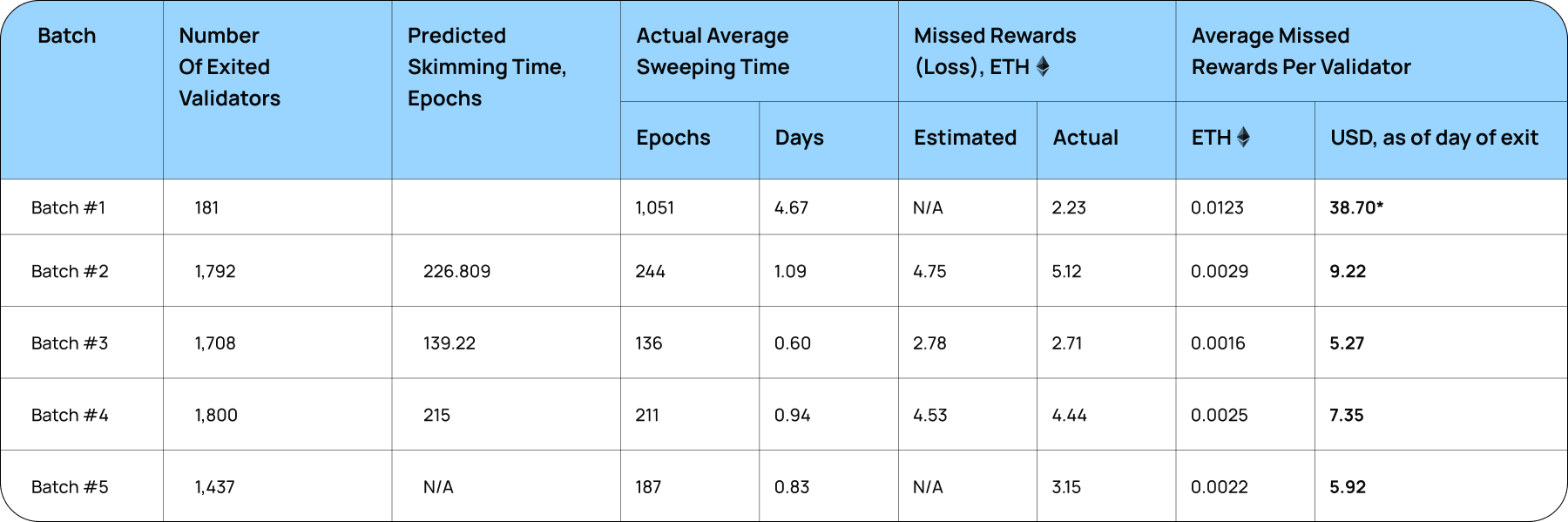
The first batch, consisting of 181 validators, served as a crucial test run to validate the workflow and tooling. It intentionally included validators with highly dispersed indices to rigorously test the script’s ability to handle non-sequential validator sets without increasing operational complexity. The test was successful, with the script processing the diverse set of validators as expected, resulting in a minimal actual missed reward of 2.23 ETH. This successful pilot confirmed the viability of the coordinated strategy.
Coordinated Batch Execution:
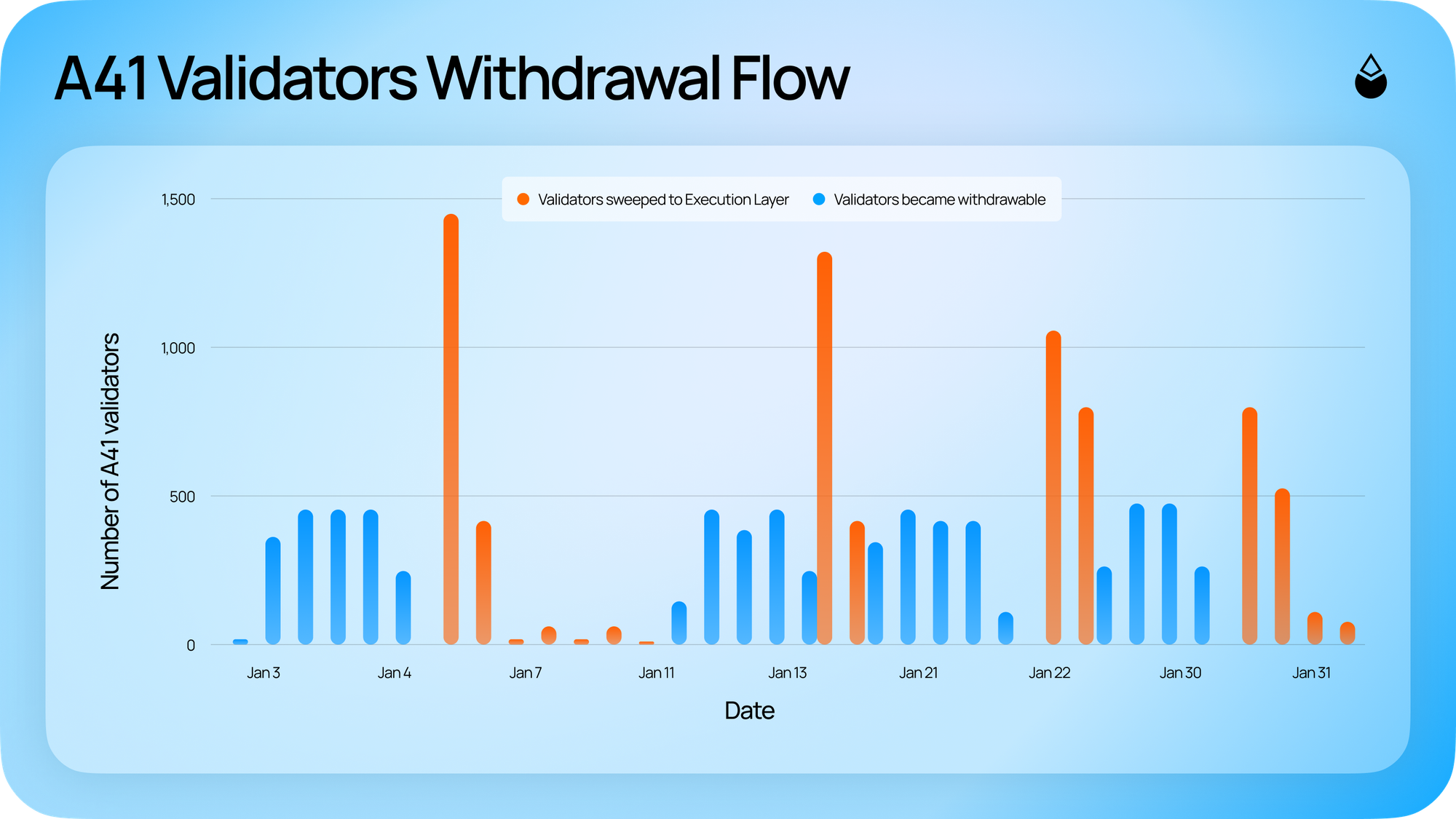
Following the successful test, four additional batches were meticulously planned and executed. The operational workflow involved Lido Analytics providing the precise exit schedule, A41 executing the voluntary exits, and Lido continuously monitoring validator behavior and network conditions throughout the process.
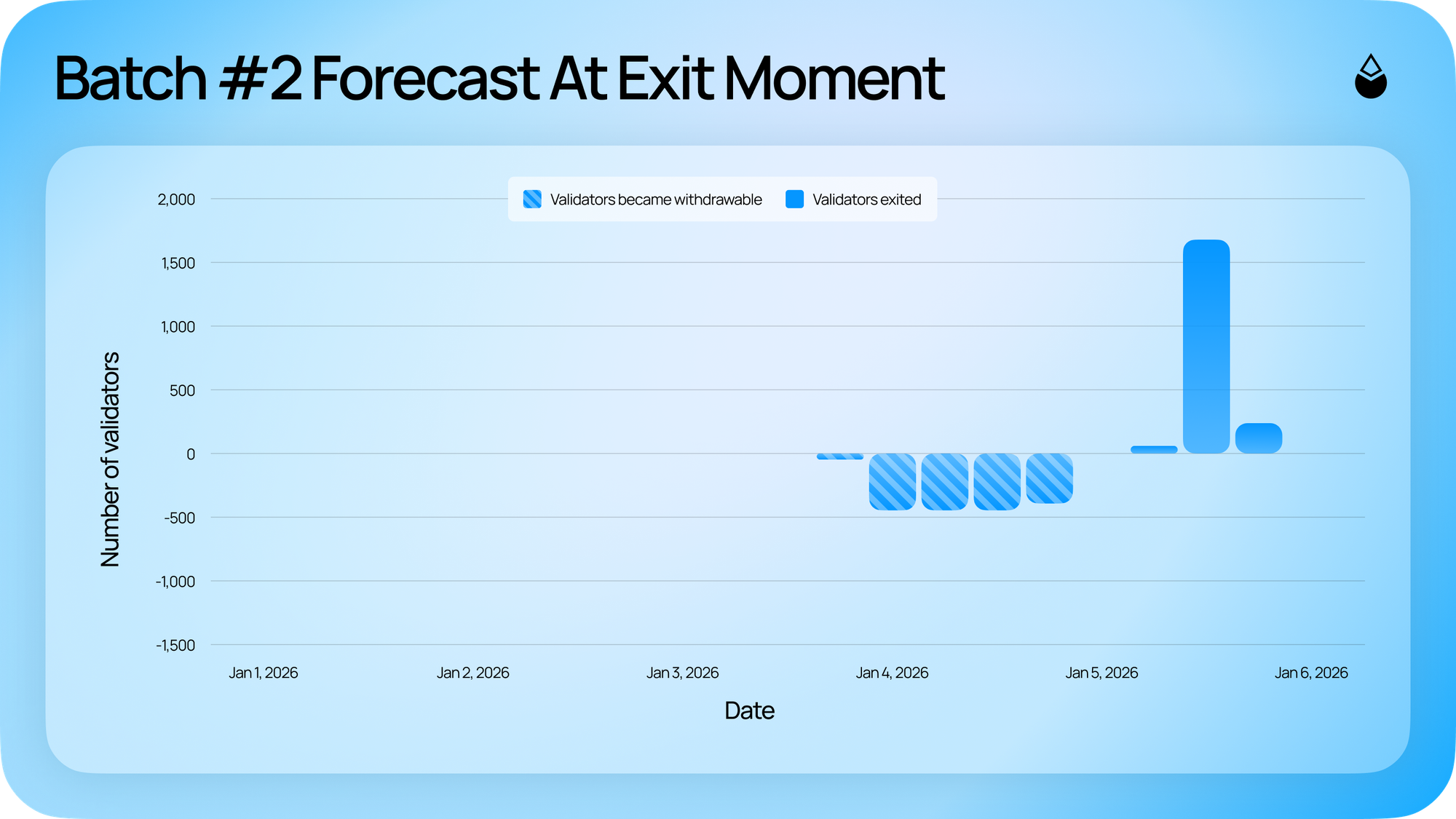
- Batch #2: Comprising 1,792 validators, this batch was executed one day after the test. Analytics contributors had forecasted an average skimming wait time of approximately 226.8 epochs if exits were triggered within the predicted window. Post-execution, the actual skimming time was 244 epochs, demonstrating a strong alignment between the predictive model and real-world network dynamics.
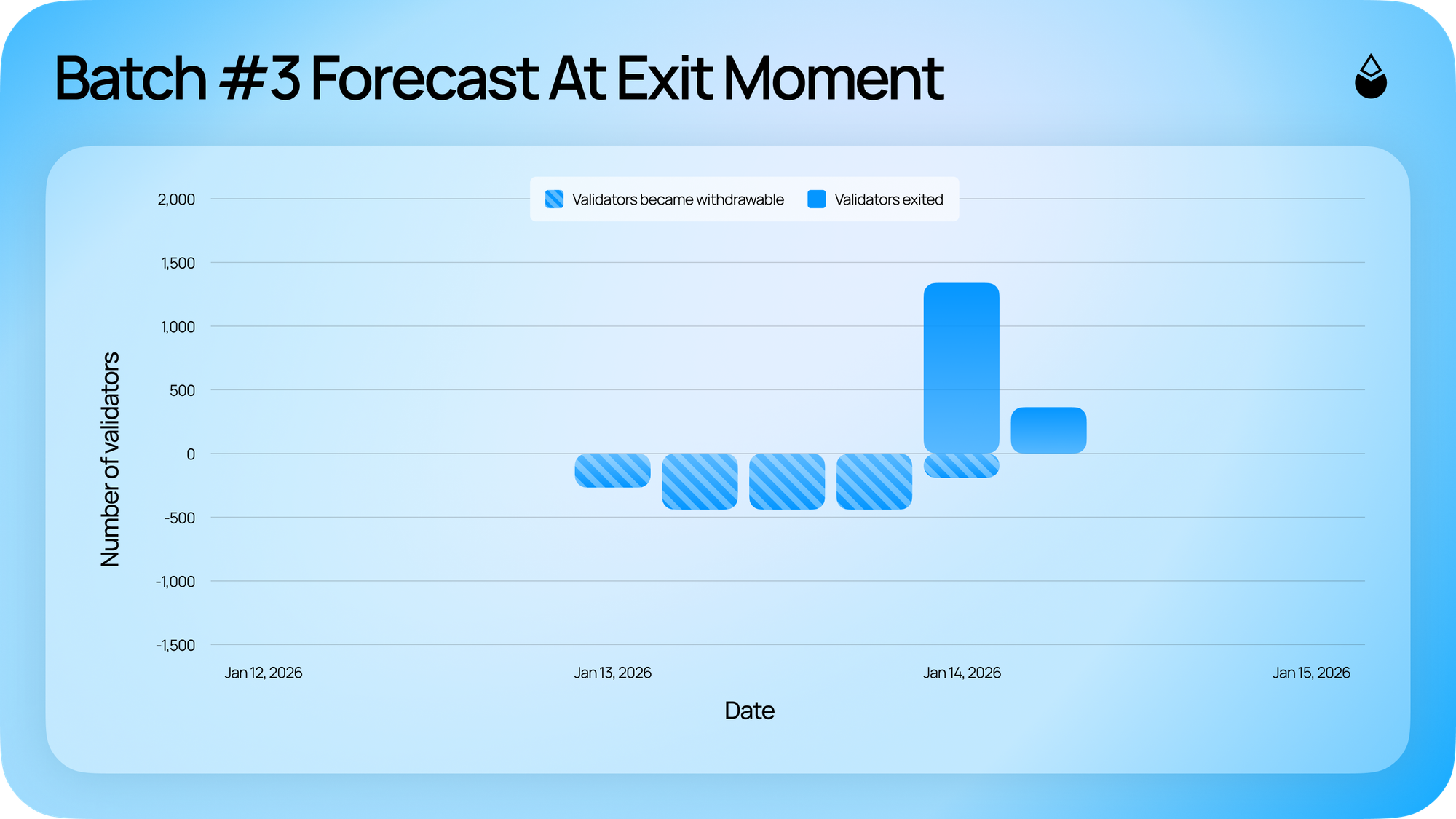
- Batch #3: This batch, including 1,708 validators, was scheduled for mid-January. Modeling estimated 2.78 ETH of missed rewards, maintaining the pattern of low foregone revenue.
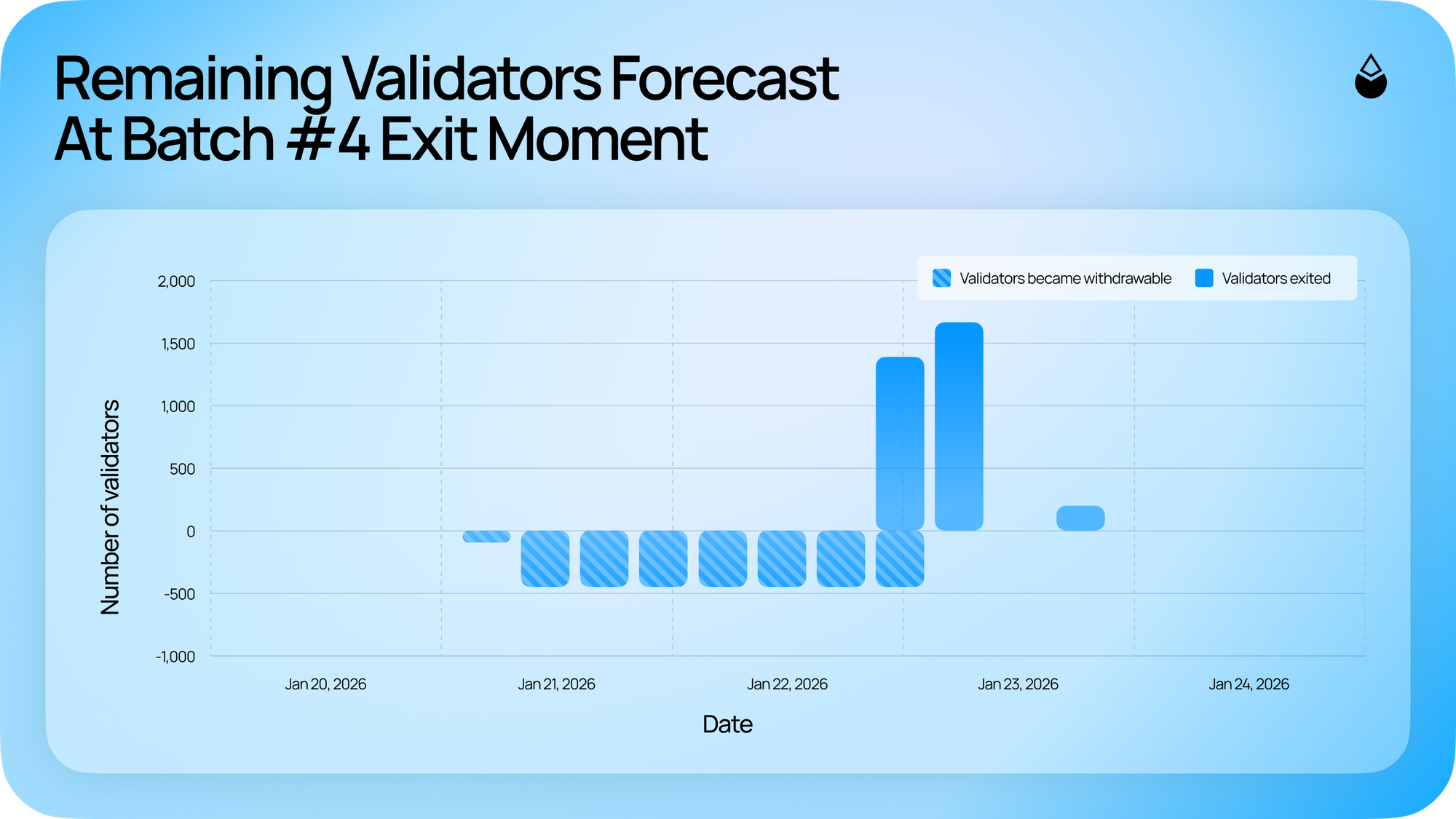
- Batch #4: The largest single batch, consisting of 1,800 validators, was executed with a predicted skimming time of 215 epochs, which closely matched the actual 211 epochs. The resulting missed rewards totaled 4.37 ETH. Notably, earlier simulations had explored exiting all remaining 3,237 validators within this batch. However, that scenario would have resulted in approximately 8.16 ETH in missed rewards. The decision to split the remaining validators into two batches (Batch #4 and #5) proved critical for optimizing the timing further.
- Batch #5: The final batch efficiently processed the remaining validators, further aligning exits with the sweep cycle and reducing its missed rewards to 3.15 ETH.
Overall Results and Efficiency Gains:
The coordinated process achieved its objectives with remarkable precision. Across all batches, the total number of exited validators reached 6,918, representing 221,376 ETH. The total missed rewards amounted to approximately 18 ETH, a staggering 90% reduction from the 78 ETH projected by a baseline immediate exit scenario. The average skimming wait time was successfully reduced from approximately 4.5 days to a mere 0.8 days, translating to significant efficiency gains and preserved staking revenue. This predictable and well-distributed pattern of validator exits ensured A41 could meet its infrastructure deprecation deadline without undue financial impact on the Lido protocol.
Unforeseen Variables: Ethereum’s Dynamic Queue Environment
Despite the sophisticated planning, the dynamic nature of Ethereum’s network queues presented an evolving challenge. While Lido contributors performed extensive analysis using historical queue patterns, the actual conditions during the A41 exit process shifted in ways that were difficult to anticipate with absolute certainty.
At the time the exit plan was initially designed, the Ethereum exit queue was estimated at approximately 18.64 days. However, by the time the actual execution commenced, the exit queue had dramatically decreased to less than one day. This unexpected improvement aided in more accurate prediction of when voluntary exits should be initiated, contributing positively to the skimming efficiency.
Conversely, the activation queue evolved in the opposite direction. When the first test batch was exited, the activation queue had already increased to 18.88 days. As the exit process unfolded, the activation queue continued its significant expansion, reaching an average of approximately 42.8 days before validators could be re-activated. This meant that while the withdrawal process itself was highly efficient, the overall cycle of exiting and potentially re-staking ETH would still incur considerable downtime due to the activation queue.
This outcome underscored a crucial lesson: even highly optimized validator exit strategies remain subject to the broader, often unpredictable, dynamics of network-level parameters. While the coordinated exit process significantly reduced foregone rewards during the withdrawal phase, the unexpected growth of the activation queue partially offset the overall optimization gains in terms of capital redeployment efficiency.
Broader Implications and Future of Staking Management
The successful A41 exit case provides invaluable operational insights and a robust blueprint for managing large-scale validator transitions in the evolving Ethereum ecosystem. While the approach was tailored to specific circumstances and network conditions, its underlying principles are broadly applicable to various stakeholders:
- Node Operators: Can utilize similar strategies to manage their own validator sets more efficiently, whether for routine maintenance, infrastructure upgrades, or full wind-downs.
- Staking Protocols: Protocols like Lido can leverage these methodologies to coordinate exits, manage validator rotations, and ensure the health and responsiveness of their decentralized validator networks.
- Institutional Stakers: Entities with substantial ETH holdings can adopt these data-driven strategies to optimize their staking operations, minimize downtime, and preserve yield during any required validator movements.
The quantifiable difference between organic exit behavior and precisely timed exits is substantial. For example, the case study estimates that for 200 validators, organic exits could result in 2.2 ETH in missed rewards, compared to just 0.5 ETH with timed exits. For 1,000 validators, this difference escalates from 11 ETH to 2.5 ETH. As the number of validators scales into hundreds of thousands of ETH, as seen in the A41 exit, these efficiency gains become profoundly significant, safeguarding millions in potential rewards.
The A41 exit case has yielded several enduring operational insights:
- Exit Timing Matters: The period between an exit request, skimming, and final withdrawal processing is not instantaneous and can materially affect forfeited rewards. Strategic timing is paramount.
- Validator Index Distribution Impacts Exits: Understanding how validators are distributed across the network’s index range is crucial for planning batch scheduling and sequencing, ensuring better alignment with the sweep and withdrawal cycles.
- Batching Improves Operational Efficiency: For large validator sets, attempting individual exits is operationally inefficient and costly. Batch-based strategies offer a practical balance between precise sweep cycle alignment and simplified execution.
- Data-Driven Coordination Improves Outcomes: The success of this exit was rooted in combining historical Ethereum data analysis with continuous, real-time monitoring. This adaptive approach ensures close alignment with network dynamics and minimizes reward leakage.
- Network Queues Remain Unpredictable: Validator queues are dynamic variables. Planning must always incorporate monitoring and flexibility, including buffers for unexpected delays, rather than relying solely on static projections.
Closing Thoughts
The coordinated exit of nearly 7,000 validators by Lido and A41 stands as a testament to the power of careful modeling, intelligent batch scheduling, and real-time operational coordination in decentralized systems. This sophisticated approach significantly reduced reward loss compared to an organic flow, while maintaining predictable validator operations. As Ethereum staking continues its trajectory of scaling and maturation, similar methodologies will become increasingly vital for comprehensive validator lifecycle management, encompassing routine rotations, infrastructure migrations, organic withdrawals, and any future large-scale exit events. This case study not only demonstrates the operational prowess within the Lido ecosystem but also provides a robust framework for enhancing the resilience and efficiency of the broader Ethereum staking landscape.