James Watt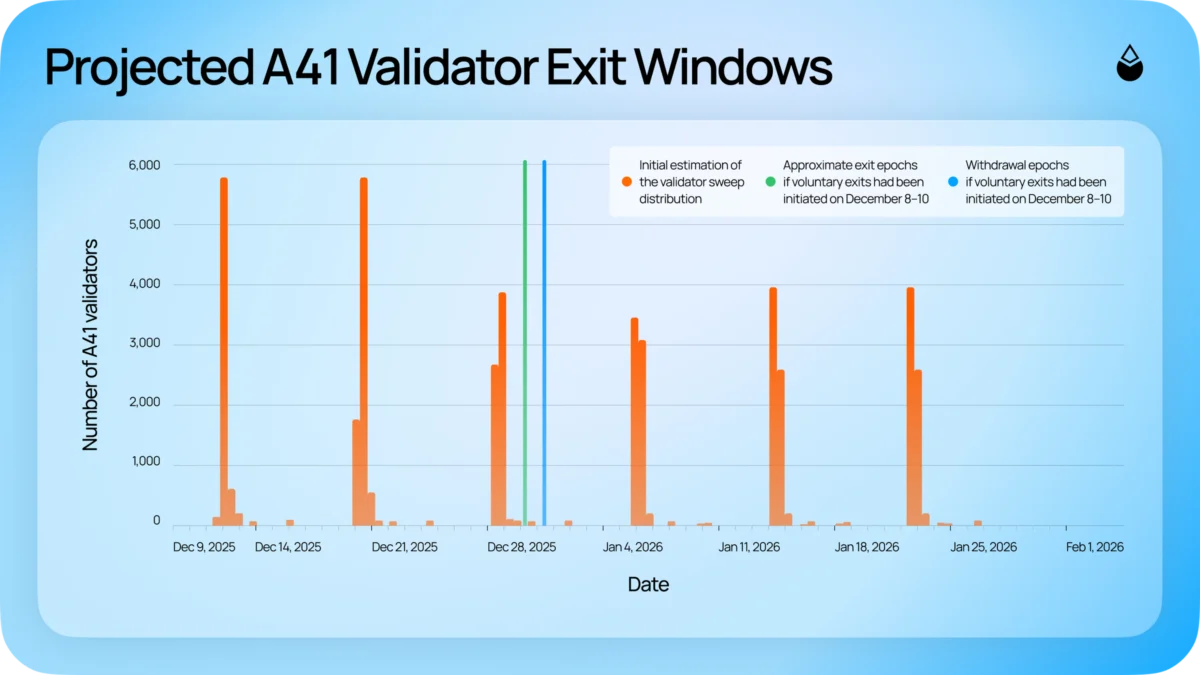
In a landmark demonstration of sophisticated blockchain operations and strategic liquidity management, Lido Finance successfully facilitated the structured wind-down of validator operations for A41, a former Lido Curated Node Operator. The complex process, which commenced in December 2025 and concluded by the ambitious deadline of January 31, 2026, involved the coordinated exit of 6,918 Ethereum validators, representing over 200,000 ETH in staked assets. This meticulously planned withdrawal minimized staking reward loss through a combination of voluntary exits, batch execution, and sweep-cycle-aware timing, setting a new benchmark for large-scale validator transitions within the liquid staking ecosystem.
Background: Understanding Ethereum Staking and Lido’s Role
To fully appreciate the significance of this operation, it is essential to understand the underlying mechanics of Ethereum’s Proof-of-Stake (PoS) consensus mechanism and the role of liquid staking protocols like Lido. Ethereum transitioned to PoS with "The Merge" in September 2022, requiring validators to stake 32 ETH to participate in network security and transaction validation. While this decentralizes network control, it also locks up significant capital. Liquid staking protocols, such as Lido, address this by allowing users to stake any amount of ETH and receive a liquid staking derivative (stETH in Lido’s case), which can be used in other DeFi applications while their original ETH earns staking rewards.

Lido operates through a network of professional Node Operators (NOs) who manage the technical infrastructure for these validators. A41 was one such curated operator, playing a crucial role in maintaining a portion of Lido’s substantial staked ETH pool. The "Shanghai" and "Capella" (Shapella) upgrades, implemented in April 2023, introduced the capability for stakers to withdraw their ETH, adding a new layer of complexity and strategic consideration to validator management. Prior to Shapella, staked ETH was locked indefinitely. The ability to withdraw, while a boon for liquidity, introduced new variables like exit queues and sweep cycles that protocols must navigate carefully to optimize returns and minimize downtime.
The Catalyst: A41’s Strategic Shift and Urgent Deadline
The genesis of this large-scale exit began in December 2025 when A41 formally announced its decision to cease validator operations and conclude its participation as a Lido Curated Node Operator. While A41 provided a reasonable heads-up period, it requested an expedited deprecation of all associated infrastructure by January 31, 2026. This imposed a tight 52-day window for Lido to manage the withdrawal of a substantial portion of its staked assets—specifically, 6,918 active validators, which constituted approximately 2.51% of Lido’s total deposited validators at the time. The challenge was not merely to exit the validators but to do so in a manner that mitigated financial impact, specifically the loss of staking rewards, for the Lido protocol and its stakers.
Lido’s Proactive Response and Governance Mandate
Upon A41’s announcement, Lido contributors immediately activated their robust governance framework to address the situation. A proposal was swiftly put forth to the Lido DAO (Decentralized Autonomous Organization) to set A41’s targetValidatorsCount parameter to 0. This critical parameter dictates the target number of validators to be deposited to a specific Node Operator; a value of 0 explicitly signals the allocation mechanism to direct exit requests to validators managed by that NO. The DAO’s approval of this measure provided the formal mandate for the Lido Analytics workstream to devise and execute a comprehensive exit strategy.

The urgency of A41’s timeline, coupled with the sheer volume of validators, necessitated an innovative approach beyond standard operational procedures. The Lido Analytics team, leveraging their deep understanding of Ethereum’s network dynamics, began modeling various exit scenarios to identify the most efficient path.
Navigating Withdrawal Mechanics: Key Network Parameters
Planning such a significant withdrawal required a meticulous understanding of several dynamic Ethereum network parameters, which directly influence the timeline and cost associated with validator exits:
- Exit Queue: This refers to the number of validators that have signaled their intent to exit the network but are awaiting processing. The Ethereum protocol limits the rate at which validators can exit, meaning a large number of simultaneous exit requests can lead to significant queue times.
- Activation Queue: Conversely, this queue holds new validators waiting to join the network. Its length is crucial as it impacts the time it takes for new validators to become active, influencing the overall staking capacity and potential re-deployment strategies.
- Validator Skimming Time: After a validator signals an exit and clears the exit queue, its balance needs to be "skimmed" or processed for withdrawal. This process is governed by the validator sweep cycle.
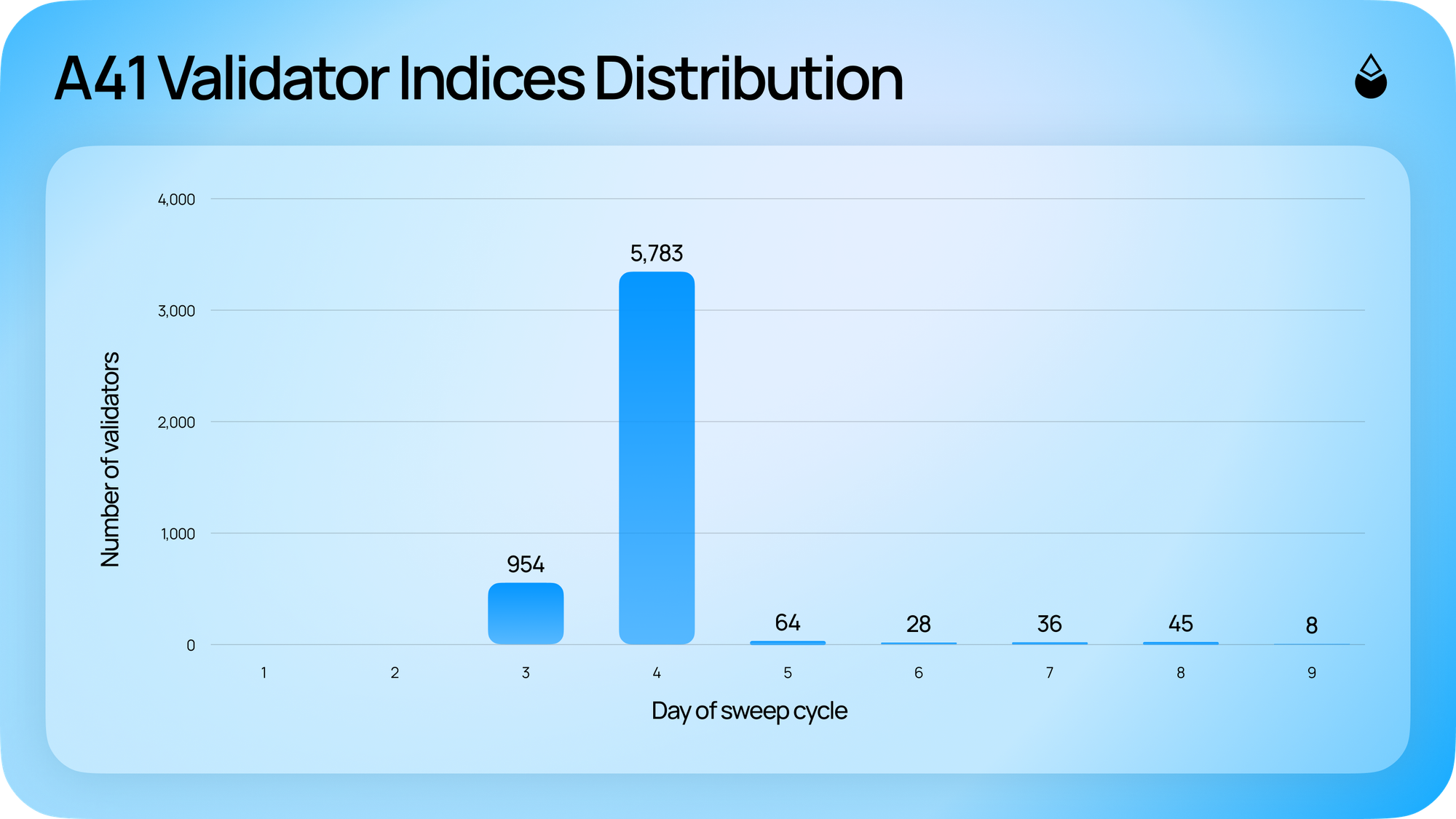
- Validator Sweep Cycle: Ethereum’s blockchain sweeps through the entire validator set sequentially, starting from index 0. In each slot (12 seconds), it identifies and processes up to 16 validators eligible for either partial or full withdrawal. The position of a validator’s index within this cycle significantly determines when its balance will be processed.
At the time of planning, the A41 validators were notably clustered within a similar index range. This concentration meant that a significant portion would become eligible for withdrawal around the same point in the sweep cycle, specifically around the transition from the third to the fourth day of the cycle. This insight was pivotal in shaping the optimized exit strategy.
The Challenge: 7,000 Validators and a Tight Deadline
The scale of A41’s operations within Lido was substantial. With 6,918 active validators, representing over 200,000 ETH, the wind-down was far from a trivial undertaking. The primary challenge was the tight deadline of January 31, 2026.
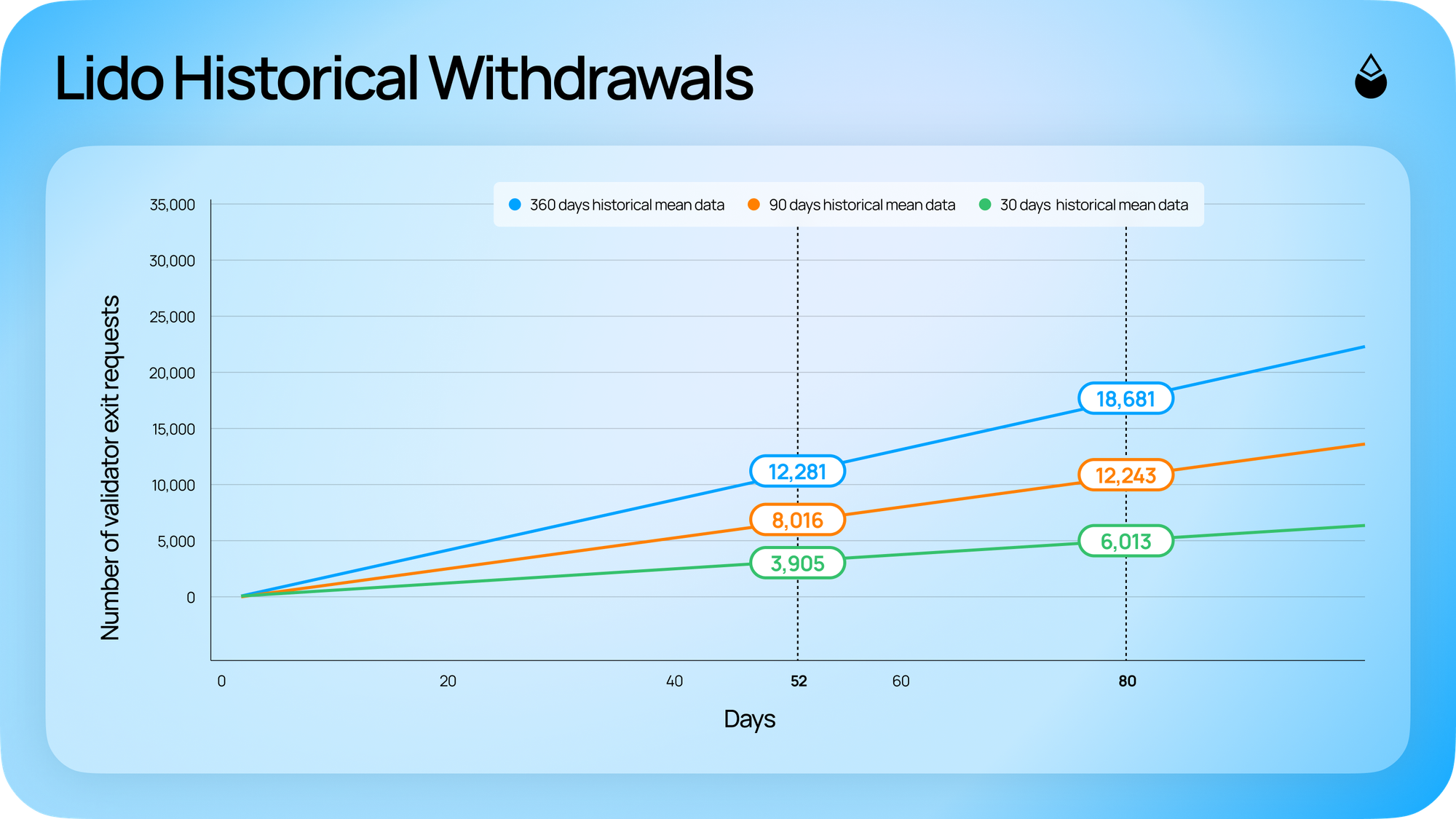
Lido Analytics contributors initially assessed the feasibility of an "organic exit" — relying solely on user-initiated withdrawals to gradually reduce A41’s validator count. Simulations based on 30-day historical withdrawal data and 1,000 statistical runs indicated that an organic wind-down of the entire A41 set would take approximately 80 days. This timeline drastically exceeded the 52-day deadline. Longer historical datasets offered higher projections but were deemed less representative of current market dynamics. It became unequivocally clear that organic exits alone would not suffice, necessitating a proactive, voluntary exit strategy. The concentrated index distribution of A41’s validators further underscored the need for precise timing to avoid prolonged waiting periods within the sweep cycle.
Modeling an Optimal Exit Strategy: Minimizing Reward Loss
With organic exits ruled out, the Lido Analytics team pivoted to designing an optimized voluntary exit strategy. A baseline scenario, where all A41 validators would immediately signal an exit, was modeled. While this approach would likely have completed most exits by early January, it carried an estimated cost of approximately 78 ETH in missed rewards, equating to roughly 10.5% of Lido’s daily protocol rewards at that time. This substantial leakage was deemed unacceptable.
The core objective of the optimization strategy was to minimize the time between a validator becoming "withdrawable" (clearing the exit queue) and its actual "sweeping" by the blockchain for withdrawal processing. Poorly timed exits could significantly extend this waiting period, directly translating into foregone staking rewards. By carefully aligning the expected withdrawal timing with the validator sweep cycles, the team aimed to drastically reduce this delay.
Extensive simulations suggested that precise, predefined timing for voluntary exits could reduce the average skimming wait time from an estimated 4.5 days to a mere 0.8 days. This translated into a projected reduction in missed rewards from 78 ETH (under immediate exit) to approximately 16 ETH, a substantial 79% improvement.
Precision Engineering: The Batch Exit Design
While individual, precisely timed exits offered optimal reward preservation, executing nearly 7,000 such exits manually would be operationally cumbersome and prone to error. To balance precision with operational efficiency, the contributors proposed a coordinated batch exit approach. This design incorporated several operational parameters:
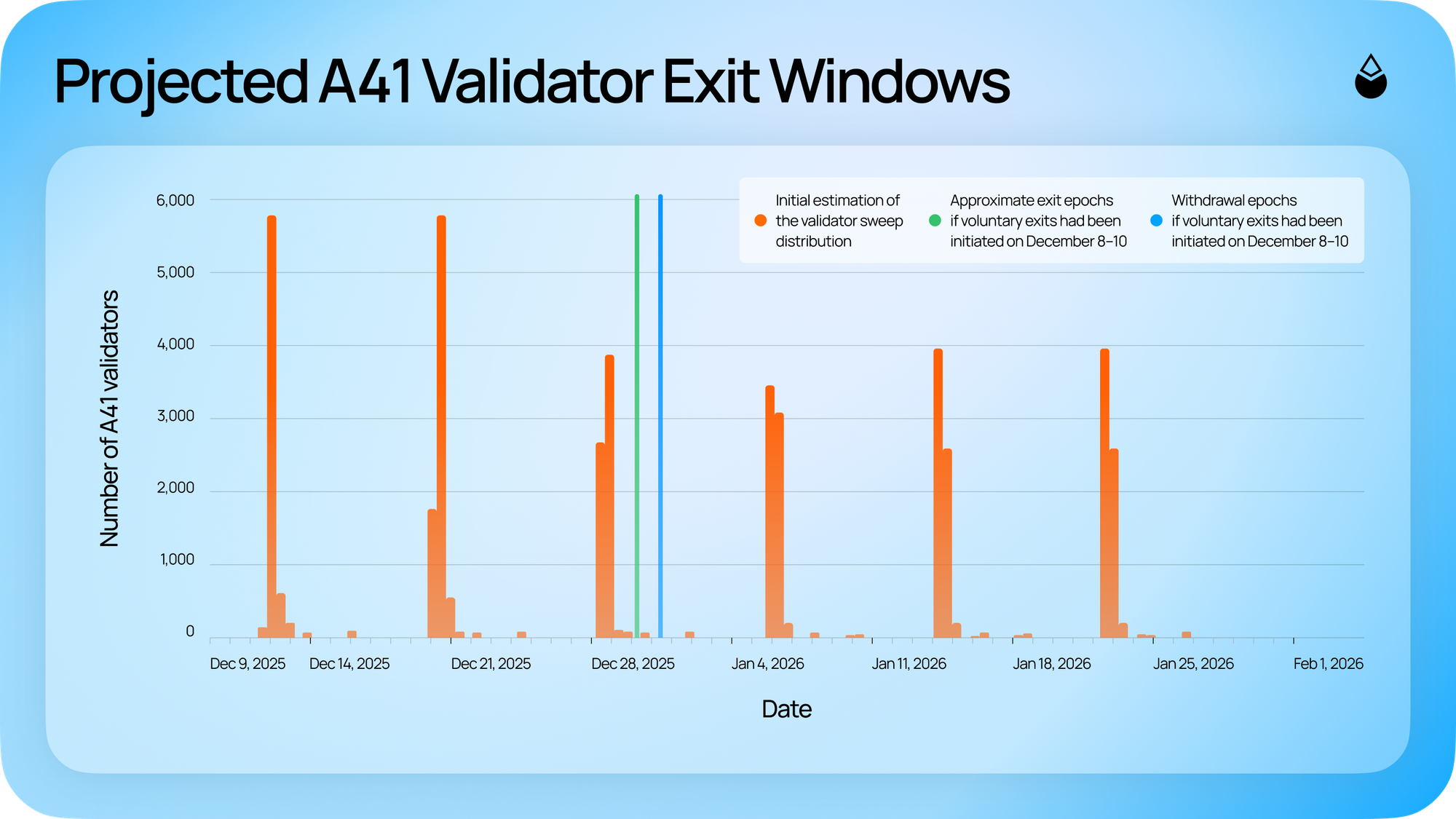
- Fixed Batch Size: To ensure manageable execution and monitoring.
- Defined Exit Windows: Specific timeframes during which batches would be triggered, aligning with optimal sweep cycle conditions.
- Predefined Exit Order: A prioritized sequence for validators within each batch, considering their index distribution.
To implement this sophisticated batching, Analytics contributors developed a specialized script designed to determine the optimal timing for voluntary exits. This tooling integrated real-time network parameters, including the current validator count, the length of the exit queue, and the dynamic position of the sweep pointer. A crucial innovation was the introduction of a "skimming acceptance level" of 0.5 days (12 hours). This parameter allowed the script to identify validators for exit only when their projected time between becoming withdrawable and being skimmed fell below this threshold, further reducing projected exit losses by an estimated 8.6 ETH. The script generated a tailored exit distribution order for A41, which, after review and adjustment, was exported as a final grouping file, empowering A41 to execute the exits while continuously monitoring validator behavior.
Execution in Action: The Phased Withdrawal of 200,000+ ETH
With the strategy meticulously planned and tooling developed, A41 proceeded with the phased execution using its own custom script to call batch voluntary exits, triggered manually during the defined exit windows. A critical initial step was a test batch to validate the entire workflow.
Test Batch (Batch #1):
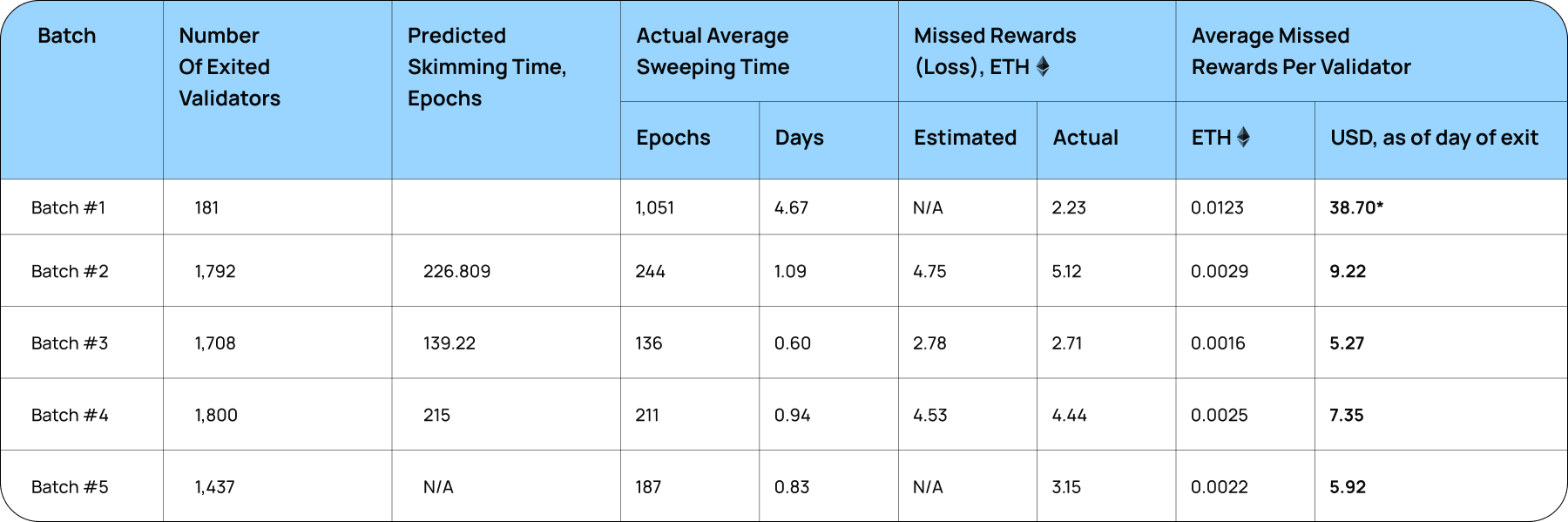
The first batch comprised 181 validators, intentionally selected with highly dispersed indices to rigorously test the script’s ability to handle non-sequential sets. The test proved successful, with the script processing the diverse validator set as expected. The actual missed rewards for this batch amounted to a minimal 2.23 ETH, confirming the efficacy of the methodology.
Coordinated Batch Execution (Batches #2-5):
Following the successful test, four additional batches were planned and executed in a coordinated fashion:
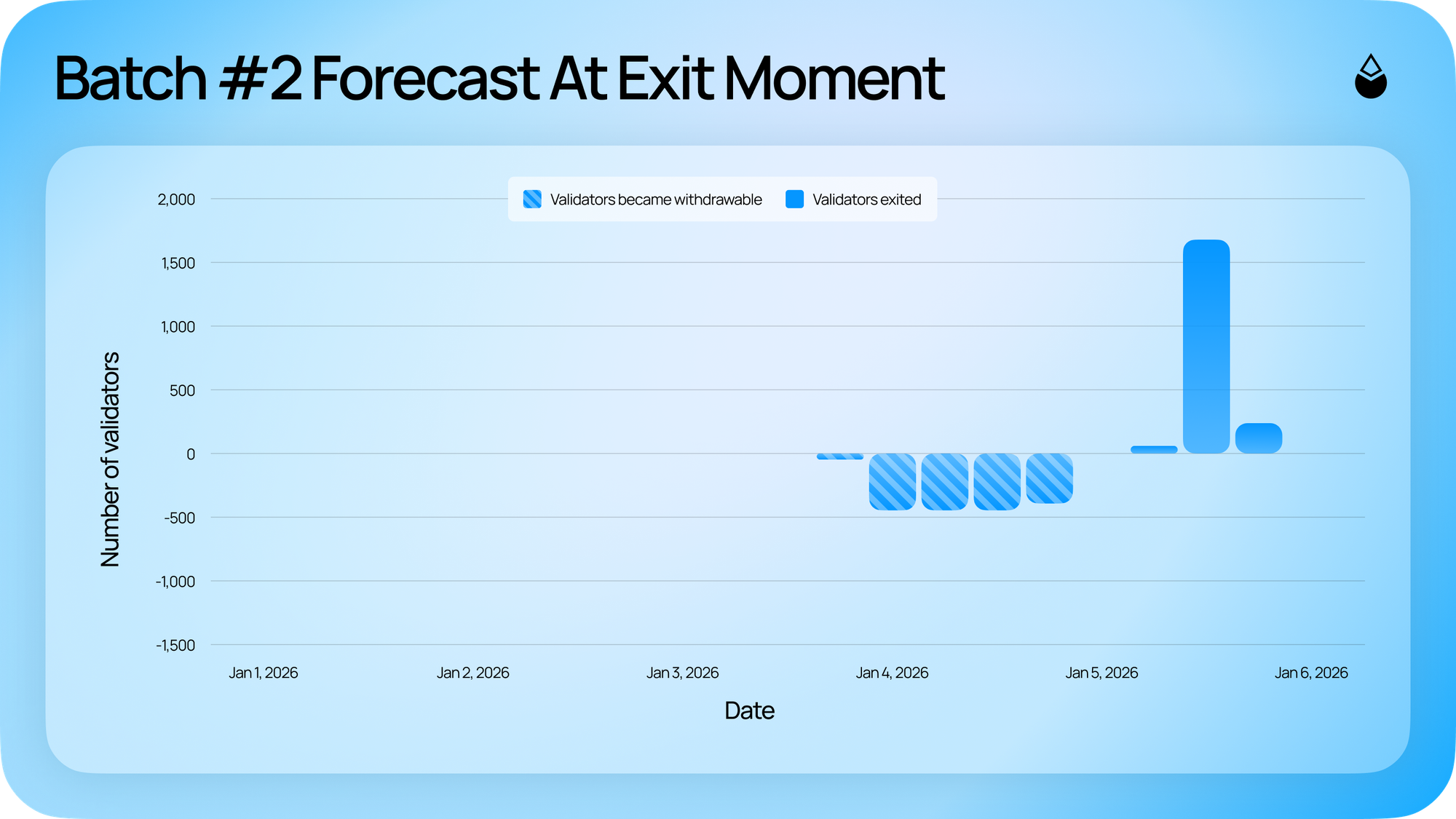
- Batch #2: Consisting of 1,792 validators, this batch was executed one day after the test. Analytics contributors had forecasted an average skimming wait time of approximately 226.8 epochs. The actual observed skimming time was 244 epochs, demonstrating a strong alignment between the predictive model and real-world network conditions.
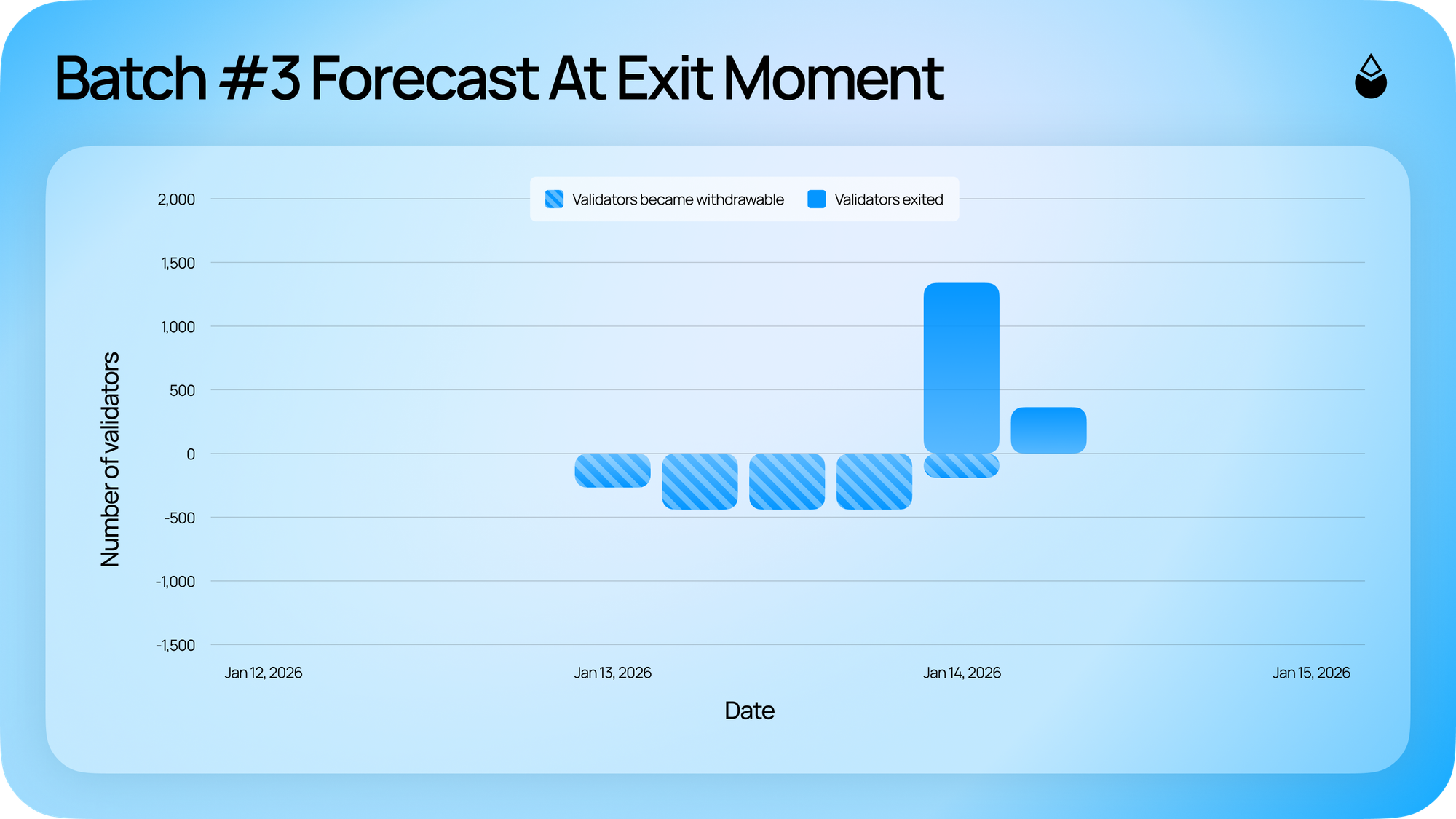
- Batch #3: Scheduled for mid-January, this batch included 1,708 validators. Modeling estimated 2.78 ETH in missed rewards, reflecting the continued precision of the timing.
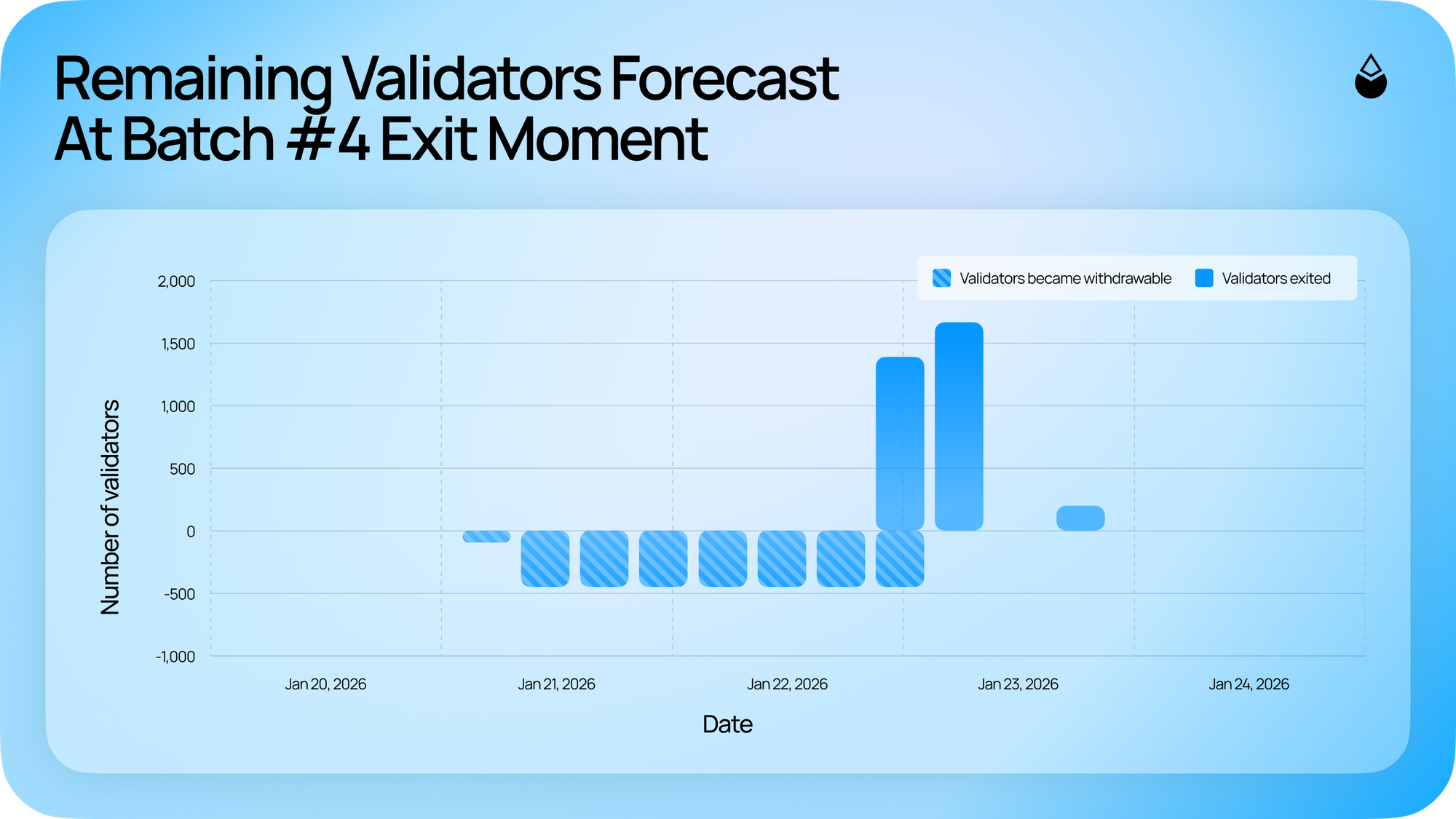
- Batch #4: The largest single batch, comprising 1,800 validators. The predicted skimming time was 215 epochs, with actual execution showing 211 epochs, resulting in missed rewards totaling 4.37 ETH. Initially, a scenario considered exiting all remaining 3,237 validators in this batch, but simulations indicated this would lead to higher missed rewards (around 8.16 ETH).
- Batch #5: To optimize further, the remaining validators were split, creating a final Batch #5. This allowed for even closer alignment with the sweep cycle, reducing the final batch’s missed rewards to 3.15 ETH.
The coordinated execution resulted in a remarkably predictable and well-distributed pattern of validator exits over the intended timeframe. By strategically aligning validator exits with the skimming pointer and prevailing exit queue conditions, Lido contributors, in conjunction with the A41 team, achieved a drastic reduction in rewards leakage. The key results were outstanding:
- A staggering 90% reduction in foregone rewards compared to an immediate, unoptimized exit strategy.
- A 79% reduction in foregone rewards compared to an organic exit scenario.
- The average skimming wait time was reduced from an estimated 4.5 days to a mere 0.8 days.
- The total rewards foregone during the entire exit process amounted to just 16.63 ETH, a fraction of the 78 ETH initially projected for a naive immediate exit.
Unforeseen Variables: Ethereum Queue Dynamics
Despite the remarkable success of the coordinated strategy, the operation underscored the inherent unpredictability of certain Ethereum network parameters. One of the fundamental challenges in planning large-scale exits is the dynamic nature of validator queues. While historical data provides valuable insights, queue conditions can shift rapidly and unpredictably.
When the exit plan was initially designed in December 2025, the Ethereum exit queue was approximately 18.64 days. However, by the time the actual execution commenced in early 2026, the exit queue had significantly decreased to less than one day. This unexpected reduction allowed for even more accurate prediction of optimal voluntary exit initiation times, contributing positively to the efficiency gains.
Conversely, the activation queue evolved in the opposite direction. At the time of the first test batch, the activation queue had already increased to 18.88 days. As the exit process unfolded, the activation queue continued to expand dramatically, eventually reaching an average of approximately 42.8 days before validators could be re-activated.
This dynamic shift in queue times highlighted a critical lesson: even highly optimized validator exit strategies remain subject to the broader, often unpredictable, dynamics of network-level parameters. While the coordinated strategy drastically improved withdrawal efficiency by reducing skimming wait times, these gains were ultimately offset by the unforeseen, significant growth of the activation queue. Nevertheless, the foregone rewards during the withdrawal itself were still substantially reduced, affirming the value of the strategic approach.
Broader Implications for Liquid Staking and DeFi
The successful execution of A41’s exit provides profound operational insights and sets a precedent for the entire liquid staking and decentralized finance (DeFi) ecosystem. The case study demonstrates a substantial difference in foregone staking rewards between unmanaged organic exits and a precisely scheduled strategy. While the specific approach was tailored to A41’s situation and prevailing network conditions, the underlying principles are broadly applicable to various scenarios:
- Node Operator Rotations: Efficiently transitioning validators between operators to maintain decentralization and performance.
- Infrastructure Migrations: Smoothly moving validator infrastructure without significant downtime or reward loss.
- Large-Scale Organic Withdrawals: Managing periods of increased user withdrawals with minimal impact.
- Strategic Rebalancing: Optimizing validator distribution across operators or regions.
For instance, projections indicate that for a hypothetical 10,000 ETH withdrawal, an organic exit could incur around 12 ETH in missed rewards, whereas a precisely timed exit would reduce this to a mere 2 ETH. As the scale of staked ETH grows into hundreds of thousands or even millions, as seen in the A41 case (200,000+ ETH), these efficiency gains become immensely significant, translating into millions of dollars in preserved value.
Key Operational Takeaways
The A41 exit case offers several critical operational insights for all participants in the Ethereum staking ecosystem:
- Exit Timing is Paramount: Validator exits are not instantaneous. The precise timing between an exit request, its clearing of the queue, and the subsequent skimming and withdrawal processing can materially affect the amount of rewards forfeited. Strategic timing can drastically reduce this leakage.
- Validator Index Distribution Influences Strategy: Understanding how validator indices are clustered is vital for planning batch scheduling and exit sequencing. Aligning exits with the sweep cycle is key to minimizing waiting times.
- Batching Enhances Operational Efficiency: For a large volume of validators, attempting to trigger individual exits is impractical and inefficient. Batch-based strategies offer a scalable solution that balances sweep cycle alignment with operational simplicity and safety.
- Data-Driven Coordination Improves Outcomes: Combining historical Ethereum network data analysis with continuous, real-time monitoring allows protocols to remain closely aligned with dynamic network conditions, significantly minimizing lost rewards.
- Network Queues Remain Dynamic: Ethereum’s validator activation and exit queues are highly dynamic variables. Any planning must incorporate continuous monitoring, flexibility, and buffers for unexpected delays, rather than relying solely on static projections.
Looking Ahead: Enhancing Protocol Resilience
The coordinated exit of nearly 7,000 validators by Lido and A41 stands as a testament to the power of careful modeling, strategic batch scheduling, and real-time operational coordination. This sophisticated approach not only significantly reduced reward loss compared to an unmanaged flow but also maintained predictable validator operations throughout a period of considerable transition.
As Ethereum staking continues its trajectory of growth and maturation, similar advanced approaches to validator lifecycle management will become increasingly relevant. The A41 case provides a robust blueprint for future challenges, including large-scale validator rotations, critical infrastructure migrations, and the efficient handling of organic withdrawals. This successful endeavor underscores Lido’s commitment to operational excellence and its proactive role in fostering a resilient, efficient, and robust liquid staking ecosystem for the benefit of all Ethereum stakers.