James Watt
July 09, 2026 – Lido V3 has announced a significant suite of updates to its innovative stVaults primitive, a modular staking infrastructure designed to offer unparalleled flexibility, including optional stETH minting. These enhancements, detailed today, span across new product integrations, critical feature rollouts for the stVaults Web UI, and comprehensive custodian guides, collectively aiming to refine the staking experience for a diverse range of participants from individual stakers to institutional entities. The advancements underscore Lido’s commitment to fostering a robust, secure, and user-friendly decentralized finance ecosystem.
Understanding the Evolution of Lido and stVaults
Lido Finance has long stood as a cornerstone of the liquid staking landscape on Ethereum, enabling users to stake their ETH while retaining liquidity through its stETH token. This mechanism has been pivotal in democratizing access to Ethereum staking rewards and enhancing capital efficiency within the DeFi ecosystem. However, as the demand for institutional-grade staking solutions grew, alongside a desire for greater customization and control, Lido recognized the need for a more modular approach. This led to the development of Lido V3 and its core primitive, stVaults.
stVaults represent a paradigm shift, offering a highly customizable framework that allows users to operate their own staking infrastructure with the added benefit of optional stETH minting. This design not only caters to institutions requiring specific operational setups and regulatory compliance but also empowers sophisticated individual stakers who seek enhanced control over their staking positions. The modularity of stVaults aims to decentralize the operational layer of liquid staking further, distributing control and responsibility more broadly across the network.
Navigating the Ethereum Staking Queue: A Persistent Challenge
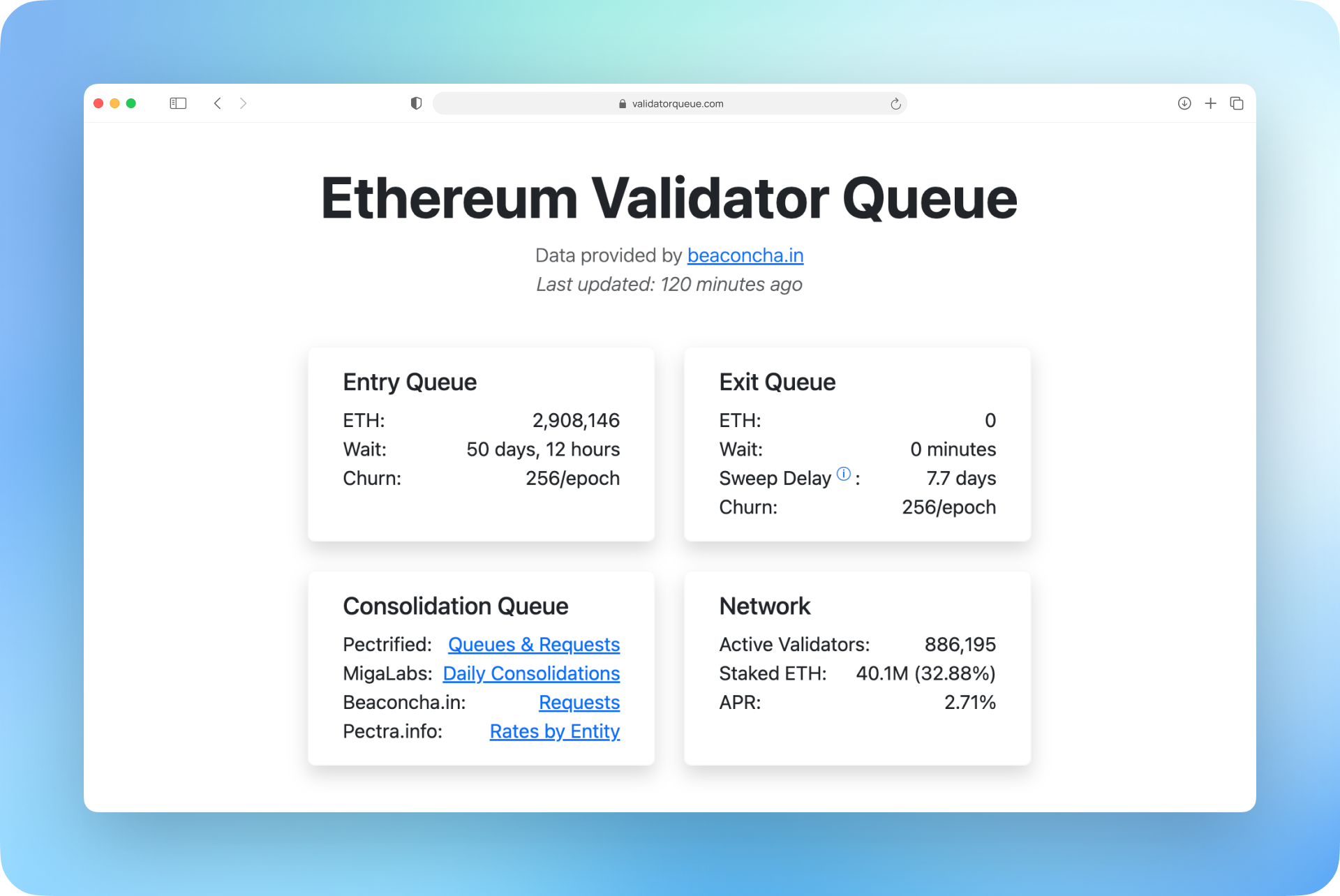
The health and activity of the Ethereum network’s staking mechanism are often reflected in the validator entry queue. This queue dictates the waiting period for new validators to become active and begin earning rewards. Throughout May 2026, the Ethereum validator entry queue experienced a notable surge, extending beyond 60 days. This indicated a strong and sustained interest in staking ETH, potentially driven by market conditions, anticipated network upgrades, or a general increase in institutional adoption. While a long queue signifies network demand, it also presents a challenge for new stakers, as their capital remains locked without earning rewards for an extended period.
By June, the situation saw a slight easing, with the average entry queue time reducing to approximately 50 days. This fluctuation is typical for the Ethereum network, influenced by factors such as the rate of new validator deposits, existing validator exits, and network capacity. For stakers, especially those with substantial capital, such delays can translate into significant opportunity costs. This context highlights the critical value proposition of solutions designed to mitigate these waiting times.
Strategic Migration: Validator Consolidation for Efficiency
In response to the persistent entry queue, Lido V3 has actively promoted "validator consolidation" as a highly capital-efficient strategy for existing validators looking to migrate to stVaults. This method allows source validators to continue accruing rewards without interruption throughout the migration process. Crucially, post-consolidation, stakers gain immediate access to stETH. This is a game-changer, as stETH unlocks a myriad of benefits including enhanced DeFi composability, the ability to leverage staking rewards across various decentralized applications, and provides essential liquidity for large staking positions that might otherwise remain illiquid during the queue period.
Industry analysts suggest that validator consolidation offers a dual advantage: it bypasses the economic friction of the entry queue and simultaneously integrates existing staked ETH into the liquid staking ecosystem, offering greater utility and flexibility. A key incentive for adoption has been the extension of the stVaults infrastructure fee waiver through the end of August. This waiver, representing a significant cost saving for early adopters and large-scale migrators, serves as a strong financial impetus for entities considering the transition to stVaults, reinforcing Lido’s commitment to facilitating a smooth and cost-effective migration path.
Expanding the Ecosystem: The stVaults Products Overview Hub
The growth of the stVaults ecosystem is visibly championed by the expanding stVaults Products Overview Hub. This dedicated platform serves as a central repository showcasing a burgeoning array of products and use-cases built directly on the stVaults infrastructure. The hub’s continuous expansion signals a vibrant developer community and a clear demonstration of the modularity and versatility inherent in the stVaults design.
The increasing number of featured products on the hub reflects the innovative spirit within the Lido community and the broader DeFi landscape. These products range from specialized institutional staking services to novel DeFi protocols leveraging the unique properties of stVaults. Lido representatives have emphasized that the hub is not merely a directory but a testament to the collaborative ethos of the ecosystem, inviting new vault builders and innovators to submit their projects for inclusion. This open invitation aims to further diversify the applications of stVaults, ensuring that the platform evolves to meet the dynamic needs of its users and the market.
Enhancing User Experience: Key Upgrades to the stVaults Web UI
A core focus of the recent updates has been the refinement of the stVaults Web UI, transforming it into a more intuitive, secure, and feature-rich interface for vault builders and owners. These enhancements are designed to simplify the setup, monitoring, and management of stVaults, removing technical barriers and improving operational efficiency.
One of the most critical additions is the implementation of anti-scam protections for stakers. In an environment where digital asset security is paramount, the Web UI now incorporates advanced mechanisms to warn stakers about potentially risky transactions. Furthermore, it intelligently blocks certain operations if the stVault setup is identified as potentially allowing unauthorized third-party actors to compromise staker funds. This proactive security measure significantly bolsters user confidence and aligns with industry best practices for protecting digital assets. Such features are vital in mitigating risks associated with phishing attacks, malicious contract interactions, and other common vulnerabilities in the decentralized space.
Another significant improvement addresses operational workflows: settling Lido fees directly within the UI. Previously, certain actions within an stVault necessitated the settlement of Lido fees, often requiring users to interact with the command-line interface (CLI) or directly with smart contracts. This process has now been streamlined, allowing Vault Owners and Node Operators to review and settle fees permissionlessly, directly from the user-friendly Web UI. This enhancement drastically reduces the technical expertise required for routine operations, integrating critical administrative tasks into a seamless graphical interface, thereby improving overall user convenience and reducing potential for errors.
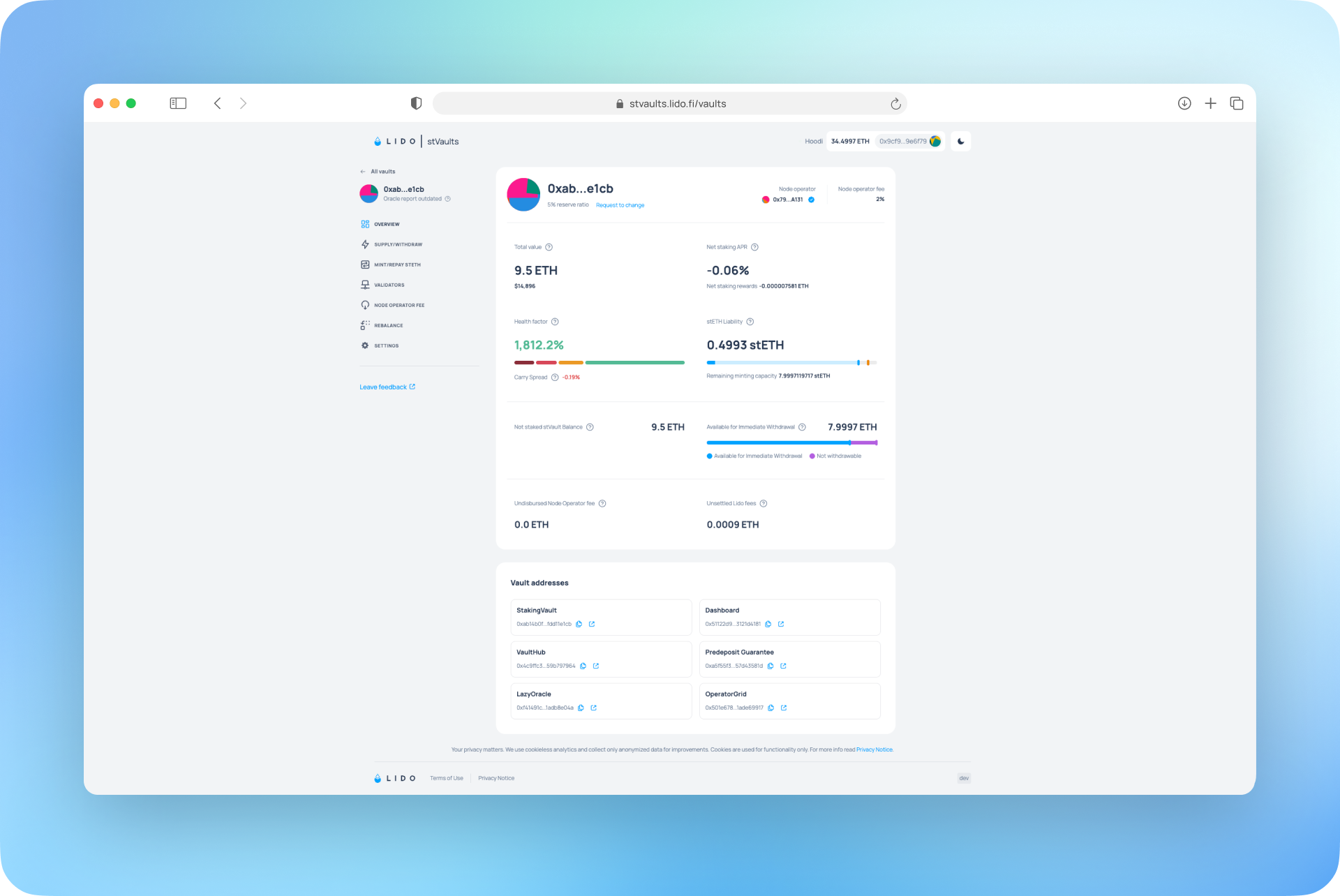
Perhaps the most impactful Web UI update for institutional users is the new rebalancing functionality. The UI now supports rebalancing, which involves repaying stETH liability using ETH from the vault’s own balance. For institutions managing large-scale redemption fulfillment processes, this feature is transformative. After a redemption request is processed by minting stETH from the stVault and subsequently swapping it for ETH, the resulting stETH liability can now be efficiently covered by rebalancing the position through the web interface. This previously complex operation, which demanded direct smart contract interaction or CLI commands, can now be executed by vault owners themselves, fitting seamlessly into their existing approval and custody setups. This simplification not only enhances operational efficiency but also significantly reduces the technical overhead and potential for errors associated with managing large institutional positions.
Robust Documentation and Custodian Support
Complementing the technical advancements, Lido has also significantly expanded its stVaults Doc Center, particularly in the realm of custodian support. The addition of more comprehensive custodian guides is a clear indication of Lido’s strategic focus on facilitating institutional adoption. These guides provide detailed instructions and best practices for integrating stVaults with various qualified custodian solutions, addressing the unique security and compliance requirements of regulated entities.
Furthermore, the Qualified Custodians overview page within the Doc Center has been updated to include a consolidated list of all necessary stVaults smart-contract addresses that require whitelisting before interaction. This centralized resource is invaluable for institutional clients who operate within strict security protocols, often requiring explicit approval and whitelisting of all interacting smart contract addresses. By providing this information in a clear, single location, Lido significantly streamlines the onboarding process for institutional stakers, reducing friction and enhancing security posture. This commitment to detailed documentation and specialized custodian support is crucial for lowering the barrier to entry for large financial institutions and enterprises seeking to participate in Ethereum staking through a secure and compliant framework.
Broader Impact and Future Trajectory
These comprehensive updates to Lido V3’s stVaults represent more than just incremental improvements; they signify a strategic push towards solidifying Lido’s position as a leading, adaptable, and institution-friendly liquid staking solution. By enhancing modularity, bolstering security, streamlining user interfaces, and providing robust institutional support, Lido is actively shaping the future of decentralized staking.
The innovations, particularly in anti-scam measures and institutional-grade operational tools like rebalancing, demonstrate a keen understanding of the evolving needs of the Ethereum staking community. As the decentralized finance landscape continues to mature, solutions that prioritize security, user experience, and regulatory compliance will be paramount for widespread adoption. Lido’s stVaults, with these latest enhancements, are well-positioned to drive further institutional engagement in Ethereum staking, fostering a more decentralized, efficient, and accessible network for all participants.
Interested parties, including prospective vault builders, institutional stakers, and those seeking to integrate stVaults into their existing infrastructure, are encouraged to consult Lido’s official documentation and outreach channels for further engagement and detailed information.