James Watt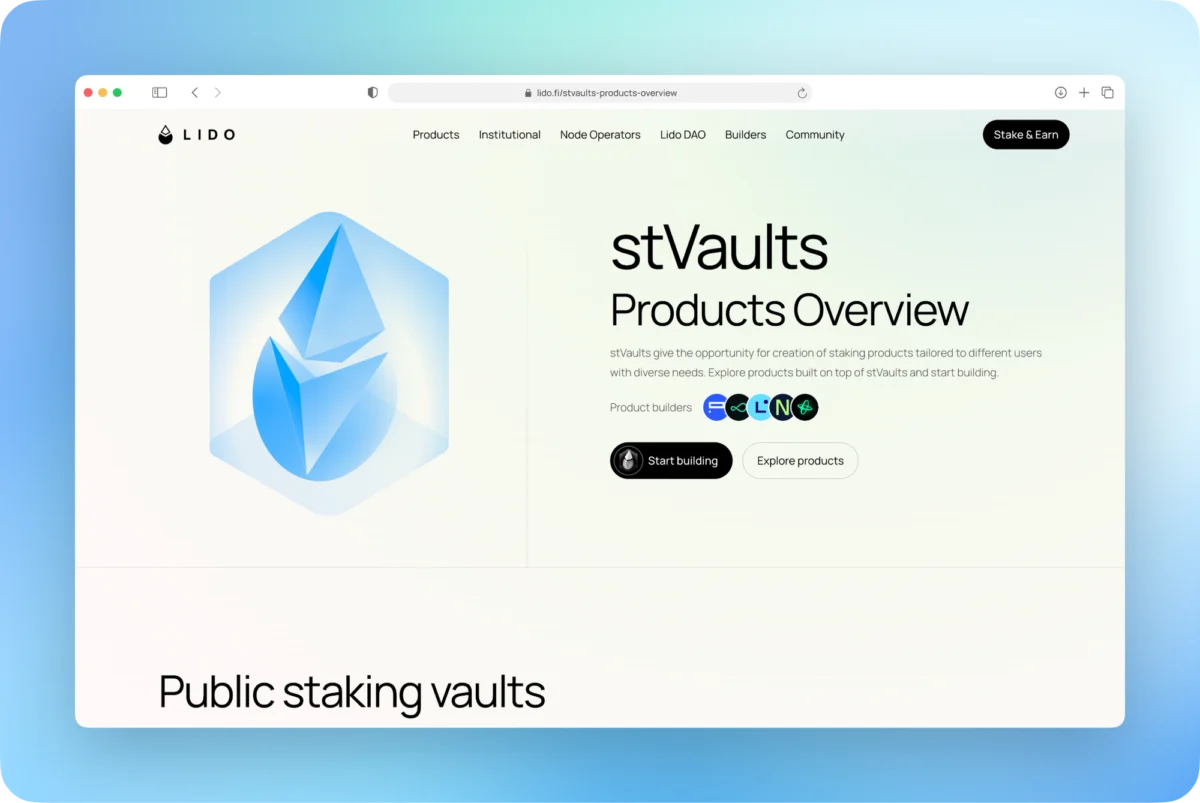
Lido Finance, a leading liquid staking protocol, announced a suite of significant advancements for its stVaults in April 2026, marking a pivotal moment in the evolution of Ethereum staking. These updates, encompassing user interface improvements, command-line interface enhancements, expanded DeFi integrations, and a dedicated resource hub, are designed to empower Node Operators with unparalleled control over validator operations while offering clients enhanced stETH liquidity and robust DeFi connectivity. stVaults, introduced as a new staking primitive within Lido V3, aim to bridge the long-standing divide between native staking and pooled staking, offering the best of both worlds to a diverse range of participants, particularly institutional players seeking greater autonomy and capital efficiency.
Background: The Evolution of Ethereum Staking and Lido V3
Ethereum’s transition to a Proof-of-Stake (PoS) consensus mechanism with the Merge opened new avenues for participants to secure the network and earn rewards through staking. Traditionally, staking Ethereum either involved running a solo validator, requiring a substantial 32 ETH and significant technical expertise, or participating in pooled staking services. While pooled staking, pioneered by protocols like Lido, democratized access to staking by allowing users to stake any amount of ETH and receive liquid staking tokens (LSTs) like stETH, it often meant relinquishing some operational control to the staking provider. Conversely, native staking offered full control but lacked liquidity for staked assets.
Lido V3, and specifically the introduction of stVaults, represents a strategic evolution in this landscape. stVaults are designed to offer a hybrid model, granting Node Operators (NOs) complete operational control over their validators, akin to native staking, while simultaneously providing their clients with the benefits of pooled staking, including instant stETH liquidity and seamless integration with the broader decentralized finance (DeFi) ecosystem. This innovation is particularly attractive to institutional stakers and professional operators who demand granular control, transparent operations, and the ability to leverage their staked assets within DeFi without compromising security or regulatory compliance. The stETH token, representing staked ETH and its accumulated rewards, has become a cornerstone of DeFi, enabling users to earn staking rewards while simultaneously utilizing their capital in various decentralized applications, from lending protocols to yield farms.
April’s Operational Milestones and User Experience Enhancements
The month of April 2026 saw a concentrated effort by Lido contributors to refine and expand the stVaults ecosystem, focusing on operational efficiency, user empowerment, and broader utility.
Navigating the Ethereum Entry Queue
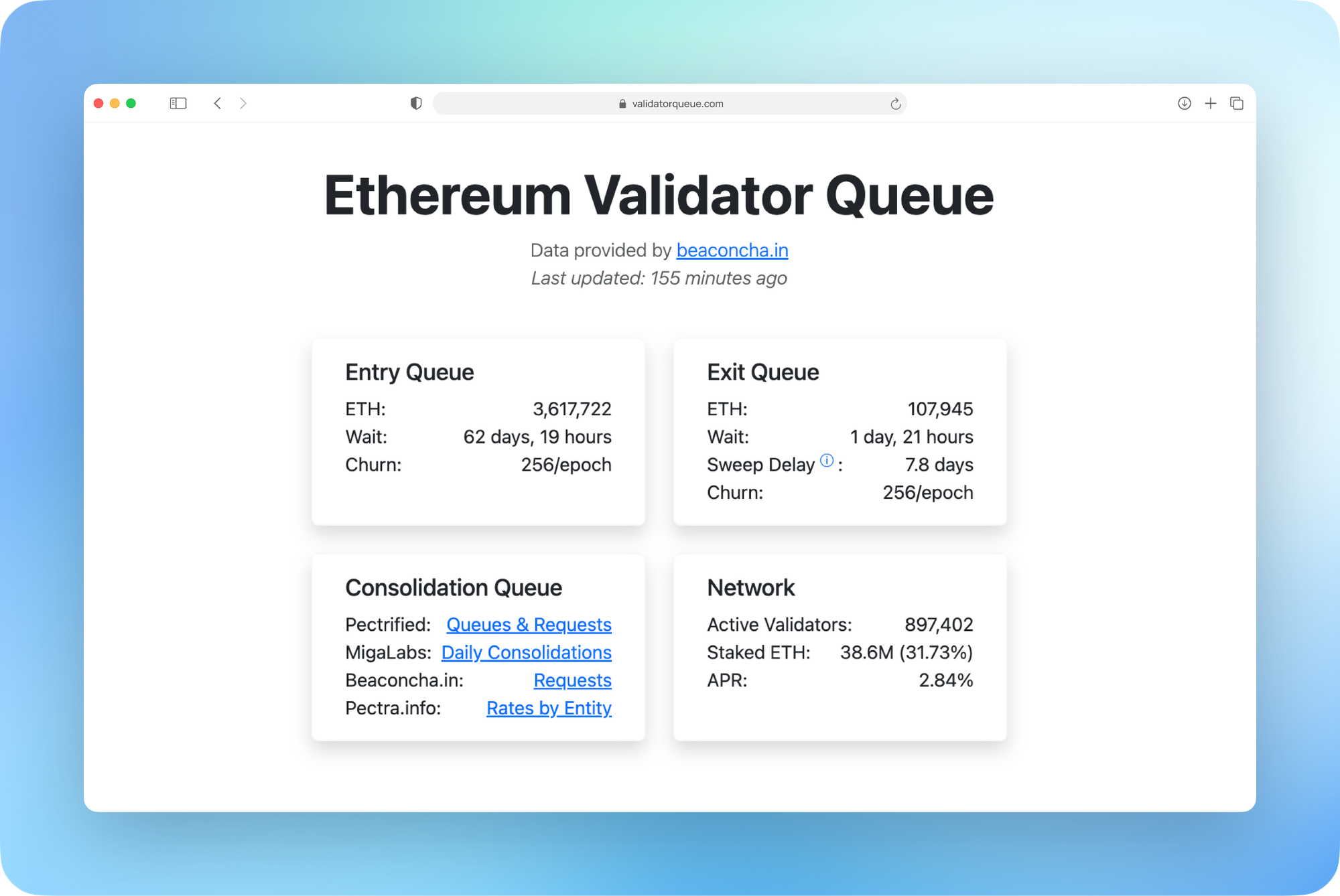
A persistent challenge for new Ethereum stakers has been the validator entry queue, a mechanism designed to manage the onboarding of new validators onto the Beacon Chain to maintain network stability. By late April 2026, this queue had extended to approximately 54 days, representing a significant waiting period before new validators could begin earning rewards. This delay can impact capital efficiency for stakers and make entry planning complex. In response, Lido contributors have proactively identified and proposed two distinct options aimed at facilitating the migration process for stakers and enabling them to fully leverage the benefits of stVaults despite the prolonged queue. While specific details of these options were not publicly elaborated, they are understood to focus on strategies such as optimizing pre-deposit guarantees and streamlining validator consolidation processes, which allow for more efficient use of capital and faster deployment within the stVaults framework. Historical data shows that entry queue lengths fluctuate significantly based on network activity and ETH price, making such solutions critical for maintaining a robust staking ecosystem.
A Centralized Hub for stVaults Products
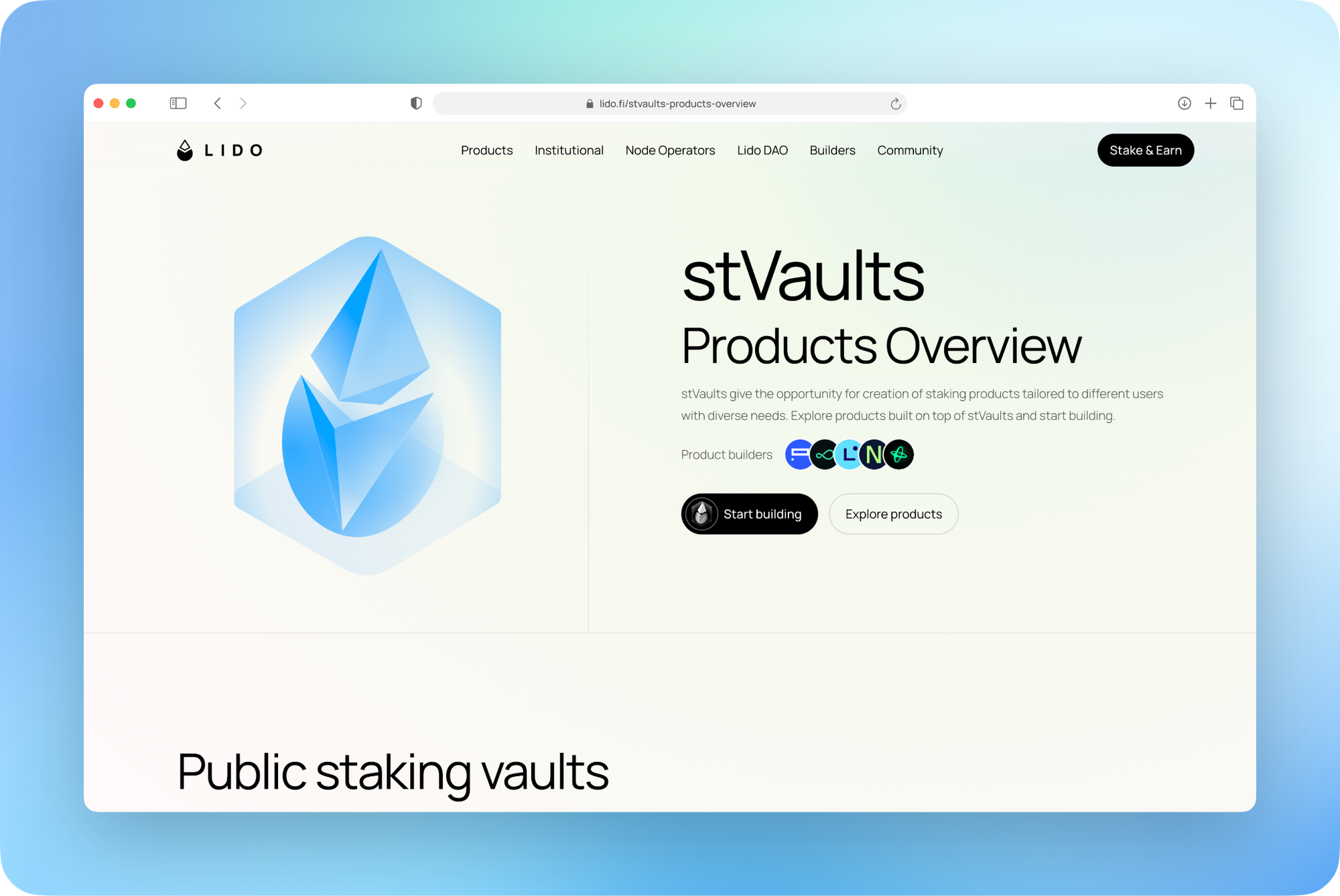
To enhance discoverability and promote ecosystem growth, Lido launched a dedicated Products Overview hub for stVaults. This centralized page serves as a vital resource, showcasing leading vault-based products built on the Lido platform. At its initial launch, three key products were featured, signaling the growing diversity and utility being developed atop the stVaults infrastructure. This hub is more than just a directory; it is envisioned as a catalyst for innovation, providing visibility to developers and offering users a curated selection of optimized staking solutions. The inclusion criteria for featured vaults emphasize robust security, demonstrated performance, and adherence to Lido’s technical standards. Vault builders and owners are encouraged to submit their products for consideration, fostering a dynamic and competitive environment that ultimately benefits end-users through improved choice and functionality.
Deepening DeFi Integration with Lido Earn Connector
A significant development in April was the integration of a connector to Lido Earn within the DeFi Wrapper. This strategic addition creates a seamless and efficient pathway between vault-issued stETH and the composable DeFi landscape. Lido Earn, a product designed to help users maximize their stETH yield through various DeFi strategies, now directly benefits from stVaults’ liquidity. Builders utilizing the DeFi Wrapper can integrate their staking strategies with Lido Earn without the need for additional, complex infrastructure. This enhances capital efficiency, allowing stETH held within stVaults to be immediately deployed into yield-generating opportunities across DeFi, such as lending, borrowing, or liquidity provision. The move underscores Lido’s commitment to making stETH a highly liquid and versatile asset, further solidifying its position as a foundational primitive in the decentralized finance space.
Elevating User Control and Performance Monitoring: The stVaults Web UI
Recognizing the critical need for intuitive and powerful tools, especially for institutional clients and professional Node Operators, the stVaults team dedicated substantial effort to enhancing the Web UI. This interface provides a simple yet comprehensive dashboard for monitoring vault performance and managing operations.
Intelligent Data Handling for Key Metrics
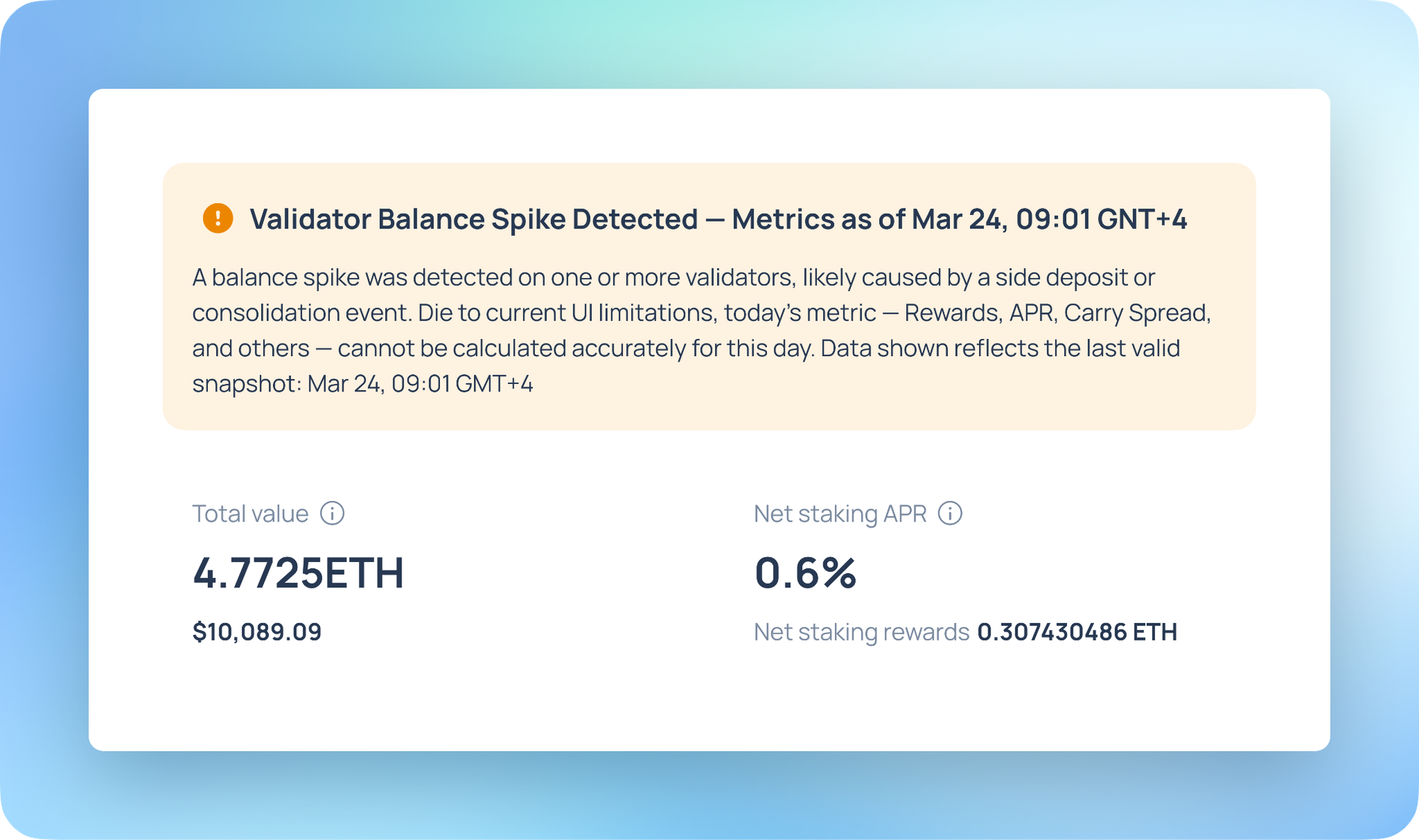
A common challenge in staking analytics involves accurately representing performance metrics amidst irregular events. Large deposits that are "unguaranteed" (meaning they haven’t yet been assigned to active validators) and validator consolidations (a capital-efficient method for migrating to stVaults) can introduce significant, one-off spikes in metrics like Annual Percentage Rate (APR) and CarrySpread. To address this, the Web UI and CLI now incorporate sophisticated tooling that detects these statistical outliers and automatically excludes them from rolling calculations. Users are now alerted with a warning on the stVault details page when such events occur, ensuring that reported performance metrics provide a more accurate and representative view of ongoing vault activity, crucial for informed decision-making.
Enhanced Transparency with Oracle Reporting
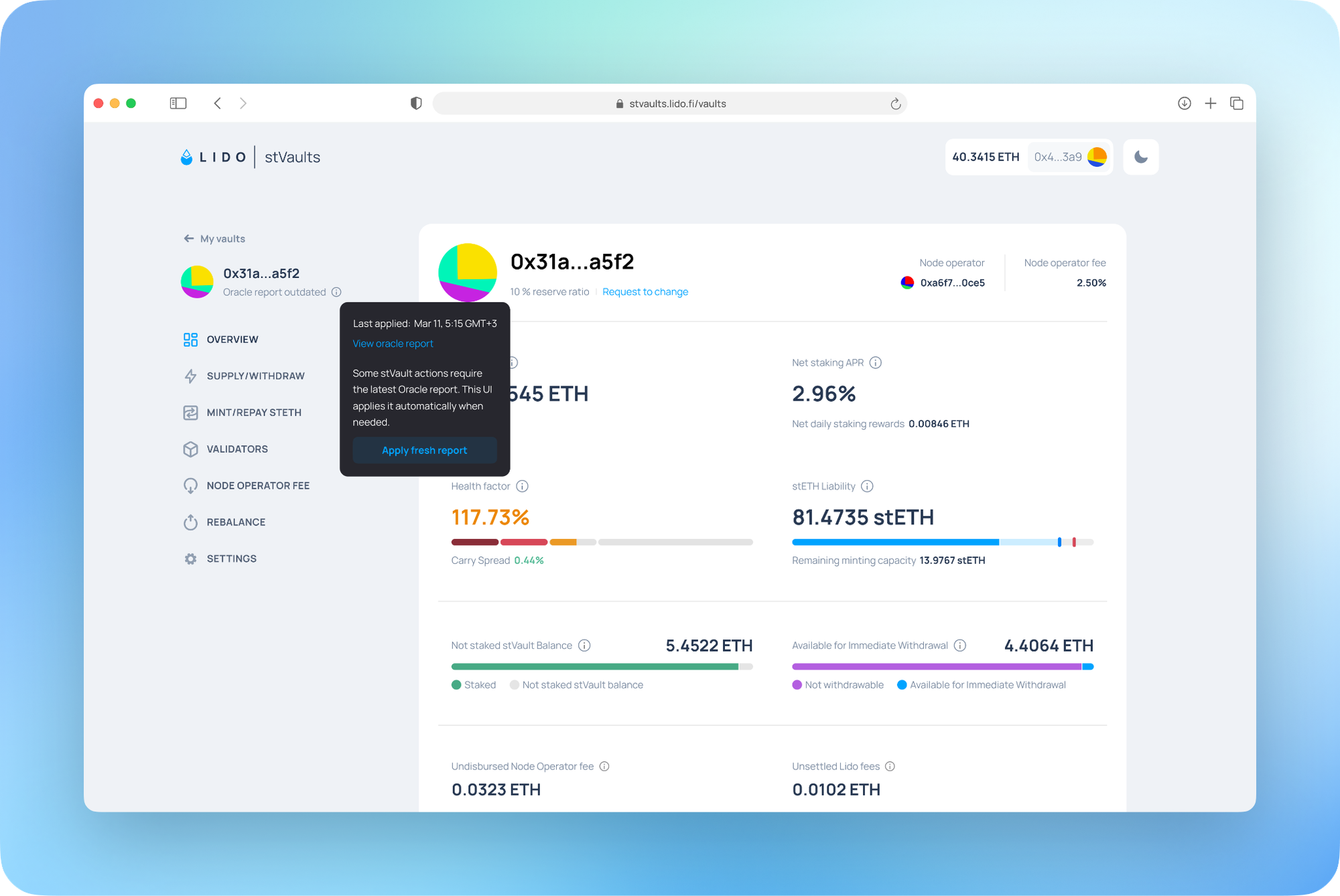
Oracles play a vital role in connecting real-world data, or in this case, on-chain staking data, to smart contracts. The stVaults Overview page now features a clear oracle report status indicator, displaying the date of the last report and its current status. This enhancement significantly boosts transparency, allowing users to verify that their vault’s performance data is up-to-date. Furthermore, users have the option to manually request a fresh report via an "Apply fresh report" button, or the system automatically applies the latest report before any action requiring current data, ensuring operational integrity and responsiveness.
Streamlined Access to Critical Addresses
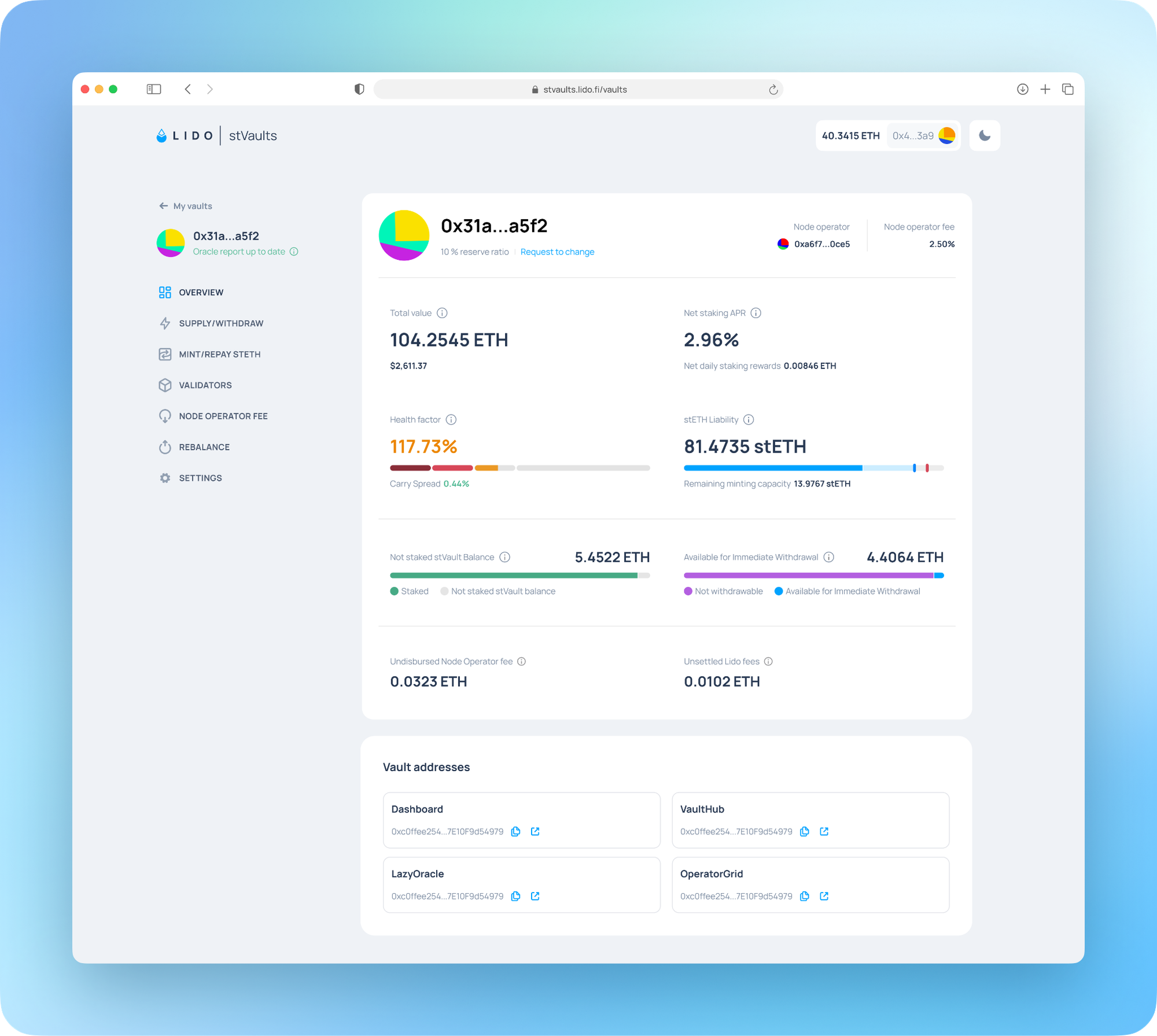
For advanced users, developers, and those conducting security audits, quick access to relevant contract addresses is paramount. The stVaults Web UI now conveniently lists all important addresses associated with a stVault, including the Dashboard, VaultHub, OperatorGrid, and LazyOracle. This feature eliminates the need to manually search for these addresses on block explorers like Etherscan or through the CLI, streamlining workflows and enhancing operational efficiency for users managing multiple vaults or integrating with external tools.
Refined Permissions Management
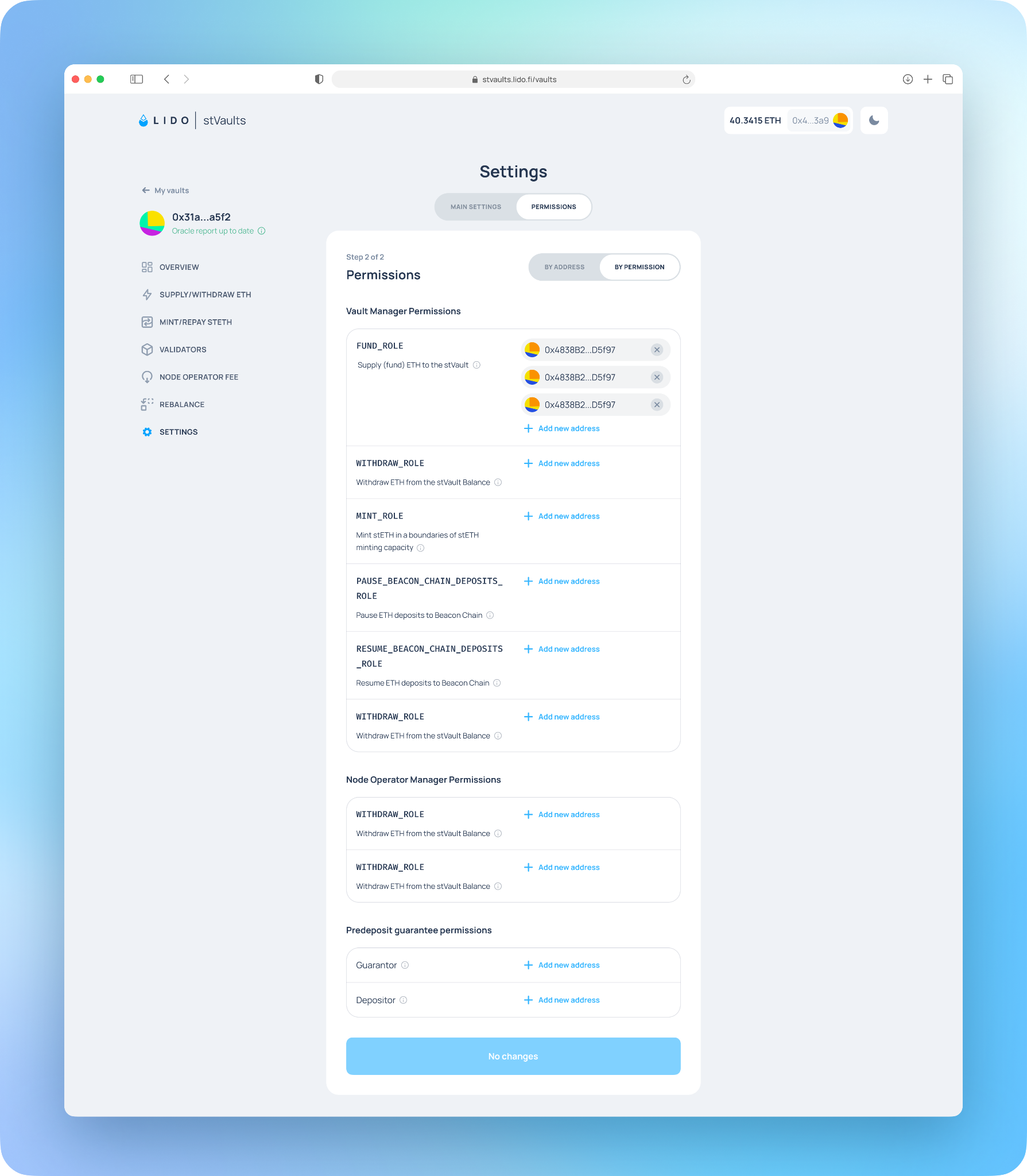
Robust and clearly defined permissions are essential for security and governance, particularly in multi-operator or institutional environments. The Permissions settings page in the Web UI has been upgraded to display technical names for roles and permissions, ensuring consistency for users who interact with both the graphical interface and the command-line interface. Moreover, full, descriptive explanations of each role are now directly accessible within the UI, simplifying the understanding and assignment of responsibilities within a vault’s operational structure. This improvement aids in compliance and reduces the potential for misconfigurations.
Empowering Institutional Stakers: Validator Management in the UI
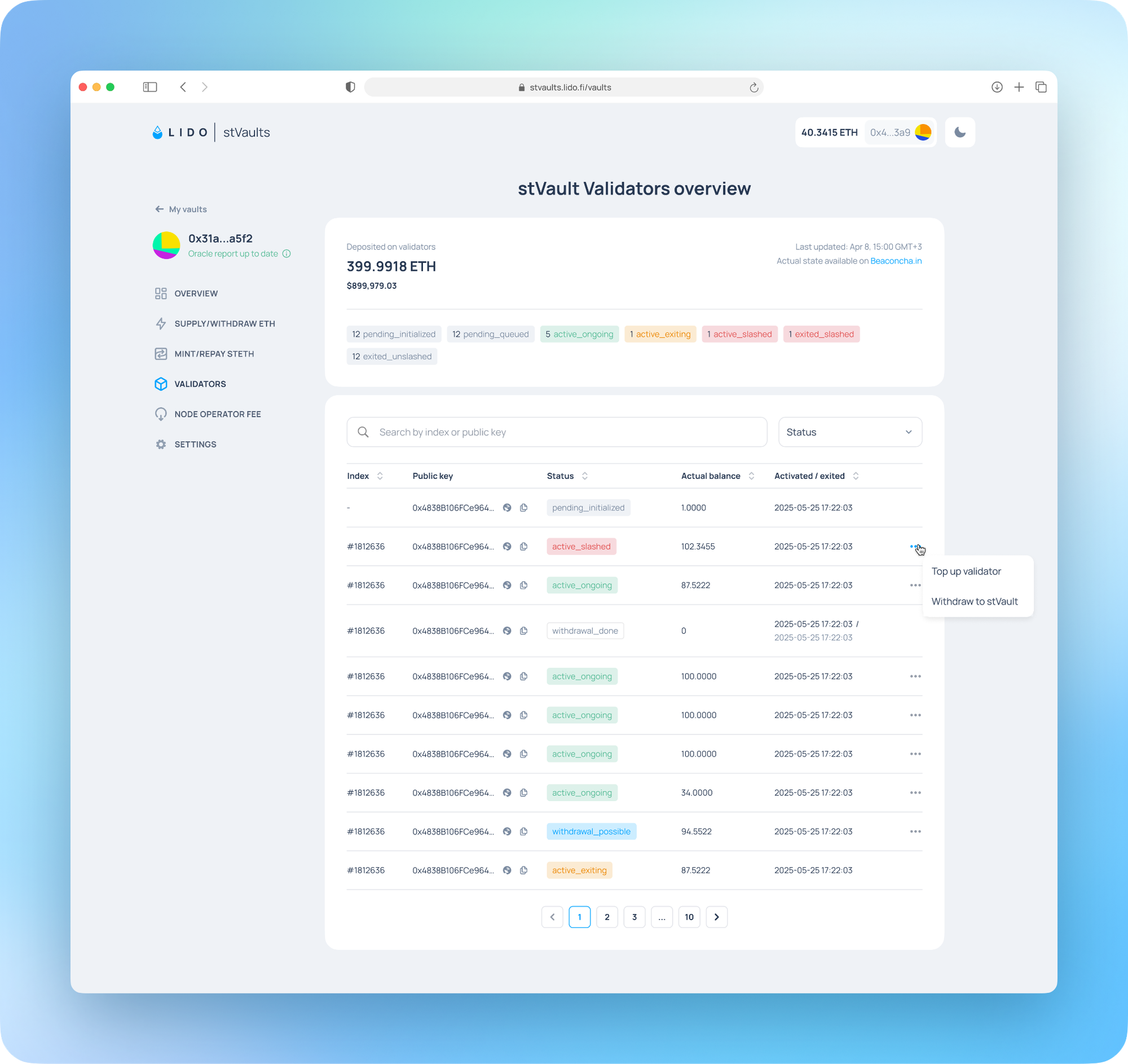
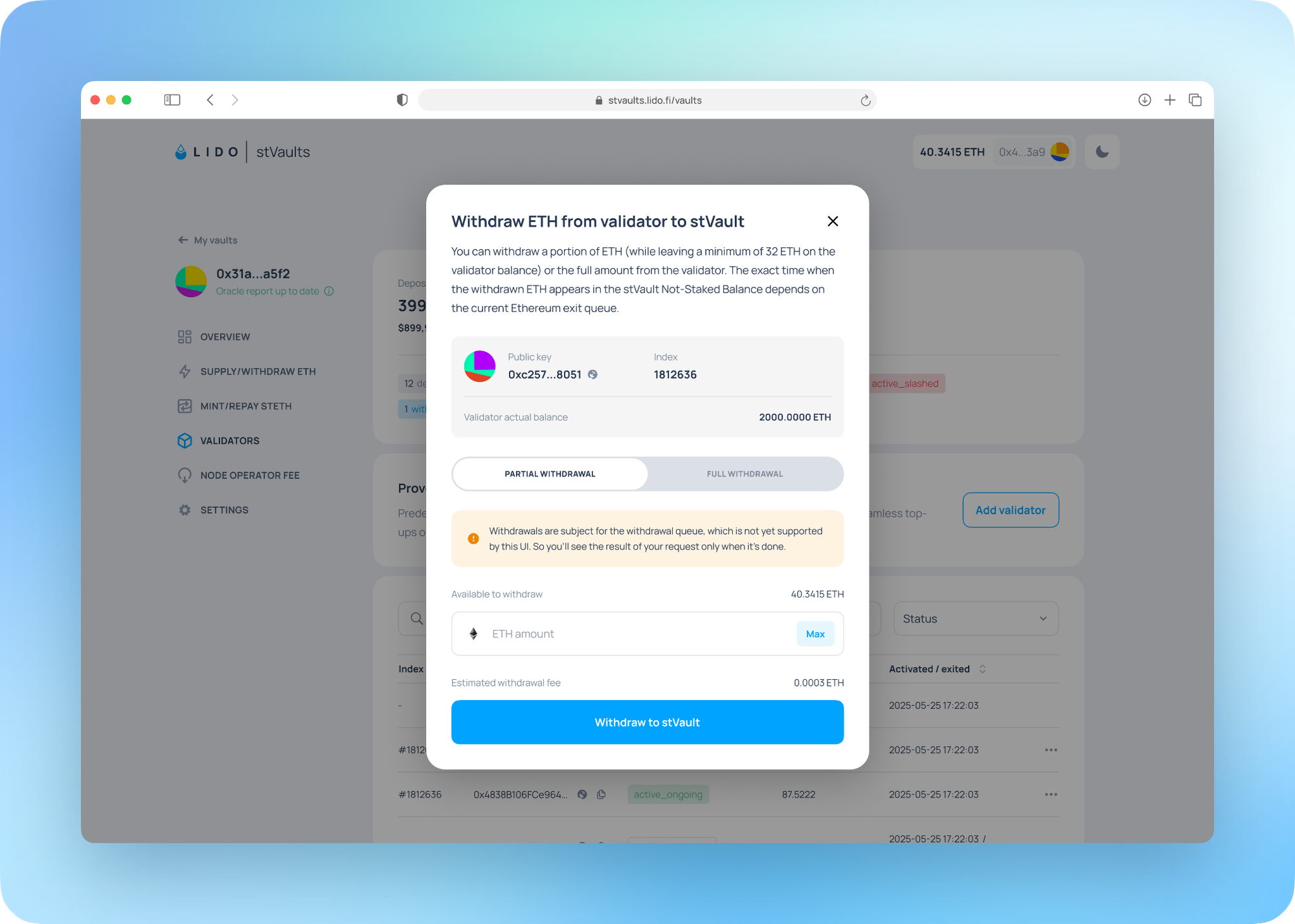
Perhaps one of the most impactful UI enhancements for institutional stakers is the ability to manage validator operations directly from the Web UI. Users can now view the real-time status of their validators on the Beacon Chain. Depending on their assigned role and permissions, they can also perform critical actions such as topping up validators from the stVault balance or initiating partial or full withdrawals. This capability previously often required CLI interaction, making the process more technical. By integrating these functions into a user-friendly web interface, Lido has taken a significant step towards enabling institutional stakers to exercise granular control over their funds and validators with greater ease, reducing operational complexity and increasing accessibility for organizations with diverse technical capabilities.
Advanced Control and Robustness: stVaults CLI Updates (v1.6 – 1.8)
While the Web UI caters to ease of use, the Command Line Interface (CLI) remains indispensable for power users, developers, and those requiring automation and scripting capabilities. The stVaults CLI received substantial upgrades across versions 1.6 to 1.8, enhancing its capabilities, metric accuracy, and overall reliability.
Expanded Capabilities for Strategy Contracts
The CLI now provides comprehensive support for strategy contracts connected to StvStrategyPool. This includes dedicated read and write commands, facilitating complex interactions, and full timelock governance flows (propose/execute) at the same level of functionality as direct pool operations. This ensures that sophisticated governance mechanisms, vital for security and decentralized decision-making, are fully supported. Furthermore, Etherscan contract verification is now directly handled by Factory commands, streamlining the deployment and verification process. A new statistic-by-reports-full command was introduced, offering operators a highly detailed, report-by-report performance breakdown, which is invaluable for granular analysis and auditing. The Distributor component now supports both claim-based and snapshot-based distribution modes, offering greater flexibility in reward allocation. Operators also gained the ability to pause and resume minting for stv-steth-pool, providing critical control over liquidity. To ensure clarity, the metrics methodology has been fully documented, providing a transparent basis for performance evaluations.
Precision in Performance Metrics
Accuracy in financial reporting is paramount. The CLI updates refined the calculations for netAPR, CarrySpread, and accrued-fee to maintain precision even when fee withdrawals or stETH minting events occur mid-period. Crucially, the accrued fee calculation is now performed off-chain, leveraging IPFS data. This ensures that the reported numbers remain correct and up-to-date, even if the latest oracle report has not yet been applied on-chain, eliminating potential discrepancies and enhancing the reliability of financial data.
Fortified Security and Reliability
A dedicated security pass was undertaken across the CLI, resulting in hardened input validation, improved URL handling, and more robust cache processing. These measures significantly reduce potential attack vectors and enhance the overall integrity of the system. Gas estimation now correctly handles low-balance accounts, preventing transaction failures due to insufficient gas. JSON output has been cleaned up, making it more machine-readable and pipe-friendly for scripting and automation. Addresses displayed in tables are now clickable block-explorer links, facilitating quick verification and navigation. Lastly, IPFS support was upgraded to include CIDv1, ensuring compatibility with the latest decentralized storage standards. The full changelog provides an exhaustive list of these technical improvements, underscoring the team’s commitment to a secure and reliable platform.
Empowering Education and Institutional Adoption: The stVaults Doc Center
To support the growing complexity and user base of stVaults, Lido launched a comprehensive Doc Center in April. This centralized hub serves as a single, authoritative source for all stVaults guides, references, and how-tos, making it easier for users to find the information they need to effectively operate and interact with the protocol.
Addressing Institutional Needs: Qualified Custodians
A cornerstone addition to the Doc Center is the section on Qualified Custodians. This critical resource includes two detailed user guides specifically tailored for institutional stakers and their custodians. These guides cover the intricate workflows and operational considerations involved when institutional entities engage in Ethereum staking through stVaults, particularly when requiring the services of a qualified custodian. Qualified custodians play a crucial role in traditional finance by holding assets on behalf of clients, providing enhanced security, regulatory compliance, and auditability. Their integration into the crypto staking landscape is a significant step towards broader institutional adoption. The guides likely detail processes for secure asset transfer, multi-signature wallet configurations, reporting requirements, and the technical integration points between stVaults and custodial solutions, addressing a key barrier to entry for large-scale financial institutions. More guides are scheduled to be released throughout May, indicating a continuous focus on supporting the institutional segment.
Industry Insights: Lido Poolside Institutional Call (April 2026)
Reflecting the growing importance of institutional participation in liquid staking, Lido dedicated its April 2026 Poolside Call to this topic. The event featured prominent figures from the institutional crypto space, including Adam Levine, CEO of Fireblocks Trust Company; representatives from Credora, a leading credit rating agency for digital assets; and FalconX, a prime brokerage for institutional crypto trading.
The discussions revolved around several key themes. Adam Levine from Fireblocks provided insights into enabling DeFi access from qualified custody, emphasizing how secure, regulated custodial solutions can bridge the gap between traditional finance and decentralized applications. This is crucial for institutions seeking to participate in DeFi yield opportunities without compromising security or regulatory mandates. Credora’s participation highlighted their groundbreaking work, including their first public asset-level rating on a liquid staking token, awarding stETH an A+. This independent, high-grade rating signifies a significant validation of stETH’s underlying quality, liquidity, and risk profile, making it more attractive for institutional portfolios and risk-averse investors. FalconX contributed perspectives on the evolving landscape of institutional Ethereum staking, discussing market trends, liquidity needs, and the infrastructure required to support large-scale institutional engagement. The call collectively underscored the maturation of the liquid staking market and the increasing sophistication of the tools and services being developed to meet the stringent demands of institutional investors.
Looking Ahead: The Road to Continued Innovation
The comprehensive updates rolled out in April 2026 demonstrate Lido’s unwavering commitment to enhancing the stVaults ecosystem and solidifying its position as a leading solution for flexible, controlled, and liquid Ethereum staking. The team has signaled a number of exciting further developments planned for May and beyond. These future enhancements are anticipated to build upon the current foundation, potentially including expanded integrations with more DeFi protocols, further refinements to governance mechanisms, introduction of new vault types catering to specialized strategies, and perhaps even initiatives to foster global adoption. The continuous evolution of stVaults, driven by user feedback and market demands, is poised to redefine the landscape of Ethereum staking, making it more accessible, efficient, and secure for both individual and institutional participants.
For those interested in exploring stVaults for their specific needs, product development, or strategic roadmap, Lido encourages direct engagement to discuss potential collaborations and further integrations.