
 James Watt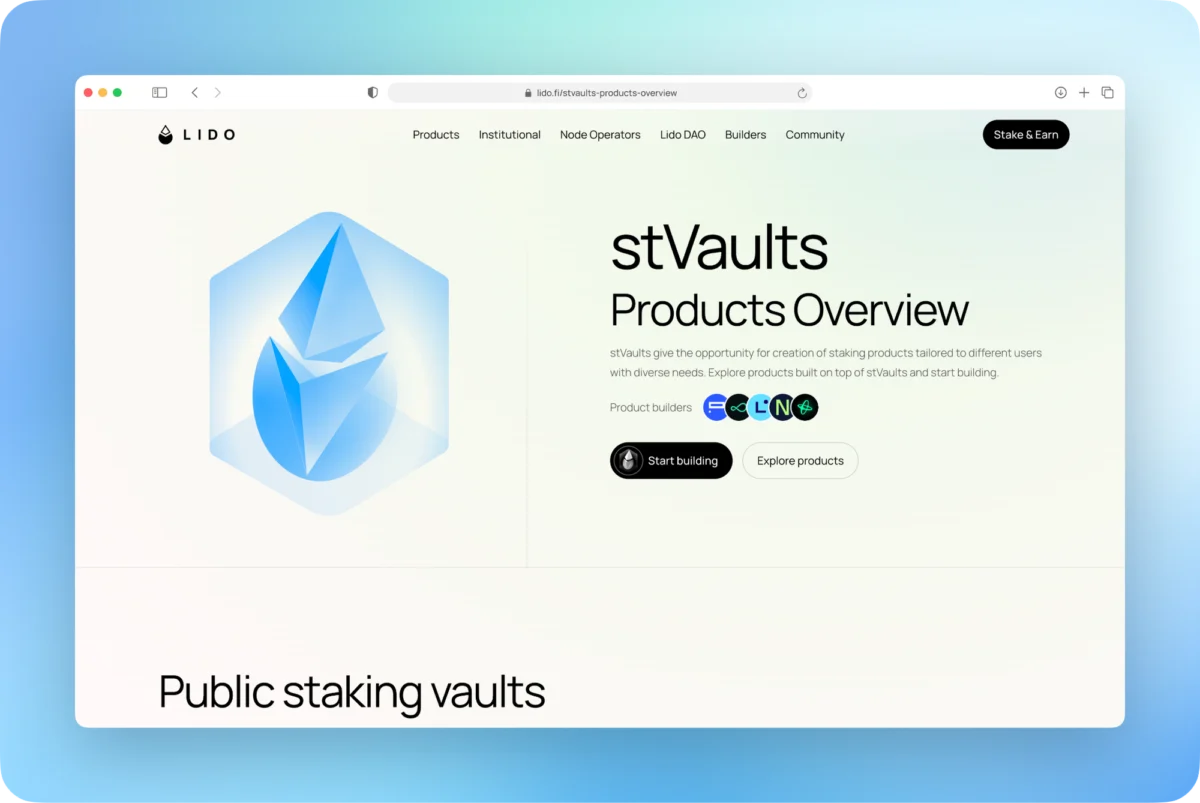
In a significant stride towards bridging the gap between native and pooled staking, Lido Finance’s stVaults — a novel staking primitive introduced with Lido V3 — rolled out a suite of comprehensive updates throughout April. These enhancements are designed to empower Node Operators with unparalleled control over validator operations while simultaneously offering clients the robust liquidity of stETH and seamless integration with the decentralized finance (DeFi) ecosystem. The updates underscore Lido’s commitment to fostering a more flexible, secure, and institution-friendly liquid staking environment, addressing key challenges in the burgeoning Ethereum staking landscape and paving the way for broader adoption.
Understanding stVaults: A Paradigm Shift in Staking
At its core, stVaults represent a sophisticated evolution in staking infrastructure. Before stVaults, stakers often faced a dilemma: either engage in native staking, which grants full control over validator operations but typically requires substantial capital and technical expertise, or opt for pooled staking solutions like Lido, which offer liquidity and ease of access but traditionally involve relinquishing some direct control. Lido V3’s stVaults ingeniously resolve this trade-off. By allowing Node Operators to maintain complete autonomy over their validators, stVaults blend the best aspects of both worlds. This model not only decentralizes control but also opens avenues for operators to innovate, offering bespoke services to their clients, including direct access to stETH liquidity and advanced DeFi strategies. The native stETH token, representing a staked Ether position, remains central to this ecosystem, providing users with a liquid, yield-bearing asset that can be freely traded or utilized across various DeFi protocols. This innovation is particularly crucial as the Ethereum network continues to mature, attracting a diverse range of participants from individual stakers to large institutional entities.
Navigating the Ethereum Entry Queue: Strategic Solutions for Stakers
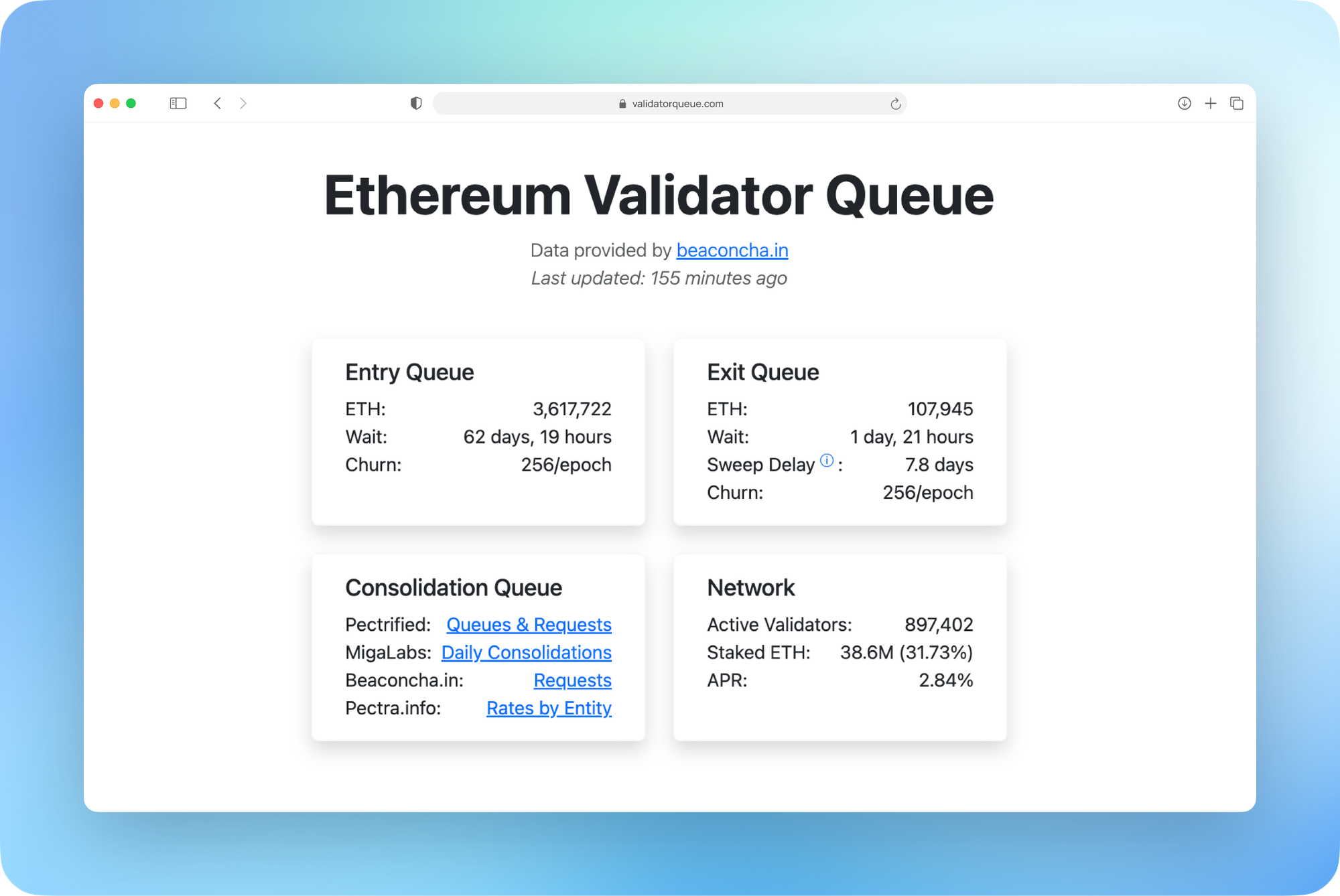
April saw the Ethereum validator entry queue extend to approximately 54 days, a notable increase that reflects the growing interest and capital flowing into Ethereum staking. This prolonged queue, while a testament to the network’s health and increasing demand for validation, presents challenges for new stakers and existing operators looking to scale. A longer entry queue means a delay in new validators becoming active and earning rewards, impacting capital efficiency and strategic planning. The queue’s length is primarily influenced by the network’s design, which limits the rate at which new validators can join to maintain network stability and security. As more ETH is staked, the queue naturally lengthens.
In response to this extended waiting period, Lido contributors have proactively identified and surfaced strategic options aimed at facilitating quicker migration and allowing stakers to fully leverage the benefits of stVaults without undue delay. While specific details on these options were not fully elaborated in the initial announcement, such strategies typically involve optimizing existing validator sets through capital-efficient methods like validator consolidations or implementing pre-deposit mechanisms that allow funds to be staged for activation, mitigating the immediate impact of the queue. This proactive approach highlights Lido’s responsiveness to network conditions and its commitment to user experience, especially for those navigating the complexities of institutional-scale staking.
Expanding the Ecosystem: The stVaults Products Overview Hub
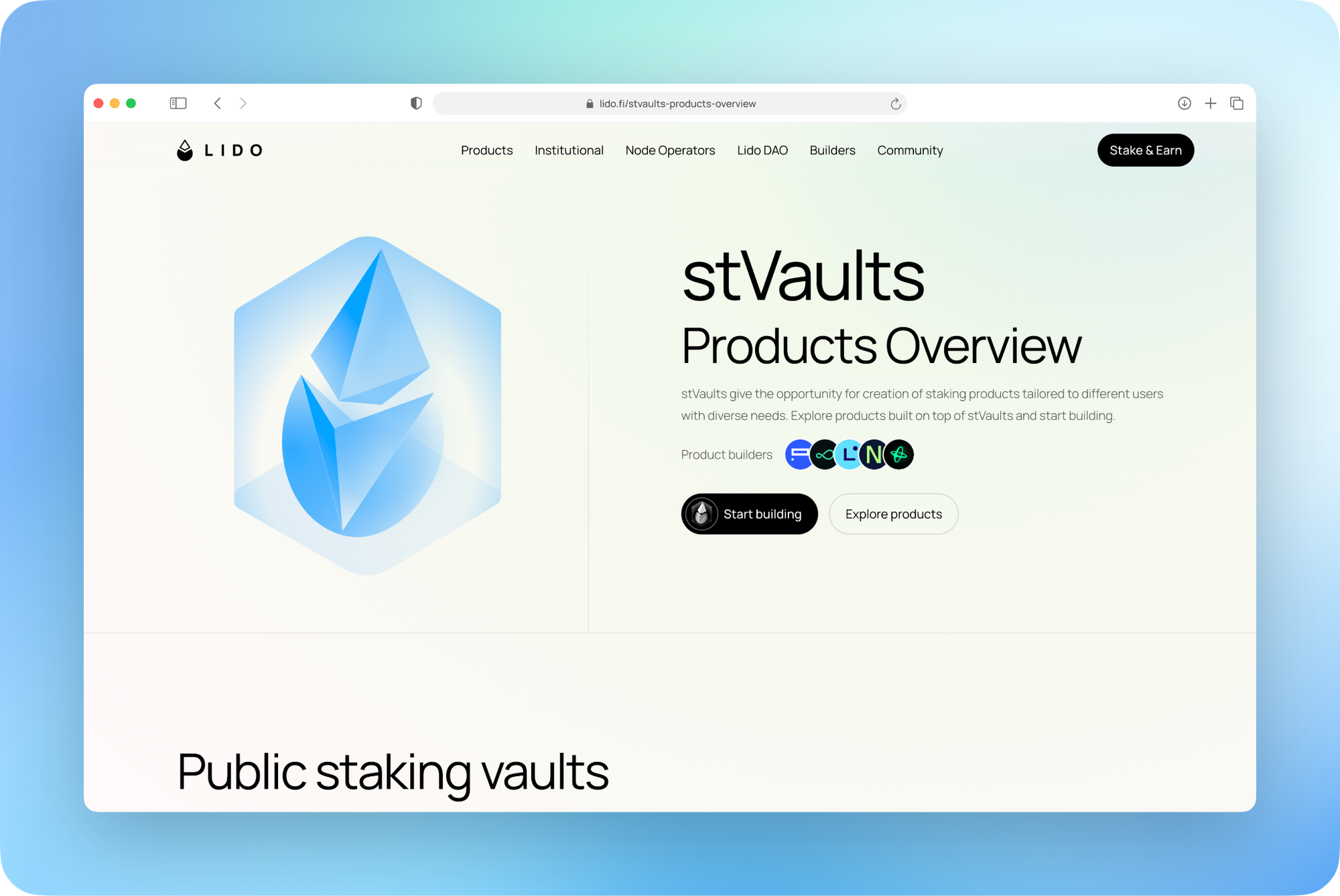
To enhance discoverability and promote innovation within its ecosystem, Lido has launched a dedicated Products Overview Hub for stVaults. This centralized discovery platform serves as a vital resource, showcasing leading vault-based products built on the Lido platform. At launch, three prominent products were featured, providing early adopters with a clear view of the diverse applications and strategies possible with stVaults. The hub is more than just a listing; it’s an invitation for builders and developers to integrate their solutions, offering a direct channel for featuring their vaults. By providing a structured pathway for inclusion, Lido actively fosters a collaborative environment, encouraging the development of new, innovative products that leverage the unique capabilities of stVaults. This initiative is crucial for cultivating a vibrant developer community and expanding the utility and reach of the Lido protocol.
Deepening DeFi Integration: The Lido Earn Connector
A significant development in April was the integration of a connector between the DeFi Wrapper and Lido Earn. This strategic move establishes a direct and streamlined path between vault-issued stETH and the broader landscape of composable DeFi applications. Lido Earn is designed to provide users with various yield-generating opportunities across the DeFi spectrum, leveraging the liquidity of stETH. The new connector simplifies the process for builders working with the DeFi Wrapper, allowing them to route staked assets to Lido Earn as an intrinsic part of their staking strategy. This eliminates the need for "bolting on extra plumbing," significantly reducing the technical overhead and complexity traditionally associated with integrating multiple DeFi protocols. The result is a more seamless, capital-efficient, and user-friendly experience for both developers and end-users, enabling more sophisticated and diversified yield strategies within the stVaults ecosystem. This enhancement is particularly attractive for institutional stakers who demand efficient and low-friction access to advanced financial products.
Enhanced User Experience: A Deep Dive into the stVaults Web UI Improvements
Recognizing the critical role of a robust and intuitive user interface, the stVaults team introduced a series of significant improvements to its Web UI. This interface provides vault builders and owners with a simple, yet powerful, platform to monitor vault performance and manage operations.
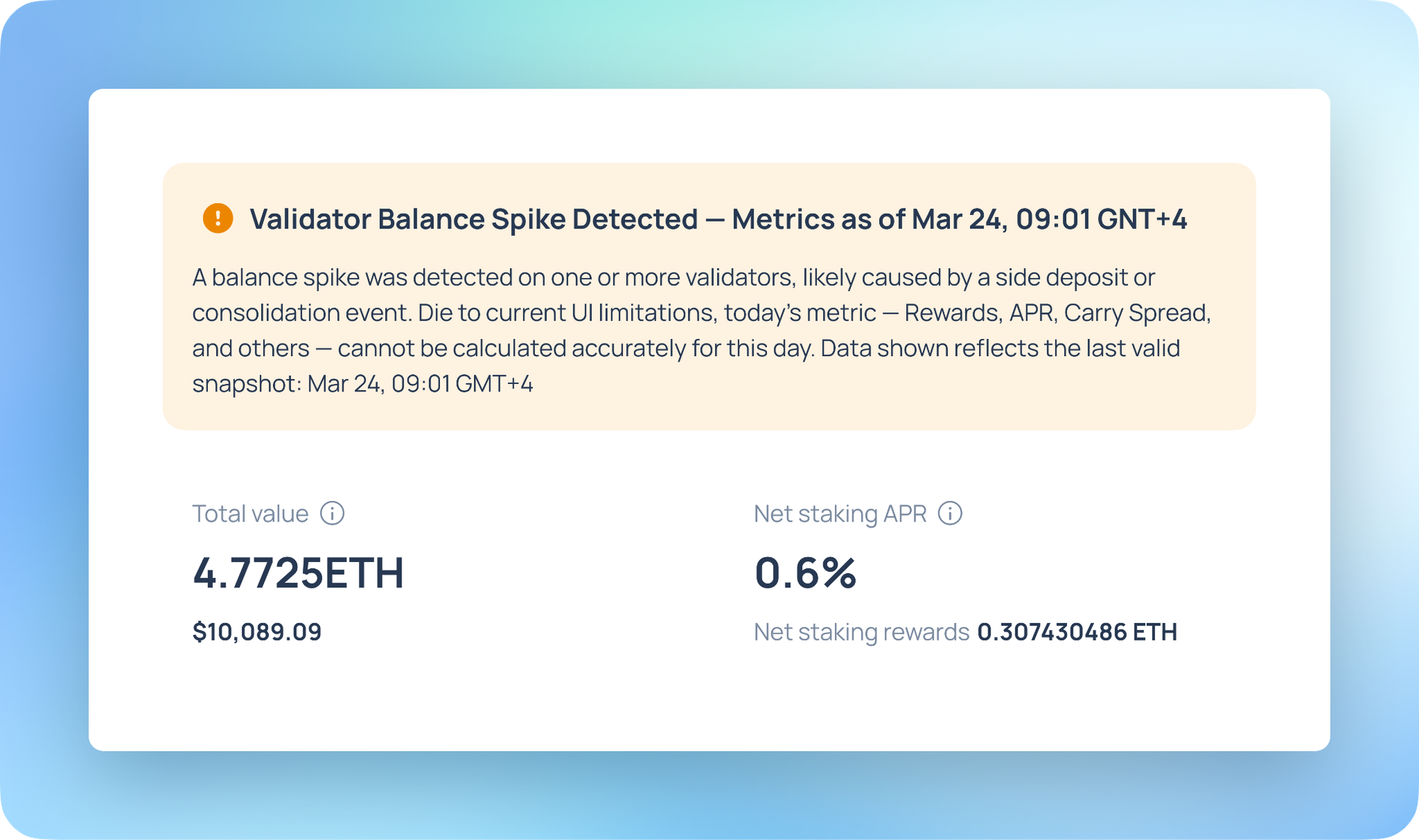
- Precision in Metrics: Handling Large Deposits and Consolidations: The nature of staking, particularly with a long entry queue, means that events like unguaranteed deposits and validator consolidations are common. While beneficial, these events can cause one-off spikes in key performance indicators such as Annual Percentage Rate (APR) and CarrySpread, potentially skewing rolling calculations. To address this, the Web UI and CLI now intelligently detect these as statistical outliers, automatically excluding them from rolling calculations. Users are now alerted with a warning on the stVault details page when such an event occurs, ensuring that reported metrics provide a more accurate and reliable reflection of consistent performance. This commitment to data integrity is paramount for informed decision-making, especially for institutional investors who rely on precise financial reporting.
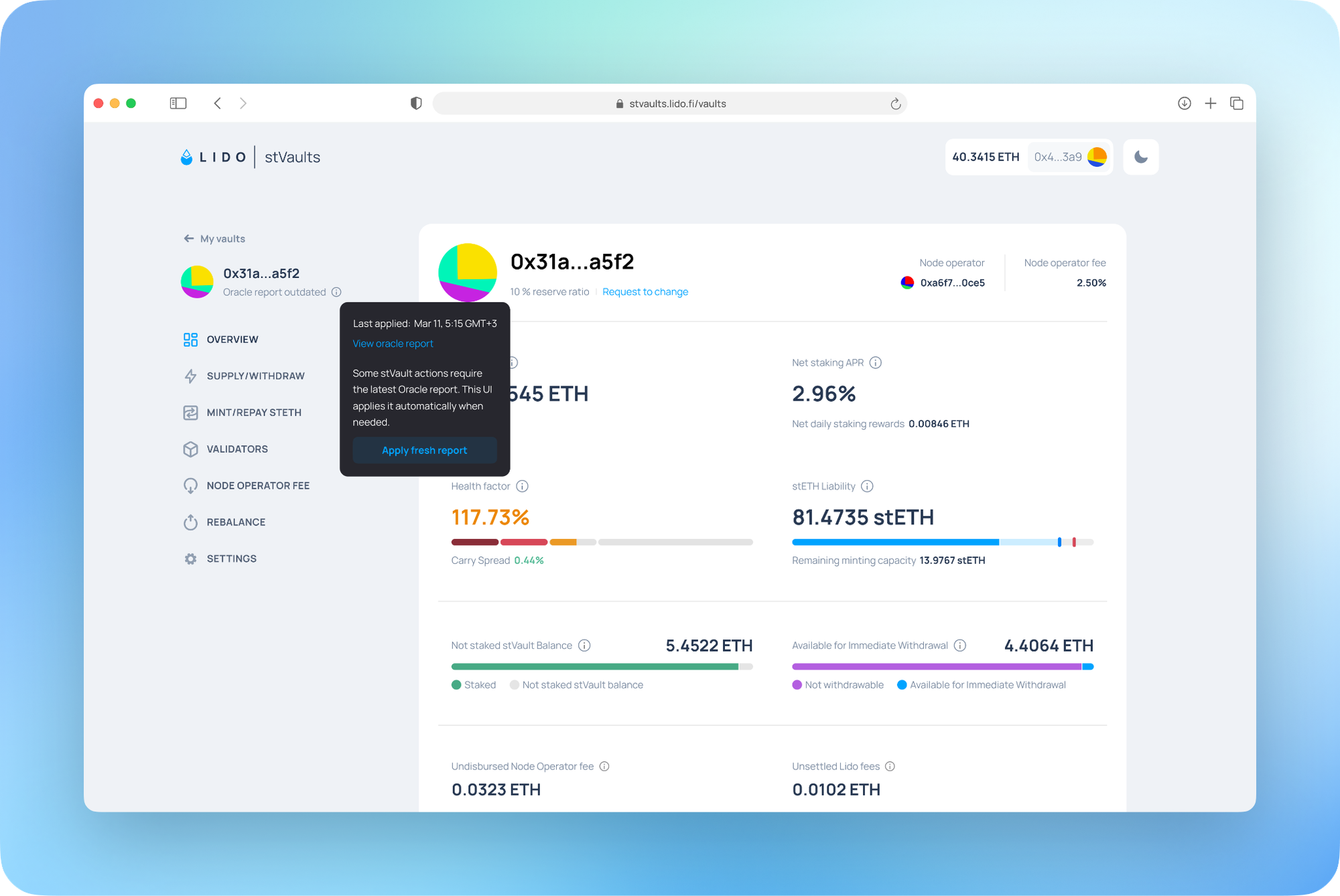
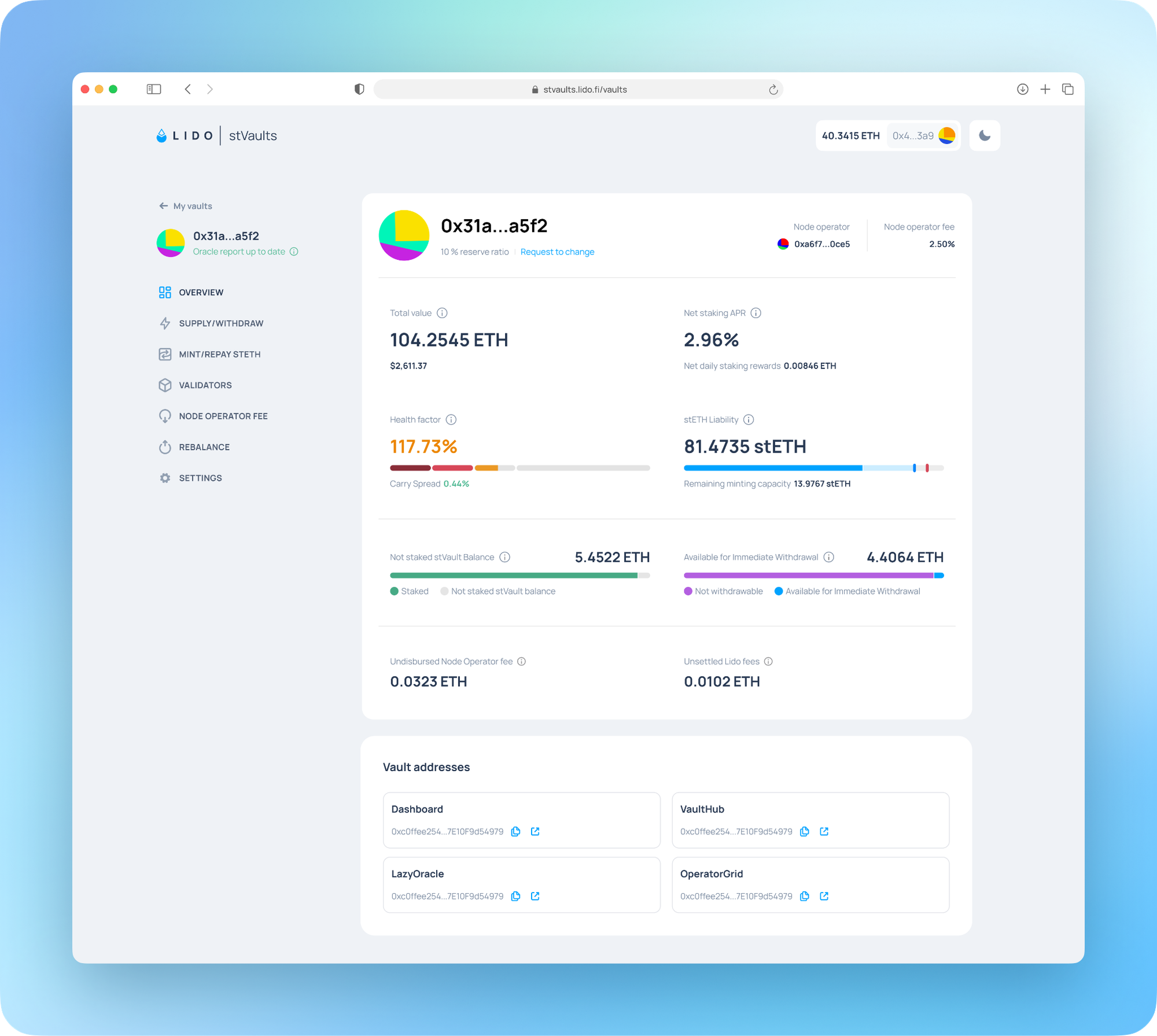
- Transparency and Control: Oracle Report Status and stVault Address Overview: The Overview page now features an Oracle Report Status Indicator, displaying the date and status of the latest oracle report. Users can manually request a fresh report or rely on automatic application before any action requiring up-to-date data. Oracles play a crucial role in DeFi by providing real-world data to smart contracts, ensuring that on-chain calculations, such as staking rewards, are accurate. This feature enhances transparency and allows operators to ensure their data is current. Furthermore, the stVaults Web UI now provides a comprehensive list of important addresses associated with each stVault, including Dashboard, VaultHub, OperatorGrid, and LazyOracle. This centralized display simplifies the process for users who need specific addresses for Etherscan queries or CLI operations, promoting greater transparency and ease of access for advanced users and auditors.
- Streamlined Permissions Management: The Permissions settings page has been improved to display technical names for roles and permissions. This standardization ensures consistency for users who operate across both the Web UI and the Command Line Interface (CLI), reducing potential confusion. Full role descriptions are also now directly accessible within the UI, making it easier for vault owners and administrators to understand and manage access controls effectively. Clear and well-defined permissions are a cornerstone of security and governance, particularly for institutional clients managing significant capital.
- Institutional-Grade Operations: Validators Page for Status, Top-ups, and Withdrawals: Perhaps one of the most impactful UI updates is the new Validators page. This feature now allows users to monitor their validators’ status on the Beacon Chain directly from the Web UI. Crucially, depending on their assigned role, users can also initiate top-ups from the stVault balance or perform partial or full withdrawals—all through the intuitive web interface, eliminating the need for CLI commands. This capability marks a significant step towards empowering institutional stakers with granular control over their funds through a user-friendly web interface, mirroring the operational ease often expected in traditional financial platforms. It democratizes access to advanced validator management, previously requiring more technical expertise, thereby lowering the barrier for entry for sophisticated players.
Powering the Technical Core: stVaults CLI Updates (v1.6 – 1.8)
For developers and advanced Node Operators, the Command Line Interface (CLI) is an indispensable tool. April saw the release of CLI versions 1.6 through 1.8, bringing a host of new capabilities, improved metric accuracy, and enhanced reliability and security.
- Advanced Capabilities: The CLI now offers full support for Strategy contracts connected to StvStrategyPool, including dedicated read/write commands and comprehensive timelock governance flows (propose/execute) at the same level as pools. Etherscan contract verification is seamlessly handled by Factory commands, streamlining transparency. A new
statistic-by-reports-fullcommand provides operators with a detailed, report-by-report performance breakdown, offering granular insights. The Distributor now supports both claim-based and snapshot-based distribution modes, providing flexibility in reward distribution. Operators can also pause and resume minting for thestv-steth-pool, allowing for greater operational control. Furthermore, the metrics methodology is now fully documented, ensuring clarity and consistency in performance reporting. - Unwavering Accuracy: Recognizing the critical importance of precise financial metrics, calculations for
netAPR,CarrySpread, andaccrued-feehave been refined. These metrics now remain accurate even when fee withdrawals or stETH minting events occur mid-period, preventing data discrepancies. Accrued fees are now computed off-chain from IPFS data, guaranteeing correctness even if the latest oracle report has not yet been applied on-chain. This robust approach to data accuracy is essential for maintaining trust and enabling reliable financial analysis. - Fortified Reliability & Security: A dedicated security pass was conducted, hardening input validation, URL handling, and cache processing across the CLI, bolstering the overall security posture. Gas estimation now correctly handles low-balance accounts, preventing unexpected transaction failures. JSON output has been cleaned up and optimized for scripting, enhancing automation capabilities. Addresses displayed in tables are now clickable links to block explorers, significantly improving traceability and ease of investigation. Finally, IPFS now supports CIDv1, ensuring compatibility with the latest decentralized storage standards. The full changelog provides a detailed overview of these technical advancements, demonstrating Lido’s commitment to a robust and secure technical infrastructure.
Empowering Knowledge: The stVaults Doc Center and Institutional Guides
To support the growing complexity and adoption of stVaults, a comprehensive Doc Center has been launched. This centralized repository serves as a single home for all stVaults guides, references, and how-to articles, making it easier for users to find the information they need.
A pivotal addition to the Doc Center is the section dedicated to Qualified Custodians. This includes two detailed user guides specifically tailored to the workflows of institutional stakers and their custodians. Qualified custodians play a vital role in traditional finance, ensuring the secure holding and management of assets for institutional clients. Their increasing involvement in the crypto space signifies a maturing market and addresses critical concerns around security, compliance, and regulatory adherence. These guides are instrumental in educating institutional players on how they can leverage stVaults within a compliant and secure custodial framework, further lowering the barrier for institutional capital to enter the liquid staking ecosystem. Additional guides are slated for release throughout May, further solidifying the Doc Center as an invaluable resource.
Bridging Traditional and Decentralized Finance: Lido Poolside Institutional Call
Reinforcing its strategic focus on institutional engagement, Lido hosted a dedicated "Lido Poolside: Institutional" call in April 2026. This event brought together prominent figures from the institutional crypto space, including Adam Levine, CEO of Fireblocks Trust Company; representatives from Credora; and FalconX. The discussions centered on critical topics such as enabling DeFi access from qualified custody, Credora’s groundbreaking public asset-level rating of stETH (awarding it an impressive A+), and the future trajectory of institutional Ethereum staking.
Fireblocks’ participation highlighted the growing convergence of traditional custodial services with decentralized finance, addressing the security and compliance requirements of large investors. Credora’s A+ rating for stETH is particularly significant. As a leading credit rating agency for digital assets, Credora’s positive assessment provides institutional investors with a crucial layer of trust and validation regarding stETH’s underlying quality and risk profile. This rating not only enhances stETH’s appeal but also sets a precedent for how liquid staking tokens can be evaluated and integrated into institutional portfolios. FalconX’s insights contributed to a comprehensive overview of the evolving landscape, underscoring the increasing sophistication and demand from institutional players for robust, compliant, and high-performance staking solutions. The call served as a powerful forum for dialogue, shaping the narrative around institutional adoption and highlighting Lido’s proactive role in facilitating this transition.
Outlook: The Road Ahead for stVaults and Lido
The comprehensive updates rolled out for stVaults in April signal a period of intense development and strategic focus for Lido. By enhancing user control, refining technical infrastructure, and prioritizing institutional-grade features, Lido is solidifying stVaults’ position as a leading solution for flexible and secure Ethereum staking. The ongoing commitment to improving the Web UI, empowering CLI users, and providing extensive documentation demonstrates a holistic approach to ecosystem development. The growing institutional interest, as evidenced by the Lido Poolside call and Credora’s positive rating for stETH, indicates a significant shift in the broader crypto landscape, where liquid staking solutions like Lido are becoming increasingly integral to institutional investment strategies. With a number of exciting stVaults developments planned for May and beyond, Lido is poised to continue innovating, expanding its reach, and further cementing its role at the forefront of the decentralized staking economy.









