admin
admin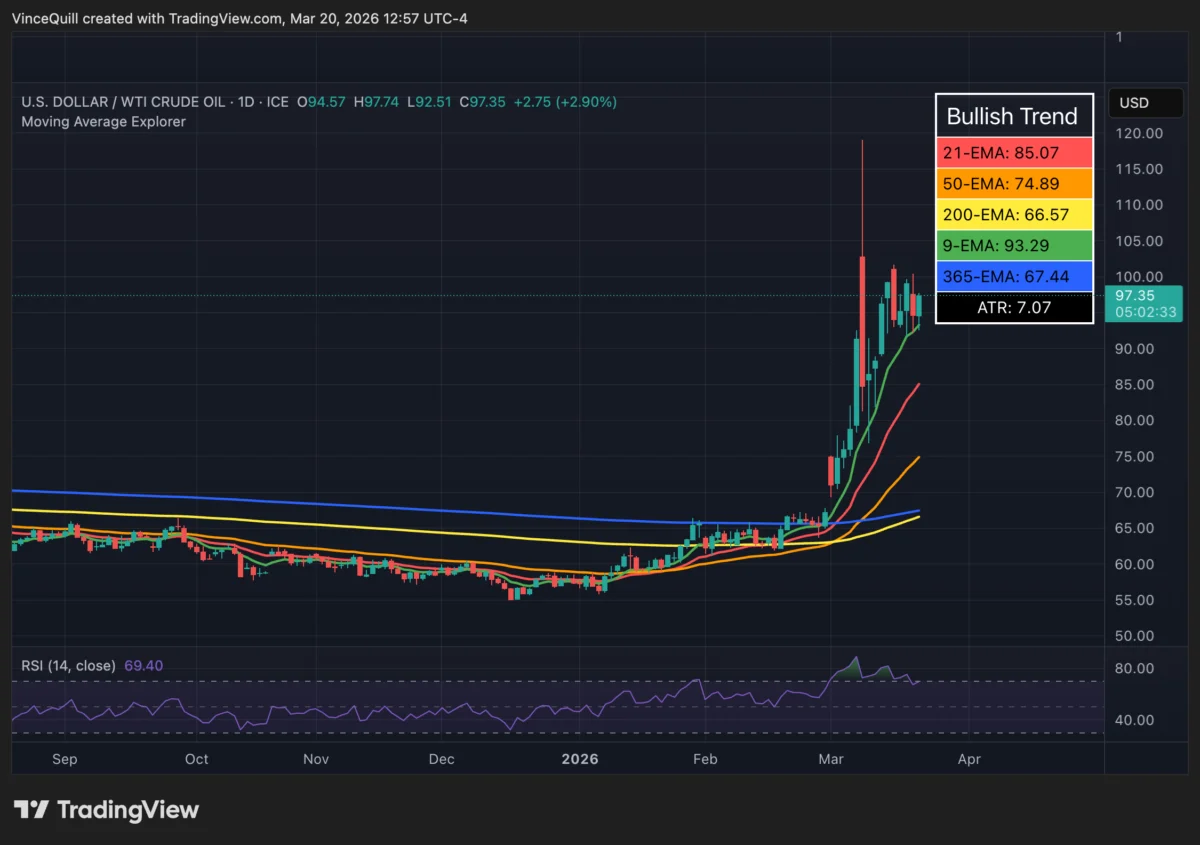
The global financial landscape is currently grappling with a significant mispricing of risk as the conflict in the Middle East continues to escalate, challenging long-held assumptions regarding geopolitical de-escalation. Market analysts are increasingly warning that investors have underestimated both the duration and the economic severity of the ongoing hostilities. At the center of this miscalculation is a phenomenon known in Wall Street circles as the "TACO" trade—an acronym for "Trump Always Chickens Out." This term, coined during the previous administration, reflects a market belief that geopolitical tensions involving the United States will ultimately result in a tactical retreat or a diplomatic "climb down" rather than a sustained, high-intensity conflict. However, market experts, including Nic Puckrin, founder of the Coin Bureau, suggest that the current architectural shift in global politics means that no single leader, including Donald Trump, maintains absolute control over the current trajectory of the war.
The "TACO" trade strategy relies on the assumption that rhetoric will not translate into long-term economic disruption. Historically, this has allowed traders to "buy the dip" during periods of initial volatility, betting on a swift return to the status quo. Puckrin warns that this logic is fundamentally flawed in the current context. The complexity of the Middle East theater, involving multiple state and non-state actors and critical energy infrastructure, suggests that there are no rapid exit strategies available. As the conflict persists, the economic fallout is transitioning from a speculative concern to a structural reality, with the potential to trigger a period of stagflation reminiscent of the 1970s.
The Oil Threshold and the Strait of Hormuz Crisis
The most immediate transmission mechanism for this geopolitical instability into the global economy is the price of crude oil. West Texas Intermediate (WTI) has already demonstrated extreme volatility, briefly surging toward the $120 per barrel mark following the initial outbreak of hostilities. While prices have fluctuated, the $100 per barrel level has emerged as a critical psychological and economic threshold. According to analytical projections, if oil continues to trade above $100 per barrel through the second and third quarters of the year, the impact on global growth and inflation will be profound.

Central to this supply-side shock is the Strait of Hormuz, a narrow waterway between Oman and Iran that serves as the world’s most important oil transit point. Approximately 20% of the global petroleum supply—roughly 21 million barrels per day—passes through this choke point. The closure or even the significant disruption of this waterway poses an existential threat to global energy security. Puckrin emphasizes that the damage to the Gulf’s oil-producing infrastructure is not a problem that can be solved overnight. Even in a scenario where the Strait were to be fully reopened immediately, the technical and logistical repairs required for damaged refineries and loading terminals would likely take months, if not years, to complete. This ensures that energy prices will remain elevated regardless of short-term diplomatic breakthroughs.
Chronology of Market Reaction and Geopolitical Escalation
The current market crisis began to take shape in early 2026, as regional tensions in the Middle East transitioned from localized skirmishes to a broader conflict affecting major oil-producing zones.
- Q1 2026: Initial spikes in WTI crude occurred as maritime insurance rates for tankers in the Persian Gulf skyrocketed. Traders initially treated the surge as a "headline risk" event, expecting a "TACO" style de-escalation.
- March 2026: The Federal Open Market Committee (FOMC) opted to hold interest rates steady between 3.5% and 3.75%. During this period, South Korean stock exchanges were forced to halt trading amid a wider market rout triggered by the specter of a prolonged war.
- Late March 2026: Reports of damage to critical oil infrastructure led to a realization that the supply shock would be persistent. G7 nations began discussing the release of emergency petroleum reserves to stabilize the market, though these measures provided only temporary relief.
- April 2026: The probability of an interest rate cut by the Federal Reserve vanished. Instead, the CME FedWatch tool began pricing in a 12% probability of a rate hike, a move almost unheard of during a period of slowing economic growth.
This timeline illustrates a shift from "transitory" concern to a "structural" crisis. The lag between the physical disruption of oil and the realization of its impact on the Personal Consumption Expenditures (PCE) price index has left many investors vulnerable to sudden market corrections.
Stagflation: The Return of a 1970s Economic Nightmare
The convergence of rising energy costs and slowing economic growth has revived the "dreaded" prospect of stagflation. Stagflation occurs when high inflation is coupled with stagnant demand and high unemployment—a scenario that leaves central banks with few effective tools. In a standard inflationary environment, the Federal Reserve raises rates to cool the economy. In a standard recession, the Fed lowers rates to stimulate growth. During stagflation, however, raising rates to fight energy-driven inflation risks crushing an already weakened labor market and deepening a recession.

Puckrin points to the 1970s as a cautionary tale for modern investors. During that decade, oil shocks led to a period where the S&P 500 remained essentially flat in real terms for ten years. When adjusted for inflation, investors saw no growth in their purchasing power, despite the nominal fluctuations of the market. The current projection suggests that sustained oil prices above $100 could add up to 1 percentage point to PCE inflation. This increase would effectively negate the progress the Federal Reserve has made over the past several years in returning inflation to its 2% target, forcing a "higher for longer" interest rate environment that could stifle innovation and capital expenditure.
The Federal Reserve’s Uncertain Path
Federal Reserve Chairman Jerome Powell has acknowledged the gravity of the situation, noting that the events in the Middle East have significantly clouded the central bank’s economic forecasts. In a recent press conference, Powell stated that the implications for the United States economy are "uncertain in the near term," though he conceded that higher energy prices will inevitably push up headline inflation.
The Fed’s dilemma is reflected in the shifting odds of future policy moves. Earlier in the year, the market was pricing in multiple rate cuts, which would have provided a stimulative "tailwind" for risk assets, including equities and cryptocurrencies. However, those odds have now "all but vanished." The emergence of a 12% probability for a rate hike in the upcoming FOMC meeting signals a hawkish pivot necessitated by the energy crisis. Powell has clarified that it is still "too soon" to gauge the full scope of the infrastructure disruption, but the central bank remains on high alert. For the Fed, the risk of unanchored inflation expectations remains a greater threat than a moderate economic slowdown, suggesting that they will not hesitate to keep liquidity conditions tight even if growth falters.
Implications for Risk Assets and the Cryptocurrency Market
The prospect of sustained high interest rates and stagflation has profound implications for the cryptocurrency market and other high-beta risk assets. Digital assets like Bitcoin have often been marketed as "digital gold" or a hedge against inflation. However, the reality of the past few years suggests that crypto remains highly sensitive to global liquidity conditions. When the Federal Reserve maintains high interest rates, the "cost of carry" for speculative assets increases, and liquidity is drained from the system.

Data indicates that "Bitcoin whales"—large-scale holders of the asset—have already begun shifting significant amounts of capital, with over $100 million in movements recorded as oil prices spiked. This suggests that large investors are de-risking and moving into more defensive postures, such as cash or short-term treasuries. The hope for a "crypto rally" spurred by easing monetary policy has been effectively quashed by the Middle East conflict. Furthermore, energy is a primary input for Bitcoin mining; a rise in global energy costs increases the production cost for new coins, potentially squeezing the margins of mining operations and adding further sell-pressure to the market.
Broader Economic and Geopolitical Outlook
As the world enters the second quarter of 2026, the "rude awakening" Puckrin described appears to be unfolding. The global economy is highly integrated, and energy is a critical input for almost every sector, from agriculture and manufacturing to transport and technology. A rise in the price of a barrel of oil is essentially a tax on the global consumer, reducing discretionary spending and increasing the cost of goods at every level of the supply chain.
The geopolitical reality is that the Middle East remains a volatile epicenter where local conflicts have global consequences. The "TACO" trade, while perhaps applicable in minor diplomatic spats, fails to account for the deep-seated structural issues and the involvement of multiple regional powers whose interests may not align with a quick resolution. For investors, the takeaway is clear: the era of "easy money" and predictable geopolitical de-escalation may be over. Navigating this new environment requires a departure from the "buy the dip" mentality and a more rigorous analysis of how energy security and central bank policy intersect in an increasingly fragmented world. The months ahead will likely be defined by how well markets can absorb the reality of $100+ oil and a Federal Reserve that is no longer in a position to offer a "Fed Put" to struggling investors.