admin
admin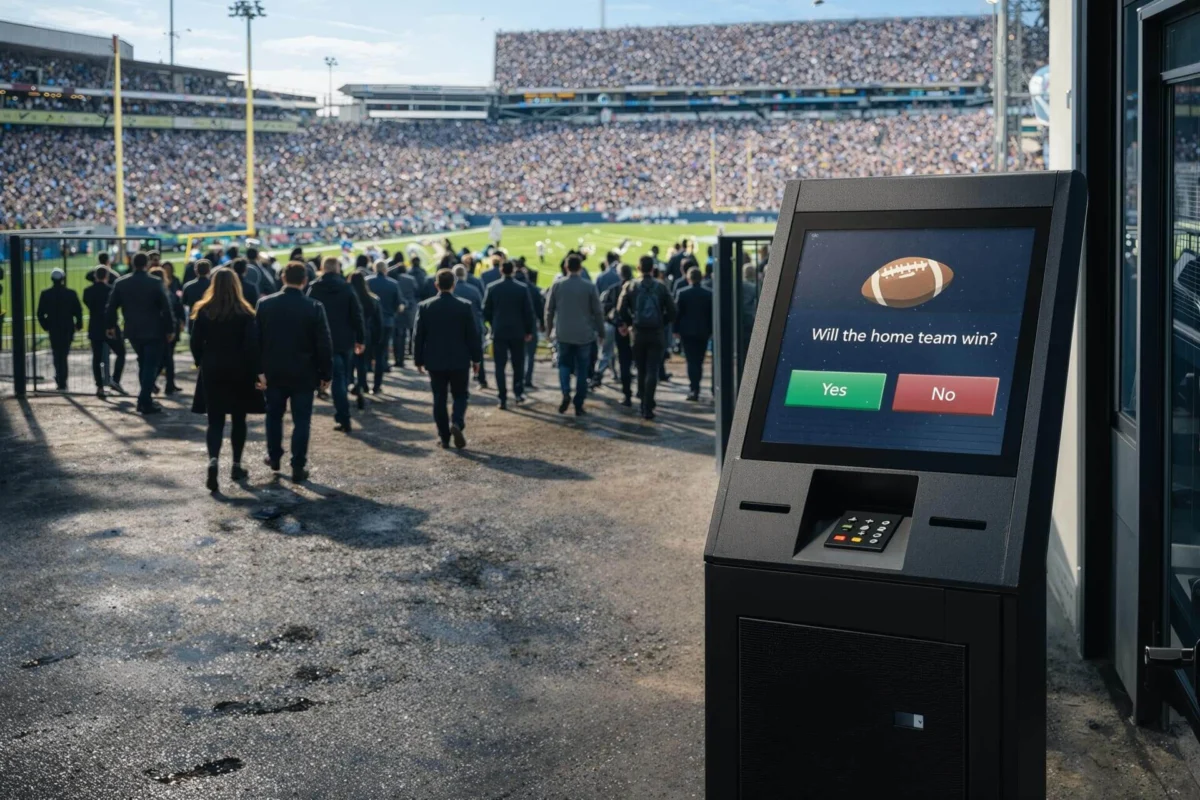
Prediction markets, once striving to position themselves as sophisticated alternatives to pure speculation, now find themselves at a critical crossroads. Their meteoric rise, largely propelled by the integration of sports event contracts, has inadvertently invited intense scrutiny from regulators, lawmakers, and state governments. This unexpected surge in popularity has plunged the industry into a dangerous identity crisis, forcing a confrontation over whether these platforms are legitimate financial derivatives or simply thinly veiled gambling operations. The question at the heart of the burgeoning conflict is deceptively simple: are these platforms facilitating bets, or are they enabling swaps? The answer to this fundamental query will dictate their future, and potentially their very existence.
The Sports Bet Catalyst: From Niche to National Phenomenon
For years, prediction markets operated on the fringes, catering to a niche audience interested in wagering on political outcomes, economic indicators, and policy shifts. Platforms like Polymarket and Kalshi sought to differentiate themselves by emphasizing their potential for hedging and information aggregation, presenting a more intellectual and financially relevant proposition than straightforward gambling. However, these efforts struggled to achieve significant scale.
The landscape dramatically shifted with the advent of sports event markets. By allowing users to trade on the outcomes of sporting events – from the Super Bowl to individual game results – prediction markets tapped into a massive, pre-existing consumer base accustomed to wagering on sports. This integration transformed a relatively obscure financial instrument into a mass-market product, attracting millions of users and generating unprecedented trading volumes. Data suggests that event contracts on sporting events now constitute the vast majority of transactions on leading prediction platforms, with some estimates placing their share at a staggering 90%.
This explosive growth, however, came at a cost. The very success that propelled prediction markets into the mainstream also exposed them to the long-established regulatory frameworks governing gambling and financial markets, creating a complex web of legal and jurisdictional challenges.
Regulatory Blitzkrieg: A Multifaceted Crackdown
The past year has witnessed a significant escalation in regulatory action against prediction markets, particularly those focused on sports. The U.S. Commodity Futures Trading Commission (CFTC) initiated a formal rulemaking process on March 12, 2026, placing manipulation, oversight, and contract structure under intense federal examination. This move signaled a clear intent from the federal regulator to assert its authority over the burgeoning market.
The federal push was quickly mirrored by state-level actions. On March 17, 2026, Arizona took a dramatic step by filing criminal charges against Kalshi, accusing the platform of operating an unlicensed gambling enterprise. Just days later, on March 20, 2026, a Nevada judge issued a temporary injunction blocking Kalshi from operating within the state without the requisite gaming license. These actions were not isolated incidents; Massachusetts had already moved against Kalshi’s sports-related contracts, indicating a coordinated effort by several states to rein in the platforms.
The legislative branch has also entered the fray. A bipartisan group of senators is actively preparing legislation aimed at banning sports bets and casino-style contracts from CFTC-regulated prediction markets. The rationale behind this proposed bill is that these platforms are exploiting a legal loophole to circumvent state gambling regulations and undermine tribal sovereignty over gaming. This congressional intervention underscores the growing concern that prediction markets, by offering sports-related contracts, are effectively creating an unregulated parallel to the established sports betting industry.
The Core Conflict: Bet or Swap?
At the heart of this intensifying dispute lies a fundamental legal classification: are prediction market contracts akin to sports bets, or are they more appropriately categorized as financial swaps or derivatives? The answer to this question is pivotal, as it determines which regulatory body holds jurisdiction.
According to Linda Goldstein, a partner at CM Law, if these transactions are deemed bets, they fall under the purview of state regulators, each with their own distinct set of rules and licensing requirements for gambling. Conversely, if they are classified as swaps or derivatives, the CFTC takes the lead role in their regulation.
States, including Arizona and Nevada, argue that while these contracts may superficially resemble derivatives, their underlying function is that of wagers. They contend that in many instances, there is no discernible commercial hedging use, and users are primarily staking money on uncertain outcomes for the sole purpose of profit. This perspective is particularly strong when considering contracts tied to the outcome of sporting events, where the primary motivation for participation appears to be entertainment and the thrill of winning a wager, rather than financial risk management.
Operators, on the other hand, assert that event contracts have historically fallen within the scope of commodities law. They argue that a functional national market cannot exist if individual states are empowered to unilaterally classify the same federally regulated product as illegal gambling. This position seeks to leverage existing federal financial regulatory structures to establish a consistent and nationwide operational framework, thereby avoiding the fragmented and costly licensing process required by individual states for sportsbooks.
Product Design and the Erosion of Credibility
Beyond the abstract legal classifications, the very design of prediction market products plays a crucial role in the ongoing regulatory debate. The pressure to drive volume and capitalize on market trends often leads platforms to list fast-moving and popular events. However, this pursuit of spectacle can sometimes compromise the precision and clarity required for robust financial contracts.
When event contracts lack precise definitions and irrefutable settlement mechanisms, they can easily devolve into entertainment wagering, blurring the lines with sports betting. This drift occurs when the emphasis shifts from the clarity of the outcome to the volume of trading and user engagement. Contracts that rely heavily on interpretation or subjective judgment calls become susceptible to disputes, litigation, and regulatory challenges.
Ross Weingarten, a partner and co-chair of the Sports Integrity Group at Steptoe, highlights this issue: "We saw an example of this with bets on whether Cardi B would perform at the Super Bowl. She was on stage, but didn’t have a microphone. Did she perform? The answer probably depends on which side of the bet you took. For the prediction markets, bets like this often lead to litigation."
Contracts with clear, objective, and easily verifiable settlement criteria, such as those determining the winner of a game, are more defensible. However, contracts involving in-game props, subjective performance metrics, or outcomes dependent on officiating decisions are inherently more vulnerable. The integrity of these markets hinges on their ability to maintain transparency, with visible order books, clear pricing, independent settlement sources, and robust abuse detection mechanisms. Platforms that emulate the operational characteristics of a neutral exchange are better positioned to argue for federal market status than those that appear to function as bookmakers.
The Financial Incentive for State Intervention
The states’ vigorous opposition to prediction markets is not solely rooted in consumer protection concerns; financial incentives and competitive pressures are significant drivers. Licensed sportsbooks operate within a regulated ecosystem that generates substantial tax revenue for states, derived from gross gaming revenue. According to the American Gaming Association, sports betting platforms have reportedly lost over $600 million to prediction markets since the beginning of 2025, representing a significant erosion of potential tax income for state coffers.
Linda Goldstein elaborates on this point: "Event contracts on sporting events account for the vast majority of transactions on prediction platforms like Kalshi and Polymarket, with some data estimating that it could be as much as 90% of the event contracts. These contracts are directly competing with licensed sportsbooks. Traditional sports betting generates significant tax revenue for the states because the states receive taxes on the gross gaming revenue. The American Association of Gaming has estimated that, since the beginning of 2025, sports betting platforms have lost over $600 million to prediction markets."
Furthermore, states emphasize that licensed sportsbooks are subject to stringent safeguards, including age verification, integrity monitoring, and mandatory contributions to responsible gambling funds. Prediction markets, by operating under a federal commodities framework, largely bypass these state-mandated protections, raising concerns about consumer vulnerability and the potential for increased problem gambling.
The escalating actions by states like Arizona and Nevada underscore their determination to prevent this gambling-like activity from migrating into a federal regulatory regime over which they have no control. The criminal charges filed by Arizona and the temporary restraining order in Nevada represent attempts to force the industry back under state jurisdiction before federal market law solidifies as a permanent workaround.
A Shifting Legal Landscape: Conflicting Court Rulings
The judicial landscape surrounding prediction markets remains highly contested, with courts offering divergent interpretations. While some jurisdictions have sided with the states, viewing sports event contracts as unlicensed sports betting, others have recognized them as financial swaps.
Ross Weingarten notes this divergence: "Some courts have agreed; others have not. Courts in New Jersey, California, and Tennessee have found that the contracts qualify as ‘swaps’ under the Commodity Exchange Act. But courts in Maryland, Nevada, Massachusetts, and Ohio have emphasized the historic role of states in regulating gambling. As a result, how and by whom prediction markets are regulated is very much in flux."
This judicial ambiguity contributes to the overall instability of the market and the ongoing regulatory uncertainty. The CFTC has consistently asserted its exclusive jurisdiction over platforms like Kalshi and Polymarket, while states continue to champion their oversight authority.
Congress Steps In: A Potential Carve-Out for Sports
The most significant development in this unfolding saga is the proposed bipartisan legislation from Congress. This bill aims to explicitly ban sports and casino-style contracts from CFTC-regulated prediction markets. This move represents a potentially more dangerous proposition for the industry than any state-level action, as it directly challenges a core assumption: that if prediction markets successfully navigate the federal-versus-state regulatory battle, sports contracts will inevitably survive.
This legislative push shifts the focus from a jurisdictional dispute to a fundamental question of market eligibility. The industry will no longer be solely concerned with whether courts deem their sports contracts as gambling under state law, but rather whether Congress will permit such contracts to be offered on regulated prediction markets at all. This represents a fight over categories and permissible activities, rather than simply the locus of regulatory control.
The Likely Endgame: A Hybrid Regulatory Future
The ultimate resolution of this complex regulatory battle is unlikely to result in a clear-cut victory for either federal or state authorities. Instead, a hybrid regulatory regime appears to be the most plausible outcome. This future may entail tighter federal rules, more stringent category restrictions, increased surveillance demands, enhanced pressure for contract clarity, and more rigorous marketing expectations for prediction market platforms.
While platforms may continue to present themselves as exchanges, they will be compelled to demonstrate this through their product design, settlement processes, surveillance capabilities, and the transparency of their contract offerings. The success of this industry hinges on its ability to evolve and adapt, proving that it offers something meaningfully distinct from traditional gambling, even as it capitalizes on the broad appeal of sports.
The current regulatory storm is not a fleeting phenomenon in a niche market. Prediction markets have found their mass audience by embracing sports, and now they must confront the consequences of that success. The ongoing conflict represents a foundational debate about the boundaries between finance and gambling, a process that is likely to unfold over years, shaping the future of how we trade on uncertainty. The industry’s challenge is to retain its newfound popularity while convincing regulators, lawmakers, and the public of its legitimate place within the financial landscape.