admin
admin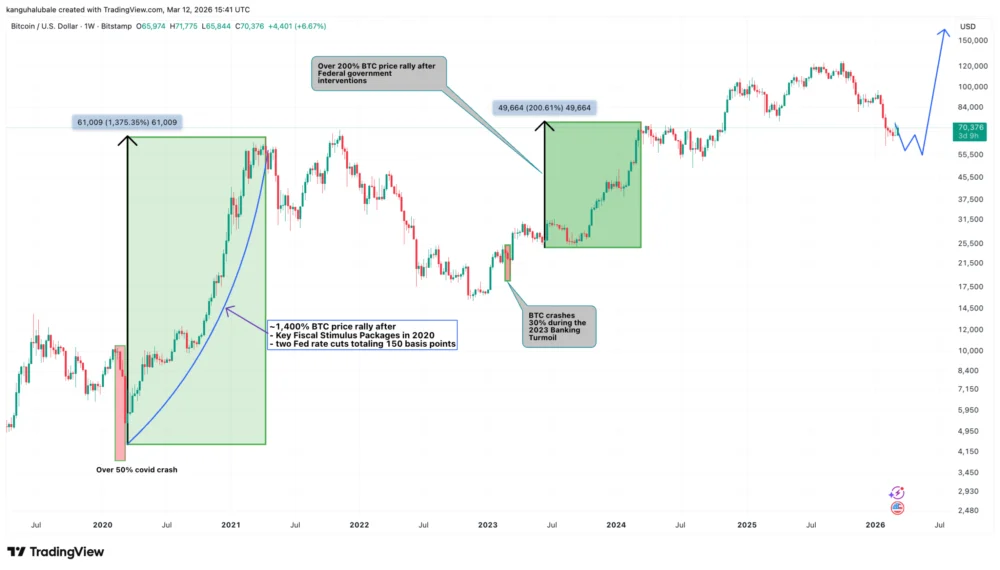
The global financial landscape is currently facing a significant stress test as the private credit market, a sector that has ballooned to over $2 trillion in assets under management, shows escalating signs of systemic fragility. Financial analysts and institutional observers are increasingly concerned that a burgeoning crisis in this "shadow banking" sector, characterized by rising defaults and restricted redemptions, could trigger a cascading liquidity crunch across traditional and digital asset markets. Specifically, experts warn that Bitcoin and the broader cryptocurrency ecosystem may serve as the initial "pressure valve" for investors seeking immediate liquidity, potentially leading to sharp short-term volatility followed by a significant long-term shift in monetary policy.
The private credit sector—defined as non-bank lending typically provided by private equity firms or specialized credit funds—has undergone a meteoric rise over the past decade. Growing from approximately $500 billion five years ago to its current $2 trillion valuation, the industry thrived in a low-interest-rate environment where investors were desperate for higher yields than those offered by government bonds or traditional savings accounts. However, as interest rates have remained elevated and economic conditions have shifted, the lack of regulatory oversight and the inherent illiquidity of these private loans have begun to manifest as structural cracks.
The Emergence of the Private Credit Ticking Time Bomb
The current alarm bells are being rung by some of the most prominent figures and institutions in global finance. The International Monetary Fund (IMF) issued a formal warning in 2024, noting that the private credit market "warrants closer watch." The IMF’s assessment highlighted that the rapid growth of this "opaque and highly interconnected segment" of the financial system could heighten vulnerabilities due to its limited transparency. Unlike traditional banks, which are subject to rigorous stress testing and capital requirement mandates, private credit funds often operate with significantly less disclosure, making it difficult for regulators to assess the true level of risk until a crisis is already underway.
In early 2026, these theoretical risks began to materialize into tangible market distress. BlackRock, the world’s largest asset manager with more than $10 trillion in total assets, recently moved to limit withdrawals from its $26 billion flagship private credit fund. This decision followed a surge in redemption requests from investors concerned about the underlying health of the loans within the portfolio. Similarly, Blue Owl Capital, another major player in the space, halted redemptions citing disruptions in the software sector caused by rapid advancements in artificial intelligence, which have rendered some legacy business models—and their ability to service debt—obsolete.
The distress is not limited to specialized firms. JPMorgan Chase has reportedly restricted lending to its own private credit funds following significant markdowns in asset values. Meanwhile, Morgan Stanley and the Cliffwater Private Credit Fund have joined the list of major institutions facing liquidity pressures. This collective "locking of the gates" suggests that the industry is entering a defensive posture, attempting to prevent a "run on the fund" that could force the fire-sale of assets at deep discounts.

Chronology of a Growing Crisis
To understand the gravity of the current situation, one must look at the timeline of the private credit expansion. Following the 2008 Global Financial Crisis, traditional banks faced stricter regulations (such as the Dodd-Frank Act in the United States and Basel III globally), which made them more hesitant to lend to mid-sized or high-risk companies. Private credit funds stepped into this vacuum, offering flexible, albeit more expensive, financing.
Between 2015 and 2021, the sector experienced a "gold rush" as institutional investors, including pension funds and insurance companies, flooded the market with capital. The low-rate environment made the 8% to 12% returns offered by private credit appear highly attractive. However, the aggressive hiking cycle initiated by the Federal Reserve in 2022 to combat inflation changed the calculus. Floating-rate loans, a staple of private credit, became significantly more expensive for borrowers to service, leading to the current rise in default rates.
By late 2025 and early 2026, the cumulative pressure of high rates and slowing economic growth began to break the weakest links. Jeffrey Gundlach, the founder of DoubleLine Capital often referred to as the "Bond King," has drawn chilling parallels between the current private credit environment and the Collateralized Debt Obligations (CDOs) that precipitated the 2008 crash. Gundlach noted that the "private credit fund of funds" structure seen today closely mirrors the "CDO-squared" products of 2007—complex instruments that masked the underlying risk of subprime mortgages until the entire system collapsed.
Supporting Data and Economic Indicators
The data supporting these concerns is stark. UBS has recently warned that in a worst-case economic scenario, default rates in the private credit sector could hit 15%. For a $2 trillion market, a 15% default rate represents $300 billion in lost or distressed capital, a figure large enough to cause significant systemic tremors.
Furthermore, data from Preqin, a leader in alternative assets data, suggests that while the market is projected to continue growing toward 2030, the quality of assets is declining. The "liquidity mismatch"—where investors expect to be able to withdraw funds quarterly or annually while the underlying loans have five-to-seven-year maturities—is the primary driver of the current redemption freezes. When major funds like BlackRock’s $26 billion vehicle limit withdrawals, it sends a signal to the rest of the market that cash is becoming scarce.
The macroeconomic backdrop further complicates the issue. Geopolitical conflicts and uncertainty regarding global trade have put upward pressure on energy prices, potentially keeping inflation "sticky." This, in turn, has reduced the likelihood of aggressive interest rate cuts by the Federal Reserve. As of the most recent data from futures markets, there is less than a 1% chance of a rate cut at the upcoming March 18 Federal Open Market Committee (FOMC) meeting. Without the relief of lower rates, the pressure on private credit borrowers will only intensify.

The Bitcoin and Crypto Spillover Mechanism
The link between a private credit crisis and the cryptocurrency market is rooted in the mechanics of global liquidity. Crypto investor and analyst Paul Barron recently characterized withdrawal limitations in private funds as a "big deal for crypto." The logic is straightforward: when institutional investors find their capital locked in illiquid private credit funds, they face a liquidity crunch. To meet their own obligations, such as margin calls, operating expenses, or other debt repayments, they must sell the assets they can sell.
Bitcoin and Ethereum are among the most liquid assets in the world. They trade 24 hours a day, seven days a week, on global exchanges with massive depth. Consequently, they often serve as the "first pressure valve" during a financial panic. We have seen this pattern play out in previous crises:
- The March 2020 COVID-19 Crash: As the global economy locked down, investors scrambled for cash. Bitcoin’s price plummeted by approximately 50% in a matter of days as it was sold off to cover losses in other markets.
- The March 2023 Banking Turmoil: When Silicon Valley Bank and Signature Bank collapsed, Bitcoin initially sold off amid fears of a broader contagion and the loss of fiat on-ramps.
However, history also suggests that this initial "liquidity sell-off" is often followed by a massive rally. In 2020, the Federal Reserve’s emergency liquidity injections and rate cuts to zero fueled a 1,400% rally in Bitcoin, taking it from roughly $4,400 to $69,000 by late 2021. Similarly, in 2023, once the market realized the Fed would provide a backstop for the banking system, Bitcoin rallied more than 200% as investors priced in an eventual end to rate hikes.
Official Responses and Market Reactions
The response from the financial establishment has been one of cautious restriction. JPMorgan’s decision to limit lending to private credit funds is a clear indication that even the largest banks are concerned about "contagion risk"—the possibility that the problems in the shadow banking sector could infect the balance sheets of regulated commercial banks.
Market analyst MartyParty recently argued on social media that "financial repression is incoming," suggesting that the rapid growth of the sector in the face of increasing scrutiny over liquidity will eventually force the Federal Reserve’s hand. "Either the Fed injects liquidity, or we go into crisis," he noted, echoing a sentiment shared by many in the macro-trading community.
BitMEX co-founder Arthur Hayes has taken a similar stance, albeit with a focus on the eventual upside for digital assets. Hayes has stated that he is waiting for the Federal Reserve to formally loosen its monetary policy before significantly increasing his Bitcoin holdings. He predicts that once the "money printer" is reactivated to save the private credit market from a total meltdown, the resulting expansion of the money supply could drive Bitcoin’s price to $250,000 or higher.

Broader Impact and Implications
The implications of a private credit breakdown extend far beyond the balance sheets of BlackRock or JPMorgan. If the sector faces a prolonged crisis, it could lead to a "credit crunch" for the thousands of medium-sized businesses that rely on these funds for survival. A lack of credit leads to reduced capital expenditure, layoffs, and a potential recession.
For the cryptocurrency market, the private credit crisis represents a "double-edged sword." In the short term, the risk of a sharp "flash crash" is high as institutional players liquidate their BTC holdings to raise cash. This could see Bitcoin drop toward the $60,000 or $65,000 range if the redemption freezes at major funds continue to spread.
In the long term, however, the crisis reinforces the narrative of Bitcoin as a "hard money" alternative to a fragile, debt-based financial system. Every time the traditional financial system requires a massive government or central bank bailout to survive, the value proposition of a decentralized, mathematically capped asset like Bitcoin becomes more apparent to institutional and retail investors alike.
As the March 18 FOMC meeting approaches, all eyes will be on the Federal Reserve’s rhetoric. While a rate cut seems unlikely in the immediate future, any hint of a "standing repo facility" or other liquidity-providing measures could signal that the central bank is aware of the "ticking time bomb" in private credit. For now, the market remains in a state of high alert, watching for the next major fund to "lock the gates" and the subsequent impact on the world’s most liquid digital assets.