
 admin
admin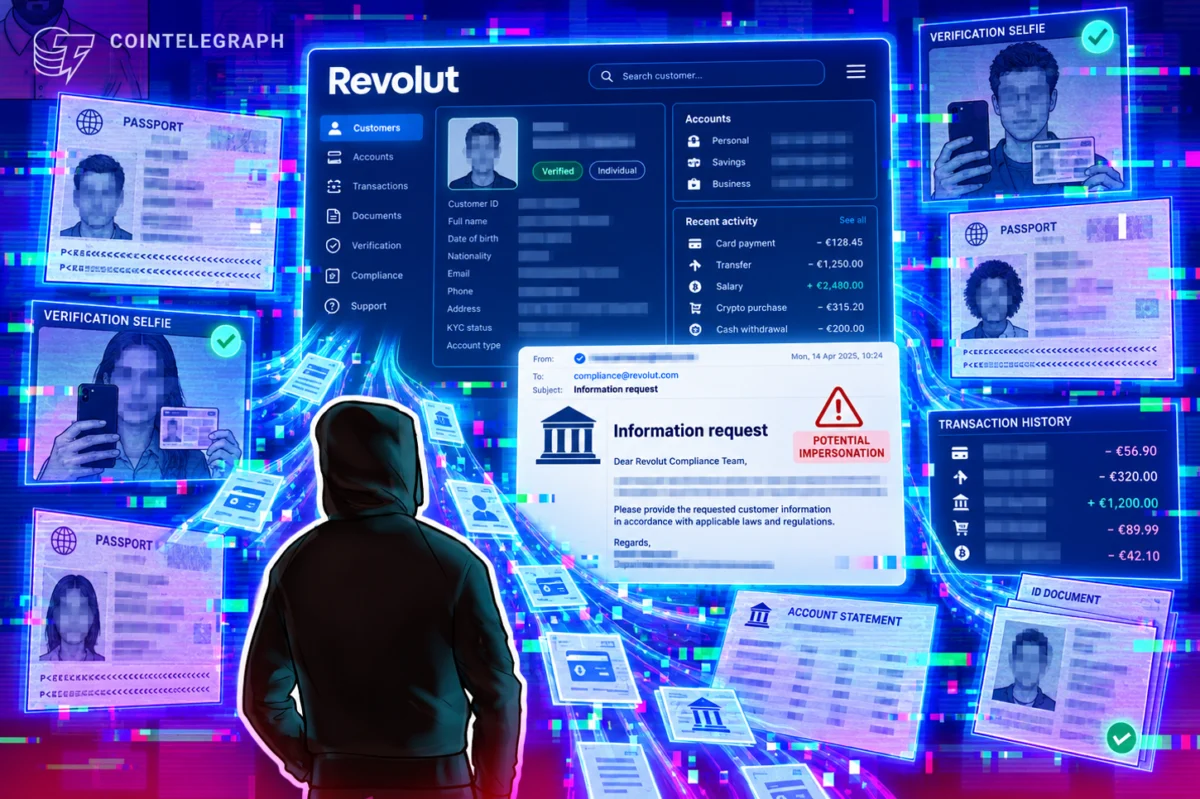
Financial technology giant Revolut has confirmed a significant security incident involving the unauthorized release of highly sensitive customer data, including passport copies, biometric verification selfies, and comprehensive transaction histories. The breach occurred after the company responded to a fraudulent request for information that appeared to originate from a legitimate government agency. This incident highlights a growing trend of "Emergency Data Request" (EDR) fraud, where sophisticated actors gain access to official government email domains or spoof them with high precision to bypass the standard authentication protocols used by financial institutions.
The breach was first brought to public attention through reports from cybersecurity monitors and social media disclosures by affected users. According to data initially shared by International Cyber Digest, the attackers utilized a legitimate government agency email domain to submit their requests. Because the email domain was authenticated and appeared valid under Revolut’s internal security checks, the company’s compliance and data teams fulfilled the requests, inadvertently handing over a trove of Private Identifiable Information (PII) to malicious actors.
The Mechanism of the Breach: Sophisticated Social Engineering
The core of the incident lies in the exploitation of the trust established between financial institutions and law enforcement agencies (LEAs). Under international financial regulations, banks and fintech companies like Revolut are required to cooperate with legal inquiries. In many jurisdictions, "Emergency Data Requests" allow law enforcement to bypass traditional subpoena or warrant timelines if there is an immediate threat to life or public safety.
In this instance, the unauthorized third party managed to leverage a legitimate government domain. This suggests one of two scenarios: either a government email server was compromised by hackers, or the attackers used advanced techniques to exploit vulnerabilities in email authentication protocols like SPF (Sender Policy Framework), DKIM (DomainKeys Identified Mail), or DMARC (Domain-based Message Authentication, Reporting, and Conformance).
A spokesperson for Revolut clarified the situation in a statement to the press, noting that the company had identified a "sophisticated external impersonation scam." The spokesperson emphasized that the attackers did not breach Revolut’s core systems or infrastructure. Instead, they manipulated the administrative channels used for regulatory and legal compliance. By the time Revolut’s internal security teams flagged the requests as non-authentic, the sensitive data had already been transmitted to the third party.
Chronology of the Incident and Response
The timeline of the event suggests a rapid escalation from the initial fraudulent request to the eventual notification of the victims. While the exact date of the data transmission has not been disclosed by Revolut, the fallout became public in late September 2024.
On Friday, September 20, 2024, Revolut began contacting a "limited number" of individuals whose data had been compromised. These notifications informed users that their most sensitive documents—those used for "Know Your Customer" (KYC) onboarding—were now in the hands of an unauthorized party.
On Saturday, September 21, 2024, the company issued a formal response to media inquiries. In this statement, Revolut confirmed that upon detecting the scam, they immediately blocked the fraudulent email address and alerted the relevant government agency whose domain had been hijacked. Furthermore, Revolut notified its primary financial regulators and relevant law enforcement bodies to initiate a forensic investigation into the source of the attack.
The company has maintained that its core financial systems, including customer balances and transaction processing engines, remain unaffected. However, for the individuals targeted, the loss of biometric data and government-issued identification poses a long-term security risk that extends far beyond their Revolut accounts.
Data Sensitivity and the Impact on High-Net-Worth Individuals
The nature of the leaked data is particularly concerning for cybersecurity experts. Unlike a standard data breach involving only names and email addresses, this incident involved "full-stack" identity data. This includes:
- Passport Copies: High-resolution scans of government IDs can be used to open fraudulent bank accounts, apply for loans, or bypass security on other platforms.
- Verification Selfies: These are often used for biometric "liveness" checks. In the era of deepfakes and AI-driven identity fraud, having a legitimate verification selfie allows attackers to create more convincing fraudulent profiles.
- Full Transaction Histories: This data provides a roadmap of a user’s financial life, including their net worth, frequent counter-parties, and spending habits. Such information is invaluable for "spear-phishing" attacks or physical targeting.
Blockchain investigator and cybersecurity analyst ZachXBT, who tracks high-level digital asset crimes, noted that the incident appeared to be highly targeted. According to his analysis, the breach did not target the general user base of over 45 million customers but was instead focused on a small group of high-net-worth individuals. This suggests the attackers had prior knowledge of who their targets were and used the fraudulent government request as a scalpel to extract specific data.
The "KYC Honeypot" Debate and Industry Reaction
The incident has reignited a fierce debate within the fintech and cryptocurrency communities regarding the risks of mandatory data collection. Marc Zeller, a prominent figure in the decentralized finance (DeFi) space and founder of the Aave Chan Initiative, was among those who reported being affected. Zeller took to social media to criticize the current regulatory landscape, stating that the leak served as a "sharp reminder" that mandatory KYC (Know Your Customer) procedures often put users at greater risk than the crimes they are intended to prevent.
Critics argue that by forcing fintech companies to collect and store massive databases of biometric and identity data, regulators have created "honeypots" for hackers. When these companies are then compelled to share that data with law enforcement via digital requests, the attack surface expands. If a single government email account is compromised, the security of thousands of private citizens across various financial institutions is jeopardized.
This is not an isolated trend. In recent years, several major tech firms, including Apple, Meta, and Discord, have reportedly fallen victim to similar fraudulent emergency data requests. In those cases, hackers gained access to police department email systems and used them to request user data, which the companies provided under the assumption that they were complying with legitimate urgent law enforcement needs.
Analysis of Broader Implications for the Fintech Sector
The Revolut breach serves as a case study for the evolving threats facing the global financial sector. As traditional hacking methods—such as brute-force attacks on servers—become more difficult due to improved encryption and cloud security, attackers are shifting their focus toward the "human and procedural" layer of security.
For Revolut, which is currently seeking a full banking license in various jurisdictions (including a recently granted provisional license in the UK), this incident presents a significant reputational challenge. Regulators like the Financial Conduct Authority (FCA) in the UK and the European Central Bank (ECB) place a heavy emphasis on operational resilience and the ability of a firm to protect customer data.
The breach also highlights the limitations of current email-based verification systems for legal requests. Journalistic analysis of the event suggests that the industry may need to move toward more robust, multi-factor authentication portals for law enforcement inquiries, rather than relying on the perceived legitimacy of an email domain.
Future Outlook and Regulatory Scrutiny
In the wake of this incident, Revolut has stated that it is providing support to the impacted individuals. This likely includes identity theft monitoring services and enhanced security protocols for their accounts. However, the long-term implications for the affected users are permanent; once a passport scan and biometric selfie are leaked, they cannot be "reset" like a password.
From a regulatory perspective, Revolut could face investigations under the General Data Protection Regulation (GDPR) in Europe. Under GDPR, companies can face massive fines—up to 4% of their annual global turnover—if they are found to have failed in their duty to implement "appropriate technical and organizational measures" to ensure data security. The investigation will likely hinge on whether Revolut’s "authentication checks" for the fraudulent request were sufficiently rigorous given the sensitivity of the data being requested.
The incident underscores a paradox in modern finance: the very data collected to secure the financial system and prevent money laundering has become one of the greatest liabilities for individual privacy and security. As cybercriminals become more adept at impersonating state actors, the friction between regulatory compliance and data protection is expected to intensify.
Revolut’s experience is a warning to the broader fintech industry. It demonstrates that even when a company’s primary infrastructure is secure, the external channels through which it interacts with the state can be weaponized. The shift from "hacking the system" to "hacking the law" represents a new frontier in cybercrime, one that requires a fundamental rethink of how sensitive identity data is managed, shared, and protected across the globe.








