
 Lina Irawan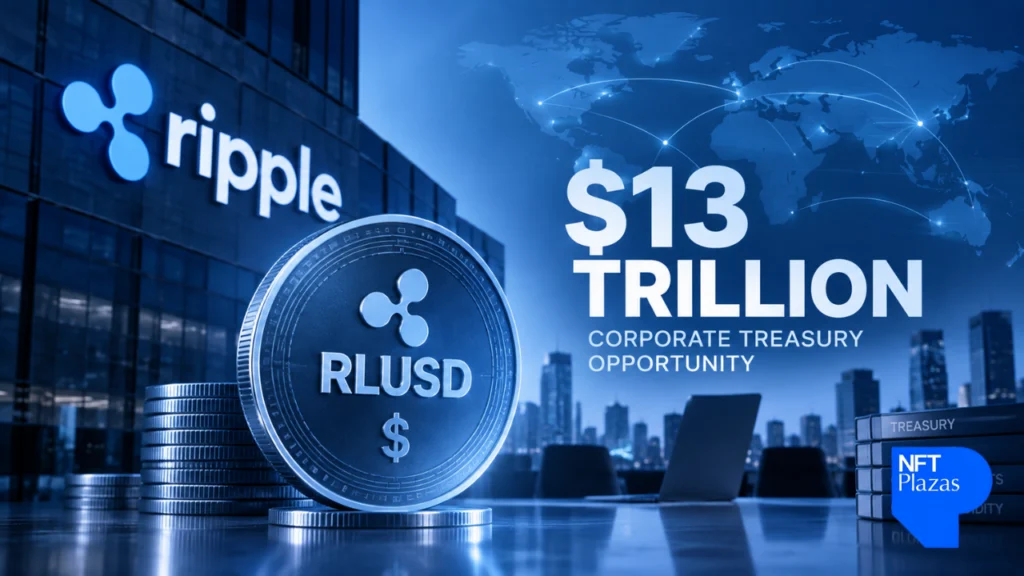
Ripple is strategically positioning its USD-backed stablecoin, RLUSD, to capture a significant share of the corporate treasury operations market, a sector collectively responsible for approximately $13 trillion in annual transactions. This ambitious move leverages Ripple’s existing infrastructure and acquisitions, aiming to integrate blockchain-based settlement into financial workflows traditionally outside the cryptocurrency sphere. The company’s senior vice president of stablecoins, Jack McDonald, highlighted this expansive opportunity, emphasizing its deep ties to Ripple Treasury, the corporate treasury-management division built upon the company’s $1 billion acquisition of GTreasury in 2025.
This strategic acquisition provided Ripple with direct access to a vast network of corporate finance teams tasked with managing intricate cash flows across diverse geographical locations, multiple subsidiaries, and numerous domestic accounts. The sheer scale of this existing customer base represents a pivotal entry point for introducing RLUSD and other blockchain-based solutions into established financial ecosystems.
"That customer base hadn’t been onchain," McDonald remarked to CoinDesk, underscoring the untapped potential. He further elaborated on the immense scope of this opportunity, stating, "So that opportunity set is just massive." While the $13 trillion figure reflects the aggregate transaction activity managed by Ripple Treasury clients rather than immediate deployable cash reserves, it vividly illustrates the strategic importance of this distribution channel for RLUSD.
The Pursuit of Utility Beyond Market Capitalization
Despite its rapid supply expansion, RLUSD currently occupies a more nascent position in the global stablecoin market when compared to established players like Tether’s USDT and Circle’s USDC. Recent transparency data from Ripple, as of September 3, 2026, indicated that approximately $2.4 billion of RLUSD was in circulation. Crucially, these tokens are reportedly backed by reserves that exceed their outstanding value, a key factor for institutional trust. Third-party blockchain analytics corroborate this supply figure, with RLUSD tokens distributed across both the XRP Ledger and the Ethereum blockchain, showcasing Ripple’s multi-chain strategy.
However, Ripple’s strategic focus appears to be less on achieving headline market capitalization and more on fostering genuine utility and daily usage of RLUSD. McDonald articulated this sentiment, stating, "What’s more exciting to us is the utility and the daily activity." He further revealed a significant uptick in RLUSD’s daily engagement, noting a more than threefold increase since the beginning of the year. This surge saw daily activity climb from approximately $200 million to roughly $750 million in the preceding month.
This distinction is critical for Ripple’s long-term vision. Instead of solely competing for a larger slice of the existing stablecoin supply market, the company is positioning RLUSD as an integral component of a comprehensive financial infrastructure. This infrastructure is designed to encompass payments, advanced treasury management, sophisticated capital markets operations, and institutional trading platforms.

Payments and Capital Markets: Pillars of Adoption
Payments represent one of the foundational use cases for RLUSD within Ripple’s broader strategy. The stablecoin has been integrated into Ripple’s existing payments infrastructure, empowering businesses to leverage digital dollars for seamless cross-border transactions and settlements. This integration aims to streamline international commerce by offering a more efficient and potentially cost-effective alternative to traditional remittance channels.
The capital markets sector presents another fertile ground for RLUSD’s expansion. The stablecoin is being positioned as a versatile tool for various functions within these markets, including serving as the cash component in transactions, facilitating settlement processes, and acting as collateral. Ripple has actively pursued partnerships with leading financial institutions, such as Franklin Templeton and DBS, to explore and develop tokenized money-market funds and innovative lending initiatives.
Furthermore, RLUSD’s utility extends to its role as collateral through Ripple Prime, the institutional brokerage arm established following Ripple’s acquisition of Hidden Road. This integrated approach underscores Ripple’s commitment to building a holistic institutional financial stack, moving beyond the concept of RLUSD as a standalone cryptocurrency.
"Stablecoins are evolving from a crypto asset to part of financial infrastructure," McDonald observed, articulating a fundamental shift in how these digital assets are perceived and utilized. This evolution is particularly relevant for corporate treasurers, whose operational priorities revolve around liquidity, settlement speed, enhanced cash visibility, robust risk management, and stringent regulatory compliance, rather than speculative cryptocurrency trading.
Ripple Treasury’s infrastructure has been proactively adapted to accommodate the growing demand for digital assets. In April, Ripple Treasury unveiled an enhanced treasury management system featuring native digital-asset capabilities. This development extends the robust infrastructure inherited from GTreasury to encompass blockchain-based assets, further solidifying Ripple’s commitment to serving institutional clients with comprehensive digital finance solutions. The platform’s reported facilitation of $13 trillion in payment volume in 2025 attests to its significant adoption and capability within the institutional finance landscape.
European Expansion: Navigating Regulatory Landscapes
Ripple is also actively targeting the European market for RLUSD’s expansion, a move catalyzed by increasing regulatory clarity surrounding stablecoins within the European Union. McDonald indicated Ripple’s intention to introduce the dollar-backed stablecoin through a dual-issuance structure specifically designed to align with the EU’s Markets in Crypto-Assets (MiCA) framework.
The company has demonstrably strengthened its regulatory standing in Europe throughout the year. In February, Ripple secured a full Electronic Money Institution license from Luxembourg, a significant regulatory milestone. Subsequently, it obtained full MiCA authorization as a Crypto Asset Service Provider (CASP). This latter accreditation grants Ripple the legal authority to offer a comprehensive suite of regulated crypto services across the entire European Economic Area (EEA), paving the way for its expanded operations in payments, custody, trading, and stablecoin services.

This progressive regulatory approach provides Ripple with a solid foundation for broadening its service offerings across Europe. McDonald further noted a persistent demand for dollar-backed stablecoins, which currently outpaces that for tokens denominated in euros or other emerging market currencies. This trend presents a significant opportunity for RLUSD, even in European markets where underlying transactions may involve multiple currencies.
Ripple also perceives a synergistic role for stablecoins operating alongside bank-issued tokenized deposits. McDonald explained that while deposit tokens are highly effective within the confines of individual banks or closed-loop systems, stablecoins offer a crucial bridge for facilitating the movement of funds between disparate institutions and across different financial systems. "When you want to go outside of that walled garden, that’s where stablecoins come into play," he stated, highlighting the interoperability advantage of stablecoins in a fragmented financial landscape.
Selective Blockchain Expansion: A Focus on Institutional Demand
RLUSD was initially launched on the XRP Ledger and Ethereum, but Ripple has systematically expanded its availability to encompass additional blockchain networks. These include Base, Ink, Optimism, and Unichain, among others. However, Ripple’s expansion strategy is characterized by selectivity rather than a broad, indiscriminate approach.
"We want to be where there is demand," McDonald affirmed, indicating that Ripple’s strategic direction is primarily driven by institutional use cases rather than an objective to maximize the sheer number of networks supporting RLUSD. This measured approach aligns perfectly with the company’s overarching strategy of positioning RLUSD as a foundational element of institutional financial infrastructure.
The substantial $13 trillion annual transaction figure associated with Ripple Treasury clients offers a potentially significant distribution advantage. Rather than compelling companies to adopt entirely new crypto-native platforms, Ripple can integrate stablecoin functionality directly into the treasury systems that these businesses already utilize.
The primary challenge for Ripple will be the effective conversion of this existing financial activity into meaningful and sustained RLUSD usage. With a current circulation of approximately $2.4 billion, RLUSD remains a relatively small player compared to the colossal transaction flows Ripple is targeting. However, should Ripple succeed in embedding RLUSD seamlessly into corporate payments, liquidity management, and capital market workflows, the company would be competing for a far more significant prize than a mere share of the crypto trading market. It would be vying for a fundamental role in the very infrastructure that businesses rely upon for their daily financial operations. This strategic integration into core financial workflows could redefine the utility and adoption of stablecoins within the institutional sector.









