
 Lina Irawan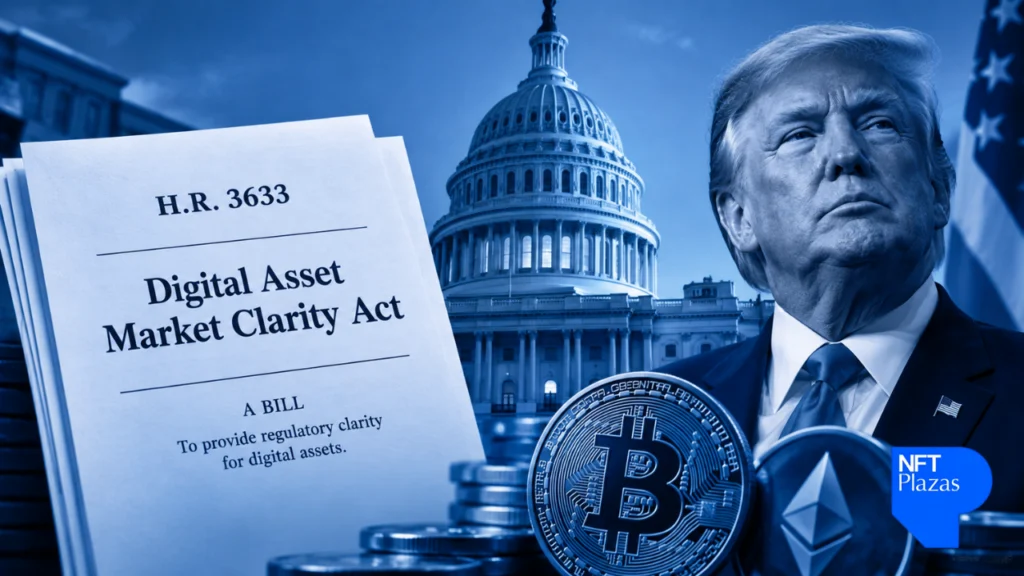
Senate Republicans have unveiled what they describe as the "final" draft of the CLARITY Act, signaling a determined effort to advance the long-anticipated cryptocurrency market structure legislation before the 2026 legislative calendar reaches its conclusion. This latest iteration of the bill, released late Sunday by Senators Cynthia Lummis, John Boozman, and Tim Scott, incorporates a significant number of amendments—126 substantive changes requested by Senate Democrats—following over a year of intensive bipartisan negotiations. The revised proposal also integrates key elements of a bipartisan ethics framework championed by Senators Thom Tillis and Ruben Gallego, a development reportedly met with agreement from former President Donald Trump, potentially neutralizing a significant political hurdle. The bill’s proponents are now eyeing a critical procedural vote scheduled for Tuesday, September 15th, as a pivotal moment in its journey toward potential enactment.
"If cloture is invoked, the new text would be offered as the substitute amendment," stated the senators in their announcement, underscoring the strategic importance of the upcoming vote. The introduction of this revised 635-page proposal aims to build momentum and demonstrate a unified front on a complex and politically charged issue that has seen considerable debate and negotiation throughout multiple legislative sessions.
Trump’s Concession on Crypto Ethics: A Turning Point?
A central point of contention that has repeatedly stalled progress on cryptocurrency legislation has been the ethical implications surrounding public officials and their potential financial ties to the digital asset space. The revised CLARITY Act directly addresses these concerns by introducing new ethics restrictions applicable to federal public officials and employees, including the President, Vice President, members of Congress, and their spouses. This move is particularly significant given recent scrutiny surrounding former President Donald Trump’s family’s involvement in various cryptocurrency ventures, including World Liberty Financial, a USD1 stablecoin, and the TRUMP memecoin. Reports from 2025 indicated that Trump’s financial disclosures revealed over $1.4 billion in crypto-related income, raising substantial questions about potential conflicts of interest as regulatory frameworks for the industry were being considered.
The ethics provisions within the new draft largely mirror the framework proposed by Senators Tillis and Gallego. This framework notably includes a role for state attorneys general in enforcing conflict-of-interest rules, a stipulation that had been a crucial condition for some Democratic senators considering their support for the legislation. Senator Lummis expressed optimism about this development, asserting that former President Trump had voluntarily agreed to these restrictions. "Democrats got what they wanted; now they need to take yes for an answer," Lummis remarked, signaling her belief that this concession should pave the way for Democratic support. However, the current language of the bill does not extend these same restrictions to other family members of public officials, such as their children, leaving a potential loophole for certain indirect financial entanglements. This nuance could still present a point of discussion or contention as the bill progresses.

Stablecoin Safeguards: Addressing Banking Industry Concerns
Another significant area of dispute that the latest CLARITY Act draft seeks to resolve involves stablecoin rewards, a key point of contention between the cryptocurrency industry and traditional banking institutions. The legislation generally prohibits platforms from offering interest on idle payment stablecoins, a measure intended to prevent them from acting as direct substitutes for traditional bank deposits. However, rewards tied to the active use of stablecoins remain permissible.
Banking groups, including the American Bankers Association, have voiced strong concerns that such incentives could incentivize customers to shift their deposits away from community banks and towards stablecoin-based products. They argue that community bank deposits are vital for local lending and economic development. To mitigate these risks, the revised draft introduces a "circuit breaker" mechanism. This provision grants the Treasury Secretary the authority to implement an 18-month moratorium on certain stablecoin rewards if payment stablecoins lead to substantial outflows of deposits from traditional financial institutions. This safeguard is designed as an emergency measure to address potential systemic risks rather than an outright ban on stablecoin rewards, aiming to strike a balance between fostering innovation and protecting the stability of the traditional banking system. The inclusion of this provision is anticipated to garner support from lawmakers who have been hesitant due to the potential destabilizing effects of stablecoins on community banks.
Evolving Protections for Blockchain Developers and Market Participants
The CLARITY Act also introduces modifications to protections for blockchain developers, specifically under the proposed Blockchain Regulatory Certainty Act. The revised language narrows these protections to encompass matters related to the Bank Secrecy Act and civil enforcement actions. Notably, broader language that could have shielded developers from certain criminal charges, including prosecutions under 18 U.S.C. 1960, has been removed. This statute has been instrumental in past prosecutions of individuals associated with privacy-focused cryptocurrency services, such as Tornado Cash and Samourai Wallet. The aim of this adjustment appears to be to provide a degree of regulatory clarity for developers without creating what lawmakers might perceive as an expansive exemption from federal criminal law.
Further refinements have been made to provisions overseen by the Agriculture Committee. These include enhanced guardrails specifically targeting affiliate trading, conflicts of interest, and vertical integration within digital commodity exchanges, brokers, and dealers. These tightened regulations are designed to promote fairer and more transparent markets by preventing potential market manipulation and ensuring a level playing field for all participants. The legislation also aims to clarify the circumstances under which state consumer-protection laws can be applied to businesses operating in the digital asset sector, providing greater certainty for both businesses and consumers regarding jurisdictional authority.
A Narrow Path to Passage: The Countdown Begins
Despite these significant compromises and bipartisan efforts, the CLARITY Act still faces a challenging legislative path. The Senate is scheduled to hold a cloture vote on Tuesday, September 15th, on the motion to proceed to the bill. This procedural vote requires a supermajority of 60 senators to overcome a potential filibuster. With Republicans holding 53 seats, this means that at least seven Democrats or independents would need to vote in favor of proceeding, assuming full Republican support.

A successful cloture vote would not immediately send the bill to the House of Representatives. Instead, it would initiate the debate phase on the Senate floor. Following the debate, senators would need to navigate potential amendments and another procedural vote before final passage in the Senate. Subsequently, the House of Representatives would have to consider the Senate’s version of the bill or reconcile it with any existing House legislation before the measure could be sent to the President’s desk for signature.
The legislative calendar is rapidly shrinking. The Senate is slated for a state work period beginning October 5th, and the crucial Election Day is set for November 3rd. Compounding the time constraints, House leadership has already canceled scheduled work weeks later in September, leaving lawmakers with a very limited window to enact significant legislation. Senator Lummis has previously cautioned that if the CLARITY Act fails to pass during the current Congress, the opportunity for comprehensive federal cryptocurrency regulation might not arise again until 2030, underscoring the urgency of the current legislative push.
Market Expectations and the Stakes of Tuesday’s Vote
The latest round of compromises has demonstrably impacted market sentiment. Prediction markets, which track the perceived likelihood of legislative outcomes, now place the probability of the CLARITY Act becoming law this year at approximately one-third, a notable increase from the low-20% range observed before the release of the revised draft.
For the cryptocurrency industry, Tuesday’s cloture vote represents more than just a procedural hurdle. It serves as the most significant test to date of whether months of intricate negotiations—spanning market structure, stablecoin regulation, developer protections, and political ethics—have yielded a sufficiently robust compromise to garner the broad bipartisan support necessary for passage. If Republicans can indeed secure the required 60 votes, the CLARITY Act will advance to the next stage of the legislative process. However, failure to achieve this threshold would likely result in another prolonged period of uncertainty for the U.S. digital asset market, delaying the implementation of much-needed federal regulatory clarity. The outcome of this vote will have profound implications for innovation, investment, and consumer protection within the rapidly evolving cryptocurrency landscape.









