Layla Zulfa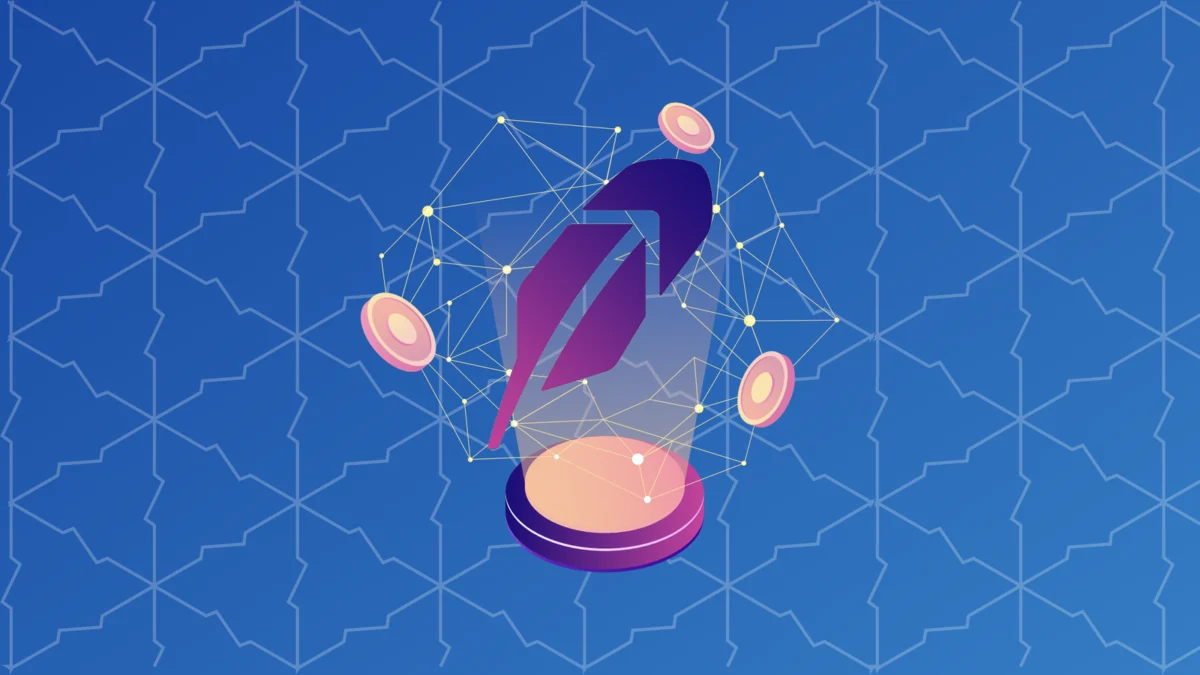
Robinhood Markets Inc. officially transitioned from a digital brokerage to a foundational blockchain infrastructure provider with the mainnet launch of Robinhood Chain on July 1, 2026, signaling a major shift in how traditional financial assets and decentralized finance (DeFi) interact. Developed as a high-performance Layer-2 (L2) network, the platform was designed to host a sophisticated ecosystem of tokenized real-world assets (RWAs), smart contracts, and decentralized applications. Since its inception, the network has experienced a rapid ascent, challenging established protocols like Base, Tron, and even the Ethereum mainnet in terms of daily transaction volume and fee generation. By early September 2026, the network had evolved into a dual-purpose hub, catering simultaneously to institutional interest in tokenized equities and the retail-driven volatility of the meme coin market.
Technical Foundation and Strategic Architecture
The Robinhood Chain is built upon the Arbitrum Dedicated Blockchains framework, a customizable Layer-2 scaling solution developed by Offchain Labs. By utilizing an Optimistic Rollup architecture, the network inherits the security of the Ethereum blockchain while significantly increasing throughput and reducing transaction costs. Unlike many other Layer-2 solutions that allow users to pay "priority fees" to jump the queue—a practice that often leads to gas wars and market manipulation—Robinhood Chain employs a sequencer that orders transactions on a strict first-come, first-served basis. This design choice was intended to create a more equitable trading environment, mirroring the "fair access" philosophy that Robinhood has championed in traditional equity markets.
The network uses Ethereum (ETH) as its native gas token, ensuring deep liquidity and compatibility with the broader Ethereum Virtual Machine (EVM) ecosystem. This compatibility has allowed developers to port existing Ethereum-based applications to Robinhood Chain with minimal friction. For end-users, the integration is seamless; those using the Robinhood Wallet or other EVM-compatible wallets can interact with the chain through standard JSON-RPC connections. Johann Kerbrat, Senior Vice President and General Manager of Crypto and International at Robinhood, emphasized that this technical bridge is essential for extending "financial ownership to every corner of the globe," effectively merging the reliability of traditional finance with the permissionless nature of DeFi.
The Tokenization Supercycle: Stock Tokens and RWAs
At the core of Robinhood Chain’s value proposition is the issuance of Stock Tokens—blockchain-based representations of exchange-traded funds (ETFs) and public equities. These assets fall under the category of Real-World Assets (RWAs), which are digital tokens that derive their value from underlying assets outside the crypto ecosystem. By putting these assets on-chain, Robinhood enables them to be used in DeFi protocols, such as collateral for loans or as pairs in decentralized exchanges (DEXs).
However, the rollout of Stock Tokens has been met with significant regulatory caution. These tokens do not convey legal ownership of company shares, nor do they grant voting rights or dividends in the traditional sense. Furthermore, due to the complexities of U.S. securities laws, Stock Tokens remain unavailable to residents of the United States, Canada, the United Kingdom, and Switzerland. Despite these geographic restrictions, the RWA market on Robinhood Chain has seen exponential growth. By September 4, 2026, the active market capitalization for RWAs on the chain reached $219.49 million, with daily trading volumes peaking at $115 million. This growth supports CEO Vlad Tenev’s assertion that the global financial markets are in the "early innings of a global tokenization supercycle." Tenev has frequently urged U.S. policymakers to modernize securities frameworks to ensure the domestic market remains competitive as other jurisdictions move forward with tokenized equities.
Ecosystem Dynamics: The "Two Wolves" Strategy
Robinhood’s approach to its blockchain has been described by Kerbrat as feeding "two wolves": one representing the serious, institutional-grade financial products like tokenized bonds and stocks, and the other representing the high-velocity, speculative world of meme coins. This dual strategy has proven highly effective at generating network activity.
The decentralized exchange landscape on Robinhood Chain is dominated by Uniswap, which deployed both its V3 and V4 protocols on the network at launch. While Uniswap serves as the primary liquidity hub, the most significant driver of retail activity has been the launchpad ecosystem. Initially, a protocol named Noxa led the market, but it was quickly eclipsed by Pons, a meme coin launchpad that streamlined the process of deploying new tokens. By late August 2026, the PONS token became the largest cryptocurrency by market cap on the chain, surpassing "Cash Cat," a meme coin named after an early internal working title for the Robinhood company.
The success of Pons triggered a "launchpad war" on the network. In August 2026, Uniswap entered the fray with Pools.trade, a zero-fee launchpad designed to compete directly with Pons. This competition has resulted in a massive influx of retail traders, with the chain recording over 200 million transactions within its first two months of operation. The speculative frenzy around meme coins has acted as a stress test for the network’s infrastructure, which has so far maintained stability despite the high volume.
Financial Performance and Comparative Metrics
The financial data emerging from the first 60 days of Robinhood Chain’s operation paints a picture of a network with significant economic momentum. In its debut week, the chain facilitated $1 billion in DEX volume and attracted 350,000 unique addresses. By September 4, the 24-hour DEX volume had surged to $1.878 billion, nearly doubling the volume recorded just one week prior.
The network’s ability to generate revenue has been particularly notable. During the 30-day period ending August 31, 2026, Robinhood Chain collected $3.13 million in chain-level revenue. This performance placed it third among all global blockchains, trailing only the institutional Canton network and Tron, while notably outperforming Ethereum’s other major Layer-2, Base. On September 4 alone, the network generated $4.13 million in chain revenue, while applications built on top of the network collected an additional $16.46 million in fees.
Key Performance Indicators (as of September 4, 2026):
- Total Value Locked (TVL): $834.5 million in DeFi deposits.
- Bridged Assets: $3.092 billion.
- Stablecoin Market Cap: $921.54 million (supported largely by Paxos’ USDG).
- Daily Perpetual Futures Volume: $420.71 million (driven by the Lighter protocol).
- Total Transactions: Exceeded 200 million.
Institutional Infrastructure and Partnerships
To support its ambitious growth, Robinhood has integrated several key infrastructure providers into the chain’s ecosystem. Chainlink serves as the primary oracle service, providing the high-fidelity price feeds necessary for the accurate valuation of Stock Tokens and the functioning of lending protocols like Morpho. Morpho, which recently raised $175 million from Wall Street and DeFi investors, provides the liquidity backbone for Robinhood’s lending products.
Custodial and stability services are handled by industry veterans. BitGo provides institutional-grade custody for assets on the chain, while Paxos facilitates the integration of the USDG stablecoin, ensuring that traders have access to a regulated, dollar-pegged asset for settlement. For developers, Alchemy provides a suite of tools that have been instrumental in the rapid deployment of the 350,000+ addresses and thousands of smart contracts currently active on the network.
Chronology of Key Events
- July 1, 2026: Robinhood Chain launches on mainnet. Robinhood Wallet begins offering gas-free swaps for qualifying users.
- July 11, 2026: Noxa, the initial leading launchpad, ceases new token deployments, clearing the way for Pons.
- August 6, 2026: Robinhood lists the "Cash Cat" meme coin on its primary trading app, bridging the gap between the chain and its retail brokerage platform.
- August 12, 2026: Uniswap launches Pools.trade to compete with Pons in the token deployment market.
- August 18, 2026: CEO Vlad Tenev issues a public call for U.S. regulatory reform regarding tokenized equities.
- August 31, 2026: Network revenue for the month hits $3.13 million, surpassing Base and Ethereum L1 in monthly fee generation.
- September 4, 2026: Network sets a 24-hour record with $4.13 million in chain revenue and $1.878 billion in DEX volume.
Future Outlook and Regulatory Implications
The immediate future of Robinhood Chain faces a critical milestone on September 29, 2026. Since the mainnet launch, Robinhood has been subsidizing gas costs for users of the Robinhood Wallet, a move that undoubtedly fueled the network’s early transaction numbers. The expiration of this subsidy will serve as the first true test of user retention and organic demand. Analysts will be watching closely to see if the high transaction volume persists when users are required to pay their own network fees, even if those fees remain low compared to Ethereum’s Layer-1.
Furthermore, Robinhood’s third-quarter financial results, expected in late October 2026, will provide the first comprehensive look at how the blockchain division contributes to the company’s overall bottom line. Beyond the balance sheet, the "Robinhood effect" on the broader crypto industry is significant. By successfully integrating speculative meme coin trading with institutional RWA infrastructure, Robinhood has created a blueprint for how traditional financial firms might navigate the decentralized landscape.
The long-term success of the chain, however, remains tethered to the evolving regulatory environment. While the network has found a massive audience internationally, the exclusion of the U.S. market for Stock Tokens remains a significant hurdle. If Tenev’s advocacy leads to a shift in SEC policy, Robinhood Chain could potentially become the primary venue for the digital transformation of the U.S. equity market. Until then, the network continues to operate as a high-octane laboratory for the future of global finance, proving that the appetite for on-chain assets—whether they are tokenized blue-chip stocks or community-driven meme coins—shows no signs of waning.