Layla Zulfa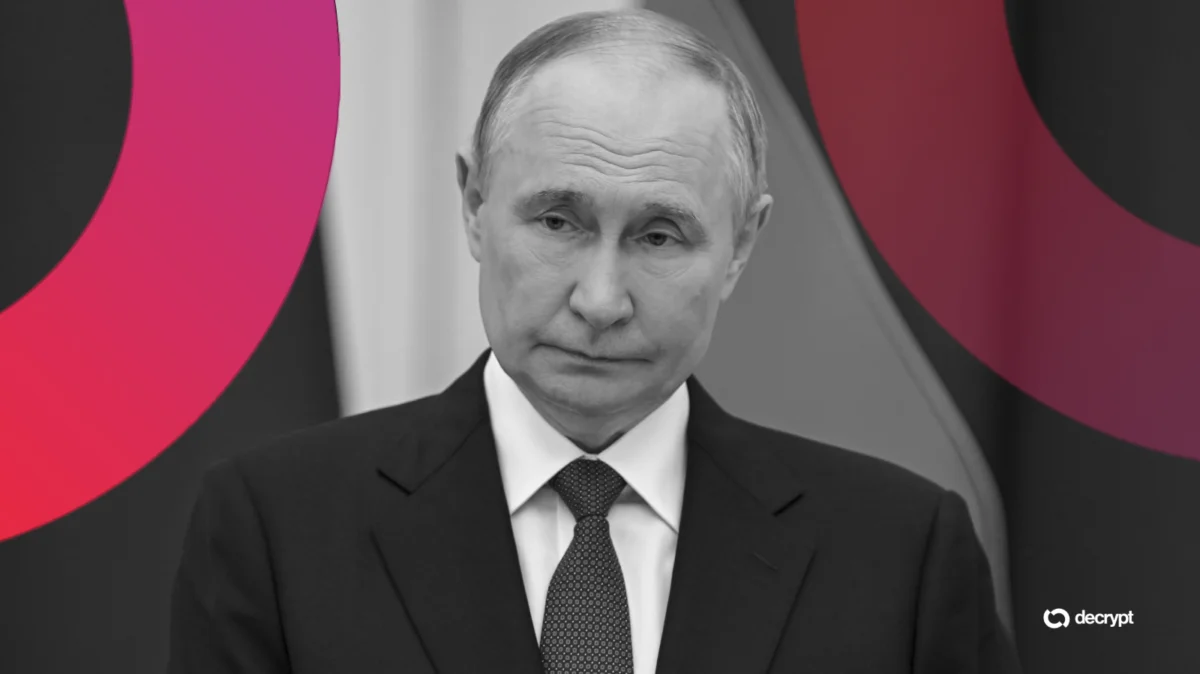
Russian President Vladimir Putin has officially signed into law the nation’s first comprehensive regulatory framework governing the issuance, circulation, and trading of digital currencies. This landmark legislation, reported by the state news agency Tass, marks a decisive shift in the Kremlin’s approach to financial technology, transitioning from years of legislative ambiguity toward a structured, state-supervised digital economy. The new law establishes a rigorous legal architecture for crypto exchanges, digital depositories, brokers, and clearing houses, effectively integrating decentralized assets into the Russian Federation’s formal financial system.
The primary objective of the legislation is to create a transparent environment for the digital asset market while maintaining strict state control over monetary sovereignty. While the law legitimizes the infrastructure of the crypto industry, it maintains a firm prohibition on the use of cryptocurrencies as a means of payment for domestic goods and services. Furthermore, the law bans the advertising of cryptocurrency payment services, ensuring that the Russian ruble remains the only legal tender within the country’s borders. This comprehensive framework follows the legalization of cryptocurrency mining earlier in 2024, closing the regulatory loop by addressing the trading, custody, and accounting aspects that were previously left in a legal vacuum.
Structural Requirements for the Digital Asset Market
Under the newly signed law, the Russian government will establish a specialized registry for organizations authorized to operate cryptocurrency exchanges and provide digital asset services. To ensure market stability and accountability, the legislation mandates that only entities included in this registry may facilitate the trading of digital currencies. Existing market participants have been granted a transition period to bring their operations into compliance, with a final deadline for registration set for July 1, 2027.
The financial barriers to entry are significant, reflecting the state’s desire to professionalize the sector. Registered exchanges must maintain a minimum of 15 million rubles (approximately $187,000) in their own capital. Additionally, these entities are required to join a self-regulatory organization (SRO) within the financial market, which will oversee industry standards and ethical conduct. For smaller entities, the law specifies that regular exchange activity is officially recognized once a firm’s trading volume exceeds 3.5 million rubles within a single month.
The role of traditional banking institutions is also redefined under this framework. Banks and branches of foreign lenders operating within Russia are now legally obligated to identify and reject transfers that they suspect are being routed through unregistered or illicit providers. This "gatekeeper" function is designed to prevent the emergence of a shadow financial system and to ensure that all digital asset flows remain within the purview of the Central Bank of Russia (CBR) and the Federal Tax Service (FTS).
Retail Access and Investor Protection Mechanisms
In a move to mitigate financial risks for the general public, the legislation introduces tiered access to the cryptocurrency market. Retail investors, categorized as "non-accredited" or "non-qualified" investors, will face strict caps on their activity. These individuals may only purchase the most liquid cryptocurrencies—the specific list of which will be determined and disclosed by the Central Bank—through licensed intermediaries.
Investment limits for non-qualified individuals are capped at 300,000 rubles per year per intermediary. Furthermore, the law mandates that both retail and qualified investors must pass a specialized knowledge test before being allowed to trade. This educational requirement is intended to ensure that participants understand the high volatility and technical risks associated with digital assets. Qualified investors, who meet specific criteria regarding wealth, experience, or education, will face no such purchase limits, reflecting a regulatory philosophy that prioritizes the protection of less-experienced market participants.
A significant addition to the legal code is the guarantee of court protection for cryptocurrency owners. For the first time, holders of digital assets can seek legal recourse in Russian courts to settle disputes or recover stolen assets, regardless of whether they had previously declared these assets to the authorities. This provision is expected to encourage the "legalization" of existing crypto holdings, as it offers a level of security that was previously unavailable to domestic holders.
A Chronology of Russian Crypto Policy
The journey toward this comprehensive framework has been characterized by a long-standing debate between different factions of the Russian government. To understand the significance of the new law, it is essential to review the timeline of its development:
- January 2021: The "On Digital Financial Assets" (DFA) law took effect. While it provided a basic definition for digital assets, it left significant gaps regarding the practical use of cryptocurrencies (referred to in the law as "digital currency").
- February 2022: A sharp divide emerged between the Central Bank of Russia, which advocated for a total ban on crypto mining and trading, and the Ministry of Finance, which favored regulation and taxation.
- August 2024: President Putin signed a bill specifically legalizing cryptocurrency mining. This move was prompted by Russia’s emergence as a global hub for mining due to low energy costs and a cold climate, which are ideal for data center cooling.
- December 2024: The signing of the current comprehensive law. This legislation integrates the previous mining rules with a broader framework for trading, custody, and international settlements.
- September 1, 2025: Most provisions of the new law are set to take effect, aligning with the scheduled rollout of the "Digital Ruble" for widespread use.
Supporting Data and Economic Context
The legalization of the crypto industry comes at a time when Russia is seeking to modernize its financial infrastructure in response to shifting global dynamics. According to data from various blockchain analytics firms, Russia has consistently ranked among the top countries for cryptocurrency adoption and mining capacity. Prior to this legislation, an estimated 12% to 14% of the Russian population held some form of digital asset, representing billions of dollars in "grey market" value.
The mining sector, in particular, has become a significant economic contributor. Russia currently accounts for approximately 15% to 20% of the global Bitcoin hashrate, trailing only the United States and potentially China. By bringing this industry into the legal fold, the Russian state expects to generate substantial tax revenue. Estimates from the Ministry of Finance suggest that the regulated crypto market could eventually contribute up to 100 billion rubles annually to the federal budget.
The 15-million-ruble capital requirement for exchanges, while modest by international standards for major banks, is high enough to consolidate the market. It is expected that the Russian crypto landscape will eventually be dominated by a handful of large, state-aligned players and traditional financial institutions that have already developed the necessary technical infrastructure.
The Geopolitical Pivot: Sanctions and Cross-Border Trade
Perhaps the most critical aspect of the new law lies in its exceptions regarding foreign trade. While domestic crypto payments are banned, the legislation explicitly permits the use of digital currencies for settlements under foreign trade contracts between residents and non-residents. This includes deals involving mined coins and payments conducted within specialized digital asset platforms.
This "carve-out" is a direct response to the sanctions pressure that has restricted Russia’s access to the SWIFT international payment system. By allowing Russian exporters and importers to settle transactions in cryptocurrency, the government is providing a sanctioned-resistant alternative to the U.S. dollar and the Euro. Western regulators and the Financial Action Task Force (FATF) are expected to monitor these developments closely, as they represent a significant attempt to bypass traditional financial oversight mechanisms.
Legal experts note that the law essentially creates a "dual-track" system: a highly restricted and monitored domestic market for individuals, and a more flexible, utility-driven market for corporations engaged in international commerce. This strategic use of crypto is viewed as a pragmatic necessity for maintaining trade flows with partners in the BRICS bloc and other non-aligned nations.
Integration with the Digital Ruble
The timing of this legislation is not coincidental. It dovetails with the aggressive push by the Central Bank of Russia to implement the "Digital Ruble," the country’s Central Bank Digital Currency (CBDC). Central Bank Governor Elvira Nabiullina has stated that banks must be technically ready to support the widespread use of the digital ruble by September 1, the same date that many provisions of the crypto law take effect.
The framework is designed to ensure that cryptocurrencies do not become a "parallel currency" that competes with the ruble. Instead, the state envisions a system where the digital ruble serves as the primary medium of exchange, while cryptocurrencies act as investment vehicles and tools for specialized international settlements. By regulating the "on-ramps" and "off-ramps" (the exchanges where rubles are traded for crypto), the state ensures it can monitor the flow of capital and intervene if the ruble’s stability is threatened.
Official Responses and Industry Implications
The response from the Russian financial sector has been a mix of relief and caution. Anatoly Aksakov, Chairman of the State Duma Committee on the Financial Market and a key architect of the bill, emphasized that the law provides "the necessary legal certainty for an industry that has existed in the shadows for too long." He noted that the primary goal is to protect citizens from fraud while giving businesses the tools they need to operate in a changing global economy.
Industry representatives from the Russian Association of Cryptoeconomics, Artificial Intelligence, and Blockchain (RACIB) have welcomed the clarity regarding court protection and mining legality. However, some have expressed concern that the 300,000-ruble limit for retail investors and the strict ban on domestic payments may stifle local innovation and push some developers to seek friendlier jurisdictions like the UAE or Kazakhstan.
International analysts view this move as a significant step in the "weaponization" of financial technology. By creating a supervised pipeline for digital assets, Russia is attempting to insulate its economy from external shocks while maintaining a level of surveillance over its citizens’ financial lives that was previously impossible with decentralized assets.
Conclusion and Future Outlook
The signing of this comprehensive law represents the end of the "wild west" era for cryptocurrency in Russia. As the September 1 implementation date approaches, the focus will shift to the Central Bank’s ability to build the necessary monitoring infrastructure and the willingness of major banks to integrate these new asset classes.
The success of this framework will be measured by its ability to achieve three conflicting goals: providing a viable alternative for international trade, protecting retail investors from extreme volatility, and maintaining the absolute dominance of the ruble within the domestic economy. As Russia continues to navigate its complex geopolitical position, this new legal framework for digital assets will serve as a critical component of its broader strategy for financial autonomy and technological sovereignty.