Lina Irawan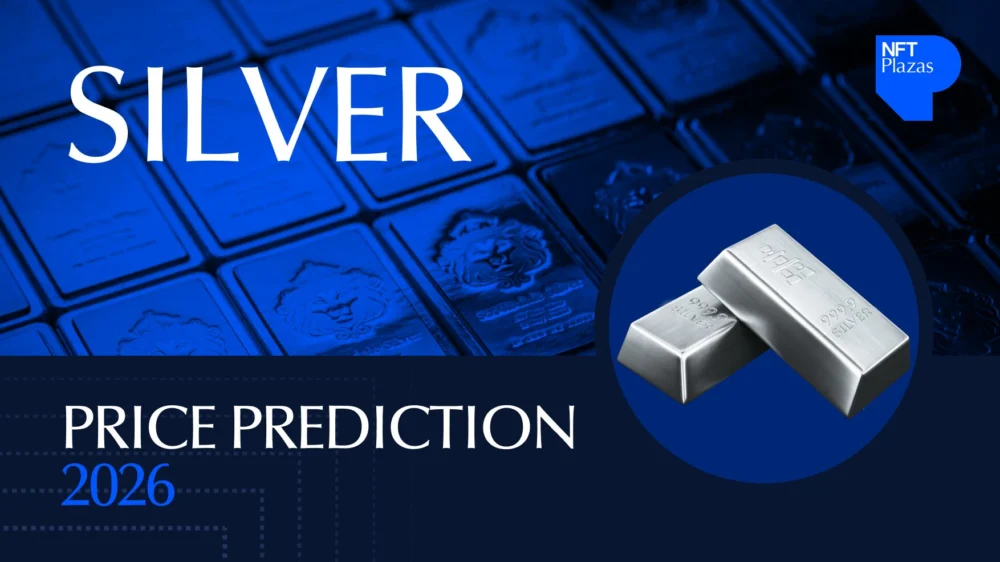
Silver (XAG/USD) is currently trading at $85.7050, reflecting a recent decline of 2.92%. This fluctuation underscores the metal’s intricate relationship with both industrial applications and investment sentiment, a duality that positions it as a unique asset in the global financial landscape. Its role as a precious metal, coupled with its essential function as an industrial commodity, means silver’s price is intrinsically linked to broader economic conditions, technological advancements, and geopolitical stability. As market participants look ahead, projections for 2026 indicate a dynamic environment for silver, with forecasts oscillating between cautious optimism and pragmatic concern, largely driven by its dual-use nature.
Silver’s Current Standing and Near-Term Outlook
The immediate trading price of $85.7050 suggests a period of consolidation or minor retracement in the silver market. This figure, while subject to intraday volatility, provides a baseline for understanding the current market sentiment. Looking ahead to the immediate future, analysts predict a subtle upward trend. The forecast for tomorrow stands at $86.10, followed by a gradual increase to $86.75 over the next few days, culminating in an expectation of $87.50 by the end of next week. This short-term projection implies a degree of stability and a potential recovery from the recent dip, likely influenced by ongoing industrial demand and general market sentiment toward precious metals as a hedge against inflation and economic uncertainty.
Silver Price Forecast 2026: A Tale of Two Scenarios
The outlook for silver in 2026 is characterized by a divergence between bullish and bearish scenarios, each hinging on a distinct set of economic and industrial drivers.
The Bull Case: Fueled by Industrial Innovation and Central Bank Strategy
In a robust bullish scenario, silver prices are projected to reach a minimum of $92.00, with an average forecast of $95.50 and a maximum potential of $98.00. This optimistic trajectory is predicated on two primary pillars: soaring industrial demand and increased accumulation by central banks. Silver’s indispensability in a growing number of high-growth industries is a key factor. Its application in solar panels, a cornerstone of the global transition to renewable energy, is expected to see substantial expansion. The increasing adoption of electric vehicles (EVs) further bolsters demand, as silver is a critical component in EV battery technology and electrical systems. The ongoing rollout of 5G infrastructure, which relies heavily on silver-laced components for efficient signal transmission, also contributes to this positive outlook. Beyond industrial applications, central banks, often seeking diversification and a hedge against currency devaluation, may increase their silver holdings, a move that has historically supported prices. This confluence of factors suggests a scenario where demand significantly outstrips supply, driving prices upward.
The Bear Case: Navigating Economic Slowdowns and Currency Strength
Conversely, the bearish outlook presents a more cautious perspective, forecasting a minimum price of $75.00, an average of $78.20, and a maximum of $80.00. This scenario is primarily driven by a slowdown in industrial activity and a strengthening U.S. Dollar. A global economic downturn, characterized by reduced manufacturing output and decreased consumer spending, would inevitably curtail demand for industrial commodities like silver. If major economies experience recessionary pressures, the sectors that are significant consumers of silver—automotive, electronics, and construction—would likely contract, leading to a surplus of the metal in the market. Furthermore, a stronger U.S. Dollar typically makes dollar-denominated commodities, including silver, more expensive for international buyers. This can dampen demand from countries with weaker currencies, exerting downward pressure on prices. In such an environment, silver might struggle to maintain its value, even as a safe-haven asset, if broader economic distress dominates market sentiment.
The Dominant Forecast for 2026: A Balanced Perspective

Despite the potential for significant swings, the prevailing forecast for silver in 2026 centers around an average trading price of approximately $90.00 (XAG/USD). However, this projection acknowledges that the path to this price point will likely be volatile. Unlike gold, which often garnishes attention primarily as a safe-haven asset, silver’s price narrative in 2026 is intrinsically tied to the fortunes of the manufacturing and clean energy sectors. These industries have historically demonstrated the capacity to drive sharp, decisive movements in silver prices, either upward or downward.
The first half of 2026 is anticipated to be characterized by relative price stability, with silver trading within a confined range. This period is expected to be a waiting game for markets, as investors and manufacturers seek clearer indicators of global industrial output and economic trajectory. Should demand from key sectors such as solar panel production and electric vehicle manufacturing gain momentum in the latter half of the year, a more substantial upward price correction for silver could materialize.
The upside potential, as outlined in the bullish scenario, could see silver approaching the $98.00 mark. This would be contingent upon a sustained surge in industrial orders, coupled with a more accommodating global economic environment, potentially including a weaker U.S. Dollar. Conversely, a significant slowdown in factory activity or a pronounced strengthening of the U.S. Dollar could push prices back towards the $75.00 support zone. Notwithstanding these potential fluctuations, the broader consensus suggests that silver will continue to serve as a pragmatic hedge for investors seeking exposure to both the cyclical nature of commodity markets and the broader uncertainties of the global economic landscape.
Key Factors Influencing Silver Prices in 2026
The price trajectory of silver in 2026 will be shaped by a multifaceted interplay of economic, industrial, and geopolitical factors. Understanding these drivers is crucial for investors and market observers.
-
Industrial Demand: This remains the most significant determinant of silver’s price, particularly in the context of technological advancement and the green energy transition. The growth of solar power generation, electric vehicle adoption, and the expansion of 5G networks are critical demand drivers. Any slowdown in these sectors, perhaps due to supply chain disruptions, regulatory changes, or shifts in consumer preferences, could negatively impact silver prices. Conversely, accelerated growth in these areas would likely lead to increased demand and upward price pressure. For instance, reports from the International Energy Agency (IEA) indicate a consistent year-on-year increase in solar photovoltaic (PV) installations globally, a trend expected to continue and intensify. Similarly, projections for EV sales worldwide suggest a significant uplift in demand for silver required in battery and electrical components.
-
Global Economic Health: The overall state of the global economy plays a pivotal role. A robust and expanding global economy typically translates to higher industrial production, increased consumer spending, and greater demand for commodities, including silver. Conversely, economic downturns, recessions, or periods of high inflation coupled with low growth (stagflation) can dampen demand and lead to price declines. The International Monetary Fund’s (IMF) economic outlook reports, which are regularly updated, provide key indicators of global GDP growth and potential recessionary risks, which investors closely monitor.
-
U.S. Dollar Strength: As a commodity priced in U.S. dollars, silver’s value is inversely correlated with the strength of the dollar. When the dollar strengthens against other major currencies, silver becomes more expensive for holders of those currencies, potentially reducing demand. Conversely, a weaker dollar can make silver more attractive to international buyers, boosting demand and prices. Federal Reserve monetary policy, interest rate decisions, and geopolitical events influencing currency markets all contribute to the dollar’s strength.
-
Central Bank Policies and Monetary Stimulus: Decisions made by central banks regarding interest rates, quantitative easing, and inflation control can significantly impact commodity prices. Low interest rates and accommodative monetary policies often encourage investment in tangible assets like precious metals, as investors seek returns beyond low-yield bonds. Conversely, aggressive interest rate hikes aimed at curbing inflation can make holding non-yielding assets like silver less attractive. The ongoing discourse surrounding inflation rates and central bank responses in major economies, such as the U.S., Europe, and China, will be closely watched.
-
Geopolitical Stability and Investor Sentiment: In times of geopolitical uncertainty, such as international conflicts, political instability, or major trade disputes, investors often flock to safe-haven assets like gold and silver. This increased demand can drive prices higher. Conversely, periods of sustained global peace and stability might reduce the appeal of precious metals as a hedge against risk. The evolving geopolitical landscape, including regional conflicts and international relations, will undoubtedly influence investor sentiment.
-
Supply Dynamics: While demand-side factors are often more emphasized, supply-side dynamics also play a crucial role. The majority of silver is produced as a byproduct of mining for other metals, primarily copper, lead, and zinc. Therefore, the production levels of these base metals, influenced by their own market dynamics and mining activity, can affect silver supply. Additionally, the discovery of new silver deposits or advancements in mining technology could increase supply. Current estimates from organizations like the Silver Institute provide insights into global mine production figures and projected supply levels.

Silver as an Investment in 2026: Opportunities and Considerations
The question of whether silver is a prudent investment for 2026 is nuanced. Its dual nature offers a unique proposition: it acts as a hedge against inflation and currency devaluation, akin to gold, while also benefiting from industrial growth and technological advancements. This makes it an appealing option for investors looking for diversified exposure.
However, silver is also known for its higher volatility compared to gold. This means that while it has the potential for greater gains, it also carries a higher risk of more substantial price swings. Investors who are comfortable with higher risk and can tolerate greater price fluctuations might find silver an attractive addition to their portfolio. For those seeking absolute stability, silver might be less suitable. Its appeal lies in its potential to capitalize on both safe-haven demand and the burgeoning demand from industrial applications, particularly in renewable energy and advanced electronics.
Long-Term Prospects: A Glimpse Towards 2030
Looking further ahead, projections for silver by 2030 suggest a potentially significant growth trajectory, with some forecasts exceeding $120.00 (XAG/USD). This long-term optimism is underpinned by the expectation that the secular trends driving industrial demand—such as the global energy transition, electrification of transportation, and advancements in electronics—will continue to accelerate. If these trends materialize as anticipated and global economic growth remains relatively stable, the sustained demand for silver could lead to substantial price appreciation. However, as with any long-term forecast, these projections are subject to a wide array of evolving economic, technological, and geopolitical factors.
Notable Perspectives on Silver
The unique position of silver as both a monetary asset and an industrial input has drawn commentary from prominent figures.
Elon Musk, known for his focus on technological innovation and industrial development, has expressed concerns about high silver prices primarily from an industrial perspective. His statement that "high silver prices are not good" stems from the metal’s essential role in numerous industrial processes. This indicates a pragmatic view, emphasizing silver’s utility as a critical manufacturing component rather than focusing on its investment potential in a traditional sense.
Warren Buffett, a titan of investment, has historically viewed silver through the lens of supply and demand fundamentals. His past investments, including Berkshire Hathaway’s significant stake in silver during the late 1990s, highlight a belief in value driven by market dynamics. While Buffett is more closely associated with cash-generating businesses and equities, his engagement with silver in the past demonstrates an understanding of its commodity-driven value.
Conclusion
The silver market in 2026 is poised to be a complex and dynamic arena. While the immediate outlook suggests modest gains, the longer-term forecast is shaped by a compelling interplay of industrial innovation, global economic health, and currency movements. The bullish scenario, driven by the green energy revolution and technological advancements, offers substantial upside potential. Conversely, economic headwinds and a strong U.S. Dollar present significant downside risks. For investors, silver represents a unique opportunity to gain exposure to both the defensive qualities of precious metals and the growth potential of key industrial sectors. Navigating this market will require a keen understanding of these multifaceted drivers and a tolerance for the inherent volatility that defines this versatile commodity. The ongoing evolution of clean energy technologies, electric vehicle production, and global economic policies will be critical in shaping silver’s price performance throughout 2026 and beyond.