admin
admin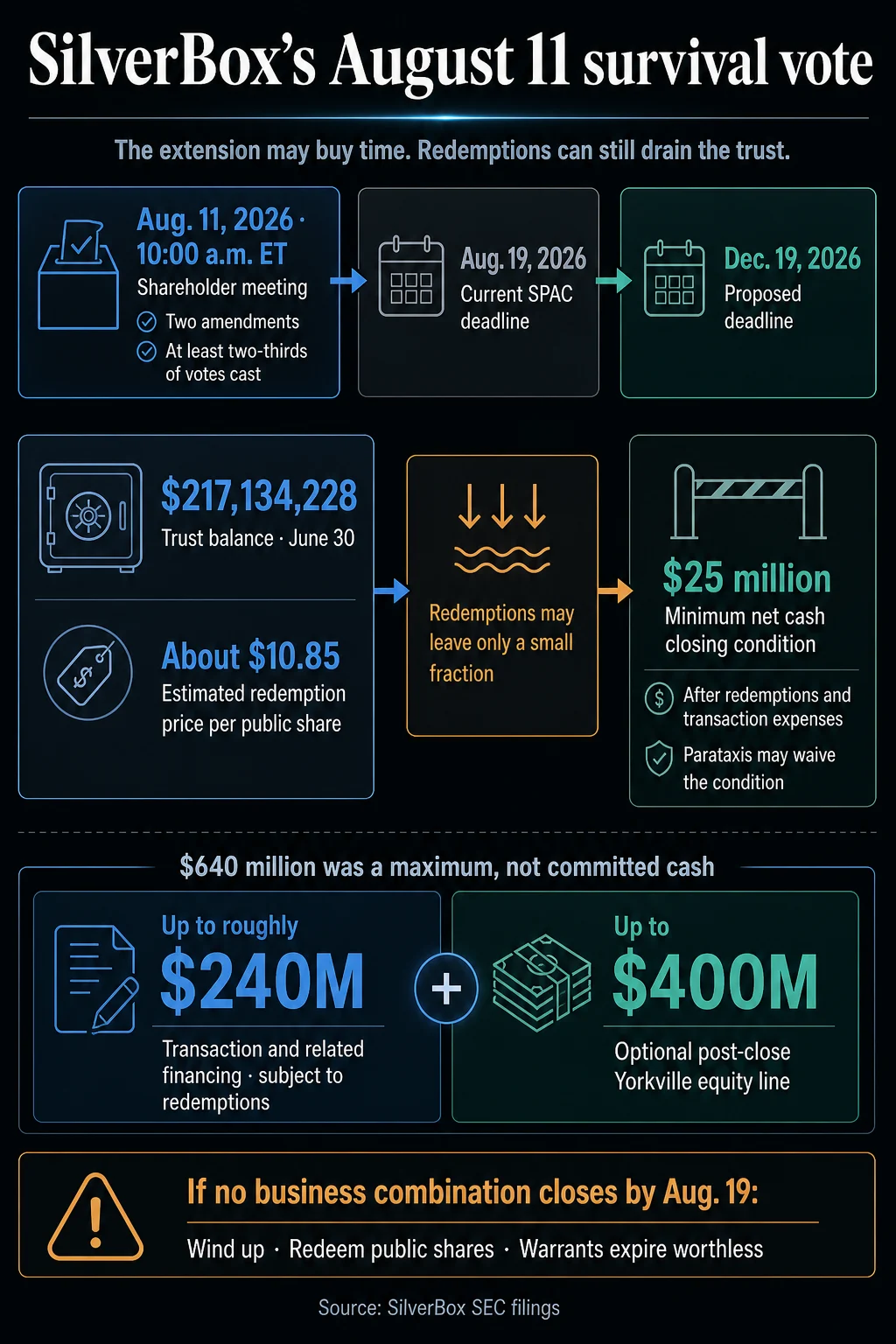
Shareholders of SilverBox Corp IV are on the cusp of a pivotal decision that will determine the immediate future of a Special Purpose Acquisition Company (SPAC) with aspirations in the burgeoning Bitcoin sector. A critical vote scheduled for Tuesday, August 11, 2026, will decide whether to grant the SPAC a four-month extension, pushing its business combination deadline from August 19 to December 19. This extension, however, comes with a stark caveat: it may not be enough to safeguard the substantial $217 million trust fund, which faces significant depletion due to anticipated shareholder redemptions. The outcome of this vote carries profound implications for the proposed merger with investment firm Parataxis Holdings and the broader landscape of digital asset-focused SPACs.
The meeting, slated for 10:00 a.m. Eastern Time, requires shareholders to approve two key amendments. The first is the four-month extension, and the second is the removal of a $5,000,001 net-tangible-assets redemption limit. Both amendments necessitate the approval of at least two-thirds of the votes cast by shareholders present and entitled to vote. Without the passage of both amendments, the extension will not take effect, potentially forcing SilverBox Corp IV into liquidation. It is crucial to note that shareholders are not voting on the Parataxis merger itself at this juncture; that decision will necessitate a separate meeting following the approval of these initial extensions.
The Looming Threat of Redemptions
The core of the current dilemma lies in the significant anticipated redemptions from the SPAC’s trust fund. As of June 30, 2026, SilverBox reported a trust balance of $217,134,228. However, the company’s filings indicate that redemptions at the upcoming extension meeting are estimated to be approximately $10.85 per public share. This means that a substantial portion of the $217 million could be withdrawn by shareholders exercising their right to redeem their investment, leaving only a fraction of the original amount.
This potential depletion of the trust fund directly impacts the viability of the proposed merger with Parataxis Holdings. The latest merger registration statement outlines a critical condition for the transaction to close: the combined company must possess at least $25 million in net cash and equivalents after accounting for redemptions and transaction expenses. This figure can include the remaining trust funds and any additional financing secured at the time of closing. While Parataxis Holdings retains the option to waive this condition under certain circumstances, the substantial outflows from redemptions create a significant hurdle.

A History of Ambitious Projections and Evolving Deal Structures
The initial announcement regarding the SilverBox Corp IV and Parataxis Holdings merger painted an ambitious picture. The proposed deal was originally framed as a potential capital infusion of up to $640 million. This figure, however, represented a maximum potential package rather than a committed amount. It was composed of up to approximately $240 million from the transaction itself and related financing, contingent upon the level of redemptions. Additionally, the deal included an option to sell as much as $400 million of stock post-closing through a Yorkville equity line. The maximum capital projection implicitly assumed zero trust redemptions and the full utilization of the post-closing equity facility, underscoring the sensitivity of the deal’s financial structure to shareholder redemptions.
Parataxis Holdings, the intended partner in this Bitcoin-focused venture, has already undertaken its own strategic maneuvers. According to merger filings, the firm successfully raised $31 million in preferred equity. A significant portion of these funds, approximately $30.8 million, was utilized in August 2025 to acquire roughly 263.78 Bitcoin. This acquisition of physical Bitcoin by Parataxis is distinct from the assets held within SilverBox’s trust fund, highlighting a dual approach to its digital asset strategy. The preferred equity agreement grants investors an elective right, following the merger agreement’s outside date and upon written notice, to claim their share of the acquired Bitcoin or its sale proceeds, adding another layer of complexity to the financial arrangements.
Navigating the Regulatory and Contractual Landscape
The path to this critical vote has been marked by evolving deadlines and contractual stipulations. A filing in May 2026 shifted the SPAC’s outside date to August 6. This date is significant as it triggers a conditional right for either party to terminate the agreement through written notice. As of August 9, 2026, SilverBox’s public filings with the Securities and Exchange Commission (SEC) did not contain any disclosed amendments, waivers, or termination notices related to this outside date. While the passage of this date alone does not automatically signify termination, it introduces a period of contractual uncertainty. The absence of explicit confirmation that the deal remains under contract adds another layer of risk for stakeholders.
The implications of a failed extension vote are clear and severe. If the two proposed amendments do not pass, and SilverBox Corp IV fails to close any business combination by the August 19 deadline, the company will be compelled to cease operations. The immediate consequence would be the mandatory redemption of public shares within 10 business days. Following this, the company would initiate dissolution and liquidation proceedings, subject to the approval of its board of directors and remaining shareholders, as well as any applicable creditor obligations in the Cayman Islands. In such a scenario, SilverBox’s outstanding warrants would expire worthless.
The Broader Implications for Bitcoin SPACs
The situation surrounding SilverBox Corp IV is not an isolated incident but reflects a broader trend and inherent challenges within the SPAC market, particularly for those targeting the volatile and rapidly evolving cryptocurrency sector. SPACs have historically offered a faster route to public markets compared to traditional IPOs, attracting numerous ventures seeking to capitalize on the hype surrounding emerging technologies like blockchain and digital assets.

However, the SPAC model is not without its risks. The reliance on shareholder votes for extensions and the high redemption rates can create significant financial instability. For Bitcoin-related SPACs, the inherent volatility of the underlying asset adds another layer of complexity. Fluctuations in Bitcoin’s price can impact the perceived value of the proposed merger and influence shareholder decisions on redemption.
The $25 million net cash requirement post-redemptions serves as a critical threshold. It is designed to ensure that the combined entity has sufficient capital to operate and pursue its business objectives. The potential for redemptions to erode this crucial liquidity poses a significant threat to the successful execution of such deals. The structure of the original capital package, with its reliance on post-closing equity facilities, also highlights the potential for dilution and the need for careful financial engineering to satisfy investor expectations and regulatory requirements.
The potential collapse of this Bitcoin SPAC merger could serve as a cautionary tale for other similar ventures. It underscores the importance of robust due diligence, realistic financial projections, and a clear understanding of shareholder sentiment. The ability of Parataxis Holdings to potentially waive the minimum cash condition offers a glimmer of hope, but it also raises questions about the flexibility of deal terms and the willingness of SPAC sponsors to absorb greater risk.
As shareholders prepare to cast their votes, the fate of SilverBox Corp IV and its ambitious foray into the Bitcoin market hangs in the balance. The outcome will not only determine the immediate future of this specific SPAC but could also influence investor confidence and the strategic approaches of other companies seeking to leverage the SPAC mechanism to enter the digital asset space. The complex interplay of shareholder rights, contractual obligations, and market dynamics has created a high-stakes scenario that will be closely watched by the financial and cryptocurrency communities alike.