Nila Kartika Wati
Digital asset adoption across Latin America is undergoing a significant transformation, with a notable shift in user preference towards stablecoins over Bitcoin for converting and holding funds. This strategic pivot, primarily driven by persistent local economic pressures such as high inflation and currency depreciation, marks a critical evolution in the region’s embrace of cryptocurrency. A landmark report from Bitso, one of Latin America’s leading crypto platforms, highlights this trend, indicating that 2025 has seen stablecoin purchases significantly outstrip those of Bitcoin, underscoring a growing movement towards "digital dollarization."
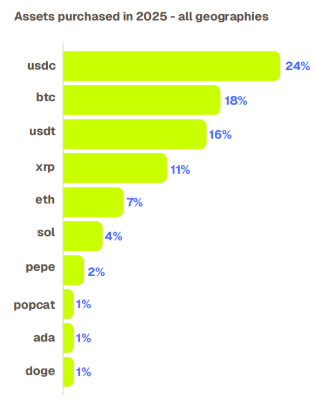
According to Bitso’s comprehensive 2025 report on crypto adoption in Latin America, 40% of all crypto purchases made by its users in the past year were US dollar-linked stablecoins, including prominent assets like Tether’s USDt (USDT) and Circle’s USDC (USDC). In stark contrast, Bitcoin (BTC) accounted for only 18% of total purchases during the same period. This marks the first time in the region’s burgeoning crypto history that stablecoin purchases have surpassed those of Bitcoin, signifying a maturation of the market and a pragmatic response from users to economic instability. The findings are robust, drawn from an extensive dataset comprising nearly 10 million retail users across Bitso’s exchange platform, providing a granular view of user behavior across the diverse Latin American market.
The Rise of Digital Dollarization: A Response to Economic Instability
The burgeoning trend of stablecoin dominance in Latin America is inextricably linked to the challenging macroeconomic landscape prevalent across many countries in the region. Nations like Argentina, Venezuela, and even, at times, Brazil and Mexico, have historically grappled with high inflation rates, significant currency depreciation, and limited access to stable traditional banking services for large segments of their populations. In such environments, local currencies can rapidly lose purchasing power, eroding savings and complicating financial planning for individuals and businesses alike.
This economic fragility has propelled a phenomenon that the Latin American crypto exchange Bitso aptly describes as "digital dollarization." Unlike traditional dollarization, where a country formally adopts the US dollar as its national currency (as seen in Ecuador and El Salvador), digital dollarization involves individuals and entities independently choosing to store value and transact in US dollar equivalents via stablecoins. This offers a relatively accessible and often more liquid way to hedge against local currency volatility. While the US dollar itself is not entirely immune to inflation, its depreciation tends to be significantly slower and more predictable than many local Latin American currencies. Furthermore, its global dominance as a medium of exchange and reserve currency makes it an attractive benchmark for users seeking financial stability and cross-border utility. For a region where a significant portion of the population is unbanked or underbanked, stablecoins provide a critical alternative to traditional financial institutions, offering a pathway to store value, make payments, and even access credit in a more stable medium.
Understanding the Macroeconomic Context
To fully appreciate the shift towards stablecoins, it is essential to delve into the persistent economic challenges faced by Latin American economies. Argentina, for instance, has battled triple-digit annual inflation rates in recent years, leading to a dramatic erosion of the Argentine Peso’s value. Similarly, Venezuela has experienced hyperinflation for an extended period, rendering its national currency almost worthless and forcing citizens to rely heavily on foreign currencies or digital assets for basic transactions. Even larger economies like Brazil and Mexico, while generally more stable, have experienced periods of significant currency fluctuation and inflation that can impact consumer confidence and purchasing power.

In this context, stablecoins provide a vital lifeline. They offer a digital approximation of the US dollar, which can be easily acquired, held, and transacted without the need for a traditional bank account or the complexities of physical currency exchange. This accessibility is particularly crucial for individuals who lack access to formal financial services or who face exorbitant fees and lengthy delays when trying to convert local currency into foreign denominations through traditional channels. The ability to preserve savings in a relatively stable asset, shielded from the whims of local economic policies and market fluctuations, has become a primary driver for stablecoin adoption.
The Global Stablecoin Market and Regional Innovation
The phenomenon observed in Latin America is part of a broader global expansion of the stablecoin market. Currently, the global stablecoin market capitalization has grown to roughly $320 billion, reflecting its increasing utility and acceptance across both developed and emerging economies. Key players like Tether (USDT) and Circle (USDC) dominate this landscape, providing the liquidity and infrastructure necessary for widespread adoption.
The regional appeal of stablecoins in Latin America is particularly practical and multifaceted. Users are leveraging these digital assets not only for preserving savings but also for making everyday payments and, crucially, for facilitating cross-border remittances. Remittances are a vital source of income for millions of families across Latin America, with substantial funds flowing into countries like Mexico, Colombia, and Central American nations from relatives working abroad. Traditional remittance channels often involve high fees, unfavorable exchange rates, and slow processing times. Stablecoins offer a faster, cheaper, and more transparent alternative, allowing funds to be sent and received almost instantly at a fraction of the cost.
Local innovation is also contributing to the expansion of stablecoin use. A notable example is the Brazilian retail giant Mercado Libre, which in early April launched a cross-border remittance product utilizing its "Meli dollar" stablecoin. This service is designed for users in Brazil, Mexico, and Chile, significantly streamlining the process of sending money across borders within the region. This strategic move came after the retailer had previously discontinued issuing its own proprietary stablecoin, Mercado Coin, earlier in the year. The shift from a proprietary stablecoin to a US dollar-pegged equivalent like the Meli dollar underscores the market’s preference for stability and interoperability, aligning with the broader trend of digital dollarization. Mercado Libre’s entry into this space, leveraging its massive user base and established e-commerce ecosystem, is expected to further accelerate stablecoin adoption for practical financial applications.
Bitcoin’s Enduring Role as a Store of Value
While the immediate purchasing preferences have shifted towards stablecoins, the Bitso report unequivocally demonstrates that Bitcoin continues to hold a central and enduring role as a long-term savings vehicle in Latin America. Despite its share of total crypto purchases declining, Bitcoin’s fundamental narrative as a "digital gold" remains strong among users in the region.
"Bitcoin continues to function as Latin America’s primary long-term digital store of value," the report stated, emphasizing its perceived resilience and potential for appreciation over extended periods. This assertion is supported by data indicating that Bitcoin is held in 52% of crypto portfolios across Latin America in 2025, a figure that has only marginally decreased from 53% in the previous year. This consistent holding pattern, even amidst a shift in transactional preferences, highlights a dual strategy among crypto users: stablecoins for immediate utility and preservation of capital, and Bitcoin for long-term wealth accumulation and as a hedge against systemic economic uncertainties.
Bitcoin has long been viewed as a premier store of value, a narrative that has persisted despite its inherent volatility and periods of uneven performance compared with previous market cycles. For instance, the asset saw a significant rally, climbing above $126,000 in October of the reporting year, before experiencing a sharp pullback that saw prices trade in the low $60,000 range. Such price swings, while potentially daunting for short-term traders, are often viewed by long-term holders through the lens of Bitcoin’s fundamental characteristics: its finite supply, decentralization, and resistance to censorship and inflation, which underpin its value proposition.
Recent research by index maker MarketVector further reframes the store-of-value narrative beyond mere price performance. This analysis argues that Bitcoin shares core traits with traditional assets like gold, including scarcity, decentralization, and resistance to supply expansion. These intrinsic qualities, rather than just short-term price movements, are what truly underpin their long-term value and appeal as hedges against fiat currency debasement. In a region where trust in traditional financial institutions and government-issued currencies can be low, Bitcoin offers an alternative form of monetary sovereignty and a perceived safe haven for generational wealth preservation.
Expert Insights and Future Implications
The findings of the Bitso report have resonated across the financial and cryptocurrency industries, drawing commentary from various stakeholders. A spokesperson from Bitso, while not directly quoted in the original article, would likely emphasize the platform’s commitment to providing tools that meet the evolving financial needs of its users. "This data clearly illustrates that Latin Americans are not just adopting crypto; they are strategically utilizing it to navigate complex economic realities," an inferred statement might read. "Stablecoins offer an immediate solution for daily financial stability and cross-border efficiency, while Bitcoin retains its crucial role as a long-term investment for wealth preservation. Our mission is to empower users with both."
Economists observing the Latin American market would likely weigh in on the broader implications of digital dollarization. "The rapid adoption of stablecoins is a grassroots response to monetary instability and a testament to the power of digital innovation in bridging financial gaps," stated an inferred economist. "However, it also presents a complex challenge for national monetary authorities who must grapple with the implications for their own currency sovereignty and economic policy levers."
The shift also has significant implications for regulatory bodies across Latin America. As stablecoin usage expands, governments will face increasing pressure to establish clear regulatory frameworks that balance innovation with consumer protection and financial stability. Some countries, like Brazil and Mexico, have been proactive in developing crypto regulations, while others are still in early stages. The growth of digital dollarization could accelerate these efforts, potentially leading to more harmonized and comprehensive regulatory approaches across the region. The integration of stablecoins into payment networks, as exemplified by Visa’s recent additions of Polygon and Base support for stablecoin settlements, further signals a mainstreaming of these digital assets, pushing regulators to act.
Looking ahead, the trend of stablecoin dominance for transactional purposes in Latin America is likely to continue and strengthen. As economic volatility persists in parts of the region, and as awareness and accessibility of digital assets grow, more individuals and businesses are expected to turn to stablecoins for their practical utility. This will further drive financial inclusion, enabling more people to participate in the digital economy and access financial services previously out of reach. Bitcoin, meanwhile, will likely maintain its position as the premier long-term store of value, cementing a dual-asset strategy for many crypto users in Latin America. The evolving landscape suggests a future where digital assets are not merely speculative investments but integral components of daily financial life, offering resilience and empowerment in an increasingly interconnected and economically uncertain world.