James Watt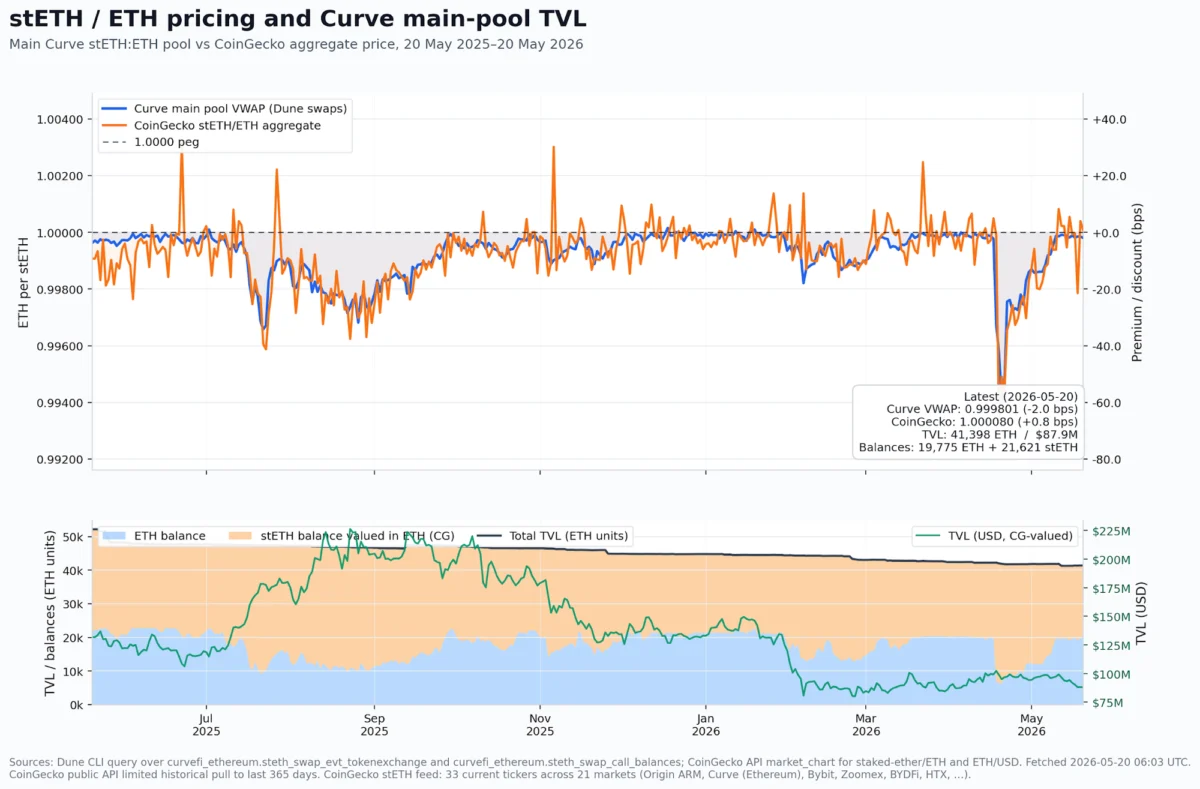
The April 2026 KelpDAO rsETH exploit served as a formidable external shock, sending tremors through the nascent restaking and broader ETH-denominated lending markets, yet data indicates that stETH and wstETH—Lido’s flagship liquid staking tokens—maintained remarkable functionality and resilience throughout the crisis. While the incident instigated a temporary de-peg in stETH pricing and elevated market depth costs, the core asset proved its mettle, showcasing the robustness built into its market infrastructure. This analysis delves into the secondary-market performance of stETH and wstETH during the KelpDAO incident, providing a focused examination of their pricing and liquidity dynamics, rather than assessing the specific outcomes for users directly impacted within KelpDAO or EarnETH. The central revelation is clear: stETH and wstETH were not the compromised assets, and their market behavior under significant duress underscored their foundational strength within the Ethereum ecosystem.
Understanding the KelpDAO Exploit: A Cross-Chain Vulnerability
On April 18, 2026, the decentralized finance (DeFi) landscape was rattled by an exploit targeting KelpDAO’s rsETH, a liquid restaking token designed to represent staked ETH and its accumulated restaking rewards. The vulnerability was specifically identified within KelpDAO’s LayerZero-based rsETH bridge path, a critical component for facilitating cross-chain asset transfers. Public post-incident analyses quickly pinpointed the root cause as a cross-chain verification failure, a sophisticated attack vector that allowed malicious actors to mint approximately 116,500 rsETH on the Ethereum mainnet without a corresponding burn on the source chain. This fraudulent minting effectively created an inflationary supply of rsETH, estimated to be worth around $292 million at the time of the exploit.
The immediate and primary stress channel for the DeFi ecosystem was directed at protocols holding rsETH as collateral for restaking activities and within various lending markets. It is crucial to distinguish this impact from Lido’s core staking mechanisms or the integrity of stETH itself. The exploit directly targeted rsETH, a derivative built upon staked ETH and further layered with restaking functionality, not the underlying liquid staking token from Lido. This distinction proved pivotal in how the market reacted and how stETH ultimately weathered the storm. The incident highlighted the complex interdependencies within DeFi and the potential systemic risks introduced by multi-layered derivatives and cross-chain bridge technologies, which, while enabling greater interoperability and capital efficiency, also introduce new attack surfaces.
A Detailed Chronology of Market Reaction and Recovery
The unfolding of the KelpDAO incident and its subsequent market impact followed a discernible timeline, illustrating both the initial shock and the eventual recovery of stETH.
April 18, 2026 – The Onset of the Crisis:
The exploit’s discovery on April 18 triggered immediate market alarm. News spread rapidly across crypto communities, prompting a wave of concern, particularly among users and protocols with exposure to rsETH. The value of rsETH plummeted as the market reacted to the sudden increase in supply and the loss of trust in its underlying integrity. This contagion effect naturally extended to related assets and markets, including ETH-denominated lending pools and other liquid staking derivatives, as participants began to reassess risk across the board. Despite this broader market turmoil, Lido’s internal protocol mechanics for stETH and wstETH continued to function precisely as designed, processing all requests without internal disruption. This included managing one of the largest periods of net outflows in its history, a testament to the protocol’s robust design and operational stability.
April 18 to April 28, 2026 – The Stress Window:
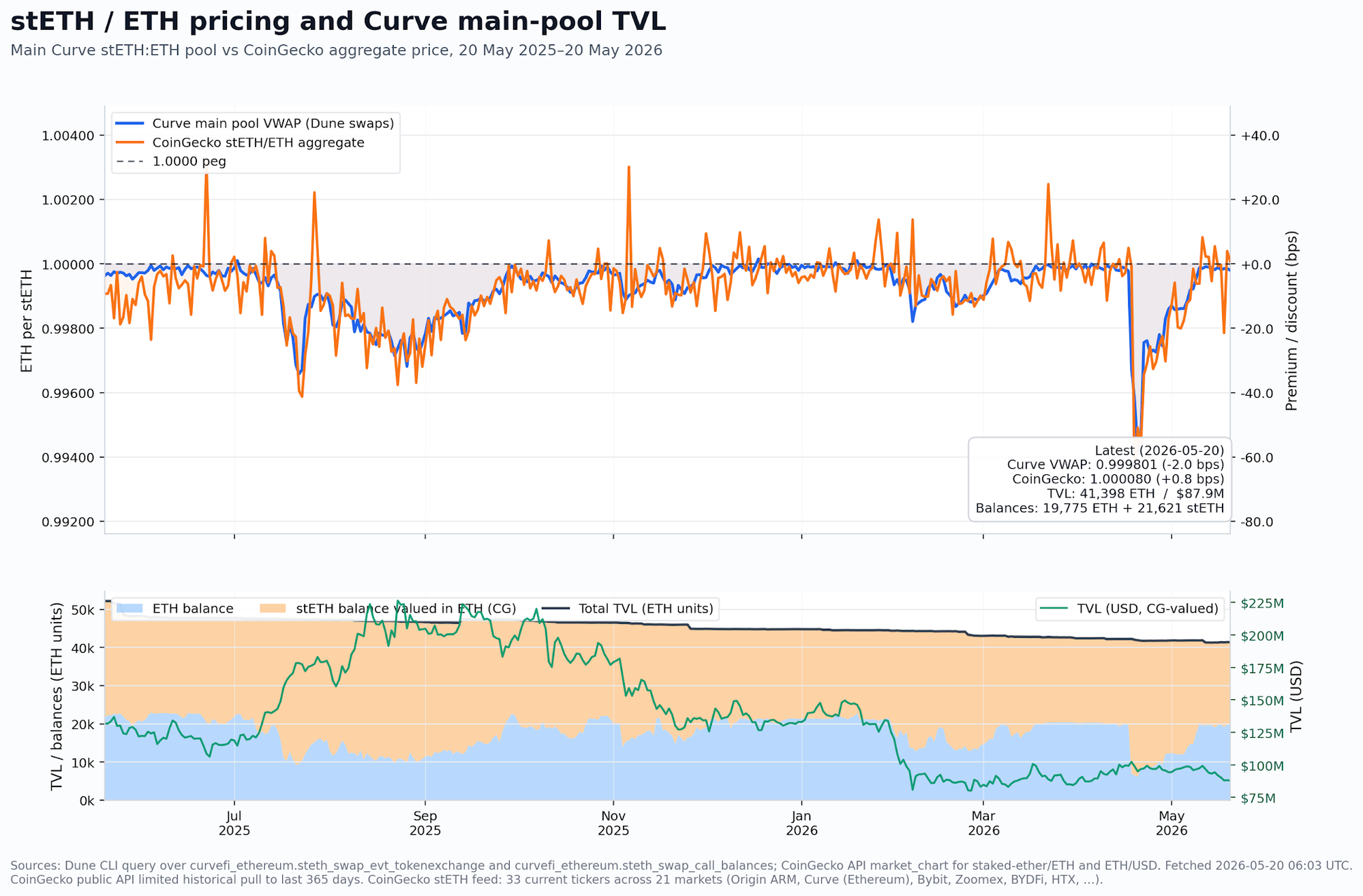
During this ten-day period, the market experienced heightened volatility and repricing of risk. The stETH/ETH peg, a critical indicator of market confidence in Lido’s liquid staking token, saw a measurable deviation. On Curve’s main stETH:ETH pool, the daily Volume Weighted Average Price (VWAP) reached a low of approximately 0.9941 ETH per stETH, representing a discount of about -59 basis points (bps) versus parity. Concurrently, CoinGecko’s aggregate stETH/ETH pricing registered a comparable low of approximately 0.9934. While these figures indicated a temporary de-peg, they were relatively minor compared to the scale of the rsETH exploit and the potential for broader market panic.
Crucially, market participants demonstrated an ability to differentiate between the failure of a specific cross-chain restaking asset path (rsETH) and the underlying liquidity profile and integrity of stETH as Ethereum’s largest liquid staking token. This discernment prevented a more severe or prolonged de-peg, allowing stETH pricing to stabilize and begin its journey back toward normal levels relatively quickly. The market’s ability to compartmentalize risk was a key factor in mitigating a wider contagion.
Post-April 28, 2026 – The Path to Recovery:
Following the initial stress window, stETH pricing continued its recovery trajectory. By May 20, 2026, just over a month after the exploit, market metrics indicated a near-complete restoration of the stETH/ETH peg. Curve’s main-pool VWAP had returned close to parity, settling at 0.99980 ETH per stETH. Similarly, CoinGecko’s aggregate pricing showed a complete recovery, reaching 1.00008, effectively signaling a return to pre-exploit stability. This swift recovery underscores the inherent resilience of stETH, supported by deep liquidity and strong market confidence, even in the face of a significant external challenge.
Analyzing Liquidity Depth: Beyond Headline Prices
While headline prices offer a snapshot of market sentiment, they can sometimes mask underlying issues such as deteriorating execution quality. For a more comprehensive understanding of market health during a crisis, liquidity depth serves as a more insightful stress metric. It reveals how efficiently large trades can be executed without significantly moving the price, reflecting the true robustness of the market.
To assess this, an examination was conducted on the quote impact for a hypothetical $1 million fixed-sell wstETH transaction on the Ethereum mainnet. The median daily quote impact across 236 observations, encompassing periods before, during, and after the exploit, was -1.6 bps. This figure represents the average cost incurred by a large seller in terms of price slippage. Prior to the exploit, in the 30 days leading up to April 18, the median quote impact was a remarkably low -0.1 bps, indicating extremely efficient execution for substantial trades.
During the intense 10-day stress window immediately following the KelpDAO exploit, the median quote impact for a $1 million wstETH sell order increased to -5.0 bps. Furthermore, the 7-day moving average of this metric reached a trough of -15.9 bps. This data clearly indicates a tangible increase in execution costs for large-volume traders during the crisis period. However, it is crucial to interpret this within the broader context of the event. While an increase in slippage is undesirable, the fact that liquidity remained "actionable, routable, and interpretable" for a significant notional value like $1 million is a powerful testament to the market’s enduring functionality. It signifies that liquidity did not vanish or become prohibitively expensive, even amidst a major external exploit directly impacting restaking collateral and lending-market utilization.
Illustrative Data: stETH/ETH Pricing and Liquidity Dynamics
Figure 1, derived from Dune and CoinGecko API data, visually encapsulates the stETH/ETH pricing and the total value locked (TVL) in the Curve main pool. The top panel presents a comparative view of market pricing, contrasting the VWAP from the main Curve stETH:ETH pool with CoinGecko’s aggregate stETH/ETH price. This comparison vividly demonstrates the temporary de-peg and subsequent recovery observed during the stress window. Below this, the lower panel details the Curve pool’s ETH and stETH balances and its overall TVL, providing insight into the underlying liquidity base that supported the price dynamics. The chart effectively illustrates both the price behavior and the substantial liquidity infrastructure that underpins stETH.
Figure 2, leveraging data from Lido’s Dune liquidity-depth query (5965996 / 9625248), focuses specifically on the quote impact for a $1 million fixed-sell wstETH quote on the Ethereum mainnet. Presented as a 7-day moving average across the full available date range, this chart visually tracks the execution cost for large trades. It starkly highlights the temporary spike in slippage during the April 2026 stress period, followed by a gradual return to more favorable execution costs. This visual evidence reinforces the narrative that while execution quality was affected, it never reached a point of dysfunctionality, confirming the continued presence of meaningful liquidity.
Pillars of stETH’s Comparative Resilience
The ability of stETH to withstand such a significant external shock stems from several reinforcing factors:
-
Direct Insulation from the Exploit: Crucially, stETH itself was not the compromised asset path. The exploit targeted rsETH, a distinct liquid restaking token built with different underlying mechanisms and cross-chain dependencies. This clear differentiation allowed market participants to isolate the risk, preventing a direct loss of confidence in stETH.
-
Robust Protocol Mechanics: Lido’s core protocol for stETH functioned flawlessly throughout the incident. Staking, unstaking, and reward distribution mechanisms operated as intended, demonstrating the robustness of its smart contracts and decentralized network of node operators. The protocol’s ability to process substantial net outflows during the crisis further underscored its operational integrity under duress.
-
Deep and Diversified Secondary Markets: stETH benefits from exceptionally deep liquidity across various decentralized exchanges (DEXs), particularly the Curve Finance main pool, as well as numerous centralized exchanges. This extensive network of liquidity providers and market makers ensures that large volumes of stETH can be traded with relatively low slippage, even during periods of market stress.
-
Transparent On-Chain Pricing: The transparent nature of stETH’s pricing on-chain, coupled with its widespread tracking by data aggregators like CoinGecko and Dune Analytics, provided real-time visibility into its market performance. This transparency fostered trust and allowed market participants to make informed decisions, distinguishing stETH’s performance from the more opaque or directly compromised assets.
-
Wide Ecosystem Integration: As Ethereum’s largest liquid staking token, stETH is deeply integrated across a vast array of DeFi protocols, serving as collateral, liquidity, and a yield-bearing asset. This extensive integration means a diversified holder base and a multitude of use cases, which collectively contribute to its stability and resilience. Unlike niche assets, stETH’s utility is fundamental to much of the Ethereum DeFi landscape.
-
Market Maturity and Differentiation: The cryptocurrency market, particularly the DeFi sector, has matured significantly. Participants are increasingly adept at distinguishing between systemic risks and isolated incidents. The ability of the market to differentiate between the KelpDAO exploit’s specific vulnerability and the general health of the liquid staking sector played a vital role in preventing a broader panic sell-off of stETH.
Inferred Reactions and Broader Implications
The KelpDAO incident elicited a range of reactions and has significant implications for the wider DeFi ecosystem.
From Lido’s Perspective: The incident serves as a strong validation of Lido’s protocol design and operational resilience. While not directly involved, the performance of stETH during the crisis reinforces its status as a robust and reliable foundational asset in liquid staking. Lido would likely emphasize the importance of distinguishing between well-established, rigorously audited protocols and newer, more experimental ventures, especially those involving complex cross-chain interactions.
For KelpDAO and LayerZero: The exploit undoubtedly prompted immediate and intensive post-mortem analyses, security audits, and mitigation strategies from KelpDAO and LayerZero. The incident underscored the critical need for unparalleled security in cross-chain bridge designs and verification mechanisms, as these remain primary attack vectors in the multi-chain paradigm. Their focus would have been on recovery, strengthening security, and restoring user trust.
From Market Analysts and Security Firms: The event has been widely viewed as a critical "stress test" for the liquid staking and restaking sectors. Analysts would likely highlight the lessons learned regarding the inherent risks of composability and cross-chain interactions, particularly for derivative assets. Security firms would reinforce the necessity for continuous, in-depth audits, formal verification, and robust incident response frameworks for all DeFi protocols, especially those handling significant user funds and operating across multiple chains.
Broader Impact on the DeFi Ecosystem:
- Heightened Scrutiny on Restaking and LRTs: The incident will undoubtedly lead to increased scrutiny and caution regarding liquid restaking tokens (LRTs) and the broader restaking ecosystem. While the concept of restaking offers compelling capital efficiency, the KelpDAO exploit highlights the added layers of complexity and risk, especially when combined with cross-chain bridging.
- Emphasis on Cross-Chain Bridge Security: The LayerZero-based vulnerability reinforces the ongoing challenges and critical importance of secure cross-chain bridge designs. Bridges remain one of the most significant points of failure and attack vectors in the multi-chain world. This event will likely accelerate research and development into more secure, fault-tolerant bridging solutions.
- Reinforcement of Established LSTs: For established liquid staking tokens like stETH, the incident paradoxically strengthens their value proposition. Their demonstrated resilience under stress positions them as relatively safer, more foundational assets compared to newer, more complex, and potentially riskier derivatives.
- Importance of Decentralization and Transparency: The incident underscores the value of genuinely decentralized protocols with transparent on-chain operations. These characteristics enable rapid assessment of risk and allow markets to distinguish between isolated failures and systemic vulnerabilities.
- Investor Education and Risk Awareness: The exploit serves as a stark reminder for investors to conduct thorough due diligence, understand the intricate layers of risk in DeFi, and differentiate between core assets and complex derivatives.
The Takeaway: Resilience Where It Matters Most
The KelpDAO incident was a stark reminder that liquidity and market functionality must be evaluated not merely under benign conditions, but more critically, when markets are under severe pressure. For stETH, the events of April 2026 provided compelling evidence that its deep secondary markets, transparent on-chain pricing mechanisms, and extensive ecosystem integration are not just theoretical advantages, but practical bulwarks capable of absorbing a significant external shock without compromising the core staking asset.
While stETH pricing did exhibit a temporary deviation and execution costs for large trades saw a measurable increase, the market remained resolutely functional. This outcome is a direct reflection of years of dedicated effort in building robust liquidity around stETH, solidifying its position as a foundational asset within the Ethereum ecosystem. Its ability to perform reliably during a crisis is a core advantage for its users, the protocols that integrate it, and the broader DeFi landscape. It demonstrates that stETH offers not just yield and flexibility in quiet markets, but critically, stability and utility when markets are truly tested. This resilience is paramount for an asset striving to be a cornerstone of decentralized finance.