Lina Irawan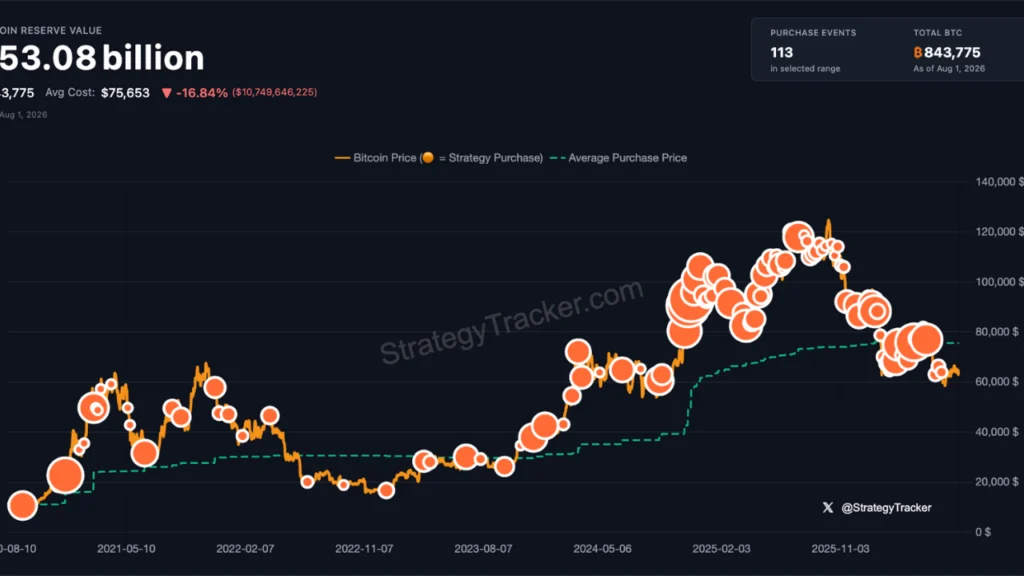
Strategy (NASDAQ: MSTR) has reported a substantial net loss of $8.22 billion for the second quarter of 2026, a figure primarily driven by a significant decline in the fair value of its extensive Bitcoin holdings. This dramatic financial outcome underscores the profound correlation between the company’s reported earnings and the volatile cryptocurrency market, even as its management actively pursues an expansion of its already unparalleled corporate Bitcoin treasury. The substantial paper loss stems almost entirely from an $8.32 billion markdown on its digital asset portfolio, a consequence of the prevailing accounting standards rather than any operational deterioration within its software business. While the headline net loss represents one of the largest in Strategy’s corporate history, executives have emphasized that this figure is largely an accounting artifact, reflecting unrealized adjustments rather than actual losses incurred from selling Bitcoin.
The Unfolding Impact of Bitcoin’s Market Volatility on Quarterly Earnings
The stark quarterly result is a direct consequence of Strategy’s adoption of FASB’s ASU 2023-08 accounting standard. This pivotal change mandates that companies holding digital assets, such as Bitcoin, report them at their fair value on a quarterly basis. Under these updated regulations, any fluctuations in the market price of Bitcoin directly translate into recognized unrealized gains or losses within the company’s net income. Consequently, Strategy’s reported earnings are now inextricably linked to the ebb and flow of cryptocurrency market prices.
As Bitcoin experienced a significant downturn during the second quarter of 2026, Strategy was compelled to record an $8.32 billion markdown on its substantial Bitcoin holdings. This accounting adjustment resulted in a reported net loss of $24.45 per diluted share. This figure stands in stark contrast to the performance of the prior-year quarter, when robust cryptocurrency prices had previously enabled the company to post a multibillion-dollar profit. It is crucial to reiterate that this accounting loss does not signify that Strategy has liquidated a substantial portion of its Bitcoin reserves. Instead, it is a direct reflection of the depreciated market value of the assets that the company continues to hold on its balance sheet.
This accounting treatment, while dramatic, is a direct outcome of regulatory shifts aimed at providing a more current financial picture of companies with significant digital asset holdings. Prior to ASU 2023-08, companies could carry digital assets at their historical cost, masking significant paper gains or losses. The new standard brings a level of transparency but also introduces considerable earnings volatility for companies like Strategy, whose core strategy revolves around accumulating and holding Bitcoin.
Expansion of Bitcoin Treasury Continues Despite Market Headwinds
Notwithstanding the significant quarterly accounting loss, Strategy has demonstrably continued its aggressive strategy of increasing its Bitcoin exposure. As of July 26, 2026, the company reported ownership of 843,775 BTC. This represents a notable increase of 25% since the beginning of the year. The aggregate acquisition cost for these holdings was approximately $63.7 billion, translating to an average purchase price of roughly $75,500 per Bitcoin.
At the prevailing market prices around the reporting date, these holdings were valued at approximately $54.8 billion. This valuation indicates an unrealized shortfall of roughly $9 billion when compared to the company’s total acquisition cost. These figures solidify Strategy’s unequivocal position as the largest publicly traded corporate entity holding Bitcoin, a testament to its long-term conviction in the digital asset.

This continued accumulation strategy, even during periods of market decline, reflects a core belief held by Strategy’s leadership, particularly Executive Chairman Michael Saylor, that Bitcoin represents a superior store of value and a hedge against inflation over the long term. The company has historically financed these acquisitions through a combination of debt, equity offerings, and retained earnings, aiming to increase its Bitcoin holdings without significantly diluting its shareholder base or compromising its operational capacity.
Strengthening Liquidity and Financial Flexibility
In conjunction with its earnings report, Strategy also highlighted several strategic initiatives designed to bolster its balance sheet and support its ongoing Bitcoin strategy. The company has been actively enhancing its financial flexibility through a multi-pronged approach. During the current year, Strategy successfully raised approximately $17.06 billion through at-the-market equity offerings. Furthermore, the company strategically repurchased $1.5 billion of its outstanding convertible notes at a discount of 8%, effectively reducing its overall debt obligations.
Andrew Kang, the Chief Financial Officer, stated that Strategy’s U.S. dollar reserves have been significantly increased to $3.75 billion. This robust liquidity position is sufficient to cover existing preferred dividend payments and interest obligations for more than 2.1 years. Management has asserted that this strengthened liquidity provides the company with considerable flexibility to navigate periods of market volatility while simultaneously continuing to invest in its core Bitcoin strategy. This emphasis on liquidity suggests a proactive approach to managing potential cash flow needs and debt servicing requirements in an unpredictable market environment.
The company’s proactive capital management aims to reassure investors that despite the paper losses, its financial foundation remains sound and capable of supporting its strategic objectives. The ability to generate and maintain substantial cash reserves is crucial for a company that is heavily invested in a volatile asset class and also carries significant debt obligations.
Strategic Bitcoin Sales Under New Monetization Program
A notable development during the quarter was Strategy’s decision to strategically sell a portion of its Bitcoin holdings. For the first time in its extensive accumulation phase, the company disclosed that it sold approximately 3,588 BTC for around $218.4 million. These sales were conducted under a newly implemented "Bitcoin Monetization Program." The proceeds generated from these transactions were earmarked for strengthening the company’s cash reserves and assisting in the funding of preferred stock dividend payments.
While this sale represented less than 0.5% of Strategy’s total Bitcoin holdings, it marked a significant departure from its long-standing practice of primarily accumulating Bitcoin without engaging in systematic sales. This shift in strategy reflects an evolution in how the company manages its treasury, balancing its commitment to Bitcoin with the need to meet financial obligations and maintain operational flexibility.
Executive Chairman Michael Saylor articulated that Strategy remains firmly committed to expanding what it refers to as its "Digital Credit" business, a segment that leverages its Bitcoin holdings. He characterized these sales not as an indication of wavering long-term conviction in Bitcoin, but rather as a component of a broader capital management strategy. This strategy is designed to ensure the company can meet its financial obligations while continuing to maintain a substantial exposure to Bitcoin.

In addition to the Bitcoin sales, Strategy also authorized a $1 billion share repurchase program for its common stock, although no repurchases have been executed to date. Separately, the company took advantage of market conditions by buying back approximately $25 million of its STRC preferred shares when they were trading below their par value, further optimizing its capital structure.
Investor Scrutiny on Capital Structure and Long-Term Viability
Beyond the immediate impact of quarterly earnings, investors continue to closely monitor Strategy’s increasingly complex capital structure. The company employs a sophisticated approach to financing its Bitcoin purchases, utilizing a combination of common equity, preferred stock, convertible debt, and existing cash reserves. While this diversified financing strategy has enabled continuous Bitcoin accumulation, it also entails ongoing financial commitments in the form of preferred dividends and interest payments on its debt.
Company management consistently argues that its robust liquidity position provides sufficient flexibility to meet these financial commitments while simultaneously advancing its core Bitcoin strategy. However, financial analysts remain keenly focused on whether Strategy can sustain this delicate balance, particularly if cryptocurrency prices experience a prolonged period of decline or stagnation. The sustainability of this strategy is contingent on the company’s ability to generate sufficient cash flow from its operations, access capital markets effectively, and manage its debt obligations without being forced into distressed asset sales.
Simultaneously, Strategy’s software business continues to generate consistent revenue. However, in the context of the company’s overall valuation and strategic focus, this software segment now represents a relatively minor portion compared to the immense value attributed to its Bitcoin holdings. This disparity highlights the company’s transformation into a de facto Bitcoin investment vehicle, with its software operations serving primarily as a means to support its digital asset strategy.
Outlook: Navigating Volatility and the Future of Digital Asset Accounting
Strategy’s latest earnings report serves as a potent illustration of how the implementation of fair-value accounting has fundamentally reshaped the company’s financial reporting. Quarterly profits and losses are now predominantly dictated by the dynamic movements of Bitcoin’s price, rather than by the performance of its underlying operations. This shift inherently introduces a greater degree of volatility into its reported earnings.
Despite these accounting fluctuations, Strategy remains committed to expanding its Bitcoin holdings and fortifying its balance sheet through innovative financing initiatives. The introduction of its Bitcoin Monetization Program signifies a more adaptable treasury strategy compared to previous years, reflecting a nuanced approach to managing its digital asset reserves. Nevertheless, company management maintains that Bitcoin remains the foundational element of Strategy’s long-term business model.
The financial trajectory of Strategy in future quarters will largely be contingent on the performance of the cryptocurrency market. A sustained and significant recovery in Bitcoin prices could substantially reverse the current accounting losses recognized under fair-value reporting. Conversely, continued weakness in the Bitcoin market would likely exert ongoing pressure on the company’s reported earnings, irrespective of the stability of its operational performance. For investors, Strategy continues to represent one of the most direct publicly traded proxies for long-term exposure to Bitcoin. Its financial results are increasingly serving as a barometer for the broader cryptocurrency’s price cycle, offering a unique lens through which to view the intersection of traditional finance and the burgeoning digital asset landscape. The company’s strategic decisions, financial management, and the performance of its core asset will be closely watched by the investment community as it navigates this evolving economic paradigm.