Lina Irawan
Silver trading brokers are online platforms that provide individuals with the means to engage in the trading of various silver-based financial instruments. These can include Contracts for Difference (CFDs), futures contracts, options, Exchange-Traded Funds (ETFs), and stocks related to silver mining companies. This comprehensive guide identifies the leading silver brokers for 2026, evaluating them based on key features, fee structures, security measures, and their respective advantages and disadvantages. Furthermore, it delves into the factors influencing silver’s market value, alongside the inherent benefits and risks associated with silver trading.
The allure of silver as an investment and trading commodity stems from its dual nature as both a precious metal and an industrial powerhouse. Historically, silver has been valued for its aesthetic appeal and as a store of value, often referred to as "poor man’s gold." However, its significance extends far beyond that of a mere safe-haven asset. Silver is a critical component in numerous industrial applications, including electronics, solar panels, and medical devices, due to its exceptional conductivity and antimicrobial properties. This industrial demand creates a dynamic market influenced by global economic growth and manufacturing output, often leading to higher volatility compared to gold.
Understanding the nuances of silver trading is crucial for investors. The market value of silver is impacted by a complex interplay of factors. These include global economic health, with increased industrial demand during periods of expansion. Inflationary pressures often drive investors towards precious metals as a hedge, boosting silver prices. Geopolitical instability can also lead to increased demand for safe-haven assets. Furthermore, the supply side, influenced by mining output and recycling efforts, plays a significant role. The U.S. dollar’s strength also affects silver prices; a weaker dollar typically makes dollar-denominated commodities like silver more attractive to foreign investors, and vice versa.
For those looking to navigate the silver market, selecting the right trading broker is paramount. This article provides an in-depth look at the top contenders for 2026, based on a rigorous evaluation process.

Top Forex Brokers for XAG/USD
The XAG/USD pair, representing the price of silver against the U.S. dollar, is a primary focus for many traders. Here’s a comparative overview of brokers offering access to this market:
| Broker | Silver Products Offered | Pricing Structure | Trustpilot Rating |
|---|---|---|---|
| Plus500 | Mini, micro, and standard futures | Competitive, often spread-based | 4.2/5 |
| FP Markets | CFDs | Spread ranges between 4.57 and 8.49 pips | 4.8/5 |
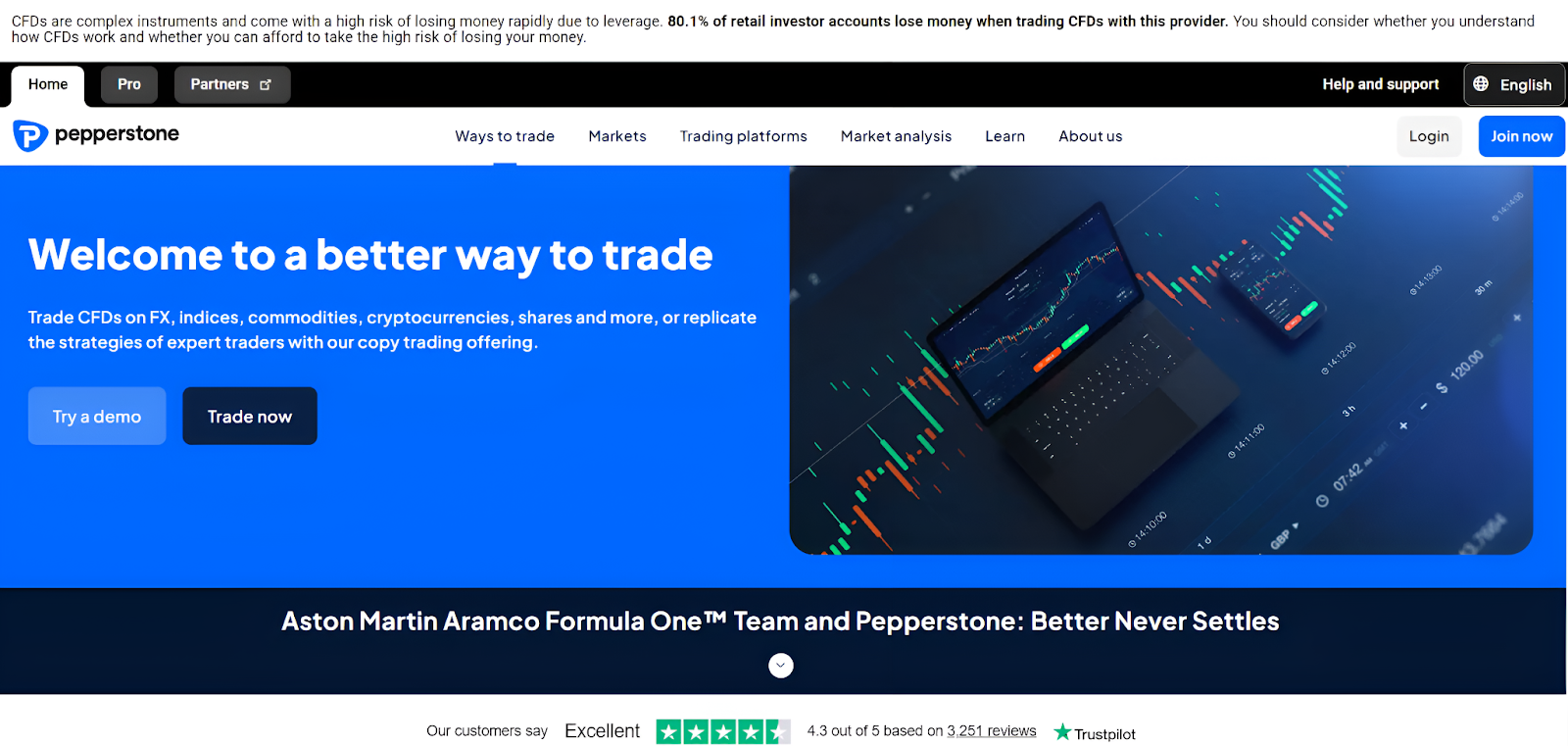
| Pepperstone | CFDs | Average spread of 0.019 pips | 4.3/5 |
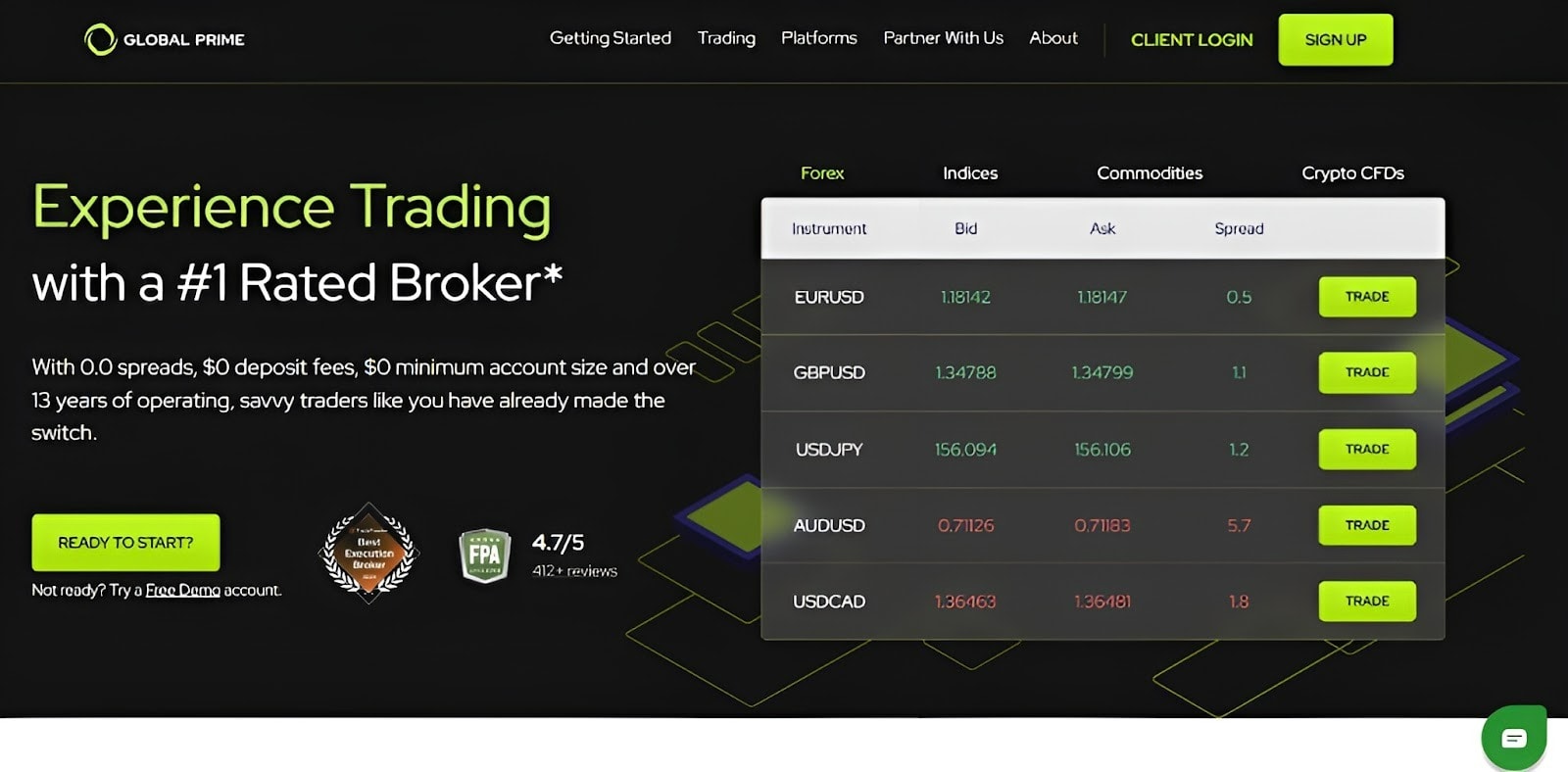
| Global Prime | CFDs | Average spread of 3.86 pips; $7 round turn commission | 4.6/5 |
| eToro | Silver stocks, ETFs, and CFDs | Spread-based, zero commission on stocks | 4.2/5 |
| Capital.com | Silver spot, futures, ETFs, and stocks (via CFDs) | Spreads as low as 0.1 pips | 4.6/5 |
| AvaTrade | CFDs | Average spread of 0.029 pips | 4.8/5 |
| FxPro | CFDs | Spreads starting from 0.001 pips | 3.2/5 |
| IG Markets | Silver spot and futures (via CFDs) | Spreads starting from 2 pips | 3.9/5 |
| NinjaTrader | Micro and standard futures | Commissions as low as $0.09 per contract | 3.6/5 |
10 Best Silver Trading Brokers for 2026
1. Plus500 – Best for Silver Futures
Plus500, a prominent fintech company established in 2008, stands out for its proprietary technology, competitive fee structure, and an intuitive, user-friendly interface. It caters to a broad spectrum of traders by offering CFDs, share dealings, and futures trading, positioning itself as a comprehensive platform for silver market participants. With over 33 million registered users across more than 60 countries and a premium listing on the London Stock Exchange, Plus500 demonstrates significant market presence and financial stability.
Key Features:
- Proprietary trading platform with advanced charting tools.
- Wide range of financial instruments, including silver futures.
- User-friendly interface suitable for beginners and experienced traders.
- Robust risk management tools.
Pros and Cons:
- Pros: Extensive range of silver futures, user-friendly platform, strong regulatory oversight.
- Cons: Limited educational resources compared to some competitors.
2. FP Markets – Best For Multi-Asset Trading
Founded in 2005 and headquartered in Australia, FP Markets has garnered over 60 global industry awards, consistently recognized for its high-quality services, deep liquidity, and advanced execution technologies. This multi-regulated platform holds licenses from esteemed bodies such as ASIC, CySEC, FSA, and FSCA, ensuring a secure trading environment. FP Markets offers a diverse range of trading instruments, making it an attractive option for those looking to diversify their portfolios beyond silver.

Key Features:
- Access to a wide array of asset classes, including forex, indices, commodities, and shares.
- Multiple trading platforms, including MetaTrader 4/5 and cTrader.
- Competitive spreads and commission structures.
- Excellent customer support.
Pros and Cons:
- Pros: Highly regulated, excellent platform choice, strong execution speed, suitable for multi-asset traders.
- Cons: Some users might find the platform selection overwhelming initially.
3. Pepperstone – Best For CFD Trading
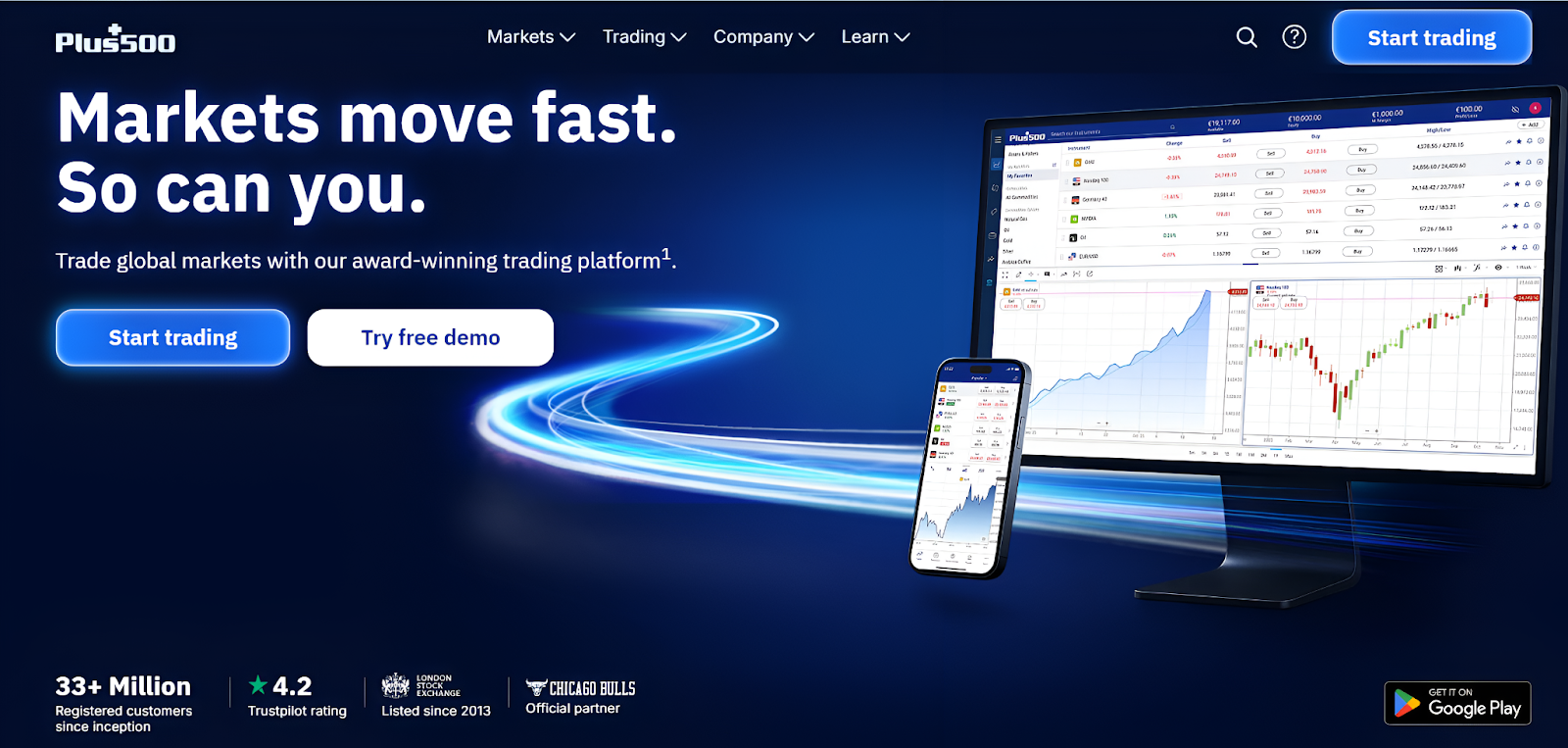
Established in 2010 and based in Australia, Pepperstone has earned a reputation as a premier silver broker, distinguished by its low-cost spreads, advanced trading features, and exceptional customer service. The platform serves over 830,000 traders in more than 150 nations. Pepperstone prioritizes client fund security by holding user funds in segregated Tier-1 bank accounts and is regulated by prominent authorities including ASIC and BaFin.
Key Features:
- Low spreads and competitive commissions on CFDs.
- Access to popular trading platforms like MetaTrader 4/5 and TradingView.
- Advanced trading tools and research resources.
- Fast execution speeds.
Pros and Cons:
- Pros: Excellent for CFD trading, competitive pricing, reliable execution, strong regulatory backing.
- Cons: Limited availability of non-CFD silver products.
4. Global Prime – Best For Trading On MetaTrader
Global Prime, a top-rated forex broker founded in 2010, is lauded for its tight spreads, competitive leverage, deep liquidity, and low latency. The platform provides traders with access to over 150 global markets. A core tenet of Global Prime’s operation is the protection of client funds, which are held in separate Client Trust Accounts with the National Australia Bank. The broker is regulated by the Vanuatu Financial Services Commission and the Australian Financial Services Authority.
Key Features:
- Strong focus on MetaTrader platform trading.
- Tight spreads and competitive pricing.
- Emphasis on client fund security.
- Access to a broad range of global markets.
Pros and Cons:
- Pros: Ideal for MetaTrader users, competitive spreads, secure fund management.
- Cons: May have fewer advanced trading tools compared to brokers with proprietary platforms.
5. eToro – Best For Social Trading
eToro has emerged as a leading online trading platform, boasting a vibrant community of over 40 million investors worldwide. Since its inception in 2007, eToro has successfully empowered millions of users across 75 countries. The platform offers access to six asset classes and over 7,000 tradable instruments, including silver stocks, ETFs, and CFDs. eToro is recognized as a secure platform, holding regulatory licenses from multiple authorities such as MAS, FSAS, ASIC, ADGM, FCA, and CySec. Its social trading features, including copy trading, make it unique.
Key Features:
- Innovative social trading and copy trading functionalities.
- Wide selection of silver-related assets, including stocks and ETFs.
- User-friendly interface with educational resources.
- Strong regulatory compliance.
Pros and Cons:
- Pros: Excellent for social trading, diverse silver investment options, beginner-friendly.
- Cons: Spreads on CFDs can sometimes be wider than specialized CFD brokers.
6. Capital.com – Best For Trading Rebates
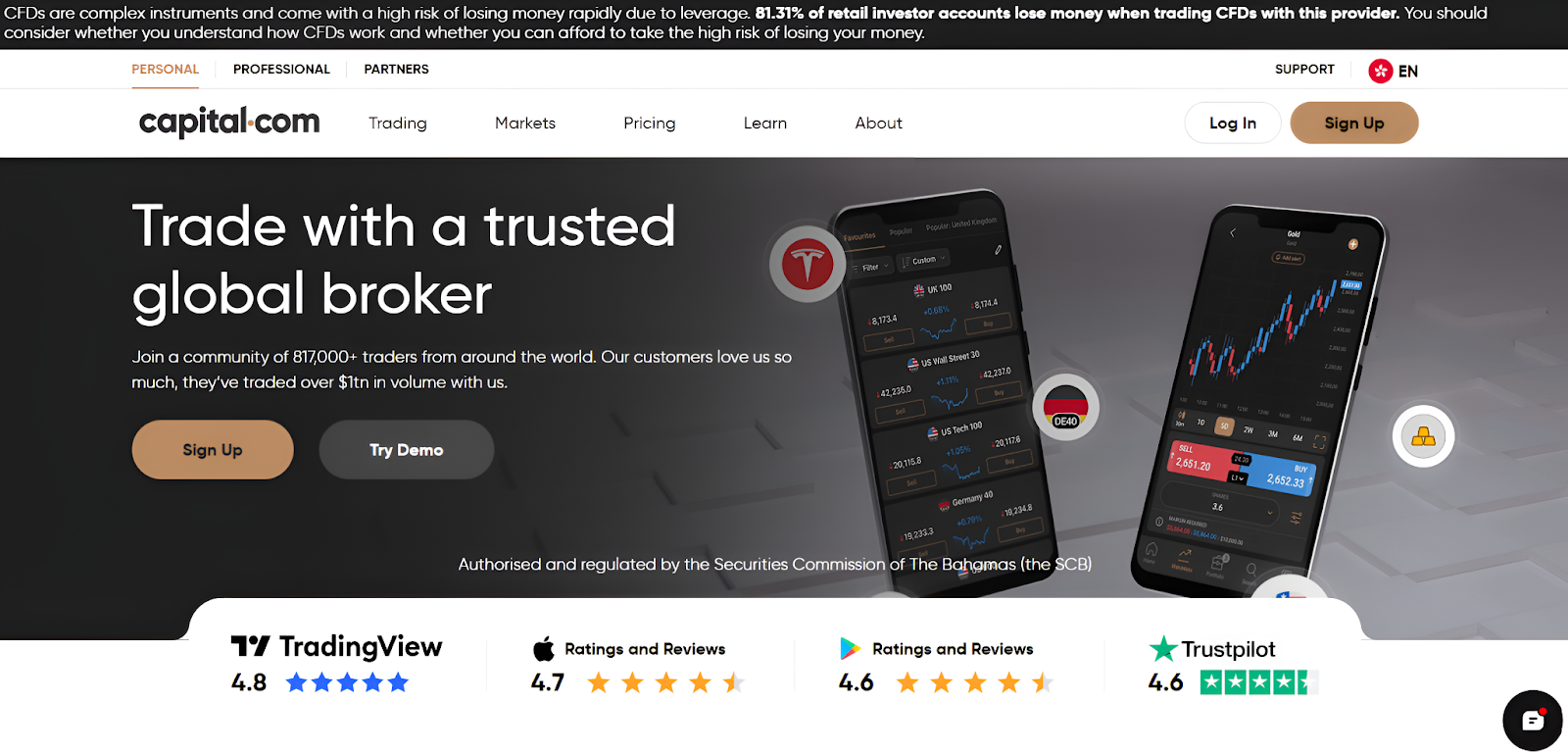
Capital.com is an ISO-27001 and PCI: DSS-certified broker, serving more than 817,000 traders globally. Operating under stringent regulatory oversight across five financial jurisdictions, including authorization by the Securities Commission of the Bahamas, Capital.com prioritizes data and financial security. The platform employs robust security measures such as segregated accounts, negative balance protection, guaranteed stop losses, and IPSec VPN. It also utilizes the DMARC email authentication protocol to prevent phishing scams and offers compensation of up to $100,000 in case of insolvency.
Key Features:
- Advanced trading platform with AI-powered insights.
- Highly competitive spreads, particularly on CFDs.
- Strong emphasis on security and data protection.
- Offers trading rebates and incentives.
Pros and Cons:
- Pros: Very tight spreads, excellent security features, potential for trading rebates.
- Cons: Primarily focused on CFDs and leveraged products.
7. AvaTrade – Best For Risk Management
Launched in 2006, AvaTrade is an Ireland-based online broker available in over 20 languages, serving more than 8.7 million traders globally. The platform offers over 1,000 instruments, including precious metals like gold and silver. AvaTrade is a multi-regulated entity, holding licenses from reputable bodies such as the Central Bank of Ireland, ASIC, ADGM, and FRSA, underscoring its commitment to client protection and adherence to international financial standards. The broker provides various risk management tools to help traders mitigate potential losses.
Key Features:
- Comprehensive risk management tools, including guaranteed stop losses.
- Wide range of trading instruments, including silver CFDs.
- Multiple trading platforms, including MetaTrader 4/5 and AvaTradeGO.
- Extensive educational resources.
Pros and Cons:
- Pros: Strong risk management features, diverse trading options, well-regulated.
- Cons: Spreads can be slightly higher than some competitors on certain instruments.
8. FxPro – Best For Ultra-Fast Execution
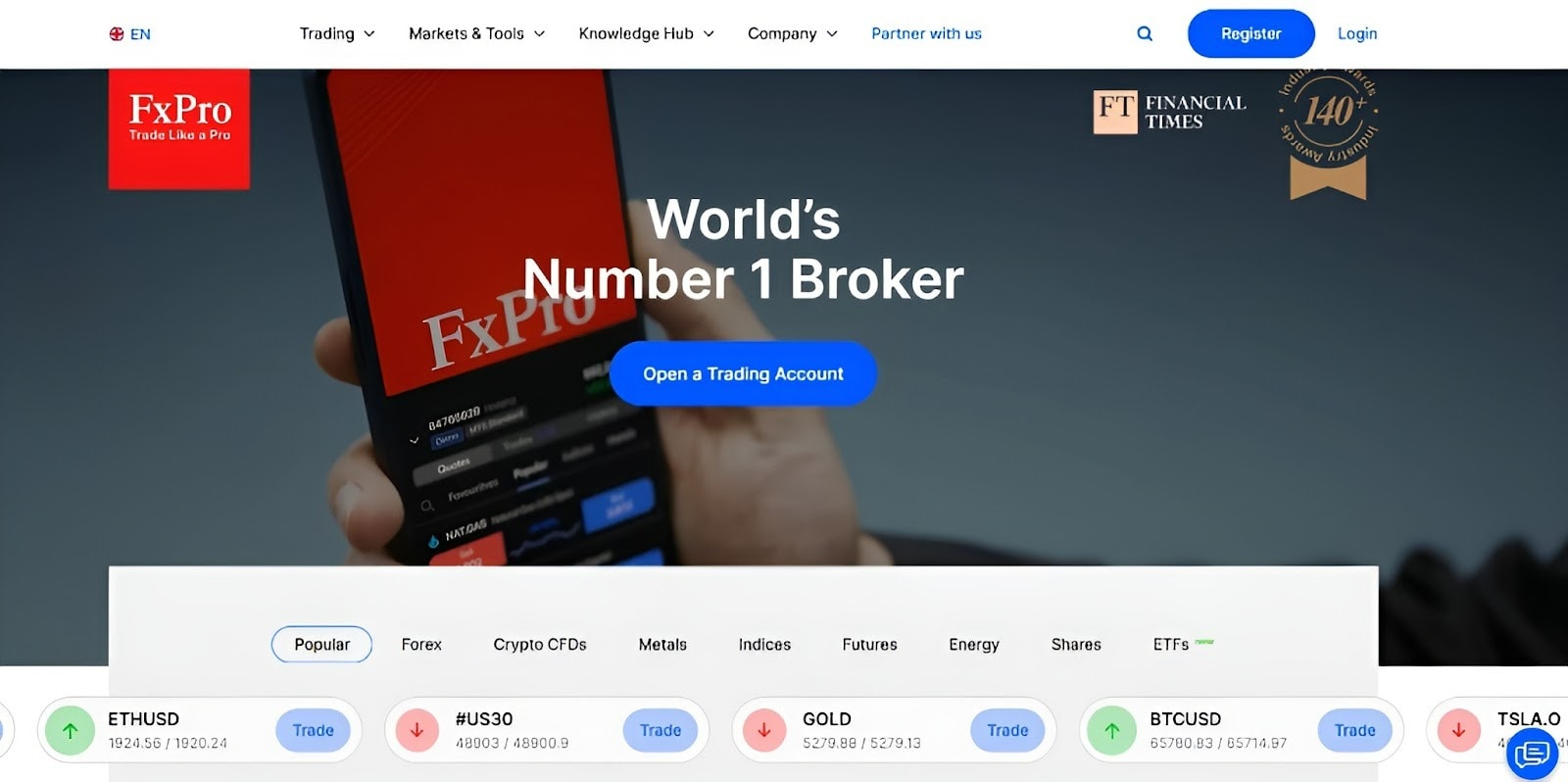
FxPro has been a leading broker in the online trading space since 1999, serving over 17,200,000 customers in more than 173 countries. The company has received over 140 international awards, a testament to its quality of service. FxPro implements high data encryption standards and is regulated by the FCA, SCB, and FSA, ensuring a secure and reliable trading environment. Its focus on ultra-fast execution makes it a preferred choice for traders who prioritize speed and precision.
Key Features:
- Exceptional execution speeds for trades.
- Access to multiple trading platforms, including MT4/5 and FxPro Edge.
- Competitive spreads, especially on major currency pairs and commodities like silver.
- Strong regulatory framework.
Pros and Cons:
- Pros: Extremely fast trade execution, competitive pricing, reliable platform.
- Cons: Lower Trustpilot rating compared to some peers, potentially less appealing for traders prioritizing social features.
9. IG Markets – Best for Diverse Trading Platform Options
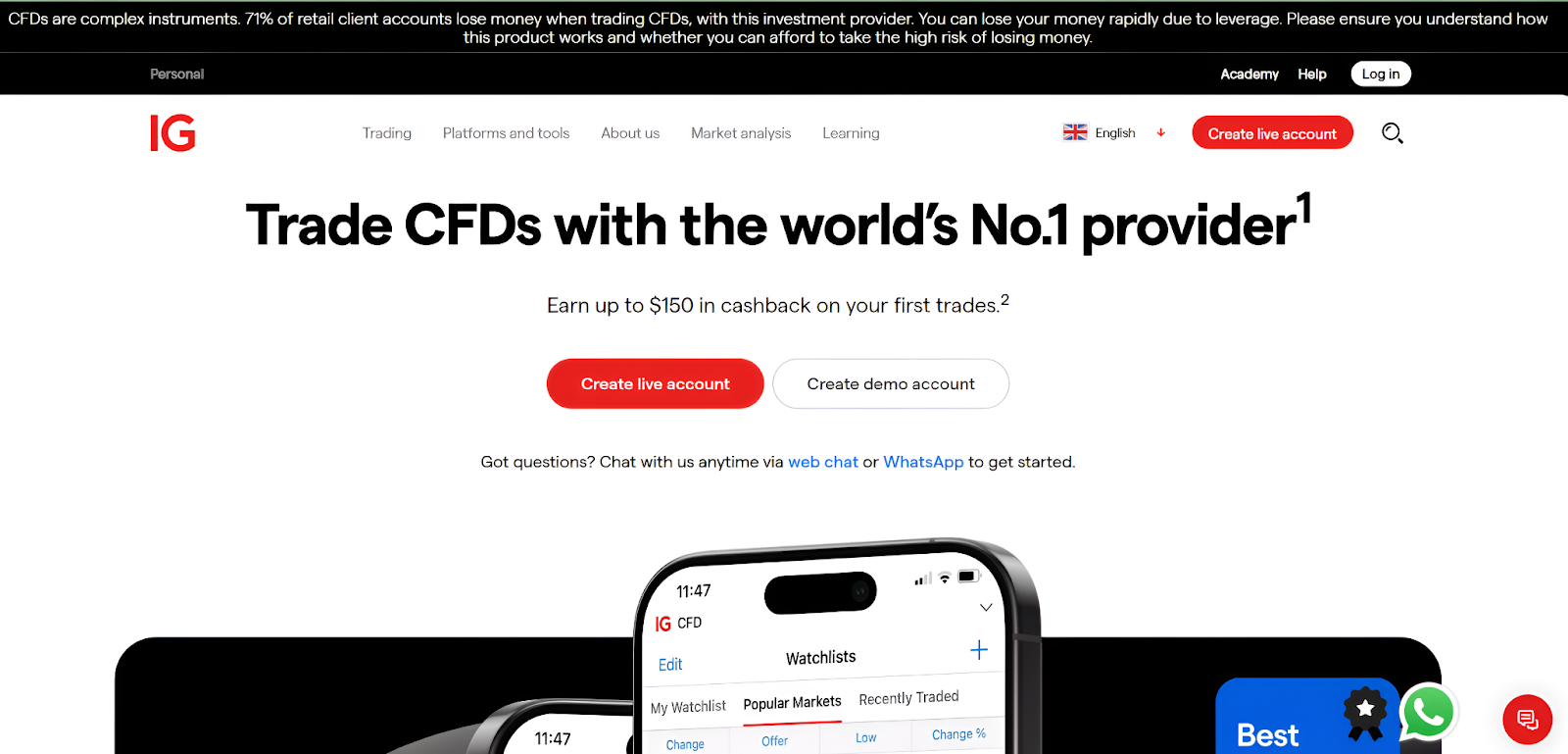
IG Markets is a highly respected CFD provider with over 50 years of experience in the online brokerage industry. Regulated by the Bermuda Monetary Authority, IG serves over 400,000 users globally and maintains a significant international presence with 18+ sales offices across five continents. As a constituent of the FTSE 250 index, IG demonstrates substantial financial stability. The company prioritizes the security of user funds by holding them in segregated accounts and ring-fencing them from its creditors, offering a secure environment for traders.
Key Features:
- Proprietary trading platform with extensive charting capabilities.
- Access to a vast range of markets and financial instruments.
- Offers free trading signals through partnerships.
- Strong educational resources and market analysis.
Pros and Cons:
- Pros: Extensive platform options, robust market access, good for traders seeking research and signals.
- Cons: Spreads can be wider on some instruments compared to ultra-low-cost brokers.
10. NinjaTrader – Best For Micro Contracts
NinjaTrader is recognized as a leading broker for trading micro and standard silver futures contracts. It has consistently received accolades from trading communities for its high-performance interface, responsive live support, customizable risk settings, and competitive pricing. As an NFA member and registered FCM with the CFTC, NinjaTrader adheres to strict regulatory standards, ensuring a secure and compliant trading environment, particularly for futures traders.
Key Features:

- Specializes in futures trading, including silver micro contracts.
- Powerful charting and analytical tools.
- Customizable trading environment.
- Competitive commission rates.
Pros and Cons:
- Pros: Excellent for futures traders, particularly those interested in micro contracts, robust platform features.
- Cons: Primarily focused on futures, which might not suit all traders.
How to Choose the Best Silver Trading Brokers?
Selecting the right silver trading broker involves a careful assessment of several critical factors to ensure a secure, efficient, and profitable trading experience.
1. Regulation and Safety
The foremost consideration when choosing a silver trading platform is its regulatory status. A broker must be licensed and regulated by reputable financial authorities in your jurisdiction. Key regulators to look for include the Commodity Futures Trading Commission (CFTC) in the U.S., the Financial Conduct Authority (FCA) in the UK, the Federal Financial Supervisory Authority (BaFin) in Germany, the Cyprus Securities and Exchange Commission (CySEC), and the Securities Commission of The Bahamas (SCB). Beyond regulatory compliance, assess the platform’s security infrastructure. This includes robust data privacy features, multi-factor authentication for account access, and the segregation of customer funds in separate accounts to protect them from the broker’s operational liabilities.
2. Trading Costs and Spreads
Trading costs can significantly impact profitability, especially for active traders. It is advisable to choose brokers that offer a transparent pricing structure. Pay close attention to the spreads (the difference between the bid and ask price), as these are a primary cost for many traders. Additionally, understand any other trading costs, such as commissions, overnight funding fees (for leveraged trades held overnight), and inactivity charges. Brokers with tight spreads and minimal additional fees will generally be more cost-effective.
3. Trading Platform Quality
The trading platform is your gateway to the market. It should be intuitive, user-friendly, and accessible across various devices (desktop, web, and mobile). Look for platforms equipped with advanced charting capabilities, a comprehensive suite of technical indicators, and tools for pattern recognition. Customization options are also important, allowing you to tailor the platform to your specific trading style and preferences. A platform that offers real-time data feeds and a stable connection is essential for making timely trading decisions.

4. Deposits and Withdrawals
Convenience and speed in managing your funds are crucial. Ensure that the broker supports multiple payment methods for deposits and withdrawals, such as credit/debit cards, bank transfers, and e-wallets. Brokers that facilitate quick processing times for both deposits and withdrawals are generally preferred. Furthermore, it’s beneficial to opt for brokerage firms that do not impose excessive fees on these transactions.
5. Customer Support and Education
Exceptional customer support can be invaluable, especially when encountering issues or seeking assistance. Look for brokers that offer 24/7 support through various channels, including email, phone, and live chat. Equally important are the educational resources provided. Whether you are a beginner or an experienced trader, access to comprehensive educational materials, such as articles, tutorials, webinars, and market analysis from experts, can significantly enhance your trading knowledge and decision-making capabilities.
What Does a Silver Broker Do?
A silver broker acts as an intermediary, facilitating the buying and selling of silver-based financial instruments. They provide traders with access to various silver markets, enabling them to open both long (buy) and short (sell) positions. These markets can include spot silver (immediate delivery at the current market price), CFDs, futures, options, and ETFs. Some brokers also offer the ability to trade shares of companies involved in silver mining. A key advantage of trading through these brokers is that you do not need to take physical possession of the silver itself. Moreover, many brokers allow traders to leverage their positions, meaning they can control a larger amount of silver with a smaller capital outlay through margin trading.
Beyond offering a diverse range of silver trading products, reputable brokers often integrate with popular trading platforms like MetaTrader and TradingView, providing advanced charting and analytical tools. Some may also support alternative platforms such as L2 Dealer, cTrader, and ProRealTime. The top-tier brokers are legally compliant, holding licenses from recognized regulatory bodies like the FCA, CFTC, and ASIC. They are committed to upholding the highest standards of security and data privacy, ensuring the safety of both client funds and sensitive personal information.
Benefits and Risks of Trading Silver
Benefits
- Diversification: Silver can act as a diversifier within an investment portfolio, as its price movements may not always correlate with those of stocks and bonds.
- Hedge Against Inflation: Like gold, silver is often considered a hedge against inflation, as its value can increase when the purchasing power of fiat currencies diminishes.
- Industrial Demand: Silver’s extensive use in various industries creates a strong demand base, independent of its precious metal status. This industrial demand can drive price appreciation during periods of economic growth.
- Volatility for Traders: While riskier, silver’s higher volatility compared to gold can present opportunities for short-term traders to profit from price swings.
- Accessibility: Silver is generally more accessible and affordable than gold, with lower entry barriers for many trading instruments.
Risks
- Price Volatility: Silver’s price can be highly volatile, influenced by economic news, industrial demand shifts, and speculative trading, leading to significant potential losses.
- Market Manipulation: Due to its smaller market size compared to gold, silver markets can be more susceptible to manipulation.
- Economic Sensitivity: Silver’s industrial demand makes it sensitive to economic downturns. A global recession can lead to decreased manufacturing activity and, consequently, lower silver prices.
- Leverage Risk: When trading leveraged products like CFDs or futures, the potential for both profits and losses is amplified. A small adverse price movement can lead to substantial losses, potentially exceeding the initial investment.
- Geopolitical Factors: While geopolitical events can sometimes boost silver prices as a safe-haven asset, they can also introduce uncertainty and market instability.
Key Differences Between Silver and Gold Trading
While both silver and gold are precious metals and often considered safe-haven assets, their trading characteristics and market dynamics differ significantly.
| Feature | Silver Trading | Gold Trading |
|---|---|---|
| Price Behavior | Tends to rise faster during economic growth and manufacturing booms. More volatile. | Tends to surge during recessions and economic uncertainties. Less volatile. |
| Price Per Unit | Generally trades at a lower price per troy ounce. | Trades at a higher price per troy ounce. |
| Industrial vs. Store of Value | Has broader industrial and technological applications. Considered a less reliable hedge against uncertainties. | Has fewer industrial applications but is a more established and reliable hedge against economic uncertainties. |
| Market Entry Barrier | Lower entry barriers due to its lower market value. | Higher entry barriers as the metal is costlier, requiring a larger capital outlay. |
| Market Size & Liquidity | Smaller market size, potentially more susceptible to volatility and manipulation. | Larger, more liquid market, generally considered more stable. |
Best Ways to Trade Silver
Traders can access the silver market through various instruments, each with its own characteristics and risk profile.
1. Spot Trading
Spot trading involves the immediate buying and selling of silver at its current market price. This method is ideal for short-term traders who aim to capitalize on real-time price fluctuations and market trends. It requires constant monitoring of market conditions and quick execution of trades.
2. Futures Contracts
Futures contracts are derivative agreements allowing traders to buy or sell silver at a predetermined price on a specified future date. If a trader expects the price to rise, they can go long on a futures contract, profiting if the spot price at maturity is higher than the contract price. Conversely, going short allows profiting if the spot price falls below the contract price. Futures offer leverage, amplifying potential gains and losses.
3. Options Contracts
Options contracts provide the buyer with the right, but not the obligation, to buy (call option) or sell (put option) silver at a specified price before a certain expiration date. The buyer pays a premium for this right. The downside risk for the option buyer is limited to the premium paid, while the upside potential can be substantial. Options offer flexibility and can be used for hedging or speculative purposes.
4. Exchange-Traded Funds (ETFs)
Silver ETFs are investment funds traded on stock exchanges that track the price of silver. They are typically backed by physical silver reserves, silver mining company stocks, or other silver-related assets. ETFs offer a simpler way to gain exposure to silver without the complexities of futures or options. They eliminate the need for storage and insurance associated with physical silver and are generally less risky than derivative products.

5. Contracts for Difference (CFDs)
CFDs are derivative products that enable traders to speculate on the price movements of silver without owning the underlying asset. A CFD contract is an agreement between a trader and a broker to exchange the difference in silver’s price from the time the contract is opened until it is closed. CFDs are leveraged products, meaning they magnify both potential profits and losses. They are popular for their flexibility and ability to profit from both rising and falling markets.
How to Start Trading Silver: Step-by-Step Guide
Embarking on silver trading requires a structured approach to ensure a well-informed and secure start.
Step 1: Choose a Regulated Broker
The foundational step is selecting a reputable, regulated broker that aligns with your trading objectives, risk tolerance, and experience level. Research brokers thoroughly, considering their regulatory status, offered instruments, fee structures, and platform features. Once you have identified a suitable broker, visit their official website or download their mobile application to begin the registration process.
Step 2: Open and Verify Your Account
After selecting a broker, you will need to open a trading account. This typically involves clicking a "Sign Up" button and providing basic personal information, including your email address, phone number, and location. You will also need to create a secure password. Following this, you must complete the Know Your Customer (KYC) verification process. This usually requires submitting copies of government-issued identification (such as a passport or driver’s license) and proof of address (like a utility bill or bank statement). Some brokers may also request income verification documents. Facial verification through a selfie is also a common requirement.
Step 3: Fund Your Trading Account
Once your account is verified, you can proceed to fund it. Brokers typically offer a variety of deposit methods, including credit/debit cards, bank transfers, and popular e-wallets like PayPal. Some may also accept cryptocurrency deposits. Each broker will specify a minimum deposit amount required to activate your account and begin trading.
Step 4: Analyze the Silver Market
Before executing any trades, it is crucial to conduct thorough market analysis. This involves understanding the fundamental factors that influence silver prices, such as supply and demand dynamics, inflation rates, macroeconomic indicators, global economic conditions, and geopolitical events. Utilize technical analysis tools, including charts and indicators, to identify market trends, potential reversal points, and profitable trading opportunities. Sentiment analysis can also provide insights into investor behavior and future price expectations. Staying informed through expert market analysis and the latest news is vital for making well-informed trading decisions.
Step 5: Execute and Manage Your Trade
Based on your analysis, financial capacity, and risk appetite, choose the most suitable silver-based instrument for trading. For beginners, it is advisable to start with lower leverage ratios, such as up to 3x, and to be cautious with highly leveraged derivative products, which carry significant risk. Once you have decided on your trade, carefully execute your order, setting appropriate stop-loss and take-profit levels to manage risk effectively. Continuously monitor your open positions and be prepared to adjust your strategy as market conditions evolve.
What Factors Impact the Price of XAG/USD?
The price of silver against the U.S. dollar (XAG/USD) is influenced by a multitude of interconnected factors. These include:
- Global Economic Growth: Strong economic growth typically increases demand for silver in industrial applications, driving prices up. Conversely, economic slowdowns can reduce demand and pressure prices downward.
- Inflation: As a precious metal, silver is often sought as a hedge against inflation. When the purchasing power of fiat currencies erodes, investors may turn to silver, increasing its demand and price.
- U.S. Dollar Strength: The U.S. dollar is the benchmark currency for silver trading. A weaker dollar generally makes silver cheaper for holders of other currencies, potentially increasing demand and pushing XAG/USD higher. A stronger dollar has the opposite effect.
- Monetary Policy: Interest rate decisions by central banks, particularly the U.S. Federal Reserve, can impact silver prices. Higher interest rates can make interest-bearing assets more attractive, potentially drawing investment away from precious metals.
- Geopolitical Stability: During times of political or economic uncertainty, silver, like gold, can be seen as a safe-haven asset, leading to increased demand and higher prices.
- Industrial Demand: The significant role of silver in industries such as electronics, automotive, and renewable energy means that trends in these sectors directly affect silver prices.
- Supply Dynamics: Factors affecting silver supply, such as mining output, new discoveries, geopolitical issues in mining regions, and recycling rates, play a crucial role in price determination.
- Market Sentiment and Speculation: Investor sentiment, speculative trading activity, and the behavior of large institutional investors can also contribute to short-term price fluctuations.
Conclusion
The landscape of silver trading offers numerous opportunities for investors, with a variety of brokers providing access to diverse instruments. The platforms detailed in this article represent some of the leading options available for 2026, each with its unique strengths. Ultimately, the "best" broker is subjective and depends on an individual’s specific trading goals, risk tolerance, and preferred trading style. Prioritizing brokers that offer robust security, competitive pricing, user-friendly platforms, and comprehensive support is essential for maximizing potential gains while effectively managing the inherent risks in silver trading.
FAQs
What is the best broker for silver trading?
FP Markets and AvaTrade are highly regarded for silver trading. For those specifically interested in trading futures contracts, Plus500 is an excellent choice.
Which broker offers lower spreads for silver trading?
FxPro is known for offering some of the lowest spreads for XAG/USD trading. AvaTrade, Capital.com, and NinjaTrader also provide competitive low spreads for silver trading.
Is silver trading profitable?
Silver trading can be profitable, provided traders employ appropriate strategies, conduct thorough market analysis, and possess a solid understanding of fundamental and technical analysis. Identifying profitable opportunities and executing trades at optimal entry and exit points are key to success.
What is the cheapest way to invest in Silver?
Trading Contracts for Difference (CFDs) on silver is generally considered the cheapest way to gain exposure. CFDs are leveraged products, allowing traders to control larger positions with a smaller capital investment, thus reducing the initial capital outlay required.
What is the best silver trading signals provider?
For free trading signals, IG Markets is a strong contender, offering signals generated by PIA-First and Autochartist. AvaTrade is also a noteworthy option, particularly for those interested in AI-powered trading signals.