
 Lina Irawan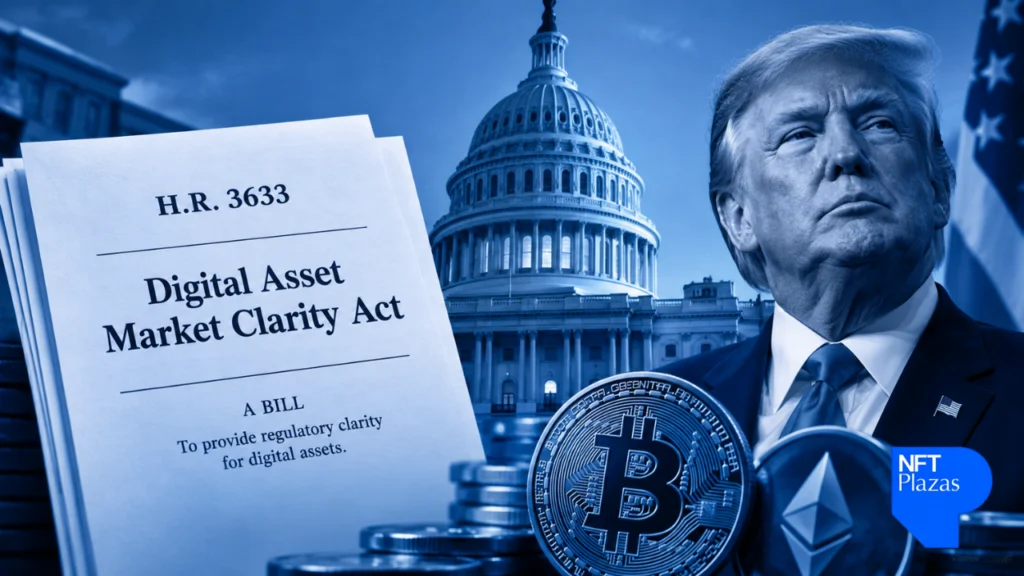
Senate Republicans have unveiled what they are terming the "final" draft of the CLARITY Act, signaling a concerted effort to advance the long-anticipated cryptocurrency market structure legislation before the legislative calendar enters its concluding phase for the 2026 session. This latest iteration of the bill, a comprehensive 635-page proposal released late Sunday by Senators Cynthia Lummis, John Boozman, and Tim Scott, incorporates a significant number of concessions aimed at garnering broader bipartisan support, particularly in anticipation of a key procedural vote scheduled for Tuesday, September 15. According to the senators, the revised text integrates 126 substantive changes requested by their Democratic counterparts, reflecting over a year of intensive, often challenging, bipartisan negotiations.
The path to this revised draft has been marked by persistent efforts to bridge divides on complex issues, from regulatory frameworks for digital assets to the ethical implications of their use by public officials. Notably, the updated legislation also incorporates the majority of a bipartisan ethics proposal championed by Senators Thom Tillis and Ruben Gallego. Crucially, President Donald Trump has reportedly agreed to the new ethical restrictions outlined in the bill, a development that could potentially neutralize one of the most significant political impediments to the CLARITY Act’s passage. "If cloture is invoked, the new text would be offered as the substitute amendment," the senators stated, indicating the procedural pathway for its consideration.
Trump’s Concession on Crypto Ethics: A Pivotal Development
The inclusion of stringent ethics provisions has emerged as a central point of contention throughout the protracted negotiations. The scrutiny surrounding President Trump and his family’s involvement in various cryptocurrency ventures, including World Liberty Financial, the USD1 stablecoin, and the TRUMP memecoin, has cast a long shadow over the legislative process. Reports indicating that Trump’s financial disclosures revealed over $1.4 billion in crypto-related income during 2025 amplified concerns about potential conflicts of interest, especially as his administration grappled with developing cryptocurrency regulations.
The revised CLARITY Act proposes to extend ethics restrictions to a broad spectrum of federal public officials and employees, encompassing the President, Vice President, members of Congress, and their respective spouses. This framework largely mirrors the Tillis-Gallego proposal, which notably includes a significant role for state attorneys general in the enforcement of conflict-of-interest rules. This particular provision was deemed critical by several Democrats considering their support for the legislation. Senator Lummis highlighted President Trump’s voluntary agreement to these restrictions, urging Democrats to reciprocate. "Democrats got what they wanted; now they need to take yes for an answer," Lummis remarked. However, the current language does not extend the same level of restriction to other family members, such as the children of public officials, leaving certain potential conflicts outside the purview of the current proposal.

Stablecoin Rewards Under New Scrutiny: The Introduction of a Circuit Breaker
Another major area of contention addressed in the latest CLARITY Act draft involves the contentious issue of stablecoin rewards, a point of friction between the cryptocurrency industry and traditional banking institutions. While the legislation generally prohibits platforms from offering interest on idle payment stablecoins, it permits rewards linked to the actual use of stablecoins. Banking groups have voiced concerns that such incentives could incentivize customers to shift deposits away from community banks and towards stablecoin-based products, potentially destabilizing local lending ecosystems.
To mitigate these risks, the revised draft empowers the Treasury Secretary with the authority to implement an 18-month "circuit breaker" on specific stablecoin rewards. This measure can be invoked if payment stablecoins lead to substantial outflows of deposits. This provision is intended to serve as an emergency safeguard, rather than a permanent prohibition on rewards. The American Bankers Association has been a vocal advocate for closing what they term a "stablecoin interest loophole," emphasizing the vital role of community bank deposits in supporting local economies. The inclusion of this circuit breaker mechanism is anticipated to garner support from lawmakers concerned about the potential ramifications of stablecoins on the broader traditional banking system.
Streamlined Protections for Blockchain Developers Amidst Evolving Regulatory Landscape
The bill also introduces modifications to the protections afforded to blockchain developers under the existing Blockchain Regulatory Certainty Act. The revised language narrows these protections to encompass matters related to the Bank Secrecy Act and civil enforcement actions. Notably, Republicans have removed broader language that could have shielded developers from certain criminal charges, including prosecutions under 18 U.S.C. § 1960. This statute has been instrumental in U.S. prosecutors’ cases against developers associated with privacy-centric cryptocurrency services, such as Tornado Cash and Samourai Wallet. These adjustments signify an endeavor to provide enhanced regulatory clarity for developers without creating what lawmakers might perceive as an expansive exemption from federal criminal law.
Furthermore, provisions originating from the Agriculture Committee have undergone tightening, incorporating additional safeguards designed to address affiliate trading, conflicts of interest, and vertical integration within digital commodity exchanges, brokers, and dealers. The legislation also aims to provide clearer definitions regarding the applicability of state consumer-protection laws to digital asset businesses, aiming to foster a more predictable operating environment for the industry.
The Narrow Path to Passage: A Race Against Time and Political Will
Despite the latest compromises, the CLARITY Act continues to face a formidable legislative hurdle. The Senate is slated to hold a cloture vote on Tuesday, September 15, on the motion to proceed with the bill. This procedural step requires a supermajority of 60 votes. With Republicans currently holding 53 Senate seats, securing the necessary support means at least seven Democrats or independents must join them, assuming full Republican backing.

A successful cloture vote, however, will not immediately send the bill to the House of Representatives. It will initiate the debate phase, during which senators will need to navigate potential amendments and overcome another procedural vote before final passage in the Senate. Subsequently, the House will have to consider the Senate’s version of the bill or engage in reconciliation efforts with its own legislative proposals before the measure can be presented to President Trump for his signature.
The legislative clock is ticking rapidly. The Senate’s tentative schedule includes a state work period commencing October 5, followed by Election Day on November 3. Adding to the time constraints, House leaders have also canceled scheduled work weeks later in September, significantly narrowing the window for lawmakers to complete this critical legislation. Senator Lummis has previously cautioned that if the CLARITY Act fails to pass during the current Congress, the opportunity for comprehensive federal cryptocurrency regulation could be delayed until as late as 2030, a prospect that weighs heavily on industry stakeholders.
The recent concessions and the final draft have demonstrably improved market sentiment. Prediction markets now place the probability of the bill becoming law this year at approximately one-third, a notable increase from the low 20% range observed prior to the release of the latest draft. For the cryptocurrency industry, Tuesday’s vote transcends a mere procedural step. It represents the most definitive test to date of whether months of intricate negotiations concerning market structure, stablecoins, developer protections, and political ethics have yielded a viable compromise capable of securing bipartisan consensus. Should Republicans successfully garner the requisite 60 votes, the CLARITY Act will advance to the subsequent stages of the legislative process. Conversely, a failure to achieve this threshold could plunge the industry back into a prolonged period of uncertainty, awaiting comprehensive federal rules for the burgeoning U.S. digital asset market.









