Layla Zulfa
The Ethereum Foundation (EF) has unveiled a comprehensive strategic focus for Decentralized Finance (DeFi) in 2026, solidifying its commitment to fostering an ecosystem rooted in permissionless access, censorship resistance, privacy, self-custody, and open-source development. This renewed emphasis positions DeFi not merely as a speculative venture, but as the inevitable evolution of finance, driven by the fundamental belief that financial autonomy is a universal right. The Foundation’s vision, dubbed "Defipunk," champions financial paradigms that are uniquely enabled by Ethereum, distinguishing them from traditional finance (TradFi) simply made marginally better. This strategic outline signals a proactive stance by the EF to guide DeFi’s trajectory, ensuring its growth aligns with the foundational ethos of decentralization and user empowerment that has been a critical driver of Ethereum’s adoption.
The Foundational Ethos: DeFi as Inevitable Evolution
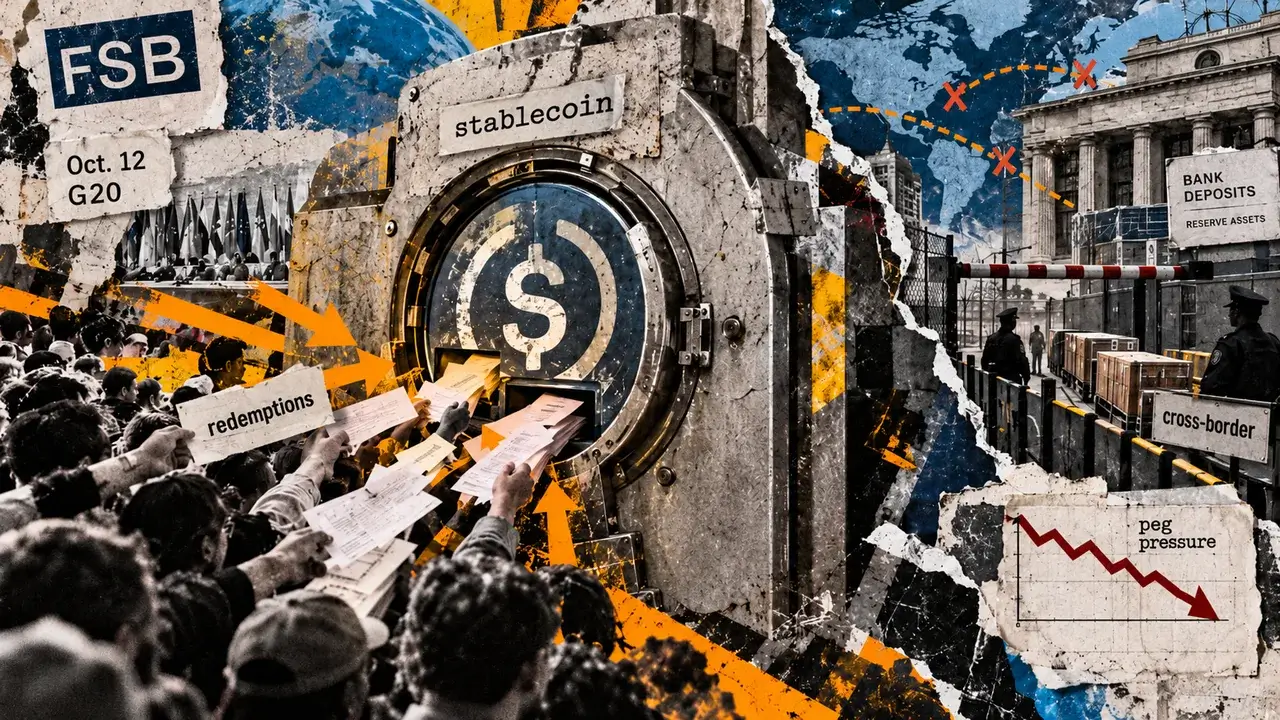
Decentralized Finance, or DeFi, represents a paradigm shift in financial services, leveraging blockchain technology, primarily Ethereum, to create open, transparent, and immutable financial protocols. Its emergence has been hailed as a revolutionary force, promising to democratize access to financial tools previously restricted by geographical barriers, socio-economic status, or the gatekeeping mechanisms of centralized institutions. The Ethereum Foundation has consistently championed this movement, recognizing DeFi’s pivotal role in Ethereum’s ecosystem expansion. Since the "DeFi Summer" of 2020, which saw an explosion of innovation and user adoption, the Total Value Locked (TVL) in DeFi protocols has surged from under $1 billion to over $50 billion as of early 2026, demonstrating its profound impact and growing utility. Major stablecoins like USDC and USDT, largely built on Ethereum, boast market capitalizations in the tens of billions, underscoring the demand for censorship-resistant digital currency.
The EF’s "Defipunk" philosophy, detailed in a recent blog post from June 4, 2025, articulates a clear distinction: true DeFi must offer services that could not exist without a public, decentralized blockchain like Ethereum, rather than simply replicating existing financial services in a digital wrapper. This commitment reflects a deep-seated belief in the transformative potential of blockchain technology to create a more equitable and accessible global financial system. Hsiao-Wei Wang, Co-Executive Director of the Ethereum Foundation, underscored this sentiment, stating, "Ethereum is poised to attract exponentially larger flows of capital, talent, and innovative energy. Growth, however, is often path-dependent: standards adopted in periods of chaotic rapid growth harden into legacy constraints, and designs that privilege transparency can lock in surveillance by default. Incumbent systems often exert subtle pressures that narrow the design space for novel DeFi primitives and constrain privacy-focused innovation. The Ethereum Foundation will defend against these pressures." This statement highlights the EF’s proactive role in safeguarding the core principles of decentralization against the potentially centralizing forces of rapid growth and institutional integration.
Bridging Today’s Innovations with Tomorrow’s Vision
The Foundation’s strategic outlook for DeFi is bifurcated, addressing both the immediate value propositions of current protocols and the aspirational, radical ideas that will define tomorrow’s financial landscape.
DeFi Today: Current DeFi protocols have already delivered on many promises, offering millions worldwide access to financial instruments traditionally reserved for the privileged. This includes stablecoins accessible globally, opportunities for yield generation without intermediaries, and always-on markets that operate without exclusionary practices. These tools are particularly impactful for populations underserved by traditional banking systems or those living under regimes where assets can be frozen arbitrarily. For instance, protocols like MakerDAO provide decentralized lending against collateral, while Uniswap offers automated market-making for token swaps, all without requiring personal identification or centralized approval. The EF aims to bolster these existing functionalities, ensuring they become more robust, secure, and widely adopted, thereby advancing financial sovereignty for all.
DeFi Tomorrow: Beyond enhancing existing solutions, the EF is committed to fostering exploratory and groundbreaking concepts that redefine finance itself. This forward-looking approach seeks to identify and nurture "N+1 financial improvements"—innovations that go beyond incremental gains. The Foundation highlights speculative yet promising areas such as combining user-controlled AI with high-throughput on-chain futures markets to develop novel solutions for hedging against future expenses. Other radical ideas include the creation of advanced futarchy DAOs (Decentralized Autonomous Organizations) for decentralized governance and integrating DeFi with zero-knowledge (ZK) reputation systems to enable privacy-preserving undercollateralized lending. These ambitious endeavors aim to create entirely new financial primitives that are currently unimaginable within traditional frameworks, echoing the spirit that gave birth to early DeFi innovations like borrowing from smart contracts. The Foundation’s goal is to facilitate the transition of these "DeFi of tomorrow" concepts into tangible, mature applications on the Ethereum mainnet.
Leadership and Strategic Direction
Leading the EF’s DeFi efforts within the App Relations team are Charles St. Louis, DeFi Protocol Specialist, and ivangbi, DeFi Coordinator. Their combined decade-plus experience in building and shaping the DeFi landscape provides critical expertise for the Foundation’s ambitious agenda.
Charles St. Louis brings a wealth of experience from pioneering fixed-rate yield protocols and products at DELV (formerly Element Finance) from 2021-2025. His earlier contributions to the DAI stablecoin system and MakerDAO’s governance, beginning in 2018, underscore his foundational role in the development of core DeFi infrastructure.
Ivan, co-founder of Gearbox Protocol (2021), a modular lending infrastructure focused on leverage, emerged from the heart of Ethereum’s DeFi community. His journey spans from the formation of LobsterDAO in 2018, through the transformative "DeFi Summer," to the deployment of one of the ecosystem’s most technically resilient protocols. Ivan articulated the delicate balance the EF aims to strike: "As TradFi and institutional adoption on Ethereum accelerate, we must not forget the core principles that built DeFi in the first place. Pragmatism is necessary, but our mission is to scale cypherpunk values alongside market growth. We see ourselves as the essential glueing piece between these two worlds. We are ready to listen and adapt; you know where to find us!" This statement reinforces the EF’s commitment to preserving decentralized values even as the ecosystem matures and integrates with traditional financial structures.
Key Strategic Pillars for 2026
For 2026, the Ethereum Foundation is concentrating its efforts on six core priorities, chosen for their foundational importance and potential for deliberate expansion.
-
Builder Relationships: Establishing clear communication channels for DeFi teams to interact with the EF and each other is paramount. This includes facilitating the sharing of protocol upgrades, surfacing application-layer needs to core developers, and providing direct support to teams building on Ethereum. The goal is to foster a collaborative environment where knowledge and resources are readily exchanged.
-
Security: Recognizing that exploits undermine trust and set back the entire ecosystem, the EF prioritizes making DeFi inherently more secure. This involves a critical examination of common points of failure, such as insecure interfaces, unreliable oracles, vulnerable upgrade mechanisms, compromised admin keys, and discretionary multisignature wallets that many protocols still rely on as transitional safeguards. The Foundation aims to support improved auditing practices, robust runtime protections, and the development of architectures that progressively trend towards trustlessness, thereby minimizing human points of failure. The cumulative financial losses from DeFi exploits, which have amounted to billions of dollars over recent years, highlight the urgent need for these security enhancements.
-
Decentralization and Openness: Advocating for open-source, composable, and verifiable code is a baseline commitment. The EF stresses that code which can be openly read, audited, and built upon fosters trust and resilience. The Foundation will encourage teams to transition from direct control towards more decentralized governance models, exploring innovative approaches beyond conventional defaults. Openness is viewed not as a vulnerability but as a fundamental strength that empowers collective ownership and scrutiny.
-
Privacy: In collaboration with the EF’s dedicated Privacy cluster, this initiative aims to integrate privacy as a foundational infrastructure layer for DeFi, rather than an optional feature. The vision extends beyond simply building "private stablecoins" to embedding privacy for all token payments, and subsequently for more complex use cases such as trading and lending. This aligns with the broader cypherpunk ethos, envisioning a future where financial privacy is the default, ensuring user sovereignty and protection from surveillance.
-
Standards and Risk Clarity: The proliferation of DeFi protocols necessitates consistent standards across various domains, including vaults, tokenization, Real World Assets (RWAs), and disclosure formats. The EF will push for shared risk frameworks, encompassing clear taxonomies and honest assessments of what truly constitutes "low-risk" DeFi, referencing insights from thought leaders like Vitalik Buterin. This coordination with wallets, explorers, and other infrastructure teams is crucial for reducing friction and enhancing user confidence and safety.
-
Research and Content: The Foundation will actively create and curate high-quality DeFi content, including mechanism research, data analysis, and accessible explanations. Supporting DeFi-focused events and educational materials will help both builders and users navigate the evolving landscape, understand complex protocols, and utilize DeFi tools effectively. This intellectual contribution aims to deepen understanding and accelerate innovation within the community.
On the Horizon: Emerging Frontiers
Looking beyond the immediate priorities, the Ethereum Foundation is closely monitoring several nascent areas with significant potential. These include the convergence of DeFi and Artificial Intelligence (AI), exploring how AI can enhance protocol efficiency, security, or user experience; the increasing institutional adoption of DeFi, analyzing how traditional financial entities integrate with decentralized protocols; the evolution of stablecoins and payments, focusing on their role in a global, digital economy; and the emergence of new financial primitives that defy existing categories. The EF is actively preparing content and strategizing on how to offer meaningful support in these burgeoning sectors, with further announcements expected.
Engagement and Community Connection
The App Relations team will be actively engaging with the community at key industry events. They are scheduled to attend the Digital Asset Summit from March 24-26 and EthCC from March 30-April 2nd, where they will discuss these initiatives. Builders working on DeFi projects on Ethereum are encouraged to connect with the team at these events. The Foundation emphasizes its readiness to listen and adapt, underscoring a collaborative approach to shaping DeFi’s future. For those seeking alternative avenues for engagement or a broader understanding of the Foundation’s activities, resources such as the EF organization chart and other initiatives like the Privacy commitment, Protocol updates, and the Ecosystem Support Program are readily available.
Ultimately, the Ethereum Foundation’s revitalized focus on DeFi underscores its conviction that open finance is central to Ethereum’s long-term success. By supporting builders with coordination, visibility, and connectivity, the EF aims to ensure that DeFi continues to push the boundaries of what is possible, living up to the vision where financial autonomy is a right, and "All roads lead to Ethereum."