
 admin
admin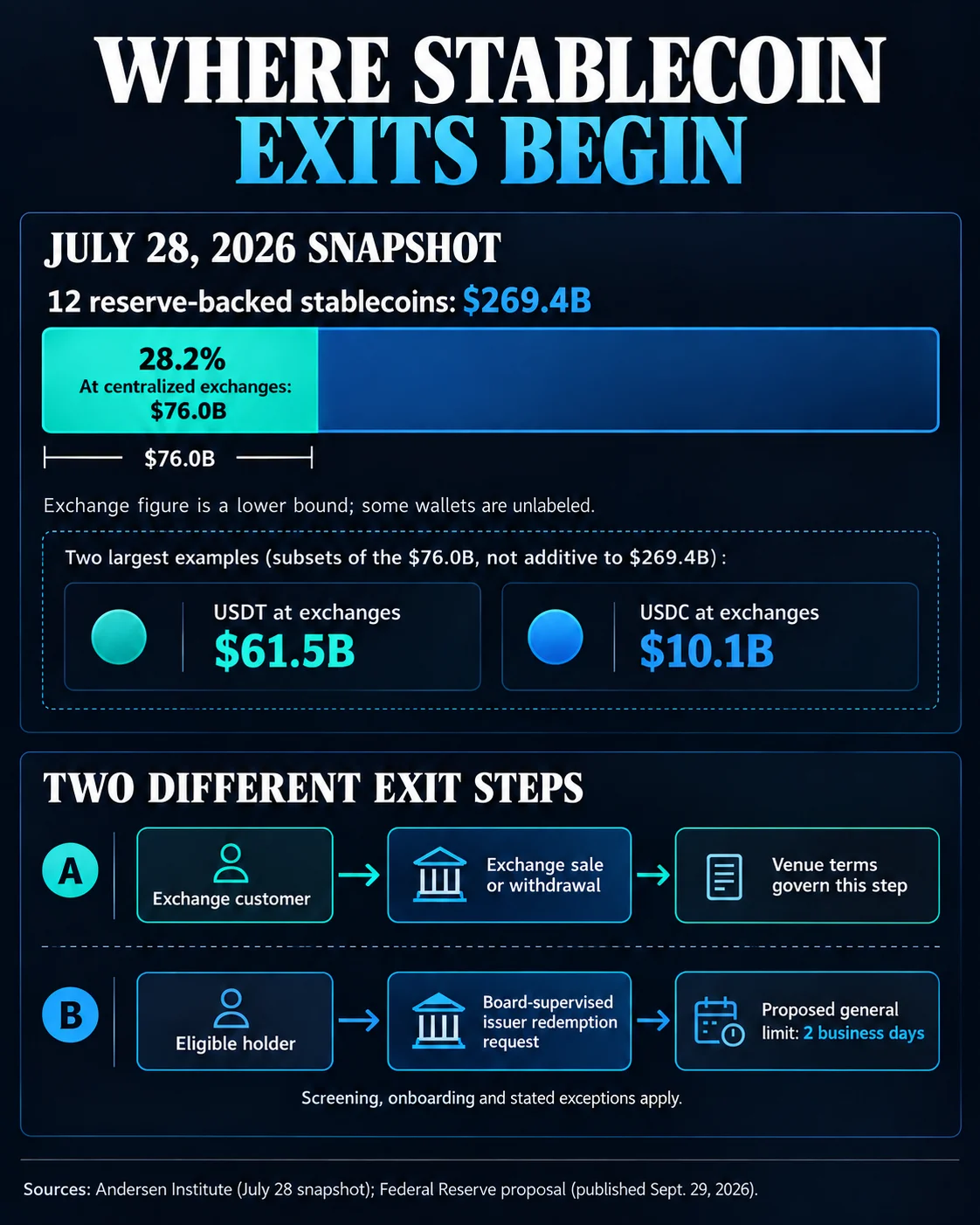
The Federal Reserve’s recent proposal to regulate stablecoin issuers, aiming to bolster financial stability and consumer protection, introduces a crucial two-business-day limit on redemption for entities under its direct supervision. This move signifies a significant step in bringing the rapidly evolving stablecoin market under a more defined regulatory framework. The proposal, published in the Federal Register on September 29, following an announcement by the Board on September 24, outlines requirements for Board-supervised payment stablecoin issuers to disclose their redemption procedures and adhere to stipulated timelines.
Under the proposed Section 247.12, payment stablecoin issuers overseen by the Board would be mandated to establish a normal redemption period that does not exceed two business days following a valid request. Issuers will be required to clearly articulate to customers how redemption can be initiated and must accept redemption requests for at least one token, subject to standard screening and onboarding protocols. This initiative is designed to provide greater predictability and assurance for individuals and institutions holding stablecoins, particularly in scenarios where swift access to underlying value is critical.
However, the practical application of these proposed rules is complicated by the current ecosystem of stablecoin holdings, a significant portion of which resides on centralized exchanges rather than directly with issuers. Research conducted by the Andersen Institute for Finance and Economics, detailed in a July 28 snapshot, identified approximately $76 billion in stablecoins held across centralized exchanges. This figure represents a lower bound, as the researchers acknowledged that some exchange wallets remain unidentified, suggesting the true amount could be higher.
The Federal Reserve’s proposal directly addresses the obligations of issuers supervised by the Board. For a customer holding stablecoins at an exchange, the process of redemption or conversion of their balance is a two-tiered transaction. First, the customer must engage with the exchange venue, and subsequently, the exchange may need to interact with the stablecoin issuer. The terms and conditions governing the customer’s relationship with the exchange dictate the initial steps, and these terms can vary significantly among platforms.
A deeper dive into the current operational landscape reveals why this distinction is critical. For instance, Circle, a prominent issuer of the USD Coin (USDC), outlines specific redemption terms. As stated on their website, direct USDC redemption for holders outside the European Economic Area is available to eligible individuals who maintain a Circle Mint account in good standing. This implies that users without such an account may face additional requirements or delays before they can redeem directly with Circle. The company describes Circle Mint as a service primarily catering to institutional distributors, highlighting a segmentation in their direct redemption access.
Similarly, Coinbase, a major cryptocurrency exchange, states in its U.S. user agreement that while a customer owns the balance of a USDC wallet held on their platform, Coinbase is not obligated to repurchase USDC for U.S. dollars. Instead, the agreement directs customers to Circle for direct redemption, subject to Circle’s separate terms and conditions. Coinbase also reserves the right to suspend trading or sending functionalities, adding another layer of potential complexity for users seeking to liquidate their stablecoin holdings. The eligibility for direct redemption with issuers like Circle, and the timing of exchange withdrawals, are therefore contingent upon individual customer circumstances and the specific policies of the trading venue.
The Andersen Institute’s July snapshot further highlights the challenges in applying the Fed’s proposed framework directly to the entire $76 billion held at exchanges. Their data includes $61.5 billion in Tether (USDT) and $10.1 billion in USDC, alongside other stablecoins. However, the Federal Reserve’s proposed rule specifically targets Board-supervised issuers. This means that a comprehensive analysis requires an issuer-by-issuer examination of their policies and regulatory standing, before comparing it against the scope of the Fed’s proposal.
Tether, another major stablecoin issuer, has its own distinct redemption requirements. According to Tether’s terms, direct redemption necessitates a verified customer and imposes a minimum redemption amount, often set at $100,000. This policy, coupled with the diverse range of issuer policies and varying regulatory classifications of different stablecoins, underscores the need for granular analysis rather than a blanket application of the proposed Fed rules.
The Fed’s Proposal: Defining Redemption Obligations
The Federal Reserve’s proposal aims to create a more standardized and reliable redemption process for a significant segment of the stablecoin market. By mandating a two-business-day limit for Board-supervised issuers, the Fed seeks to mitigate risks associated with rapid depreciation or loss of confidence in a stablecoin. This timeframe is intended to provide a reasonable window for users to convert their stablecoins back to fiat currency or an equivalent asset, especially during periods of market stress.
The proposal allows for extensions to this redemption period under specific circumstances. The Board may grant extensions for reasons of safety, financial stability, or the public interest. Furthermore, limited safe harbors are included for delays that arise from mandatory customer identification and verification processes (often referred to as Know Your Customer or KYC procedures) or from circumstances beyond the issuer’s direct control. These provisions acknowledge the operational realities of financial services and the need for robust anti-money laundering and counter-terrorism financing measures.

The requirement for issuers to disclose their redemption procedures is a critical transparency measure. This will empower users to understand their rights and the processes involved before they encounter a situation where redemption is urgent. The ability for customers to redeem at least one token, subject to onboarding, ensures a baseline level of accessibility.
Background and Context: The Evolution of Stablecoins and Regulatory Scrutiny
Stablecoins, digital assets designed to maintain a stable value relative to a specific currency or commodity, have grown exponentially in popularity and market capitalization over the past decade. Initially conceived as a bridge between traditional finance and the burgeoning cryptocurrency ecosystem, they have become integral to many decentralized finance (DeFi) applications and a popular medium of exchange within the crypto space. Their stability is typically achieved through various mechanisms, most commonly by holding reserves of traditional assets, such as fiat currency, government securities, or other highly liquid assets.
However, the rapid growth of stablecoins has also attracted increased scrutiny from regulators worldwide. Concerns have been raised about their potential to disrupt financial markets, their susceptibility to "runs" similar to traditional bank runs, and the adequacy of their reserves to back the issued tokens. The collapse of TerraUSD (UST) in May 2022, an algorithmic stablecoin that lost its peg, served as a stark reminder of the potential fragilities within the stablecoin market and intensified regulatory calls for action.
The Federal Reserve, along with other U.S. financial regulators, has been actively exploring frameworks for stablecoin oversight. The current proposal represents a significant move towards implementing a regulatory structure that addresses the unique challenges posed by these digital assets. The focus on a two-business-day redemption limit is a direct response to concerns about liquidity and the ability of users to access their funds when needed, particularly in times of market volatility.
Chronology of the Federal Reserve’s Stablecoin Proposal
- May 2022: The collapse of TerraUSD (UST) triggers heightened global regulatory concern regarding stablecoins.
- Late 2022 – Early 2023: U.S. financial regulators, including the Federal Reserve, Treasury Department, and SEC, engage in discussions and issue reports on potential stablecoin regulation.
- September 24, 2026: The Federal Reserve announces its intention to propose new rules for stablecoin issuers.
- September 29, 2026: The Federal Reserve formally publishes its proposed rule, outlining a two-business-day redemption limit for supervised issuers, in the Federal Register.
- Present: The proposed rule is open for public comment, allowing stakeholders to provide feedback and suggestions before potential finalization.
Supporting Data: Exchange Holdings and Stress Testing
The Andersen Institute’s research provides crucial data points illustrating the scale of stablecoins held on centralized exchanges. As of July 28, 2026, $76 billion of reserve-backed dollar stablecoins were held across 12 identified centralized exchanges. This figure, representing approximately 28.2% of the total $269.4 billion supply across these stablecoins, underscores the significant role exchanges play in the stablecoin ecosystem. The fact that some exchange wallets could not be identified suggests that the actual amount held by these venues might be even larger.
The researchers also examined the behavior of stablecoins during a stress event, specifically the March 2023 episode involving USDC. By analyzing data from March 9, 2026 (the pre-shock baseline), they found that exchanges held 15.2% of the total USDC supply but accounted for a disproportionate 40% of the subsequent supply decline. This data highlights the sensitivity of exchange holdings to market shocks and the potential for rapid outflows from these platforms.
During the initial phase of the USDC stress from March 10 to 13, 2026, the overall USDC supply decreased by $2.7 billion, while identified exchange balances actually rose by $600 million. This counterintuitive increase in exchange balances could indicate tokens moving onto exchanges for various reasons, possibly to facilitate sales or conversions, even as the overall supply was contracting. However, in the subsequent phase, from March 13 onwards, the USDC supply fell by an additional $8.1 billion, and exchange balances saw a significant decline of $4.9 billion. This later stage suggests a more direct correlation between overall supply reduction and exchange outflow.
This analysis of the USDC stress episode offers valuable insights. It demonstrates that treating the entire $76 billion held at exchanges as an immediate, uniform exodus during a crisis might be an oversimplification. The data suggest a more nuanced pattern of token movement, with initial inflows to exchanges potentially preceding larger outflows. However, the Andersen snapshot itself has limitations when applying the Fed’s proposal. The data include USDT, which has different redemption policies and regulatory considerations than USDC. Furthermore, the wallet-location data do not reveal the sequence of individual customer redemption requests made to exchanges, nor the subsequent actions taken by exchanges with issuers.
Broader Impact and Implications
The Federal Reserve’s proposed two-business-day redemption limit, if enacted, could have several significant implications for the stablecoin market:
- Enhanced Consumer Protection: The primary benefit would be increased assurance for stablecoin holders. Knowing they can redeem their assets within a defined timeframe, especially from Board-supervised issuers, can foster greater confidence in stablecoins as a reliable digital asset.
- Market Standardization: The proposal aims to bring a degree of standardization to redemption practices, reducing the opacity and variability that currently characterize the market. This could lead to a more predictable and stable environment for stablecoin users.
- Impact on Exchange Operations: Exchanges that hold substantial stablecoin reserves will need to ensure their own operational capabilities align with the proposed issuer redemption timelines. This might require adjustments to their internal processes, liquidity management, and partnerships with issuers. The distinction between the exchange’s terms with its customers and the issuer’s obligations will remain a critical area of focus.
- Potential for Regulatory Arbitrage: While the proposal targets Board-supervised issuers, other entities or jurisdictions might operate with different regulatory standards. This could create opportunities for regulatory arbitrage, where stablecoin activities shift to less regulated areas.
- Incentive for Direct Issuer Engagement: The clearer redemption obligations for supervised issuers might encourage some users to hold stablecoins directly with issuers rather than solely through exchanges, especially for those who meet issuer eligibility criteria.
- Challenges for Certain Stablecoins: Stablecoins with more complex or less accessible redemption mechanisms, such as those with high minimums or stringent verification requirements, may face greater pressure to adapt their policies or could see reduced adoption if they fall outside the scope of direct Federal Reserve supervision.
The current regulatory landscape for stablecoins is still in its formative stages. The Federal Reserve’s proposal is a significant piece of the puzzle, addressing a core concern of liquidity and accessibility. However, the ultimate impact will depend on the final form of the regulation, the compliance efforts of issuers, and the continued evolution of the broader digital asset market. The ongoing public comment period will be crucial in shaping these rules, ensuring that they are both effective in their objectives and practical in their implementation. The distinction between direct issuer obligations and the customer-exchange relationship will continue to be a vital point of clarification and potential friction as this regulatory framework develops.








