James Watt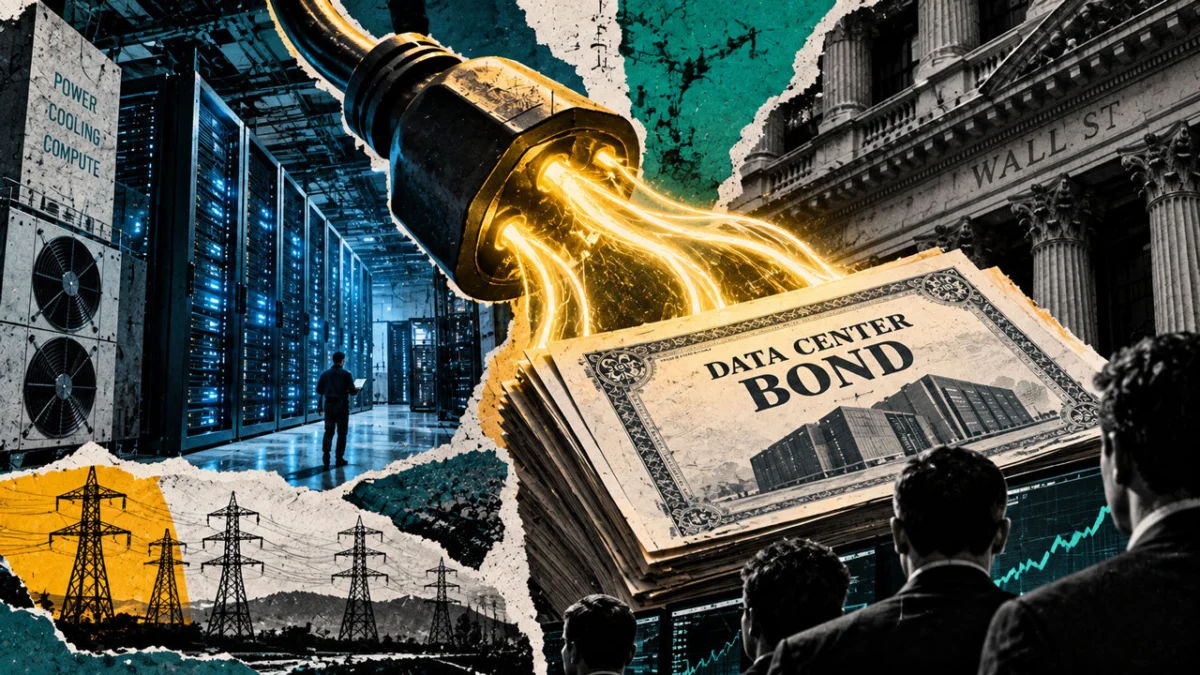
The rapid expansion of artificial intelligence has fundamentally altered the economics of digital infrastructure, transforming electricity from a mere utility expense into the primary collateral for a burgeoning multibillion-dollar bond market. As every interaction with generative AI models necessitates a sequence of server calculations, cooling cycles, and high-speed network transmissions, the data centers housing these processes have become the focal point of a massive capital infusion. This shift is characterized by the "securitization" of data centers, a process where Wall Street packages the rental income and service fees from these facilities into bonds, effectively allowing investors to trade on the physical and electrical capacity required to sustain the AI revolution.
In this new financial paradigm, the traditional metrics of real estate—primarily square footage and location—are being superseded by power density and energy reliability. A facility’s value is increasingly determined by its secured megawatt capacity rather than its physical footprint. This transition reflects a broader trend where the "megawatt" has become the standard unit of real estate in the tech sector, a development that has significant implications for fixed-income portfolios, regulatory frameworks, and the stability of the national power grid.
The Mechanics of Data Center Securitization
The process of turning a server hall into a tradable bond begins once a data center is operational and populated by paying tenants. The facility owner transfers the physical assets and their associated long-term lease contracts into a "ring-fenced" or separate legal entity known as a special-purpose vehicle (SPV). This entity then issues debt to investors, who are repaid through the cash flow generated by the facility.
The "cash-flow waterfall" in these transactions is structured to prioritize operational stability. Revenue flows from tenants—often high-credit-rating "hyperscalers" like Microsoft, Google, or Amazon—and is used first to cover essential operating expenses. These expenses include property taxes, insurance, maintenance, and, most critically, the electric bill. Only after these costs are satisfied do bondholders receive their coupon payments. Consequently, the price of electricity and the reliability of the local power grid are as vital to the bond’s creditworthiness as the financial health of the tenants themselves.
In February 2024, the market saw a prime example of this trend when S&P Global Ratings assigned an A(sf) rating to Sabey Data Center Issuer’s $475 million Series 2024-1 notes. These notes were backed by a diversified pool of data center properties and their associated tenant leases. Such transactions are becoming increasingly common; data from the Structured Finance Association (SFA), drawing on Barclays research, indicates that outstanding data-center securitizations grew from approximately $4 billion in 2020 to a staggering $61 billion by July 2026.
The Megawatt as the New Unit of Real Estate Value
Conventional property language often fails to capture the complexity of a data center. While a warehouse or office building is defined by its usable floor space, a data center is defined by its infrastructure: utility connections, on-site substations, backup diesel generators, sophisticated liquid or air-cooling systems, and redundant fiber-optic routes. An AI company finds little value in a vast hall that lacks the electrical capacity to power thousands of high-density H100 or Blackwell GPUs.
The physical requirements for these facilities are expanding at an unprecedented rate. According to the Lawrence Berkeley National Laboratory’s 2025 update, U.S. data centers are estimated to consume 649 terawatt-hours (TWh) by 2030 in a reference case scenario. This would represent approximately 11.8% of total U.S. electricity consumption. Depending on variables such as chip efficiency, server utilization, and the adoption of advanced cooling technologies, the range of projected consumption spans from 521 TWh to 843 TWh (9.5% to 15.3% of total U.S. use).
For bond investors, this volatility in power demand introduces a unique set of risks. While increased demand for AI chips can drive higher revenue for data center operators, it also necessitates expensive retrofits. As new processors pack more heat and power draw into each rack, even a facility under a long-term contract may require utility upgrades or new cooling configurations to remain technologically relevant. This creates a dual-track underwriting challenge: investors must assess not only whether the tenant can pay (tenant credit) but also whether the building’s design will remain viable as hardware evolves (asset longevity).
A Chronology of Financing: From Construction to Maturity
The lifecycle of a data center involves several distinct phases of financing, each with a different risk profile:
- Development and Construction: Initial funding is typically provided through construction loans, project finance, or private credit. These lenders take on the "greenfield" risks, including construction delays, cost overruns, and the potential for a "dark" building—one that opens without secured tenants.
- Grid Connection and Commissioning: A critical milestone is the connection to the local utility grid. In many regions, wait times for high-voltage power connections can stretch for years, making a secured "power drop" a highly valuable intangible asset.
- Stabilization: Once the building is operational and leased to creditworthy tenants, the owner can move to refinance. This is the stage where securitization (Asset-Backed Securities or ABS) and Commercial Mortgage-Backed Securities (CMBS) enter the picture.
- Refinancing and Recycling Capital: Many data center bonds are structured with an "expected repayment date" (often around five years) but a "legal final maturity" that extends 25 to 30 years. This gap allows the sponsor to add new facilities to a master trust and issue more notes, effectively using existing assets to fund the next round of construction.
According to the Structured Finance Association, the average data-center ABS issuance is approximately $600 million, while CMBS deals—which are secured by a mortgage on the property rather than the broader operating business—average $1.2 billion.
Regulatory Evolution: The SEC’s July 2026 Ruling
A pivotal moment for the market occurred on July 29, 2026, when the U.S. Securities and Exchange Commission’s (SEC) Office of Structured Finance issued a "no-action" letter regarding certain data center securitizations. This letter, responding to an inquiry from the law firm Latham & Watkins, provided significant regulatory clarity.
The SEC staff agreed that data center securitizations matching specific structural criteria do not fall under the strict legal definition of an "asset-backed security" as defined by the Exchange Act. The reasoning is based on the nature of the collateral. In a typical ABS, the underlying assets (like car loans or mortgages) are "self-liquidating"—they are paid down and eventually disappear. In contrast, a data center is an operating real estate asset that continues to exist and generate value even after the bonds are repaid.
By moving outside the statutory definition of an ABS, these transactions can avoid several costly requirements:
- Risk Retention: Issuers are no longer strictly required by federal rule to retain 5% of the credit risk, although most sponsors still maintain significant equity (often 30% or more) to attract investors.
- Rule 192: These deals are exempt from certain conflict-of-interest prohibitions designed for traditional securitizations.
- Disclosure Requirements: The ruling reduces the burden of specific disclosure provisions tied to repurchase activity and third-party due-diligence reports.
While this classification reduces the administrative cost of issuing debt, it places a higher burden on investors to perform their own due diligence regarding power contracts, tenant concentration, and the physical condition of the assets.
The Global Capital Race and Future Implications
The scale of the capital required to sustain AI growth is immense. Morgan Stanley estimates that global data-center spending could reach $2.9 trillion through 2028. Approximately $1.4 trillion of this is expected to be funded by the internal cash flow of major cloud companies, leaving $1.5 trillion to be sourced from external finance. While securitizations and CMBS are expected to supply roughly $150 billion, the remainder will likely come from corporate debt, bank loans, and private credit.
The impact of this growth on the broader financial market is already visible. Data-center ABS grew to represent 12% of the "esoteric" ABS market in 2026, up from just 3% in 2020. Barclays projections suggest that total outstanding data-center securitizations could reach $180 billion by the end of 2028.
However, the "financialization" of the megawatt also brings systemic risks. The reliance on a small number of technology giants creates high tenant concentration. If a major hyperscaler were to shift its strategy or renegotiate leases, the impact on the bond market would be immediate. Furthermore, the "refinancing cliff"—the gap between expected repayment and legal maturity—leaves issuers vulnerable to interest rate spikes or a hostile bond market at the five-year mark.
To mitigate power-related risks, some AI data centers are adopting strategies pioneered by the Bitcoin mining industry. This includes "demand response" capabilities, where a facility can manage its power consumption intelligently, scaling back during times of grid strain to preserve margins and maintain utility relationships.
Ultimately, the rise of the data center bond market represents the bridge between the digital world of AI and the physical world of the energy grid. While the user experiences AI as a near-instantaneous software response, the investor sees it as a long-term claim on electricity, infrastructure, and real estate. As Wall Street continues to price and package the megawatt, every coupon payment serves as a reminder that the "cloud" is a physical entity with an immense—and increasingly investable—appetite for power.