
 James Watt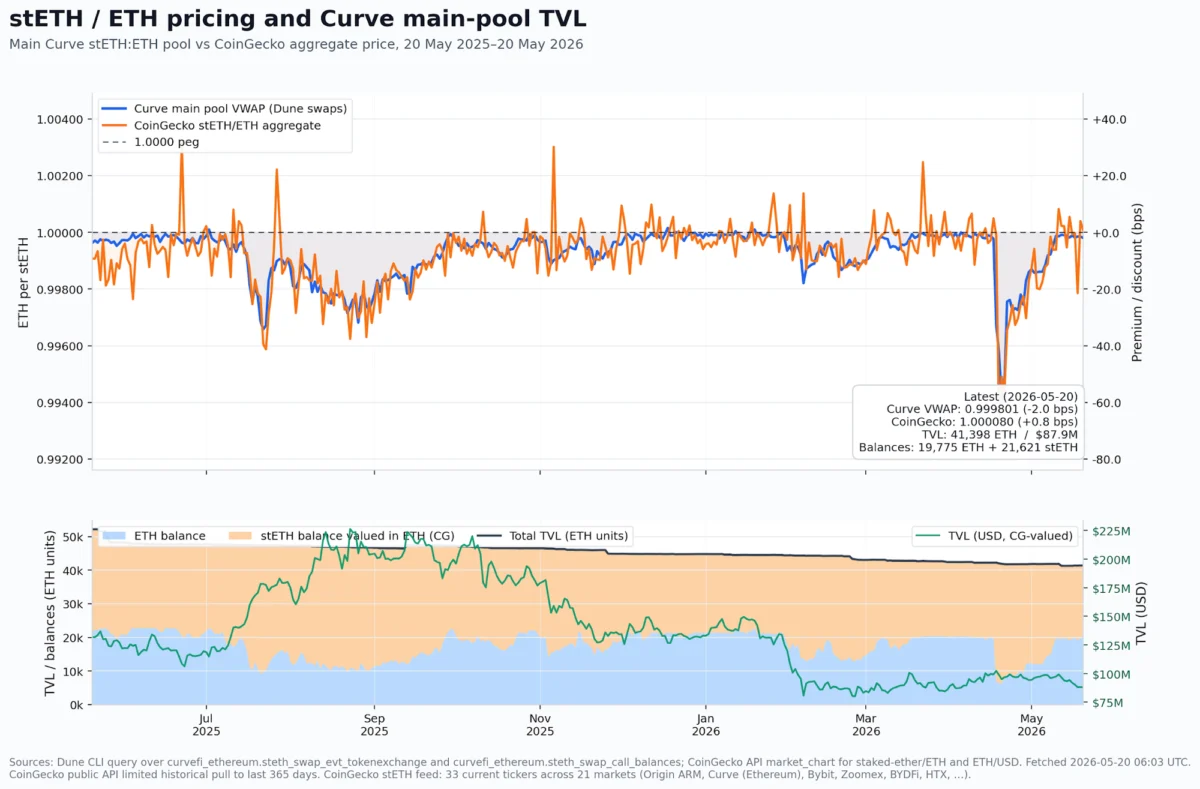
The decentralized finance (DeFi) landscape was rocked in April 2026 by a significant external shock: the KelpDAO rsETH exploit. This incident, which saw approximately $292 million in rsETH released on Ethereum due to a cross-chain verification failure, sent ripples through restaking and ETH-denominated lending markets. While the broader ecosystem grappled with the fallout, a critical asset, Lido’s stETH, faced an indirect but rigorous stress test. Despite a noticeable dip in its pricing and an increase in transaction costs, stETH—and its wrapped counterpart, wstETH—demonstrated remarkable resilience, maintaining functionality and liquidity amidst the turmoil. This incident underscored the robust architecture and deep market integration that have come to define stETH as a foundational component of the Ethereum economy, even when external vulnerabilities threaten the wider DeFi fabric.
The KelpDAO Incident: A Detailed Account of a Cross-Chain Compromise
The alarm bells first sounded on April 18, 2026, when anomalous activity on the KelpDAO protocol, a prominent player in the liquid restaking sector, was detected. Attackers successfully exploited a critical vulnerability within KelpDAO’s LayerZero-based rsETH bridge path. Post-incident analyses quickly converged on a consensus: the exploit stemmed from a sophisticated cross-chain verification failure. This technical flaw allowed the attackers to mint approximately 116,500 rsETH tokens on the Ethereum mainnet without a corresponding burn on the source chain, effectively creating an unauthorized supply. The total value of these illicitly generated tokens was estimated to be around $292 million, representing a substantial loss for the protocol and its users.
The immediate impact of the exploit was concentrated on two primary areas: restaking collateral and the myriad lending markets that utilized rsETH. Restaking protocols, which allow users to re-pledge their liquid staking tokens (LSTs) to secure additional networks and earn further rewards, found their underlying collateral compromised. Similarly, various decentralized lending platforms that accepted rsETH as collateral faced significant liquidation risks and potential bad debt. The incident served as a stark reminder of the inherent risks associated with cross-chain interoperability and the complex composability of DeFi protocols, where a failure in one component can cascade through interconnected systems.
Understanding rsETH, Restaking, and the Vulnerability
To fully grasp the implications of the KelpDAO exploit, it is essential to understand the underlying technologies. KelpDAO is a liquid restaking protocol that allows users to deposit liquid staking tokens (LSTs) like stETH, rETH, or cbETH to receive rsETH in return. rsETH, or "restaked ETH," is designed to represent a user’s stake in KelpDAO’s restaking strategy, accruing rewards from both Ethereum staking and additional AVS (Actively Validated Services) secured by EigenLayer. The promise of restaking is enhanced yield and broader network security, but it also introduces new layers of complexity and potential attack vectors.
The vulnerability lay within the LayerZero-based bridge architecture used by KelpDAO to facilitate cross-chain transfers of rsETH. LayerZero is an omnichain interoperability protocol that enables seamless communication and asset transfers between different blockchains. While designed for security and efficiency, the specific implementation or integration within KelpDAO’s rsETH bridge path contained a flaw related to how it verified burns on the source chain before minting tokens on the destination chain. In essence, the attackers managed to trick the bridge into believing a burn had occurred, allowing them to mint new rsETH on Ethereum without any actual assets being locked or destroyed elsewhere. This "phantom mint" created the excess supply, leading to the substantial financial loss.
stETH’s Unwavering Core: A Test of Resilience
Crucially, the KelpDAO incident did not directly compromise stETH or wstETH. Lido Finance, the issuer of stETH, was quick to clarify that its core staking protocol and the underlying mechanics of stETH remained entirely unaffected. The exploit was confined to KelpDAO’s specific implementation of a LayerZero bridge for rsETH, a distinct asset built on top of other LSTs. This distinction proved vital in preventing a wider contagion event across the entire LST ecosystem.
During the intense period following the exploit, Lido’s internal protocol mechanisms functioned exactly as intended. The protocol continued to process staking rewards, manage validator operations, and, notably, handled one of the largest periods of net outflows in its history without a hitch. This demonstrated the robustness of Lido’s design, emphasizing that the protocol’s mechanics did not contribute to the market volatility that ensued. Market participants, despite the generalized fear, were largely able to differentiate between a failure in a specific cross-chain restaking asset path and the underlying stability and liquidity profile of stETH, which serves as Ethereum’s largest liquid staking token. This discernment was key to stETH’s eventual recovery.
Market Dynamics: Pricing and Liquidity Under Pressure
While stETH’s core integrity remained intact, its secondary market pricing and liquidity were inevitably tested by the broader market panic. The period from April 18 to April 28, 2026, became a critical stress window for ETH-denominated assets. During this time, the price of stETH relative to ETH experienced a noticeable, albeit contained, dip.
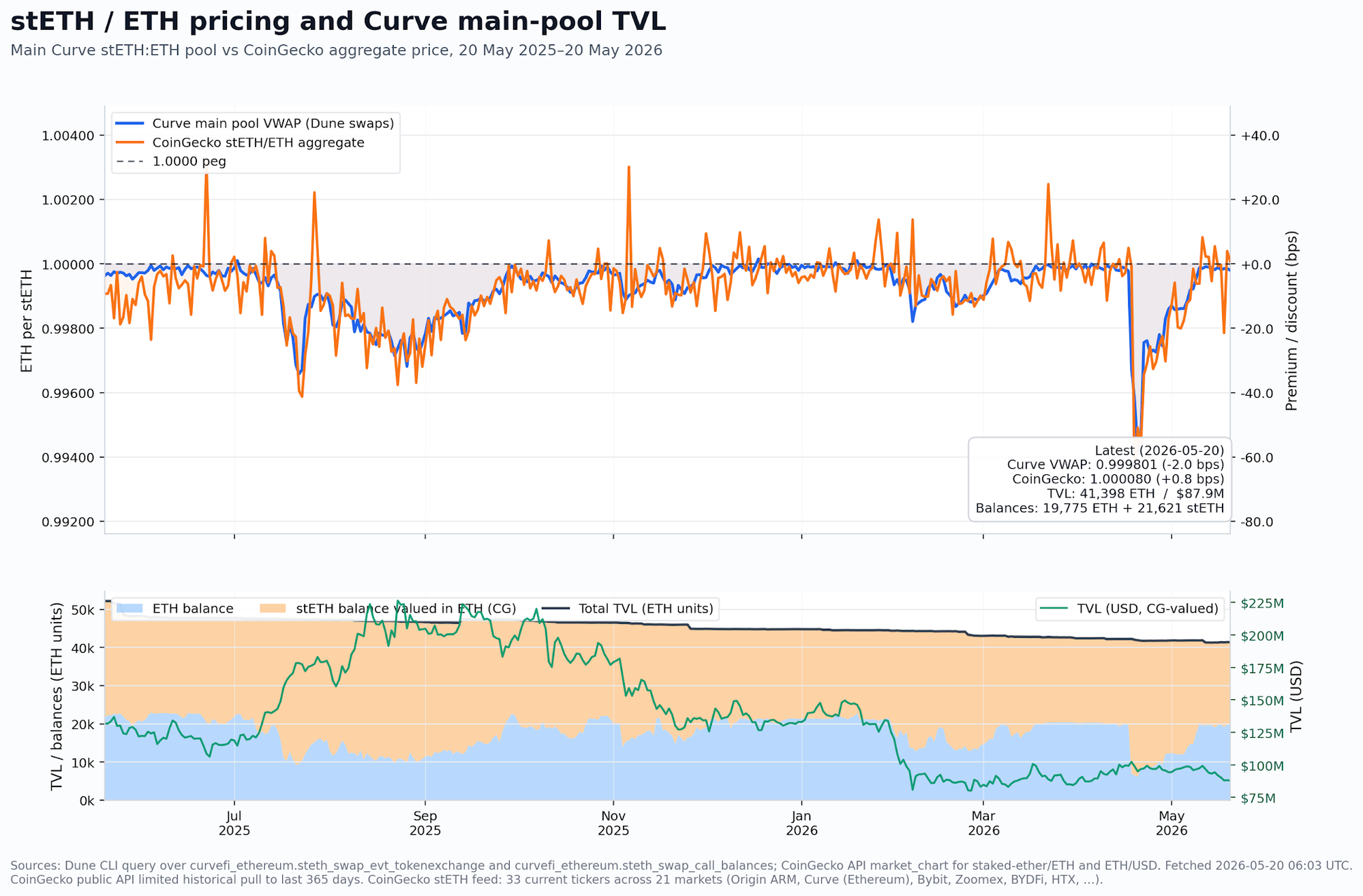
Data from the Curve main-pool, a primary liquidity venue for stETH/ETH, showed its daily Volume Weighted Average Price (VWAP) reaching a low of approximately 0.9941 ETH per stETH. This represented a discount of about -59 basis points (bps) versus parity. Similarly, CoinGecko’s aggregate stETH/ETH pricing, which compiles data from various exchanges, recorded a comparable low of approximately 0.9934. This momentary de-peg, though significant in absolute terms given the scale of stETH’s market capitalization, was relatively modest compared to the severity of the $292 million exploit that had just occurred in a closely related sector.
The market’s ability to distinguish the localized nature of the exploit became evident in the subsequent recovery. By May 20, less than a month after the initial shock, the Curve VWAP for stETH/ETH had largely rebounded, settling near parity at 0.99980. CoinGecko’s aggregate price also returned to normal levels, registering 1.00008. This swift recovery underscored the market’s underlying confidence in stETH’s fundamental value proposition and the depth of its liquidity.
Beyond headline prices, a more telling metric of market health under stress is liquidity depth—the ability to execute large trades without significant price impact. For a substantial $1 million fixed-sell wstETH quote on the Ethereum mainnet, the median daily quote impact across 236 observations before the exploit was a minimal -0.1 bps. This indicated highly efficient execution with negligible slippage. During the 10-day stress window immediately following the KelpDAO incident, this median moved to -5.0 bps, and the 7-day moving average reached a trough of -15.9 bps.

While a -15.9 bps impact for a $1 million trade represents a real increase in execution cost, it is crucial to interpret this within the context of the event. For a major external exploit affecting hundreds of millions of dollars in restaking collateral and profoundly impacting lending-market utilization, this level of slippage is remarkably low. It signifies that liquidity, while temporarily more expensive, did not disappear. wstETH/ETH execution remained measurable, routable, and interpretable, allowing large market participants to adjust their positions effectively without triggering a liquidity spiral. This demonstrated that the market for stETH was not only functional but resilient, capable of absorbing significant sell pressure without collapsing.
Industry Reactions and Responses
The KelpDAO exploit prompted swift reactions across the DeFi ecosystem. KelpDAO itself moved quickly to acknowledge the breach, initiating an internal investigation and collaborating with security experts to understand the full scope of the attack. They likely released statements detailing their recovery efforts, potential compensation plans for affected users, and measures to prevent future occurrences, focusing on bolstering their bridge security.
LayerZero, as the underlying interoperability protocol, faced scrutiny regarding the security of its implementations. Representatives from LayerZero reportedly emphasized that the vulnerability was specific to KelpDAO’s integration and not a fundamental flaw in the LayerZero protocol itself, while simultaneously offering technical assistance and guidance to affected projects. This distinction was vital for maintaining confidence in cross-chain infrastructure.
Lido Finance officials were quick to issue public statements clarifying that stETH was not directly compromised and that Lido’s protocol functioned as designed. These communications highlighted stETH’s robust design and the decentralized nature of its operations, which contributed to its stability during the crisis. Lido likely reiterated its commitment to security and transparency, emphasizing that its primary focus remained on secure and efficient Ethereum staking.
Market analysts and institutional investors, while initially wary, largely praised the stETH market’s performance. Many pointed to the incident as a critical "stress test" for liquid staking tokens, noting that stETH’s ability to weather such a storm validated its position as a reliable, foundational asset in DeFi. The event also reignited discussions about the importance of auditing, risk management, and the careful evaluation of composability risks in complex DeFi ecosystems.
Broader Implications for DeFi and Restaking
The KelpDAO rsETH exploit carries several profound implications for the future of decentralized finance, particularly in the burgeoning restaking sector and cross-chain interoperability.
Firstly, it highlighted the inherent risks of cross-chain bridges. While bridges are essential for connecting disparate blockchains and enhancing liquidity, they remain a significant attack vector. The incident underscores the need for continuous innovation in bridge security, rigorous auditing, and perhaps new models that minimize reliance on single points of failure in verification processes. It also reinforces the argument for "trust-minimized" bridges that rely on cryptographic proofs rather than external validators where possible.
Secondly, the event served as a cautionary tale for the liquid restaking paradigm. While restaking offers compelling yield opportunities, it introduces additional layers of abstraction and smart contract risk. Protocols building on top of LSTs must implement even more stringent security measures, given the increased attack surface. Users must also exercise extreme diligence in understanding the risks associated with depositing their LSTs into third-party restaking protocols.
Finally, the resilience of stETH reinforces its role as a bedrock asset in the Ethereum ecosystem. Its ability to absorb a significant external shock without a catastrophic de-peg or liquidity crisis speaks volumes about its market depth, widespread integration, and the community’s trust. This resilience is not accidental; it is the culmination of years of liquidity building, transparent on-chain pricing, and broad ecosystem integration that ensures stETH remains useful not just in quiet markets, but critically, when markets are under severe pressure. The incident demonstrated that for stETH, deep secondary markets, transparent on-chain pricing, and wide ecosystem integration can absorb a severe external shock without compromising the core staking asset. Pricing moved, execution cost rose, but the market remained functional.
Looking Ahead: Fortifying Decentralized Finance
The KelpDAO rsETH exploit of April 2026 will undoubtedly be remembered as a pivotal moment for the DeFi industry. It served as a real-world crucible, demonstrating why liquidity and stability must be evaluated under stress, not merely in normal market conditions. The relative stability and rapid recovery of stETH’s pricing and liquidity depth provided a crucial data point, offering a testament to the robust infrastructure that has developed around liquid staking.
As the DeFi space continues to innovate with new paradigms like restaking and increasingly complex cross-chain interactions, the lessons learned from this incident will be invaluable. Protocols will likely redouble their efforts in security audits, risk management frameworks, and transparent communication. For users, it underscores the importance of due diligence and understanding the intricate dependencies within the DeFi stack. The takeaway is clear: resilience where it matters most, particularly for foundational assets like stETH, is paramount for the continued growth and maturation of decentralized finance. The outcome reflects years of dedicated liquidity building around stETH as a foundational Ethereum asset, a core advantage for users, integrators, and protocols that require staking collateral to be reliable and functional in all market conditions.









