Layla Zulfa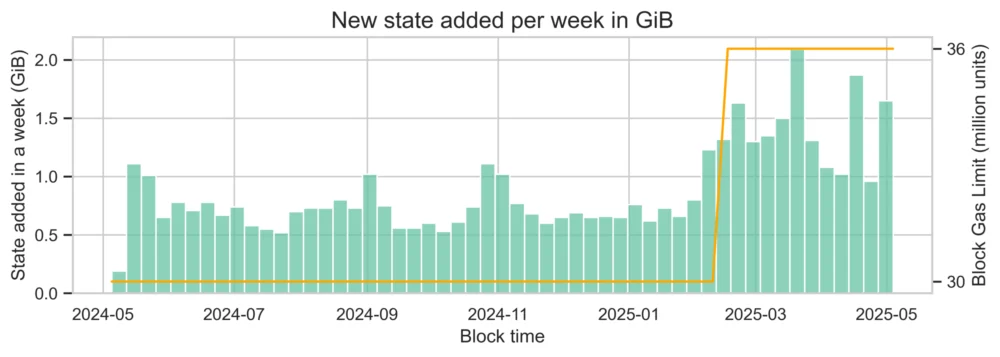
Ethereum, a blockchain network that began as an ambitious experiment, has rapidly evolved into a foundational pillar of global digital infrastructure. Daily, it orchestrates the settlement of billions of dollars in value, powers thousands of decentralized applications (dApps), and serves as the bedrock for an extensive ecosystem of Layer 2 (L2) scaling solutions. At the very heart of this intricate system, enabling every transaction and smart contract interaction, lies a single, crucial component: the blockchain’s "state." However, this indispensable element is also presenting one of Ethereum’s most profound and silent challenges, prompting core developers and researchers to explore radical new approaches to ensure the network’s long-term health and decentralization.
Understanding Ethereum’s "State" and Its Fundamental Importance
Ethereum’s "state" can be conceptualized as the complete snapshot of all information the network "knows" at any given moment. It’s not merely a transaction history but a dynamic database containing every account balance, the code and storage variables of every smart contract, and other crucial metadata like nonces. For instance, when a user checks their cryptocurrency balance, that figure isn’t stored within their digital wallet but rather resides within Ethereum’s global state. This comprehensive record is what allows every node in the network to verify the legitimacy of transactions and maintain a consistent, shared reality of the blockchain.
This state underpins virtually every function on Ethereum:
- Account Balances: Who owns what assets.
- Smart Contract Execution: The current variables and logic dictating how decentralized applications operate.
- Token Ownership: The distribution and transferability of ERC-20 tokens and NFTs.
- Decentralized Finance (DeFi): The integrity of lending protocols, exchanges, and liquidity pools.
- Layer 2 Operations: The root state that L2s periodically commit to the mainnet, ensuring their security and allowing for fraud or validity proofs.
The integrity and accessibility of this state are paramount. If the state becomes excessively large, too centralized in its storage, or prohibitively difficult to access and serve, the entire layered ecosystem built upon Ethereum becomes more vulnerable, costly, and resistant to decentralization efforts. This is a direct threat to the network’s core ethos of credible neutrality and censorship resistance.
A Chronology of Scaling and Its Unforeseen Consequences
Ethereum’s journey has been marked by a relentless pursuit of scalability. From its inception, the network’s architects understood the inherent trade-offs between decentralization, security, and scalability – often referred to as the "blockchain trilemma." Over the years, significant milestones have been achieved to increase throughput and transaction capacity:
- The Merge (2022): The transition from Proof-of-Work to Proof-of-Stake drastically reduced energy consumption and set the stage for future scaling, though it didn’t directly address state growth.
- Layer 2 Solutions (Ongoing): The proliferation of rollups (Optimistic and ZK-Rollups) has offloaded significant transaction volume from the mainnet, processing transactions externally and only committing compressed data or proofs to L1.
- EIP-4844 (Proto-Danksharding, 2024): This upgrade introduced "blobs" for cheaper data availability, primarily benefiting L2s by reducing their transaction costs on L1. While not directly scaling L1 execution, it significantly increased the network’s data capacity.
- Gas Limit Increases and Repricings: Periodic adjustments to the maximum computational work allowed per block have incrementally boosted L1 throughput.
- Enshrined Proposer-Builder Separation (ePBS, upcoming): Aims to mitigate Miner Extractable Value (MEV) by separating block production into two roles, enhancing credible neutrality.
Each of these steps, while vital for scaling, has inadvertently amplified the underlying challenge of state growth. More activity on the network, whether directly on L1 or via L2s posting data to L1, inevitably leads to more data being written into Ethereum’s permanent state.
Challenge 1: The Relentless Expansion of Ethereum’s State
The size of Ethereum’s state is a metric that, historically, only moves in one direction: up. Every new account creation, every storage variable updated by a smart contract, and every bytecode deployment adds data that the network is committed to storing indefinitely. This continuous accumulation carries tangible and escalating costs for those operating the network’s foundational infrastructure.
Concrete Costs of State Growth:
- Hardware Requirements: Running a full Ethereum node today demands significant disk space, currently exceeding several terabytes for archival nodes and growing rapidly for full sync nodes. As state expands, so do these storage requirements, pushing the necessary hardware specifications beyond the reach of average users.
- Bandwidth Consumption: Syncing a new node with the network requires downloading the entire historical state, which is a bandwidth-intensive and time-consuming process. Maintaining synchronization also demands constant data transfer.
- I/O Performance: The efficiency of accessing and writing to state is heavily dependent on disk input/output (I/O) speeds. A larger state means more data to sift through, leading to slower block processing times and increased latency, particularly for complex transactions.
- Economic Barriers: The rising hardware and operational costs translate into higher barriers to entry for individual node operators. This economic pressure favors well-resourced entities, such as large data centers, institutional staking providers, and professional infrastructure companies, leading to a concentration of power.
Data from initiatives like bloatnet.info, which actively measures and stress-tests state growth, illustrates the scale of this issue. For example, recent analyses have shown that new state additions can average several gigabytes per week, a trend directly correlated with increased network activity and gas limit adjustments. This upward trajectory is unsustainable in the long run if decentralization is to be preserved.
Threats to Decentralization and Censorship Resistance:
The most critical consequence of unchecked state growth is the erosion of decentralization. When only a select few sophisticated actors can afford to run full, high-performance nodes capable of processing and validating blocks, the network’s censorship resistance and credible neutrality are jeopardized. If block production becomes monopolized by a tiny set of entities, they gain the capacity to filter or censor transactions, undermining Ethereum’s promise of an open and permissionless system.
To partially mitigate this, mechanisms like FOCIL (Forward-Compatible On-Chain Indexing Layer) and VOPS (Validity-Only Partial Statelessness) are being explored. These proposals aim to preserve a degree of censorship resistance by allowing even lighter nodes to verify block validity or force-include transactions, even if they don’t hold the full state. However, their ultimate effectiveness hinges on the continued existence of a healthy ecosystem of nodes that can access, hold, and serve the full state without prohibitive costs. Therefore, state growth management is not an optional optimization but a fundamental prerequisite for Ethereum’s future.
Challenge 2: State in a Stateless World – The Paradox of Responsibility
Even if Ethereum’s gas limit were to remain static, the network would eventually confront insurmountable state growth issues. The community’s clear demand for higher transaction throughput only accelerates this timeline. This is where the concept of "statelessness" emerges as a crucial scalability breakthrough.
The Promise of Statelessness:
True statelessness for validators means that they would no longer need to hold the entire network state to validate new blocks. Instead, they could simply verify cryptographic proofs (e.g., ZK-proofs) that attest to the correctness of a block’s state transition. This is a monumental scalability win, dramatically lowering the hardware requirements for validators and allowing the network to process far more activity without burdening every participant with an ever-growing dataset. It makes validating blocks much cheaper and more accessible, potentially increasing validator decentralization.
The Centralization Paradox:

However, statelessness introduces a paradox: while validators become "lighter," the responsibility for storing and serving the full, historical state doesn’t disappear; it merely shifts. In a truly stateless environment, the full state is likely to be primarily maintained and served by:
- RPC (Remote Procedure Call) Providers: Companies like Infura and Alchemy, which currently serve the vast majority of user and dApp queries to the blockchain.
- Block Builders: Specialized entities that assemble transactions into blocks and require low-latency access to the entire state to construct optimal, profitable blocks.
- Archival Services: Dedicated services that store historical data for analytical or specific application needs.
In essence, the state becomes much more centralized in its storage and provision. This has several critical consequences:
- Data Availability Risk: If a few centralized providers are the sole custodians of the state, their failure, malicious actions, or regulatory pressure could lead to significant data availability issues, hindering network functionality.
- Increased Censorship Vectors: Centralized state providers could become choke points, potentially censoring access to certain data or transactions, even if validators are technically stateless.
- Higher Costs for Developers and Users: Dependence on centralized RPC providers can lead to higher fees for API access, reduced service quality, or even service interruptions.
- Impact on L2 Security: Layer 2 solutions rely on users’ ability to access the L1 rollup contract state to challenge fraudulent transactions or force-include their own transactions. If L1 state access becomes fragile or highly centralized, these crucial safety valves for L2 users become practically unusable, weakening the entire L2 security model.
The challenge is not just to make validators stateless but to ensure that the storage and serving of the state remain decentralized, robust, and economically viable for a broad range of participants.
Three Broad Directions for State Management
To address these complex challenges, Ethereum researchers are exploring a multifaceted approach, focusing on three primary directions: state expiry, state archiving, and making state easier to hold and serve.
1. State Expiry: Managing the Active State
State expiry proposes a mechanism to temporarily remove inactive state from the "active set" that every node must maintain, while still allowing it to be retrieved and reactivated if needed. This acknowledges that not all pieces of state are equally important forever. Recent analyses indicate that roughly 80% of Ethereum’s state has remained untouched for over a year, yet nodes still bear the cost of perpetually storing it.
Two main categories of state expiry are being considered:
- Mark, Expire, Revive: In this model, the protocol would identify and mark rarely used state entries as "inactive." These inactive entries would no longer reside in the primary, "hot" state maintained by every node. However, they could be "revived" and brought back into the active set by a user providing a cryptographic proof that the state previously existed. This approach is more fine-grained, allowing frequently used contracts and balances to remain easily accessible, while dormant state doesn’t burden the entire network. The challenge lies in managing the additional metadata required for marking and the complexity of proof generation for revival.
- Multi-Era Expiry: This design proposes rolling the entire state into distinct "eras" periodically, for example, once a year. The "current era" would be small and fully active, accommodating new state writes and transactions. Older eras would be "frozen" from the perspective of live execution, meaning their state cannot be directly modified. To interact with or retrieve data from an older era, users would need to provide proofs demonstrating its existence within that historical era. This approach is conceptually simpler for protocol design and aligns well with archiving, but revival proofs can be more complex and larger.
Both categories aim to keep the active state small and manageable by temporarily removing inactive parts, while still ensuring historical data can be accessed. They represent different trade-offs in terms of implementation complexity, user experience, and the burden placed on client software and infrastructure.
2. State Archive: Separating Hot and Cold Data
State archiving is a complementary approach that focuses on intelligently separating the "hot" (frequently accessed, recent) and "cold" (rarely accessed, older) parts of the state.
- Bounded Active State: In a state archive design, nodes would explicitly store recent, frequently used state separately from older, less critical data. The crucial insight here is that even if the total state continues to grow indefinitely, the "hot set" – the portion of the state requiring fast access for current block processing – can remain bounded.
- Stable Performance: By segregating state, the execution performance of a node, particularly its I/O cost of accessing state, can remain relatively stable over time. This prevents the degradation of node performance as the blockchain ages and its overall state expands, making it more sustainable for node operators.
State archiving doesn’t remove state; it organizes it more efficiently, ensuring that the operational demands on nodes remain predictable and manageable.
3. Making it Easier to Hold and Serve State: Enhancing Accessibility
Beyond structural changes to state management, a critical direction involves lowering the barrier for participation and making it easier for various entities to hold and serve the state effectively. This aims to empower more diverse participants to contribute to state availability, countering centralization tendencies.
- Partial Statelessness: This involves designing nodes and wallets that are still useful participants without necessarily storing the full, active state. For instance, a partial stateless node might only store the most recent state and fetch older data on demand with proofs, or specialize in serving specific parts of the state. This enables a wider range of node types, from ultra-light clients to specialized archival nodes.
- Lowering the Barrier for Infrastructure:
- Enhanced Light Clients: Improving the capabilities and reliability of light clients would allow users and dApps to interact with Ethereum with minimal local storage, fetching only the necessary proofs from full nodes.
- Better Node Operator Tools: Developing more efficient syncing mechanisms, advanced pruning techniques, and improved peer-to-peer (P2P) protocols for state distribution would make it less resource-intensive to run and maintain various types of nodes.
- RPC Enhancements and Decentralized State Serving: Working on standardized, more efficient RPC APIs and exploring incentivized networks for state serving could decentralize the provision of state data, reducing reliance on a few large centralized providers.
These ideas are being explored in detail through various research efforts and Ethereum Improvement Proposals (EIPs), seeking pragmatic paths towards a more robust and decentralized state infrastructure.
What’s Next: A Focused Path Forward
Ethereum’s state lies at the nexus of some of the most critical questions shaping the protocol’s future: How much activity can the network truly sustain? Can decentralization be maintained alongside massive growth? Who will bear the responsibility and cost of preserving Ethereum’s historical ledger?
The direction is unequivocally clear: Ethereum must reduce state as a performance bottleneck, lower the cost of holding it, and make it easier to serve. The current priorities reflect a pragmatic, iterative approach, focusing on low-risk, high-reward initiatives that provide immediate benefits while laying the groundwork for more ambitious long-term protocol changes.
- Archive Solutions (Out-of-Protocol Experiments): Researchers are actively experimenting with solutions that manage state archiving outside the core protocol. This approach allows for gathering real-world data on performance, user experience, and operational complexity without introducing breaking changes to the mainnet. If these out-of-protocol solutions prove successful and necessary, they can then be considered for in-protocol integration.
- Partial Stateless Nodes and RPC Enhancements: Recognizing that most users and applications interact with Ethereum through centralized RPC providers, efforts are underway to:
- Develop more efficient RPC interfaces.
- Explore decentralized RPC networks.
- Implement partial statelessness in client software, allowing for lighter, more specialized node roles.
These projects are strategically chosen for their immediate utility and forward compatibility. They aim to strengthen Ethereum’s health today by improving its existing infrastructure and accessibility, simultaneously preparing the ecosystem for the deeper, more fundamental protocol changes that state expiry and full statelessness will eventually entail.
The challenges of state growth are systemic and require a collaborative effort. Ethereum Foundation researchers, core developers, infrastructure operators, L2 builders, and the broader community are all invited to engage in this critical dialogue. Sharing feedback on proposals, participating in technical discussions, and helping to test new approaches in practice will be instrumental in ensuring Ethereum’s long-term resilience, decentralization, and global utility. The future of a credibly neutral, scalable, and decentralized Ethereum hinges on successfully managing its most fundamental component: its state.