
 James Watt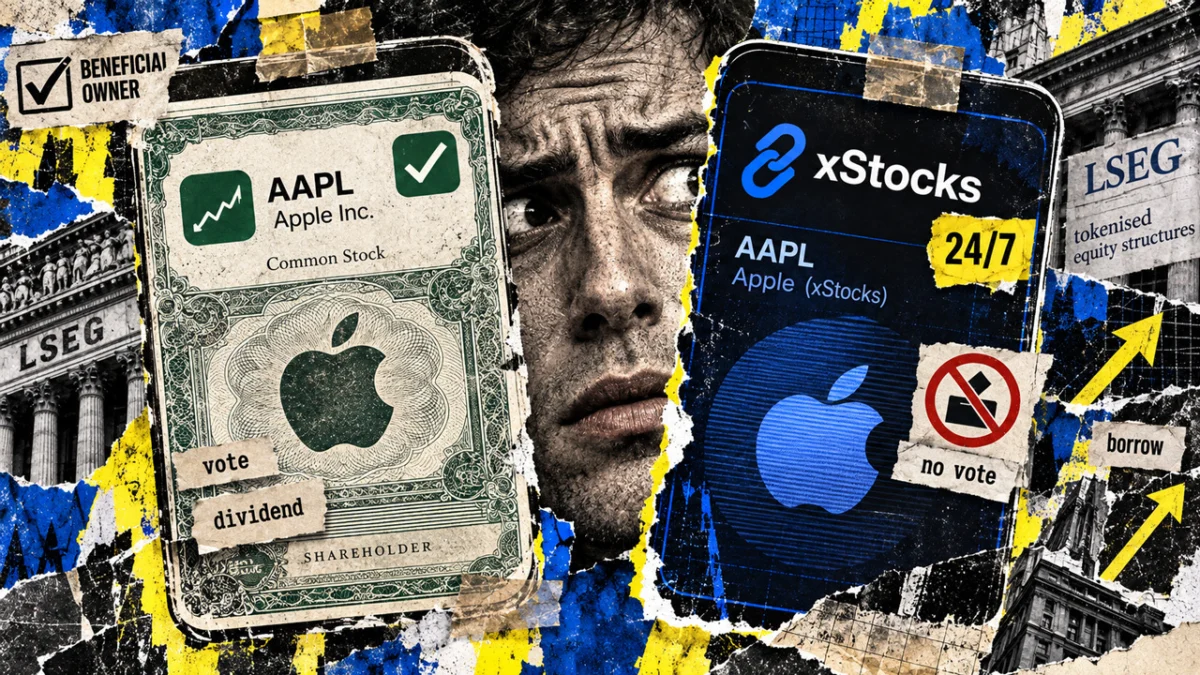
The global financial landscape is currently undergoing a structural transformation as the London Stock Exchange Group (LSEG) and various digital asset platforms attempt to bridge the gap between traditional equities and blockchain-based tokenization. While the promise of tokenized stocks includes reduced trading costs, expanded market access, and 24/7 liquidity, the emergence of these products has introduced a critical distinction between true asset ownership and mere price exposure. As financial institutions move toward integrating distributed ledger technology (DLT) into the heart of the capital markets, investors are increasingly faced with a choice between holding a share with full legal rights and holding a digital instrument that tracks a stock’s value without the underlying protections of a shareholder.
The recent push toward tokenization is characterized by two distinct philosophies. The first, championed by established institutions like the LSEG, seeks to migrate traditional shares onto blockchain networks while strictly preserving the legal and corporate rights of the investor. The second, exemplified by products such as Kraken’s xStocks, focuses on providing synthetic exposure to price movements, often bypassing the complexities of voting rights and direct corporate actions in favor of ease of use and broader accessibility.
The Strategic Shift: LSEG and the Roadmap to 2027
On September 1, 2024, the London Stock Exchange Group announced a partnership with Payward to explore the development of a UK-based tokenized equity structure. This project is currently in an assessment phase and remains subject to rigorous regulatory oversight. The initiative is part of a broader strategy to modernize the plumbing of the financial markets, moving away from legacy settlement systems and toward a more agile, blockchain-enabled infrastructure.
According to the LSEG’s preliminary plans, the exchange intends to list "xStocks" on its LSE 24 venue by 2027, provided it receives the necessary approvals from the Financial Conduct Authority (FCA). This timeline reflects the cautious approach of institutional players who must reconcile the speed of blockchain technology with the stringent requirements of securities law. The LSEG’s dual-track approach—one focusing on preserving the issuer-investor relationship and the other on secondary-market trading products—highlights the tension between innovation and investor protection.
Defining Ownership in the Digital Age
To understand the implications of tokenization, it is necessary to revisit the fundamental rights associated with stock ownership. Historically, a common share represents a residual claim on a company’s assets and earnings. Shareholders typically enjoy the right to vote on significant corporate decisions, such as board elections or mergers, and the right to receive dividends. In the event of a corporate liquidation, shareholders are entitled to whatever remains after creditors and preferred stockholders have been paid.
In the current brokerage environment, most retail investors do not hold shares directly in their own names. Instead, they are "beneficial owners." The shares are held by a nominee or a custodian, while the broker maintains a ledger of which customer is entitled to the benefits of those shares. Tokenization essentially replaces this centralized ledger with a decentralized blockchain record.
In January 2024, the staff of the U.S. Securities and Exchange Commission (SEC) issued a taxonomy for tokenized securities, distinguishing between issuer-sponsored tokens and third-party products. An issuer-sponsored tokenized share is a digital representation of the share itself; the transfer of the token on the blockchain is legally recognized as the transfer of the share. This model, which the LSEG is exploring, aims to keep the "DNA" of the share intact. Conversely, third-party products create a new contract that is merely linked to the performance of the underlying stock.
The Mechanics of Synthetic Exposure: A Case Study of xStocks
The distinction between a share and a token becomes most apparent when examining the fine print of products like Kraken’s xStocks. Unlike traditional brokerage accounts where the investor is the beneficial owner of the underlying equity, xStocks are tokens designed to track the value of shares held by a custodian. This creates a "layering" effect: the investor holds a contract with the token issuer, not the company whose name appears on the ticker.
According to Kraken’s xStocks documentation, holders of these tokens do not receive voting rights in the underlying company. Furthermore, the treatment of dividends is handled through an "economic adjustment" rather than a direct cash payment. For example, if an investor holds a token representing $100 of a specific stock and the company issues a 2% dividend, the investor does not receive $2 in cash. Instead, the "effective holding" of the token is adjusted upward—perhaps through a multiplier or the issuance of fractional token units—to reflect the value of the dividend.
This synthetic approach offers significant advantages for investors in jurisdictions with limited access to Western capital markets. It allows for fractional ownership and transfers between compatible digital wallets, potentially bypassing the hurdles of opening a traditional international brokerage account. However, it also means the investor is reliant on the solvency and integrity of the token issuer rather than the legal framework governing the underlying corporation.
Supporting Data and Market Projections
The drive toward tokenization is fueled by the potential for massive efficiency gains. A report by the Boston Consulting Group (BCG) suggests that the tokenization of global illiquid assets could become a $16 trillion business by 2030. While much of this focus is on real estate and private equity, the migration of public equities to blockchain is seen as a necessary step in creating a unified digital financial ecosystem.
Currently, the traditional settlement cycle for stocks is T+1 (one business day after the trade) in the United States and T+2 in many other regions. Blockchain technology offers the possibility of T+0, or atomic settlement, where the transfer of the asset and the payment happens simultaneously. This could eliminate billions of dollars in counterparty risk and free up collateral that is currently trapped in the settlement pipeline.
However, the data also suggests risks regarding liquidity and price discovery. When stock trading moves to 24/7 blockchain venues, it often operates while the primary exchanges (like the NYSE or LSE) are closed. During these "off-hours," liquidity is significantly thinner. This can lead to "tracking error," where the price of a tokenized stock deviates significantly from the last quoted price on the main exchange. For retail investors, this volatility can result in "slippage"—the difference between the expected price of a trade and the price at which the trade is executed.
Regulatory Responses and Financial Stability
The rapid growth of the tokenized equity market has caught the attention of global regulators. The Financial Stability Board (FSB), in its 2024 assessment of tokenization, noted that while the current scale of the market does not pose a material risk to global financial stability, the "interconnectedness" of these products deserves scrutiny.
The FSB’s primary concern involves the use of tokenized stocks as collateral. In decentralized finance (DeFi) protocols, tokens can be pledged to borrow other assets, such as stablecoins. This creates a leverage loop. If the price of the underlying stock falls, the value of the collateral drops, potentially triggering automated liquidations. If several large holders hit their liquidation thresholds simultaneously, it can create a "fire sale" effect that transmits stress from the digital asset market back into the traditional financial system.
In the United States, the SEC has maintained a cautious stance. While the staff taxonomy provided clarity on how different structures are viewed, the agency has continued to emphasize that simply wrapping a security in a digital token does not exempt it from federal securities laws. This includes requirements for registration, disclosure, and the protection of customer assets.
The Implications for Corporate Governance and Investor Protection
Perhaps the most profound implication of the shift toward tokenization is the potential erosion of corporate governance. If a significant portion of a company’s "exposure" is held through synthetic tokens rather than shares, the link between the company’s management and its economic stakeholders is weakened.
When an investor holds a token without voting rights, they have no voice in ESG (Environmental, Social, and Governance) initiatives, executive compensation, or strategic pivots. This effectively turns "investing" into "betting." While many retail investors may prioritize price action over voting, the aggregate effect of millions of silent stakeholders could shift power toward large institutional "nominees" who hold the actual shares backing the tokens.
Furthermore, the legal recourse available to a token holder is fundamentally different from that of a shareholder. If a company commits fraud, a shareholder has established legal avenues for class-action lawsuits or regulatory complaints. A token holder’s claim, however, may only be against the issuer of the token. If that issuer is located in a different jurisdiction or has limited assets, the "protection" afforded to the investor may be illusory.
Conclusion: A Choice Between Access and Ownership
The innovations proposed by the LSEG and the products currently offered by digital asset platforms represent a crossroads for the global investor. Tokenization has the undeniable power to democratize access to wealth-building assets, allowing a person with $10 in a developing nation to gain exposure to the world’s largest companies. It can streamline the archaic systems of the 20th century, reducing fees and settlement times for everyone.
However, the "enrichment" of the market through technology must be balanced against the preservation of investor rights. The LSEG’s commitment to preserving shareholder rights within a blockchain framework suggests that the future of finance does not have to sacrifice ownership for the sake of efficiency. As the market moves toward the 2027 milestones set by major exchanges, the burden remains on the investor to look past the "buy" button and understand whether they are purchasing a piece of a company or simply a digital ticket to its price fluctuations. The true value of tokenization will be measured not by the volume of trades it generates, but by the quality of the rights it delivers to the people who provide the capital.









