admin
admin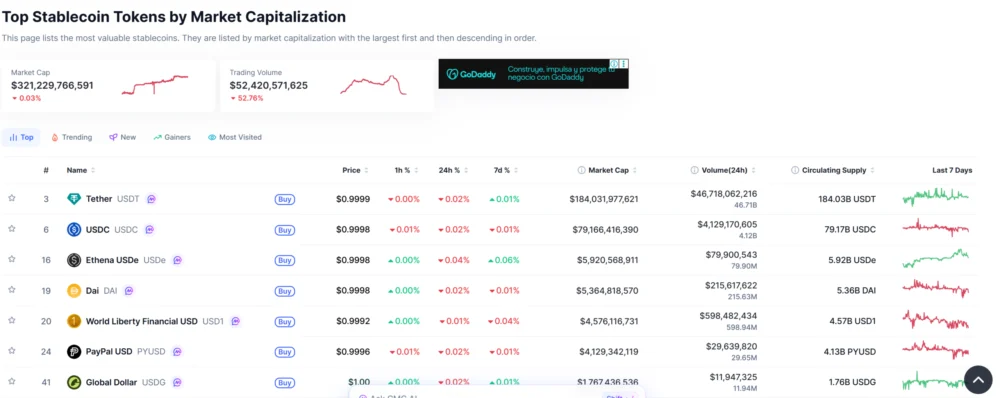
The global financial landscape is currently witnessing a stark divergence in the adoption of blockchain technology, where traditional banking institutions find themselves increasingly marginalized by the very regulatory frameworks designed to ensure stability. While major financial entities have committed billions of dollars toward developing digital asset infrastructure, the lack of a definitive legal classification for stablecoins has created a strategic bottleneck. According to Colin Butler, the executive vice president of capital markets at Mega Matrix, this regulatory ambiguity is no longer just a legal hurdle but a significant competitive disadvantage that favors agile crypto-native firms over legacy banks. The core of the issue lies in the inability of bank boards to greenlight full-scale deployments of existing technology without knowing whether stablecoins will eventually be categorized as deposits, securities, or entirely new payment instruments.
The Infrastructure Paradox: Ready but Restricted
For the past several years, the world’s largest financial institutions have not been idle. They have proactively built the "pipes" necessary for a digital economy, recognizing that the future of finance involves the tokenization of assets and the use of distributed ledger technology (DLT) for settlements. JPMorgan Chase, for instance, has successfully launched its Onyx blockchain platform, which facilitates hundreds of billions of dollars in intraday repo transactions and cross-border payments. BNY Mellon, the oldest bank in the United States, has developed sophisticated digital asset custody solutions, while Citigroup has conducted extensive testing on tokenized deposits to streamline private market transactions.
However, these innovations remain largely siloed or restricted to internal "walled gardens." Butler notes that the "infrastructure spend is real," but the scaling of these investments is currently capped by risk and compliance departments. In a traditional banking environment, the general counsel holds significant sway over the board of directors. If a product’s regulatory status is undefined, the risk of "retroactive enforcement" or capital charge penalties becomes too great to justify. Consequently, while banks have the technology to compete with stablecoin issuers like Tether or Circle, they are legally prevented from entering the arena with the same level of flexibility as their non-bank counterparts.
A Chronology of Regulatory Uncertainty
The current state of paralysis is the result of a multi-year period of shifting guidelines and legislative stalemates. To understand the depth of the disadvantage banks face, one must look at the timeline of stablecoin oversight in the United States and abroad:
- 2019: The announcement of Facebook’s Libra (later Diem) project serves as a wake-up call for global regulators, leading to a flurry of reports from the G7 and the Financial Stability Board regarding "global stablecoins."
- 2020: The Office of the Comptroller of the Currency (OCC) issues interpretive letters suggesting that national banks could hold reserves for stablecoin issuers and even participate in independent node verification networks. This period marked a peak in institutional optimism.
- 2021: The President’s Working Group on Financial Markets releases a report recommending that stablecoin issuers be limited to "insured depository institutions," essentially suggesting that only banks should issue stablecoins.
- 2022: The collapse of the Terra/Luna algorithmic stablecoin erases $40 billion in market value, leading to a "crypto winter" and causing regulators to pivot toward much more stringent oversight and a skeptical view of all dollar-pegged assets.
- 2023: Legislative efforts, such as the Clarity for Stablecoins Act, begin to move through U.S. House committees but face delays due to disagreements over the role of state versus federal regulators.
- 2024: The European Union’s Markets in Crypto-Assets (MiCA) regulation begins its phased implementation, providing a clear framework that many argue puts the U.S. at a further disadvantage.
Throughout this timeline, crypto-native firms have continued to operate in "regulatory gray zones." While they face the risk of SEC lawsuits or fines, their business models are built to navigate these uncertainties. Banks, conversely, are subject to the "safety and soundness" standards of the Federal Reserve and the OCC, which effectively prohibit them from operating in any area that lacks a clear legal mandate.
The Yield Gap and the Threat of Deposit Migration
Beyond the technical and legal hurdles, a more immediate economic threat is emerging: the yield gap. As interest rates have risen globally, the disparity between the returns offered by traditional bank accounts and those available on stablecoin platforms has become impossible for consumers and corporations to ignore. Butler points out that while the average U.S. savings account continues to yield less than 0.5%, many crypto exchanges and decentralized finance (DeFi) platforms offer between 4% and 5% on stablecoin balances.
This yield is often generated through the underlying collateral of the stablecoin—typically short-term U.S. Treasuries. While stablecoin issuers like Circle or Tether capture the "spread" between the Treasury yield and what they pass on to users, new models are emerging that pass nearly all the yield directly to the holder. This creates a powerful incentive for "deposit flight."
Historical precedents suggest that capital is highly mobile when yield differentials become significant. In the 1970s, the U.S. saw a massive migration of funds from traditional bank accounts into money market funds as investors sought higher returns during a period of high inflation. Butler argues that a similar shift is occurring today, but at a much higher velocity. In the 1970s, moving money required physical paperwork and days of processing; today, a corporate treasurer or a retail investor can move millions of dollars from a bank account into a yield-bearing stablecoin environment in a matter of minutes.

Institutional Perspectives on Migration Risks
While the threat of deposit flight is a primary concern for Mega Matrix, other industry leaders suggest a more nuanced transition. Fabian Dori, the chief investment officer at Sygnum—a digital asset bank based in Switzerland and Singapore—acknowledges the competitive gap but suggests it may not yet be "critical" for the largest institutions. Dori argues that for many large-scale institutional players, trust, operational resilience, and regulatory compliance still outweigh the desire for a 4% yield.
"A large-scale deposit flight is unlikely in the immediate term because institutions still prioritize the safety of the regulated banking system," Dori stated. However, he warned that the "asymmetry can accelerate migration at the margin." This is particularly true for fintech users, global corporations, and liquidity providers who are already comfortable with digital infrastructure. Dori believes that the true tipping point will occur when stablecoins are no longer viewed as "crypto trading tools" but are instead recognized as "productive digital cash." Once that perception shifts, the competitive pressure on traditional bank deposits will become visible and potentially irreversible.
The Risk of Offshore Migration and Synthetic Dollars
One of the most significant unintended consequences of the current regulatory environment is the potential for activity to be pushed offshore. Under current U.S. interpretations, stablecoin issuers are often prohibited from paying yield directly to holders, as doing so could classify the stablecoin as a security. To circumvent this, many users turn to offshore exchanges or "synthetic" dollar products.
A prime example is Ethena’s USDe, a "synthetic dollar" that generates yield through a combination of staked Ether and a delta-neutral derivatives position. Because these products do not rely on traditional banking reserves and operate outside of U.S. jurisdiction, they can offer high yields that regulated U.S. banks cannot legally match. Butler warns that if lawmakers impose even broader restrictions on stablecoin yields, they may inadvertently drive capital into these more opaque, offshore structures that offer fewer consumer protections.
"Capital doesn’t stop seeking returns," Butler emphasized. If the regulated banking sector is barred from offering competitive digital cash products, the market will simply find alternatives in less-regulated jurisdictions. This creates a "worst of both worlds" scenario for regulators: a weakened domestic banking system and a growth in shadow-banking activity that is difficult to monitor or control.
Analysis of Broader Implications
The current standoff between the banking sector and the crypto industry over stablecoins represents a fundamental shift in the nature of money. If stablecoins continue to gain market share while banks remain sidelined, the very role of a bank as a primary intermediary for the economy could be called into question.
- Monetary Policy Transmission: If a significant portion of the money supply moves into stablecoins that are backed by Treasuries but held outside the traditional banking system, the Federal Reserve’s ability to influence the economy through bank lending could be diminished.
- Financial Inclusion vs. Exclusion: Stablecoins offer the promise of cheaper, faster cross-border remittances, which is a boon for financial inclusion. However, if banks are unable to participate, the "on-ramps" and "off-ramps" between digital and physical economies may remain fragmented and expensive.
- The "Basel III" Effect: Banks are subject to strict capital requirements (like the Basel III framework) that dictate how much liquidity they must hold against deposits. Stablecoin issuers do not currently face these same requirements, allowing them to be more capital-efficient. Without a level playing field, banks are essentially fighting a high-tech war with one hand tied behind their backs.
Conclusion: The Path Forward
The consensus among market analysts like Colin Butler and Fabian Dori is that the status quo is unsustainable. For traditional banks to remain competitive, there must be a clear legislative framework that allows them to treat stablecoins as a core part of their service offering rather than a high-risk peripheral experiment.
The "yield gap" serves as a ticking clock for the banking industry. As more corporations and individuals become comfortable with digital wallets, the friction of moving away from traditional banks decreases. If the regulatory environment does not evolve to allow banks to issue their own regulated stablecoins or offer competitive yields on tokenized deposits, the "migration at the margin" could quickly turn into a mainstream exodus. The challenge for regulators now is to provide a framework that ensures safety without stifling the very innovation that the traditional banking sector needs to survive in a digital-first global economy.