James Watt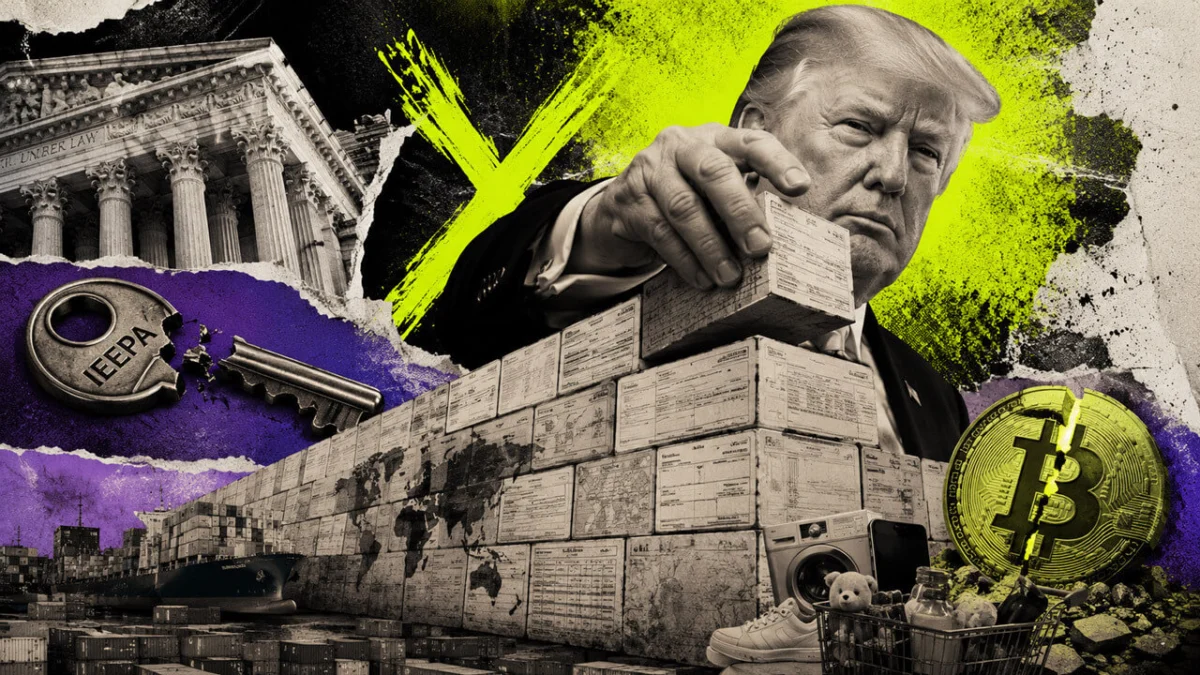
The United States trade landscape underwent a significant structural transformation in the first half of 2026 as the executive branch successfully bypassed a restrictive Supreme Court ruling to re-establish a broad tariff regime. While the Supreme Court had initially stripped the administration of its primary tool for imposing import taxes—the International Emergency Economic Powers Act (IEEPA)—the White House utilized a complex web of older statutes and administrative investigations to rebuild the system. By July 24, 2026, a new framework was operational, impacting 60 trading partners and introducing a fresh layer of volatility for global financial markets, including Bitcoin and digital assets.
The Legal Reversal and the Search for New Authority
The confrontation began in February 2026, when the Supreme Court issued a narrow but consequential ruling regarding the scope of presidential authority. For years, the administration had relied on IEEPA to justify broad-based tariffs, arguing that the law’s provision to "regulate imports" during a national emergency granted the president the power to impose taxes on foreign goods. The Court disagreed, ruling on February 20 that while IEEPA allows for the blocking of transactions or the freezing of assets, it does not provide the specific statutory authority required to levy duties.
The decision was a significant blow to the administration’s trade strategy, rendering billions of dollars in collected tariffs potentially illegal and creating a projected $175 billion refund liability. However, the ruling did not declare tariffs themselves unconstitutional; it merely invalidated the specific legal "key" the president had used to unlock that power. This distinction allowed the administration to immediately begin scouring the federal statute books for alternative foundations.
Within days of the ruling, the White House shifted its strategy. On February 24, the president invoked Section 122 of the Trade Act of 1974, which allows for a temporary 10% import surcharge to address "serious balance-of-payments problems." This served as a 150-day "bridge" policy, providing the administration with the necessary time to build a more permanent and legally defensible system under Section 301 of the same Act.
A Chronology of the 2026 Tariff Reconstruction
The reconstruction of the American tariff wall followed a deliberate, highly bureaucratic timeline designed to withstand future legal challenges:
- February 20, 2026: The Supreme Court rules that IEEPA does not authorize the imposition of tariffs.
- February 24, 2026: The administration invokes Section 122 for a temporary 10% surcharge, effective immediately, citing national payment imbalances.
- March 12, 2026: The Office of the United States Trade Representative (USTR) initiates 60 separate Section 301 investigations into the labor practices of global trading partners.
- March – May 2026: USTR conducts public hearings, receives thousands of pages of testimony from domestic manufacturers and importers, and consults with 45 foreign governments.
- June 2, 2026: USTR releases a comprehensive report concluding that the failure of 60 economies to effectively ban or enforce prohibitions on forced labor constitutes an "unreasonable" practice that burdens U.S. commerce.
- July 24, 2026: The new Section 301 tariffs officially take effect, replacing the expiring Section 122 surcharge with a more complex system of 10% and 12.5% duties.
The Forced Labor Pivot: Using Section 301 as a Foundation
The core of the new system rests on the ethical and legal issue of forced labor. By framing the tariffs as a response to human rights abuses and unfair labor competition, the administration tapped into Section 301 of the Trade Act of 1974. This statute allows the U.S. to take action against any foreign act, policy, or practice that is "unjustifiable, unreasonable, or discriminatory and burdens or restricts United States commerce."
The USTR’s June report argued that goods produced through forced labor—or in environments where labor laws are not enforced—artificially lower the cost of production in global supply chains. This, in turn, puts American companies that adhere to strict labor standards at a competitive disadvantage. By linking trade taxes to labor rights, the administration created a moral and legal argument that is significantly harder to challenge than a simple declaration of an "economic emergency."
The resulting policy divides trading partners into two primary categories. Economies with established but allegedly under-enforced labor bans—including the European Union, Canada, Mexico, and Japan—generally face a 10% duty. Other nations, where labor protections are deemed insufficient or non-existent, are subject to a 12.5% rate.
Economic Data and the Cost to American Households
Despite assertions from U.S. Trade Representative Jamieson Greer that the economic impact would be limited due to market adaptation, independent data suggests a more significant burden. Because tariffs are paid by the domestic company importing the goods—not the foreign government—the costs often trickle down to the consumer.
The Budget Lab at Yale University released an analysis estimating that the cumulative effect of the current U.S. tariff regime will cost the average American household approximately $1,100 annually. Over a ten-year horizon, these tariffs are projected to generate roughly $1.9 trillion in federal revenue, even after accounting for the dampening effect on overall economic growth.
The complexity of the new system also adds an "administrative tax" on businesses. Unlike the previous blanket emergency tariffs, the Section 301 regime includes a dense schedule of exemptions. Critical materials such as oil, natural gas, fertilizers, and certain essential minerals have been excluded to prevent a spike in energy and food prices. Importers must now navigate a labyrinthine customs process to determine if their specific product falls under an exemption, a "most-favored-nation" rate, or a negotiated textile quota.
Implications for Bitcoin and Financial Markets
The re-establishment of the tariff wall has created a secondary wave of impact within the cryptocurrency market. Bitcoin, which has increasingly functioned as a high-sensitivity macro asset, reacts to the "downstream" effects of trade policy rather than the tariffs themselves.
1. The Inflation and Interest Rate Connection:
Tariffs are inherently inflationary for the domestic economy. When core goods prices rise, the Federal Reserve is less likely to pursue aggressive interest rate cuts. Bitcoin has historically performed best in environments of high liquidity and low interest rates. If tariffs keep core inflation "sticky," the Fed may maintain a restrictive monetary policy for longer, which acts as a headwind for non-yielding assets like BTC.
2. Treasury Yields and Institutional Risk:
Institutional investors often view Bitcoin through the lens of a "risk-on" asset. Rising tariffs can lead to increased volatility in the bond market as investors demand higher yields to compensate for inflation risks. When Treasury yields climb, the relative attractiveness of speculative assets decreases. During previous tariff-related escalations in 2025 and early 2026, U.S.-based spot Bitcoin ETFs saw net outflows exceeding $230 million as funds rebalanced toward safer, yield-bearing instruments.
3. The Supply Chain of Digital Assets:
The trade war has also physicalized the digital industry. Major Bitcoin mining hardware manufacturers, including Bitmain and Canaan, have been forced to relocate portions of their assembly lines to the United States or third-party countries to avoid prohibitive duties on Chinese-made electronics. This shift in the physical supply chain can lead to higher capital expenditures for miners, potentially impacting the network’s hash rate and the profitability of public mining firms.
The "Bye America" Trade and Currency Volatility
Tariffs also complicate the role of the U.S. Dollar. Traditionally, trade barriers can strengthen the dollar by reducing the supply of currency leaving the country. However, if tariffs lead to global "de-risking" or a slowdown in U.S. growth, the dollar can weaken. This phenomenon, often called the "Bye America" trade, creates a complex environment for Bitcoin. While a weaker dollar is generally bullish for BTC, the underlying economic instability that causes the weakness often triggers liquidations in leveraged crypto positions first.
In July 2026, the market saw a clear example of this "fragility." A sudden escalation in U.S.-European trade tensions led to $2 billion in crypto liquidations in a single weekend. Because Bitcoin markets remain open 24/7, they often serve as the "vent" for macro stress when traditional stock and bond markets are closed.
Conclusion: A More Durable Barrier
The transition from IEEPA to Section 301 marks a shift from "rule by decree" to "rule by bureaucracy." By building a massive administrative record—complete with hearings, investigations, and thousands of pages of findings—the administration has made it much more difficult for the judiciary to strike the system down in one blow.
Future legal battles will likely be fought over technicalities—whether a specific country was treated unfairly or whether the evidence of forced labor in a specific sector was sufficient—rather than the fundamental right of the president to impose the tax. This procedural "armor" suggests that the current tariff regime may be a permanent fixture of the American economy for the foreseeable future.
For Bitcoin investors and global traders, the message is clear: the "tariff key" may have changed, but the wall remains standing. The focus now shifts to how these trade barriers will influence the Federal Reserve’s path through the remainder of 2026 and whether the resulting inflationary pressure will eventually force a new era of monetary easing that could, in the long run, provide the next catalyst for digital asset growth.