
 Nila Kartika Wati
President Donald Trump has officially appointed Jay Clayton, the current U.S. Director of National Intelligence (DNI), to head the nation’s newly established Super Intelligence Force. The announcement, made via a post on Truth Social on Sunday, confirms earlier media reports from Friday regarding the significant appointment. This move underscores a burgeoning governmental focus on artificial intelligence (AI) and its strategic implications for national leadership and security.
Formation of a New AI-Focused National Entity
The concept of a dedicated governmental body for artificial intelligence has been gaining traction, with Cointelegraph reporting as early as September 20 that Trump intended to create an "AI Force." This initiative is explicitly modeled after the Space Force, signaling a similar level of strategic importance attributed to AI dominance. According to President Trump’s Truth Social post, the Super Intelligence Force is specifically "tasked with coordinating the effort of the Federal Government to ensure that America continues to lead the World in Super Intelligence." This directive highlights a clear ambition to position the United States at the forefront of global AI innovation and application, a field increasingly viewed as critical for economic prosperity, national security, and geopolitical influence.
The redefinition of "artificial intelligence" to "superintelligence" by presidential directive further emphasizes the ambitious scope of this new force. This linguistic shift reflects a forward-looking perspective, anticipating the rapid evolution of AI capabilities beyond current general intelligence. In a related development, Elon Musk, a prominent figure in technological innovation and known to be an associate of President Trump, is reportedly renaming his company SpaceXAI to SpaceXSI (SpaceX Super Intelligence) in honor of this directive. This symbolic gesture from a leading private sector entity underscores the perceived gravity and potential impact of the Super Intelligence Force’s mandate.
Jay Clayton’s Background and Potential Impact
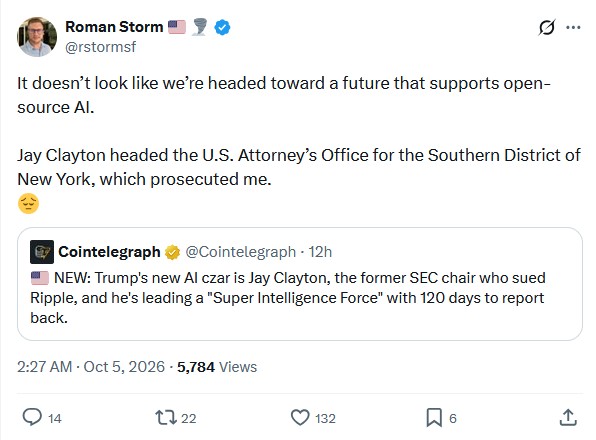
The selection of Jay Clayton to lead this pivotal new agency brings a unique blend of legal, regulatory, and intelligence experience to the fore. Clayton previously served as Chairman of the Securities and Exchange Commission (SEC) during Trump’s first term. His tenure at the SEC was marked by significant actions in the emerging cryptocurrency sector, most notably initiating a high-profile prosecution against Ripple Labs for allegedly selling unregistered securities on his last day in office. Following his time at the SEC, Clayton assumed the role of U.S. Attorney for the Southern District of New York, where he notably led the criminal trial against Roman Storm for his alleged involvement with Tornado Cash, a cryptocurrency mixer. These past actions have cemented Clayton’s reputation as a firm regulator, particularly concerning digital assets and financial compliance.
His appointment to spearhead the Super Intelligence Force has elicited varied reactions, particularly from within the technology and cryptocurrency communities. Roman Storm, whose case Clayton prosecuted, expressed concerns about the future direction of AI under such leadership. "It doesn’t look like we’re headed toward a future that supports open-source AI," Storm commented, suggesting apprehension that a focus on stringent regulation and national control might stifle the collaborative, decentralized development often seen in open-source projects. This perspective highlights a potential tension between governmental efforts to secure national leadership in AI and the ethos of open innovation that has driven much of the technology’s rapid advancement.

The implications of Clayton’s leadership are vast. Given his track record, observers anticipate a strong regulatory stance on the development and deployment of superintelligence technologies. This could manifest in increased government oversight, stricter licensing requirements, and potentially a more centralized approach to AI research and application, particularly concerning sensitive or critical infrastructure uses. The Super Intelligence Force’s mandate to "coordinate the effort of the Federal Government" suggests a whole-of-government approach, potentially involving collaboration with defense, commerce, and other agencies to ensure a unified national strategy for AI. This could also mean a significant allocation of federal resources towards AI research and development, aiming to accelerate breakthroughs and maintain a competitive edge against other global powers.
NEAR Protocol Navigates Security Challenges and Decentralization Debate
In other significant blockchain news, the NEAR Protocol has experienced a tumultuous week, oscillating between positive market sentiment and contentious debates over its approach to security and decentralization. The protocol has recently enjoyed a surge in its market value, more than doubling in price over the past month, buoyed by the successful debut of its Bitwise ETF, which saw nearly $60 million in inflows. However, this positive momentum was challenged by a series of security incidents that tested NEAR’s operational philosophy.
The protocol’s SHIELD AI system garnered both praise and criticism after it successfully intervened to block hacked funds originating from Bitget on its INTENTS cross-chain swaps platform. This proactive intervention showcased the capabilities of NEAR’s AI-powered security infrastructure. Furthermore, SHIELD was instrumental in halting a separate $3.8 million exploit targeting NEAR Intents itself. This incident was attributed to a "bug in the Omni deposit and withdrawal infrastructure interaction with NEAR Intents smart contract," underscoring the complexities and vulnerabilities inherent in multi-chain environments.
The immediate aftermath of the $3.8 million exploit saw a brief period of bearish sentiment for NEAR. However, the situation quickly turned when Alex Shevchenko, the general manager of NEAR Intents, issued a decisive public ultimatum. In a post, Shevchenko declared, "we have identified you, sir," and gave the exploiter 48 hours to return the stolen funds, implicitly threatening legal action if the demand was not met. He added, "You know better than most how responsible disclosure works — this is the last window to use it. After 48 hours, that window closes." The swift and firm response proved effective, as the funds were duly returned. Following the successful recovery, Shevchenko encouraged other potential exploiters to "use bug bounties instead of disrupting the services," advocating for ethical hacking practices.
The THORChain vs. NEAR Decentralization Debate
While NEAR’s assertive stance was effective in recovering funds, it ignited a furious debate within the broader cryptocurrency community regarding the core principles of decentralization and intervention. The controversy primarily pits NEAR’s approach against that of THORChain, another prominent cross-chain swap platform. THORChain has steadfastly refused to block swaps on its platform, even when linked to stolen funds, citing its commitment to permissionless and decentralized ideals. This philosophical divide highlights a fundamental tension in the blockchain space: should protocols intervene to protect users and recover stolen assets, or should they remain immutable and permissionless, even if it facilitates illicit activity?
Critics of NEAR’s intervention argue that blocking funds, even for legitimate reasons like preventing theft, introduces a degree of centralization and a potential single point of failure. They contend that such actions could set a precedent where a protocol, or those who control it, could censor transactions or freeze assets, undermining the very trustless nature that blockchain technology aims to achieve. This perspective suggests that "idealism has limits," as the original article notes, implying that a pure, unadulterated decentralization might come at the cost of security and user protection in real-world scenarios.

Conversely, proponents of NEAR’s approach argue that practical security measures are necessary to foster adoption and trust, especially as the crypto industry seeks to mature and integrate with mainstream finance. They assert that allowing hackers to freely move stolen funds without any recourse is detrimental to the ecosystem as a whole. The debate also touches upon legal liability. There is an ongoing discussion about whether NEAR’s SHIELD system, by actively blocking funds, could inadvertently assume legal liability for everything that transpires on its platform in the future. If a system can intervene to stop illicit activity, could it also be held responsible for failing to do so, or for erroneous interventions? This legal ambiguity adds another layer of complexity to the decentralization dilemma. Despite the successful recovery, NEAR’s token price saw an 11% decline this week, reflecting the market’s mixed reaction to the security incidents and the ensuing philosophical discussions.
Arthur Hayes Predicts Inevitable Money Printing Amid Economic Headwinds
Prominent crypto figure Arthur Hayes, Chief Investment Officer at Maelstrom fund and co-founder of BitMEX, delivered a stark economic prediction at the CONNECT by Cointelegraph: Seoul Edition event during Korea Blockchain Week. Hayes asserted that a new era of "money printing" is not merely possible but "inevitable," driven by a confluence of factors including the demands of the AI revolution, the United States’ escalating debt crisis, and increasing financial instability in Europe.
Hayes’s analysis began with the AI sector itself. He highlighted that AI companies require "trillions of dollars" to finance the construction and operation of massive data centers, which are the backbone of advanced AI models. This immense capital expenditure comes even as the prices of AI services are projected to fall due to increasing competition and efficiency. This creates a challenging economic paradox: soaring infrastructure costs coupled with declining revenue potential, necessitating external financial infusions. Hayes posits that governments and central banks will be compelled to provide this liquidity.
Beyond the tech sector, Hayes pointed to the United States’ mounting national debt, which has reached unprecedented levels. He argued that the sheer scale of this debt, combined with ongoing fiscal pressures, leaves policymakers with limited options. "They’ve not really given themselves a lot of options other than print money and make it less bad," he stated, suggesting that inflationary measures will be seen as the path of least resistance to manage the debt burden without triggering a more severe economic contraction.
Furthermore, Hayes expanded his outlook to include global financial stress, specifically mentioning increasing instability in France. He cited rising credit-default swaps tied to major French banks like BNP Paribas and widening spreads on French government bonds as indicators of underlying financial fragility. Such signals suggest a potential for broader European financial contagion, which could further pressure central banks into monetary stimulus. Hayes also alluded to China potentially moving towards monetary stimulus, completing a picture of a global economic landscape increasingly reliant on expansionary policies.
Hayes concluded by characterizing the situation as a "slow motion train wreck happening underneath the surface." His prediction of inevitable money printing implies a future where fiat currencies may face sustained inflationary pressures, potentially driving investors towards alternative assets like Bitcoin and other cryptocurrencies as hedges against currency debasement. This macro-economic perspective provides a crucial backdrop for understanding the long-term investment theses prevalent in the digital asset space.
Blast Ethereum L2 Network Announces Shutdown
In a significant development for the Ethereum ecosystem, the Layer-2 (L2) network Blast has announced its decision to wind down operations. The team stated in a Friday post on X that it sees "no credible path" to achieving economic sustainability, as its operating costs have consistently outpaced the revenue generated by the chain. Users have been advised to withdraw their assets to the Ethereum mainnet.
Blast, founded by Tieshun "Pacman" Roquerre, who is also the founder of the popular NFT marketplace Blur, launched in November 2023 with considerable fanfare. Its unique value proposition included offering native yield on staked Ether (ETH) and stablecoins, alongside a points program designed to incentivize early adoption ahead of an anticipated token airdrop. This innovative strategy proved highly effective initially, attracting over $2 billion in deposits even before its mainnet officially launched in February 2024.
However, despite its promising start, Blast’s trajectory took a downturn. According to data from DeFiLlama, the network’s Total Value Locked (TVL) has plummeted by more than 98% since its peak in June 2024. This precipitous decline in user engagement and capital locked on the platform ultimately rendered its operational model unsustainable. The team’s statement, "We launched Blast with the goal of building a self-sustaining chain for users and developers… Unfortunately, the economics of operating the chain no longer make sense," underscores the harsh realities of competitive and capital-intensive L2 development.
The shutdown of Blast serves as a cautionary tale within the rapidly evolving Layer-2 landscape. It highlights the challenges faced by new protocols in establishing a viable economic model amidst intense competition, high operational costs, and the need to maintain sufficient user activity to justify infrastructure expenses. For users and developers who built on Blast, the wind-down necessitates a migration of assets and applications, raising questions about the stability and longevity of certain L2 solutions.
Ethereum’s Glamsterdam Upgrade Scheduled for Sepolia Testnet
The Ethereum network continues its relentless pace of development with the scheduling of its next major upgrade, dubbed "Glamsterdam." Developers have set October 6 as the activation date for this upgrade on the Sepolia testnet, a crucial step before its potential deployment on the mainnet. Ethereum Foundation has issued a directive for Sepolia node operators to update both their execution-layer and consensus-layer clients prior to the activation date to ensure seamless transition and participation.
Glamsterdam introduces several key protocol changes aimed at enhancing Ethereum’s decentralization, efficiency, and scalability. One of the most significant features is the "enshrined proposer-builder separation" (ePBS). This upgrade will move the critical handoff process between specialized block builders and validators directly into Ethereum’s core protocol. Currently, this process often relies on external middleware, which introduces potential points of centralization and complexity. By enshrining PBS, Ethereum aims to reduce reliance on these outside components, thereby bolstering the network’s decentralization and censorship resistance.
Another important addition in Glamsterdam is the introduction of "block-level access lists." These lists will record the accounts and storage locations utilized during each block’s processing. This data can provide valuable insights for debugging, optimization, and potentially for future scaling solutions. Furthermore, the upgrade will enable "parallel processing by clients," a technical advancement designed to significantly speed up transaction throughput. By allowing different parts of the network to process data concurrently, Ethereum aims to improve its overall performance and capacity, addressing persistent concerns about network congestion and high gas fees.

These technical enhancements collectively represent Ethereum’s ongoing commitment to evolving its infrastructure to meet the demands of a growing global user base and increasingly complex decentralized applications. The successful deployment of Glamsterdam on testnets will pave the way for its eventual mainnet integration, marking another milestone in Ethereum’s roadmap towards a more robust, scalable, and decentralized future.
Market Performance: Winners and Losers of the Week
The cryptocurrency market concluded the week with mixed performance among major assets, though overall stability was observed. Bitcoin (BTC) saw a modest gain, rising 1.4% to trade at $85,821. Ethereum (ETH) also edged up, increasing 0.6% to reach $2,701. In contrast, XRP experienced a slight downturn, dropping 0.8% to $1.50. The total cryptocurrency market capitalization stood at $2.92 trillion, according to CoinMarketCap data, reflecting a robust but consolidating market environment.
Among the top 100 cryptocurrencies by market cap, several altcoins posted notable gains. Midnight (NIGHT) emerged as the top performer, soaring by an impressive 60.6%. StarkNet (SRK), a prominent Layer-2 scaling solution for Ethereum, also performed strongly with a 14.5% gain. Pump.fun (PUMP), an innovative platform for launching meme coins, secured a 26.3% increase, indicating continued interest in speculative and high-growth segments of the market.
Conversely, some altcoins faced significant corrections. Lighter (LIT) experienced the steepest decline, falling 22.2%. Zcash (SEC), a privacy-focused cryptocurrency, was down 16.4%, while Ethena (ENA), a synthetic dollar protocol, saw its value drop by 14%. These losses highlight the inherent volatility and risk associated with investing in smaller-cap digital assets, even within a relatively stable broader market.
Prediction of the Week: Peter Brandt’s Bitcoin Outlook
Veteran trader Peter Brandt has significantly revised his long-term price prediction for Bitcoin, flipping decidedly bullish after earlier warnings of a potential dip into the high $40,000 range in July. Brandt, a widely respected figure in technical analysis, now suggests that Bitcoin could reach as high as $600,000 by 2029.
Speaking on the latest episode of Cointelegraph’s "Trade Secrets," Brandt expressed renewed optimism: "There’s a good possibility we have seen the low and now are entering a new bull market cycle in Bitcoin." This statement marks a pivotal shift in his outlook, indicating his belief that the recent market activity has established a strong foundation for a sustained upward trend.

Brandt has not only confirmed a new bull market cycle but has also raised his targets for Bitcoin’s next peak. His previous projection in July was for a range of $250,000 to $300,000. However, he now anticipates a late-2029 high of between $300,000 and $600,000. "The bull market cycle this time has a very good chance of reaching half a million," he affirmed. This bold prediction, coming from a seasoned trader known for his cautious approach, underscores a growing conviction among some market analysts about Bitcoin’s long-term appreciation potential, possibly fueled by increasing institutional adoption, macroeconomic factors like anticipated money printing, and its growing status as a digital store of value.
Top FUD of the Week: Crypto Hacks, Exploits, and Regulatory Scrutiny
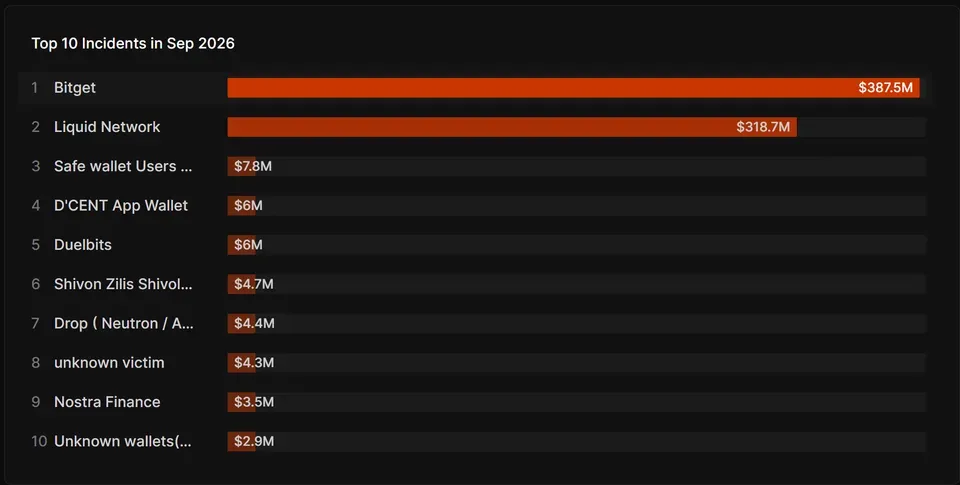
September proved to be the worst month of 2026 for cryptocurrency-related hacks and exploits, casting a shadow of "Fear, Uncertainty, and Doubt" (FUD) over the digital asset space. Two prominent blockchain security firms, PeckShield and CertiK, independently estimated the total losses for the month to exceed $766 million, marking a significant increase in security incidents.
PeckShield reported 55 major incidents resulting in $766.5 million in stolen funds, while CertiK recorded a higher count of 97 incidents, estimating total losses at $768.4 million. This surge in malicious activity highlights the persistent and evolving threat landscape facing blockchain networks and decentralized finance (DeFi) protocols.
Among the most significant incidents were the $388 million Bitget hack and a substantial $320 million exploit of the Liquid Network. While a considerable portion of the Liquid Network funds, over $270 million, was reportedly returned, these high-profile breaches underscore the vulnerabilities that still exist within the ecosystem. Other notable hacks in September included Safe Wallet, which lost $7.8 million, DCENT with a $6 million loss, and Duelbits, which saw $5.9 million drained. CertiK aptly summarized the situation: "September was a stark reminder of how quickly the threat landscape can shift," emphasizing the constant need for vigilance and robust security measures across the industry.
Aave V3 Unaffected by Third-Party Adapter Exploit
Amidst the wave of security incidents, a notable exploit impacted two Safe multisig wallets, resulting in the drainage of approximately $305,000. The incident occurred through a third-party adapter built on top of the Aave lending protocol. However, Aave founder Stani Kulechov quickly clarified that the core Aave v3 protocol itself remained unaffected.
Kulechov took to X (formerly Twitter) to reassure the community, stating, "This is not Aave v3 contract, it’s third party external adapter built on top of Aave, zero effect on Aave v3." This distinction is crucial, as it separates vulnerabilities in integrated applications from the underlying protocol’s security. While the exploit still represents a loss for users interacting with the specific adapter, Kulechov’s swift communication aimed to prevent broader panic and maintain confidence in Aave’s core smart contracts. This incident highlights the ongoing risks associated with the composability of DeFi, where vulnerabilities in one integrated component can lead to losses for users, even if the primary protocol is secure.

Tether Freezes Iran-Linked USDT Amid Sanctions Concerns
Stablecoin issuer Tether found itself in the spotlight this week as it announced its assistance to authorities in freezing nearly $550 million in Iran-linked USDT throughout 2026. The company released a statement asserting its long-standing collaboration with international law enforcement agencies. This year alone, Tether reported freezing over $130 million in USDT across four distinct wallets, and a significant $344 million linked to the Central Bank of Iran in April.
Tether’s announcement came in direct response to a report released by Democratic investigators on the Senate Permanent Subcommittee on Investigations. The report alleged that USDT had become a "key channel" for Iran to circumvent international sanctions. Investigators claimed that a staggering 84% of 846 crypto wallets sanctioned due to ties with Iran had transacted "exclusively or nearly exclusively" in USDT. These findings prompted U.S. Senator Richard Blumenthal to publicly call on the Treasury and Justice departments to launch an investigation into potential sanctions violations.
The situation reignites the debate surrounding stablecoins’ role in both legitimate global finance and illicit activities. While Tether emphasizes its cooperation with law enforcement and its efforts to combat financial crime, the Senate report highlights the inherent challenge of regulating highly liquid, permissionless digital assets. The ability of stablecoins to settle 24/7 and traverse international borders at lightning speed presents both an opportunity for efficient global transactions and a potential vulnerability for sanctions evasion, depending on one’s perspective. This ongoing scrutiny underscores the increasing pressure on stablecoin issuers to enhance their compliance frameworks and work closely with regulatory bodies to mitigate risks.
Top Magazine Features of the Week
This week’s long-form journalism from Cointelegraph Magazine delved into critical debates and analyses shaping the crypto landscape.
"Furious debate about THORChain vs NEAR shows idealism has limits" explored the philosophical clash between two cross-chain platforms following the Bitget hack. The article examined whether a strict adherence to "permissionless and decentralized" ideals should preclude intervention even when significant funds are stolen, contrasting THORChain’s non-interventionist stance with NEAR’s proactive security measures.
"Could THORChain face prosecution over stolen Bitget funds? Legal opinion" provided an in-depth legal analysis by crypto lawyer Yuriy Brisov. This piece delved into the complexities of whether THORChain’s refusal to block addresses linked to the $387.5 million Bitget hack could expose its developers to money laundering prosecutions, highlighting the intricate legal challenges in a decentralized ecosystem.
Finally, "Stablecoins can drain from banks and nations at lightning speed" analyzed the macroeconomic implications of stablecoins. The article discussed how their high liquidity and 24/7 settlement capabilities allow capital to move rapidly across borders, posing both risks and opportunities for traditional financial systems and national economies. This feature provided crucial context to the ongoing regulatory discussions surrounding stablecoins and their systemic impact.
Cointelegraph publishes long-form journalism, analysis and narrative reporting produced by Cointelegraph’s in-house editorial team with subject-matter expertise. All articles are edited and reviewed by Cointelegraph editors in line with our editorial standards. Some articles contain affiliate links, from which Cointelegraph may earn a commission. These relationships do not influence which products we review or our editorial conclusions. Content published in here does not constitute financial, legal or investment advice. Readers should conduct their own research and consult qualified professionals where appropriate. Cointelegraph maintains full editorial independence.









