
 James Watt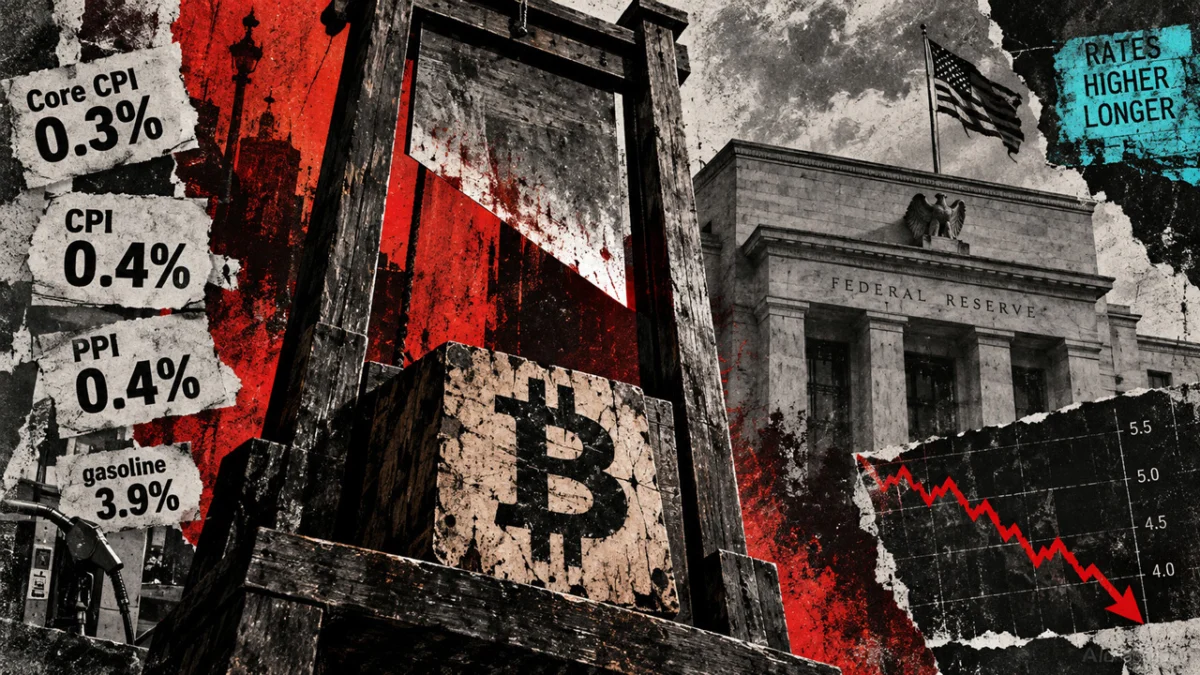
The United States economy faced a renewed challenge in August as consumer prices accelerated at a faster-than-anticipated pace, complicating the Federal Reserve’s path toward potential interest rate reductions. According to the latest data from the Bureau of Labor Statistics (BLS), the Consumer Price Index (CPI) rose 0.4% on a monthly basis, a significant jump from the 0.1% increase recorded in July. This acceleration suggests that the "last mile" of the inflation fight remains arduous, leaving Bitcoin investors and broader financial market participants exposed to a prolonged environment of restrictive monetary policy and expensive borrowing costs.
While the annual headline inflation rate held steady at 3.4%, the underlying data revealed pockets of persistent price pressure that have caught the attention of economists. When stripping out the volatile food and energy sectors, the "core" CPI rose by 0.3% in August, up from 0.2% in the previous month. Paradoxically, the annual core rate managed to ease slightly to 2.4% from 2.5%, a phenomenon largely attributed to "base effects"—the comparison against higher price levels from the same period a year ago. However, the month-over-month acceleration in core prices indicates that inflationary pressures are not merely confined to energy spikes but are beginning to simmer in other areas of the economy.
Detailed Breakdown of the August Inflation Report
The August inflation data was characterized by a sharp divergence between headline figures and the underlying core components. The primary catalyst for the headline jump was a 3.9% surge in gasoline prices, which alone accounted for more than one-third of the total monthly increase in the CPI. This energy-driven volatility was mirrored in the Producer Price Index (PPI) report, which showed a 0.4% monthly increase and a 5.4% annual gain. Energy prices within the PPI framework surged by 4.2%, accounting for more than three-quarters of the rise in final-demand goods prices.
Beyond the gas pump, shelter costs—a heavily weighted and notoriously "sticky" component of the CPI—rose by 0.3% during the month. Because shelter costs represent a large portion of consumer spending, their refusal to decline rapidly remains a thorn in the side of the Federal Open Market Committee (FOMC). In the producer sector, while services prices rose by a modest 0.1%, the measure excluding food, energy, and trade services slowed to 0.3%. This suggests that while manufacturers and wholesalers are seeing some relief in service-related overhead, the cost of physical goods and the energy required to move them remains elevated.
The following table summarizes the key metrics released for the August period:
| Inflation Measure | July Monthly Increase | August Monthly Increase | August Annual Increase |
|---|---|---|---|
| Consumer Price Index (CPI) | 0.1% | 0.4% | 3.4% |
| Core CPI (Excluding Food & Energy) | 0.2% | 0.3% | 2.4% |
| Producer Price Index (PPI) | 0.1% | 0.4% | 5.4% |
| Core PPI (Excluding Food, Energy, & Trade) | 0.4% | 0.3% | 4.7% |
The Federal Reserve’s Policy Dilemma
The timing of these reports is particularly sensitive as the Federal Reserve prepares for its upcoming policy meeting on September 15–16. For months, market participants have been searching for signs that the Fed might pivot toward a more accommodative stance. However, the August data provides little ammunition for those advocating for immediate rate cuts. Instead, the figures enable officials to maintain a "restrictive" policy, keeping the federal funds rate at its highest level in two decades to ensure inflation returns to the central bank’s 2% target.
The Fed’s decision-making process is multi-faceted. While the CPI and PPI provide essential data points, the central bank officially targets a different measure: the Personal Consumption Expenditures (PCE) price index. The PCE index draws on elements of both the CPI and PPI but adjusts for changes in consumer behavior, such as substituting cheaper goods for more expensive ones. The recent uptick in monthly core CPI to 0.3%—a threshold often viewed by analysts as a "trigger" for continued hawkishness—suggests that the upcoming PCE report may also show more heat than the Fed would prefer.
Matt Weller, an analyst at StoneX, had previously noted that a core CPI reading rounding to 0.3% would likely support the argument for maintaining or even increasing rates. With that threshold now met, the "higher-for-longer" narrative regarding interest rates has gained renewed traction. Fed officials must now weigh these price increases against a labor market that has shown signs of cooling, though it remains historically tight. If employment stays strong while inflation re-accelerates, the Fed may feel compelled to keep rates elevated well into the next year.
The Energy Ripple Effect and Supply Chain Dynamics
One of the most complex aspects of the August report is the role of energy. Policymakers often look past "headline" inflation because fuel prices are volatile and frequently driven by global factors—such as OPEC+ production cuts or refining outages—that interest rates cannot directly control. However, sustained increases in energy costs have a "pass-through" effect on the rest of the economy.
When gasoline and diesel prices rise, transport companies often implement fuel surcharges, which eventually reach the consumer in the form of higher prices for groceries, clothing, and electronics. Manufacturers, facing higher costs for raw materials and factory operations, may also seek to recover these expenses through their selling prices. The PPI data is a critical leading indicator in this regard; it tracks the costs businesses pay before those costs are handed down to the end consumer. The 5.4% annual gain in PPI suggests that there is still significant inflationary pressure "in the pipeline" that could keep CPI elevated in the coming months.
Implications for Bitcoin and Digital Asset Markets
The intersection of macroeconomic data and the cryptocurrency market has become increasingly pronounced over the last two years. Bitcoin, often touted as "digital gold" or a hedge against fiat currency debasement, has shown a high degree of sensitivity to the Federal Reserve’s interest rate trajectory. The logic is rooted in the concept of opportunity cost and liquidity.
When interest rates are high, investors can earn a guaranteed, relatively high return on "risk-free" assets like U.S. Treasury bills. This makes volatile assets like Bitcoin less attractive to institutional investors who must justify the risk of holding a non-yielding asset. Furthermore, higher interest rates increase the cost of borrowing. For traders who use leverage (borrowed funds) to increase their Bitcoin positions, the rising cost of capital directly eats into their potential profits or exacerbates their losses.
The August inflation report suggests that the window for "cheap money" remains closed. As long as the Fed views inflation as a persistent threat, liquidity in the financial system is likely to remain constrained. For Bitcoin to see a sustained rally, it must often compete with 5% or higher yields on government debt. While Bitcoin can attract buyers based on its own unique catalysts—such as the upcoming "halving" events or the approval of spot ETFs—the macro environment acts as a persistent headwind.
Furthermore, the relationship between Bitcoin and "real yields" (the yield on Treasury bonds minus the expected inflation rate) is a key metric for analysts. If inflation remains high but bond yields rise even faster, real yields increase, which typically puts downward pressure on the price of gold and Bitcoin. Conversely, if inflation outpaces the rise in interest rates, Bitcoin’s appeal as a store of value could be bolstered. The August data, showing a monthly acceleration in core prices, suggests that the Fed will likely keep the pressure on bond yields to prevent inflation from unanchoring.
Chronology of Recent Economic Signals
To understand the significance of the August spike, one must look at the sequence of events leading up to this point:
- Late 2023 – Early 2024: Inflation showed a steady decline, leading many market participants to predict as many as six rate cuts in 2024.
- Spring 2024: "Sticky" inflation in services and shelter began to stall the downward trend, causing the Fed to adopt a "wait and see" approach.
- July 2024: A softer CPI print (0.1% monthly) fueled optimism that the Fed might begin cutting rates as early as September.
- August 2024: The current report reveals a 0.4% jump in CPI and a 0.3% jump in core CPI, effectively dousing the flames of immediate pivot hopes.
This timeline illustrates the "start-stop" nature of the current economic recovery. Each time the markets prepare for a loosening of monetary policy, a fresh data point suggests that the battle against inflation is not yet won.
Analysis of the Road Ahead
The Federal Reserve now finds itself in a precarious position. If they cut rates too early, they risk a secondary surge in inflation, similar to the "double peak" seen in the 1970s. If they keep rates high for too long, they risk triggering a severe recession as businesses and consumers buckle under the weight of expensive debt.
For the Bitcoin market, this means that volatility is likely to remain high. The digital asset is caught between two competing narratives. On one hand, persistent inflation validates the long-term argument for a decentralized, finite supply currency. On the other hand, the short-term reality of high interest rates reduces the global liquidity that typically fuels crypto bull markets.
As the September 15–16 meeting approaches, all eyes will be on the Fed’s "Summary of Economic Projections" (the dot plot), which will provide a roadmap for where officials see interest rates heading through the end of the year and into 2025. Until then, the August CPI and PPI reports serve as a stark reminder that the path to price stability is rarely a straight line, and the era of "expensive money" may be here to stay for longer than many had hoped. Investors in both traditional and digital markets must now recalibrate their expectations, acknowledging that while annual inflation may be trending down, the month-to-month reality remains uncomfortably warm.









