
 admin
admin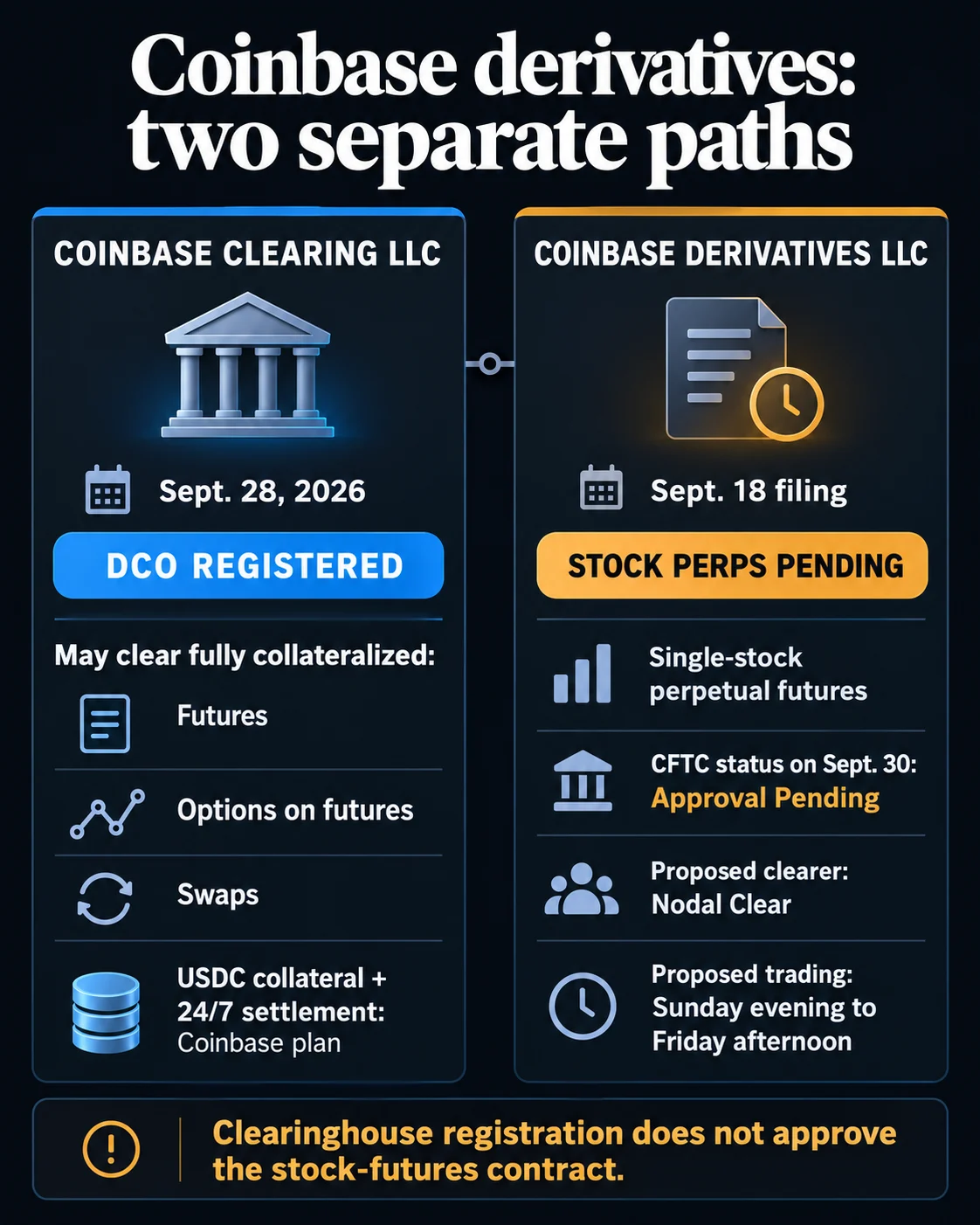
Coinbase, the preeminent cryptocurrency exchange in the United States, has achieved a significant regulatory milestone with the Commodity Futures Trading Commission (CFTC) granting approval for its proprietary derivatives clearinghouse. This development marks the culmination of Coinbase’s strategic endeavor to establish a vertically integrated trading infrastructure within the U.S. regulated derivatives market. The approval, effective September 28, allows Coinbase Clearing LLC to operate as a registered derivatives clearing organization, a critical function that has historically relied on external clearing partners.
The CFTC’s registration empowers Coinbase Clearing to facilitate the clearing of fully collateralized futures, options on futures, and swaps. This move grants Coinbase direct control over a fundamental aspect of derivatives trading, enhancing its operational autonomy and potentially streamlining the introduction of new products. The exchange’s comprehensive U.S. derivatives ecosystem now comprises Coinbase Financial Markets, acting as a futures commission merchant; Coinbase Derivatives, functioning as a designated contract market; and the newly approved Coinbase Clearing, serving as the registered clearinghouse. Coinbase has articulated that this integrated structure provides "end-to-end infrastructure for bringing regulated products to market," signaling a robust commitment to the institutional and retail derivatives space.
The immediate operational scope of Coinbase Clearing is focused on fully collateralized contracts. The exchange has highlighted the potential advantages of utilizing its own stablecoin, USD Coin (USDC), as collateral, coupled with 24-hour settlement capabilities. This offering is particularly tailored for products designed for the always-on nature of digital asset markets. By internalizing clearing functions, Coinbase anticipates a reduction in product development cycles and a diminished reliance on third-party clearing entities for eligible contracts. The company has stated its expectation that this new infrastructure will foster more efficient operations and provide greater agility in introducing a broader array of regulated derivatives over time.
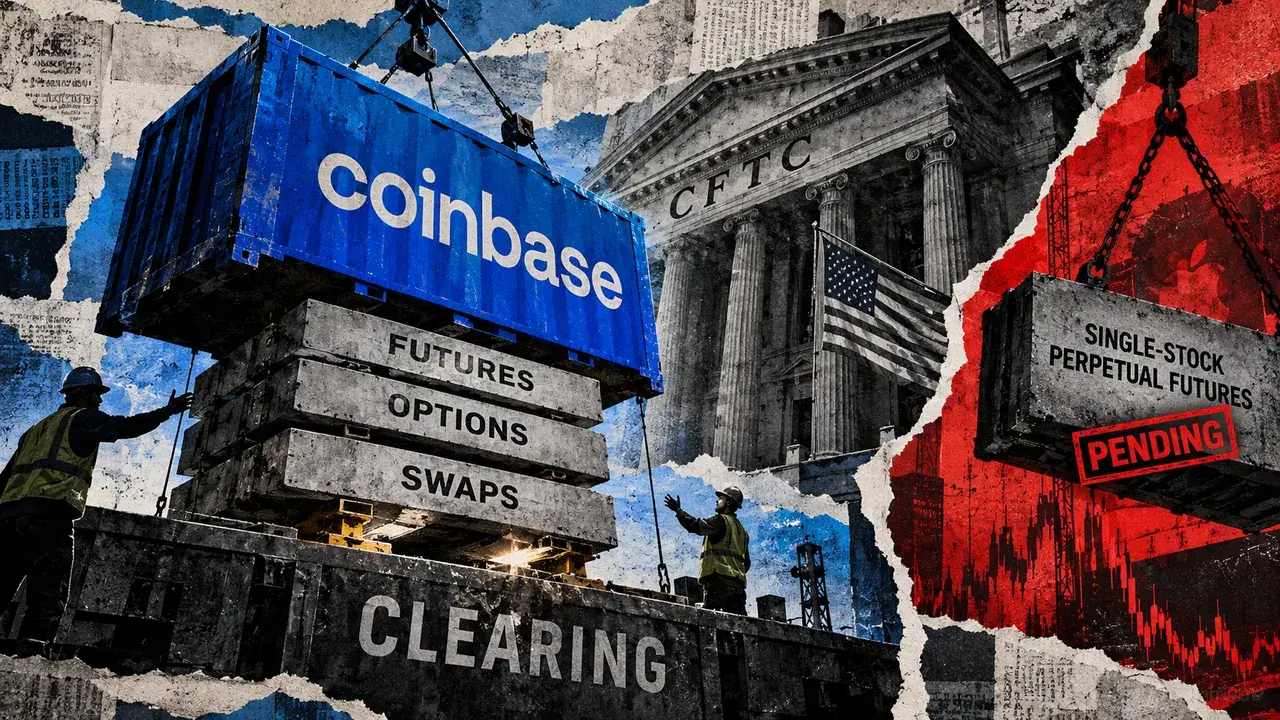
However, a key component of Coinbase’s ambitious derivatives strategy, its planned single-stock perpetual futures, remains outside the purview of its newly approved clearinghouse. These margined derivatives will continue to be processed through existing external clearing partners, and their launch is contingent on separate regulatory review and approval from the CFTC.
Timeline of Developments and Regulatory Milestones
The journey toward this integrated derivatives stack has been a multi-year endeavor for Coinbase, reflecting a strategic shift towards offering a more comprehensive suite of financial products.
- Early 2020s: Coinbase begins laying the groundwork for its U.S. derivatives ambitions, recognizing the growing institutional interest in regulated crypto derivatives.
- Late 2022 – Early 2023: The exchange announces plans to establish a U.S.-based derivatives exchange and clearinghouse, signaling a significant investment in regulatory compliance and infrastructure.
- September 2023: Coinbase Derivatives receives CFTC designation as a contract market, a crucial step in establishing its U.S. derivatives trading platform.
- September 18, 2023: Coinbase formally files its proposal for single-stock perpetual futures contracts with the CFTC. This filing outlines plans for cash-settled contracts tied to individual U.S. equities and exchange-traded funds (ETFs), with Apple Inc. serving as a benchmark for the initial contract.
- September 28, 2023: The CFTC officially registers Coinbase Clearing LLC as a derivatives clearing organization. This approval grants Coinbase the ability to clear fully collateralized futures, options on futures, and swaps.
- September 30, 2023: A review of the CFTC’s product record for Coinbase Derivatives shows the Single Stock Perpetual Futures Contract still listed as "Approval Pending." This indicates that while the clearinghouse is operational, the more complex margined products are undergoing separate scrutiny.
Deeper Dive into Coinbase’s Derivatives Infrastructure
Coinbase’s strategy hinges on building a compliant and robust platform for institutional and sophisticated retail traders. The establishment of Coinbase Clearing represents a significant leap in this direction.
Coinbase Clearing LLC: This entity is now a registered derivatives clearing organization under the CFTC. Its primary function is to act as the central counterparty for cleared derivatives transactions, mitigating counterparty risk and ensuring the smooth settlement of trades. The focus on "fully collateralized contracts" means that these products will require 100% margin upfront, thereby reducing leverage and associated systemic risk compared to margined products. This approach aligns with a more conservative and regulated approach to derivatives trading, especially in the nascent stages of crypto derivatives. The emphasis on USDC collateral is strategic, promoting the use of a stablecoin with a strong regulatory track record and a commitment to transparency. The 24-hour settlement capability is a direct nod to the continuous trading nature of digital assets, offering a distinct advantage over traditional markets with fixed trading hours.
Coinbase Derivatives: Designated as a contract market, this platform serves as the venue where derivatives are traded. Its approval by the CFTC allows it to list and offer a range of regulated futures and options contracts. This is where participants can execute trades, and the platform ensures fair and orderly trading practices.
Coinbase Financial Markets: Operating as a futures commission merchant (FCM), this entity acts as an intermediary, handling customer accounts, margin requirements, and order execution for derivatives trading. As an FCM, it is subject to stringent regulatory oversight to protect customer assets.
The synergy between these three entities creates a comprehensive U.S. derivatives trading stack, allowing Coinbase to manage the entire lifecycle of certain regulated derivatives, from trading to clearing and settlement. This vertical integration offers Coinbase greater control over its product development roadmap, fee structures, and operational efficiency. It also positions the company as a more attractive partner for institutional investors seeking regulated access to crypto-related financial products.
The Separate Path of Single-Stock Perpetual Futures
While the approval of Coinbase Clearing is a major win, the ongoing regulatory review of its single-stock perpetual futures highlights the nuanced and often complex nature of U.S. financial regulation, particularly when applied to novel products.
Nature of Perpetual Futures: Perpetual futures are a type of futures contract that, unlike traditional futures, do not have a fixed expiration date. Instead, they use a mechanism called "funding payments" to incentivize traders to keep the contract price aligned with the underlying asset’s spot price. These contracts are highly popular in the cryptocurrency derivatives market due to their flexibility and leverage potential.
Proposed Structure: Coinbase’s filing with the CFTC details plans for cash-settled perpetual futures tied to individual U.S. equities and ETFs. The inclusion of Apple as a representative contract signifies the ambition to bridge traditional equity markets with crypto derivatives. The proposed trading window from Sunday evening to Friday afternoon mirrors the operating hours of traditional U.S. stock markets, yet the 24-hour settlement capability of Coinbase Clearing contrasts with the proposed trading window for these specific contracts.
Clearing Arrangement for Stock Perps: Crucially, the filing for the Apple perpetual futures contract names Nodal Clear LLC, rather than Coinbase Clearing, as the proposed central counterparty. This arrangement underscores that the single-stock perpetual futures product is not directly integrated into Coinbase’s newly approved clearinghouse. This separation suggests that the regulatory hurdles and operational complexities associated with margined, leveraged products tied to traditional securities require a different approach to clearing and risk management compared to fully collateralized crypto derivatives.
The "Approval Pending" status on the CFTC’s record as of September 30 indicates that the regulator is still evaluating the proposal. This review likely involves assessing the risk management framework, market integrity safeguards, and compliance with existing regulations pertaining to both derivatives and securities. The delay underscores the CFTC’s cautious approach to new financial instruments that could potentially impact market stability or investor protection.

Broader Implications and Market Impact
The successful establishment of Coinbase’s U.S. derivatives clearinghouse has several far-reaching implications for the cryptocurrency market and the broader financial landscape.
Enhanced Regulatory Credibility: Securing CFTC approval for a derivatives clearinghouse significantly bolsters Coinbase’s regulatory standing in the United States. It demonstrates the company’s commitment to operating within established regulatory frameworks, which is crucial for attracting institutional capital and fostering broader market adoption of digital assets. This move positions Coinbase as a key player in the regulated U.S. financial markets, not just within the crypto niche.
Competitive Landscape: The vertically integrated infrastructure provides Coinbase with a competitive edge over exchanges that rely on third-party clearing. This could lead to more efficient product launches, potentially lower trading costs for users, and greater flexibility in responding to market demands. It also sets a precedent for other crypto-native companies looking to expand their offerings within regulated jurisdictions.
Institutional Adoption: The availability of regulated derivatives, cleared through a CFTC-registered entity, is a significant draw for institutional investors who often require robust risk management and regulatory compliance. This could unlock substantial capital flows into the crypto derivatives market, leading to increased liquidity and price discovery.
Innovation and Product Development: With its own clearinghouse, Coinbase is empowered to innovate more rapidly. The ability to offer 24-hour settlement and utilize USDC collateral for fully collateralized products opens up new possibilities for product design, catering to the unique characteristics of digital assets. This could spur further development of regulated crypto-native financial instruments.
The Path Forward for Stock Perps: The pending approval of single-stock perpetual futures remains a critical next step. If greenlit, this product would represent a significant expansion of Coinbase’s derivatives business, bridging traditional equities with the crypto derivatives market. The successful launch, even with an external clearing partner, would validate Coinbase’s strategy of offering diverse, regulated derivative products. However, the ultimate integration of these products into Coinbase’s own clearing infrastructure would depend on future regulatory developments and the evolution of its capabilities.
In essence, Coinbase’s achievement with its clearinghouse is a testament to its strategic foresight and commitment to navigating the complex regulatory environment. While the fully integrated U.S. derivatives stack is now a reality for certain products, the company’s most ambitious bet on single-stock perpetual futures continues its journey through the regulatory process, highlighting the ongoing evolution of financial markets and the increasing intersection of traditional finance and digital assets. The success of these initiatives will likely shape the future of regulated derivatives trading in the United States.








