admin
admin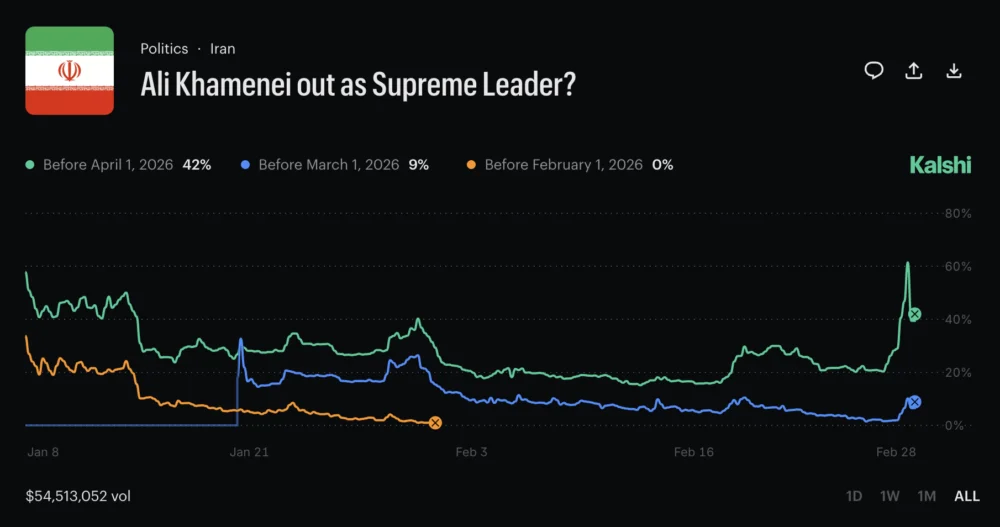
The sudden escalation of geopolitical tensions in the Middle East reached a critical inflection point this weekend following the confirmed death of Iran’s Supreme Leader, Ayatollah Ali Khamenei. The event, which followed a coordinated military strike by Israeli and United States forces, has sent shockwaves through global political circles and financial markets alike. Among the most immediate and controversial reactions occurred within the nascent industry of prediction markets, specifically on the United States-based platform Kalshi. Tarek Mansour, the co-founder of Kalshi, announced a significant intervention in the platform’s "Ali Khamenei out as Supreme Leader" market, opting to void certain positions and adjust payouts to adhere to the company’s long-standing ethical guidelines regarding "death markets."
The decision by Kalshi management to intervene in active trading has sparked a heated debate regarding the role of ethics in speculative markets and the boundaries of event-based contracts. Mansour clarified the platform’s stance in a public statement, emphasizing that Kalshi is designed to facilitate the forecasting of political and economic events without incentivizing or profiting from human mortality. The move comes at a time when prediction markets are under increased scrutiny from regulators and the public, particularly concerning their potential to host "insider trading" activity tied to classified military or intelligence operations.
The Policy Against Profiting from Mortality
At the heart of the controversy is Kalshi’s internal policy regarding markets that involve the life expectancy or death of public figures. According to Mansour, the platform does not intentionally list markets directly tied to the death of an individual. In instances where a market’s outcome—such as a change in national leadership—is ultimately decided by a death, the platform employs specific "carveout" rules to prevent what it deems unethical profiteering.
"We don’t list markets directly tied to death," Mansour stated via a social media update. "When there are markets where potential outcomes involve death, we design the rules to prevent people from profiting from death. That is what we did here." This policy was reportedly embedded in the contract specifications for the Khamenei market, though many traders expressed surprise when the platform took action to limit payouts.
To implement this policy, Kalshi announced a comprehensive reimbursement and settlement plan. The platform is currently in the process of returning all transaction fees associated with the "Ali Khamenei out as Supreme Leader" market. Furthermore, for traders who held positions before the death was officially confirmed, Kalshi determined the payout based on the "last-traded price" recorded immediately prior to the event. This effectively capped the potential gains for those betting on the Supreme Leader’s ouster, as the price of "Yes" contracts typically surges toward 100 cents once an event is confirmed.
Market Mechanics and Post-Event Trading
The intervention also addressed users who entered the market after news of the death began to circulate but before the market was officially closed. Iranian state media confirmed the Supreme Leader’s passing early Sunday, following reports of a significant military operation. In the chaotic window between the initial reports and the official confirmation, trading volume on Kalshi spiked as users attempted to capitalize on the breaking news.
Kalshi’s management moved to reimburse users who opened positions during this period. These users were reimbursed the difference between the higher entry prices they paid and the last-traded price prior to the death. By doing so, Kalshi sought to neutralize the financial impact of trades made on "stale" or rapidly evolving information, ensuring that the market did not become a venue for high-speed speculative gains based on a tragedy.

Despite the platform’s insistence that these rules were clearly stated in the market’s governing documents, the decision met with significant backlash from the trading community. Critics argued that prediction markets are intended to reflect the real-time probability of events and that "voiding" or "capping" profits undermines the integrity of the market. Some users accused the platform of paternalism, suggesting that if a market is legal to list, the platform should not interfere with the financial outcomes, regardless of the moral optics.
Chronology of the Event and Market Reaction
The timeline of the event highlights the rapid pace at which modern prediction markets must operate. On Saturday, reports surfaced of a high-profile military strike involving U.S. and Israeli assets targeting strategic locations in Iran. While initial reports were focused on military infrastructure, rumors regarding the safety of the Supreme Leader began to proliferate on social media and encrypted messaging apps.
By early Sunday morning, Iranian state media provided the official confirmation that Ayatollah Ali Khamenei had died. During the hours between the strike and the confirmation, the "Ali Khamenei out" market on Kalshi saw a dramatic shift in sentiment. The contract price for "Yes" rose steadily as leaked reports suggested the severity of the strike.
On Saturday evening, as the situation remained fluid, Kalshi’s official accounts reiterated the platform’s policy on death-related outcomes. This preemptive communication was likely an attempt to manage expectations, yet it did little to stem the tide of criticism once the settlement terms were finalized. The "last-traded price" mechanism used for settlement essentially froze the market in a pre-confirmation state, a move that some traders labeled as "moving the goalposts" in the middle of a high-stakes event.
Broader Context: Geopolitical Tensions and Prediction Markets
The death of Khamenei marks one of the most significant geopolitical shifts in the Middle East in decades. As the Supreme Leader of the Islamic Republic since 1989, Khamenei was the ultimate authority on all matters of state, religion, and military policy. His passing, particularly under the circumstances of a military strike, creates a power vacuum and raises immediate questions regarding succession and the future of Iranian foreign policy.
Prediction markets have increasingly become a primary source of information for those looking to gauge the likelihood of such monumental shifts. Proponents of these markets argue that they provide more accurate forecasts than traditional pundits or news outlets because participants have "skin in the game." However, the Khamenei incident underscores the ethical and regulatory hurdles these platforms face when their data points are tied to human lives and international conflict.
The tension between Kalshi and its users reflects a broader struggle within the industry. While platforms like Polymarket—which operates on a decentralized blockchain and often hosts more controversial markets—frequently allow for unrestricted trading on a wider variety of outcomes, Kalshi operates as a regulated exchange under the oversight of the Commodity Futures Trading Commission (CFTC). This regulatory status necessitates a more conservative approach to market design and settlement, as the platform must comply with U.S. laws regarding public interest and market integrity.
The Specter of Insider Trading in Geopolitical Markets
The controversy surrounding the Khamenei market is further complicated by recent history involving suspicious trading patterns on prediction platforms during times of international crisis. In February, a similar situation occurred on Polymarket, a rival platform, where six traders reportedly netted approximately $1 million by betting that the United States would launch a strike on Iran.

On-chain investigators noted that the six wallets involved in those trades were all created within the same month and focused almost exclusively on Iranian military outcomes. Some of the largest positions were filled just hours before explosions were reported in Tehran, raising significant concerns about the potential use of non-public, "insider" information. If individuals with access to classified military intelligence or diplomatic cables are using prediction markets to monetize that knowledge, it poses a severe threat to the perceived fairness of the platforms and could invite further regulatory crackdowns.
A similar incident occurred in January involving a raid in Venezuela. Following the capture of former President Nicolás Maduro, U.S. President Donald Trump announced that a "leaker" who had provided information regarding the raid had been arrested. This announcement led to speculation from on-chain analysis firms, such as Lookonchain, that the individual in question might have been linked to a series of highly profitable, well-timed bets on Polymarket.
Regulatory and Ethical Implications for the Future
The decision by Kalshi to void and adjust trades in the Khamenei market is likely to be viewed as a landmark case in the evolution of event contracts. By prioritizing ethical considerations and "public interest" over pure market mechanics, Kalshi is attempting to position itself as a "responsible" alternative to unregulated offshore platforms. However, this positioning comes at the cost of alienating a segment of its user base that views any platform intervention as a violation of the "code is law" or "free market" ethos.
From a regulatory perspective, the CFTC has historically been wary of prediction markets that could be seen as "gaming" or that involve activities contrary to the public interest. Kalshi’s proactive stance on "death markets" may be a strategic move to maintain its regulatory standing and demonstrate that it can self-regulate effectively. By preventing users from "profiting from death," the platform is aligning itself with broader legal standards that discourage contracts that could incentivize violence or provide financial rewards for tragic outcomes.
As prediction markets continue to grow in volume and influence, the industry will need to address several key questions:
- How can platforms distinguish between "informed trading" and "insider trading" based on classified government actions?
- What are the standardized "best practices" for settling markets when an outcome is triggered by a death or a humanitarian disaster?
- Can a regulated market truly compete with decentralized platforms that offer higher risk and higher reward without ethical guardrails?
Conclusion and Market Outlook
The fallout from the Khamenei market settlement is far from over. While Kalshi has moved to reimburse fees and stabilize its accounts, the reputational impact among high-volume traders remains to be seen. The platform’s spokesperson maintained that the policy on "death markets" is "clear and long-standing," suggesting that the company will not waver in its commitment to these ethical boundaries.
In the coming weeks, the focus will likely shift from the prediction markets back to the ground in Tehran, as the world watches for signs of a succession plan or further military escalation. For the prediction market industry, the Khamenei event serves as a stark reminder of the complexities involved in turning real-world tragedies into tradable assets. As geopolitical volatility remains high, the pressure on platforms to balance profitability, accuracy, and ethics will only intensify.
For now, Kalshi’s intervention stands as a definitive statement on the limits of speculation. While the platform remains a leader in the regulated event contract space, its recent actions highlight the fine line that must be walked when the "wisdom of the crowd" intersects with the grim realities of international conflict and human mortality. The industry’s ability to navigate these moral grey areas will ultimately determine its viability as a mainstream financial tool in the years to end.