Nila Kartika Wati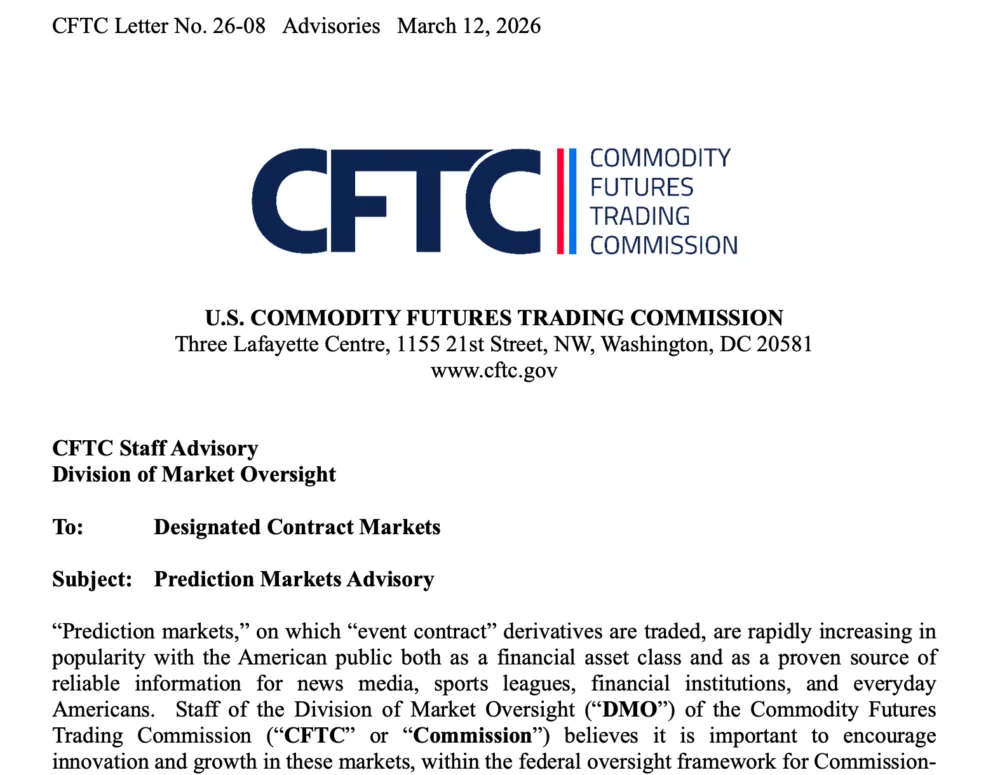
The landscape of cryptocurrency regulation in the United States experienced a pivotal week, marked by three significant developments signaling a decisive shift towards greater oversight and clarity. Michael Selig, Chair of the Commodity Futures Trading Commission (CFTC), initiated a public comment period for proposed rules governing prediction markets, indicating a formal classification of event contracts as a "financial asset class." Concurrently, banking giant JPMorgan Chase found itself embroiled in a proposed class-action lawsuit, accused by investors of facilitating a massive $328 million crypto Ponzi scheme. Adding another layer to the evolving regulatory framework, the U.S. Securities and Exchange Commission (SEC) and the CFTC signed a landmark memorandum of understanding (MOU) aimed at fostering harmonized oversight across crypto and other emerging financial markets, seeking to end long-standing jurisdictional disputes. These actions collectively underscore a growing commitment from federal agencies to establish comprehensive frameworks for digital assets, protect investors, and ensure market integrity within the rapidly expanding crypto ecosystem.
CFTC Moves to Formalize Oversight of Prediction Markets
In a move set to reshape the nascent prediction market industry, CFTC Chair Michael Selig announced a significant step towards regulating these innovative platforms. On Thursday, the CFTC issued a staff advisory explicitly classifying "event contracts" offered on prediction markets, such as Kalshi and Polymarket, as a distinct "financial asset class." This designation marks a crucial moment for platforms that allow users to wager on future events, ranging from economic indicators to political outcomes.
The CFTC further submitted an Advanced Notice of Proposed Rulemaking (ANPR) for publication in the Federal Register, inviting public comment on how the Commodity Exchange Act (CEA) – the primary legislation governing commodity futures and options trading in the U.S. – should apply to prediction markets. This formal request for input signals the agency’s intent to either amend existing regulations or issue entirely new ones tailored specifically to this burgeoning sector.
Chairman Selig articulated the rationale behind this initiative in a Thursday post on X (formerly Twitter), stating, "Prediction markets are one of the most exciting innovations in financial markets. Yet for too long, the CFTC has failed to provide guidance for these markets being used by millions of Americans. This ends today." His statement highlights both the perceived potential of prediction markets as valuable tools for aggregating information and the long-standing regulatory uncertainty that has plagued their operation.
Background and Regulatory Challenges of Prediction Markets
Prediction markets function by allowing participants to buy and sell contracts whose value is tied to the outcome of a future event. For example, a contract might pay $1 if a specific political candidate wins an election and $0 if they lose. The market price of such a contract at any given time can be interpreted as the collective probability assigned by participants to that event occurring. Proponents argue that these markets can be more accurate than traditional polls or expert forecasts, acting as powerful tools for collective intelligence and risk hedging.
However, prediction markets have historically navigated a complex and often ambiguous regulatory environment. The primary challenge stems from classifying these contracts: are they legitimate financial derivatives, subject to CFTC oversight as commodity options or swaps, or are they akin to illegal gambling operations, which fall under different state and federal laws? The CFTC’s previous approach has been largely reactive, issuing cease-and-desist orders against platforms deemed to be offering illegal off-exchange commodity options. This piecemeal approach has created an environment of legal uncertainty, stifling innovation and limiting the growth of legitimate platforms.

The CFTC’s latest initiative, particularly the classification of event contracts as a "financial asset class" and the ANPR, represents a proactive effort to bring clarity and a structured regulatory framework to the sector. This move suggests the CFTC recognizes the legitimate financial utility of these markets while also acknowledging the need for robust consumer protection, market integrity safeguards, and anti-manipulation measures. The public comment period will be critical in shaping the final rules, as stakeholders from across the financial, tech, and legal sectors will provide input on definitions, licensing requirements, disclosure standards, and operational guidelines for prediction market platforms. The outcome could significantly impact the operational models of existing platforms like Kalshi and Polymarket, potentially legitimizing their offerings under a clear federal regulatory umbrella, while also attracting new participants and investment to the space.
JPMorgan Accused of Facilitating $328 Million Crypto Ponzi Scheme
In a striking development that underscores the persistent challenges of illicit finance within the crypto sphere, U.S. banking behemoth JPMorgan Chase is facing a proposed class-action lawsuit. Filed on Tuesday in the U.S. District Court for the Northern District of California, the lawsuit alleges that the bank played a crucial role in enabling a $328 million crypto Ponzi scheme operated by the now-defunct Goliath Ventures.
Investors claim that JPMorgan, despite its sophisticated compliance mechanisms and "Know Your Customer" (KYC) protocols, ignored numerous red flags and allowed Goliath Ventures to utilize its banking infrastructure to collect and move investor funds. The complaint highlights a perceived hypocrisy, noting that JPMorgan CEO Jamie Dimon has been a vocal critic of Bitcoin (BTC) and the broader cryptocurrency market, yet the bank allegedly failed to prevent crypto scammers from executing fraudulent wire transactions through its systems.
Details of the Goliath Ventures Scheme and Allegations Against JPMorgan
The criminal investigation into Goliath Ventures, formerly known as Gen-Z Venture Firm, revealed a classic Ponzi scheme operation that ran from January 2023 through January 2026. According to the U.S. Attorney’s Office for the Middle District of Florida, Goliath Ventures lured over 2,000 investors with promises of high returns from purported crypto investments. In reality, the scheme allegedly relied on new investor funds to pay off earlier investors, a hallmark of Ponzi operations. The CEO of Goliath Ventures, Christopher Delgado, was arrested on February 24 and faces multiple charges, including wire fraud and money laundering, carrying a maximum penalty of 30 years in federal prison if convicted on all counts.
The class-action lawsuit specifically alleges that JPMorgan was the sole banking institution for Goliath Ventures from January 2023 to May or June 2025 – a critical period during which the vast majority of the $328 million was collected. The complaint asserts, "Chase, by virtue of its Know Your Customer actually knew that Goliath was acting as a ‘private equity’ cryptocurrency pool operator investing money for investors, without being licensed at all to sell these investments." This statement suggests that JPMorgan possessed sufficient information to identify Goliath Ventures as an unlicensed entity operating in a high-risk sector, yet allegedly failed to act.
Implications for Banking Compliance and Crypto Fraud Prevention
This lawsuit carries significant implications for the banking sector, particularly concerning their responsibilities in detecting and preventing financial crime in the context of digital assets. Banks are legally obligated to implement robust KYC and Anti-Money Laundering (AML) programs to scrutinize customer identities and transaction patterns. Failures in these areas can lead to substantial fines, reputational damage, and legal liabilities.

The allegations against JPMorgan will likely intensify scrutiny on how traditional financial institutions manage accounts related to cryptocurrency businesses. Even if a bank is skeptical of crypto, as Dimon has often expressed, it still has a legal duty to comply with regulatory requirements and prevent its services from being exploited by illicit actors. The outcome of this lawsuit could set a precedent for holding banks accountable for the fraudulent activities of their crypto-related clients, potentially leading to stricter onboarding processes, enhanced transaction monitoring, and increased due diligence for any entity dealing with digital assets. This case serves as a stark reminder that as the crypto market matures, so too will the legal and regulatory expectations placed upon the financial infrastructure that supports it.
SEC and CFTC Forge Historic Pact for Harmonized Crypto Regulation
In a long-awaited development aimed at untangling decades of "regulatory turf wars," two of the most influential financial regulators in the U.S., the Securities and Exchange Commission (SEC) and the Commodity Futures Trading Commission (CFTC), have formally agreed to better coordinate their oversight of financial markets, including the rapidly evolving cryptocurrency space.
On Wednesday, the agencies signed a memorandum of understanding (MOU), acknowledging a "pivotal time" where new technologies, particularly crypto assets, present unprecedented challenges to effective market monitoring and regulation. This agreement is a significant step towards creating a more cohesive and predictable regulatory environment for digital assets, which have often fallen into a jurisdictional gray area between the two agencies.
Ending Decades of "Turf Wars" and Addressing Crypto’s Unique Challenges
The relationship between the SEC and the CFTC has historically been characterized by overlapping mandates and occasional disputes, especially concerning new financial products that blur the lines between traditional securities and commodities. This friction, often termed "turf wars," has led to regulatory uncertainty, fragmented enforcement, and, as SEC Chair Paul Atkins noted, has "stifled innovation and pushed market participants to other jurisdictions."
The rise of cryptocurrencies has exacerbated this issue. Bitcoin, for example, has generally been classified as a commodity by the CFTC. However, many other digital assets, particularly those launched through initial coin offerings (ICOs), have been deemed securities by the SEC, subject to its stringent disclosure and registration requirements. This distinction is not always clear-cut, leading to confusion for issuers, exchanges, and investors about which rules apply. The lack of a unified approach has been a major impediment to the mainstream adoption and institutionalization of crypto assets in the U.S.
In a separate statement, SEC Chair Paul Atkins emphasized the importance of this collaborative effort: "For decades, regulatory turf wars, duplicative agency registrations, and different sets of regulations between the SEC and CFTC have stifled innovation and pushed market participants to other jurisdictions." His comments underscore the recognition that regulatory fragmentation has been detrimental to the U.S. position in the global digital asset landscape.
Towards a "Fit-for-Purpose Regulatory Framework"

The newly signed MOU aims to remedy these issues by establishing clear protocols for information sharing, joint investigations, and consistent policy development. The agencies explicitly stated their shared goal to provide a "fit-for-purpose regulatory framework for crypto assets." This signifies a commitment to move beyond ad-hoc enforcement actions and develop a comprehensive and tailored regulatory structure that addresses the unique characteristics and risks of digital assets while fostering responsible innovation.
Implications for the Digital Asset Ecosystem
This historic pact holds profound implications for the entire digital asset ecosystem. For crypto businesses, it offers the promise of reduced regulatory arbitrage and a clearer understanding of compliance obligations. A harmonized approach could streamline processes for companies seeking to operate legally in the U.S., potentially leading to fewer instances of conflicting guidance or enforcement actions from different agencies. This clarity could encourage greater institutional investment and innovation, as businesses can plan and operate with more certainty.
For investors, a coordinated regulatory approach means enhanced protection against fraud and market manipulation. With both agencies working in concert, there will likely be a more comprehensive oversight of trading platforms, digital asset issuers, and intermediaries. The MOU also signals a maturing regulatory stance towards crypto, moving from an initial phase of skepticism and uncertainty to one of active engagement and structured integration into the broader financial system. While the path to a fully harmonized framework will still require legislative action and detailed rulemaking, this agreement lays a crucial foundation for a more stable, secure, and transparent digital asset market in the United States.
Conclusion: A New Era of Crypto Regulation
The convergence of these three significant developments – the CFTC’s proactive move to regulate prediction markets, the lawsuit holding a major bank accountable for alleged crypto Ponzi facilitation, and the landmark SEC-CFTC agreement – collectively heralds a new, more intensive era of cryptocurrency regulation in the United States. These actions reflect a growing recognition among policymakers and regulators of the need to address the complexities and risks of digital assets, protect investors, and foster responsible innovation.
The CFTC’s initiative to classify and regulate prediction markets indicates a willingness to integrate novel financial instruments into existing regulatory frameworks, ensuring transparency and market integrity. The lawsuit against JPMorgan serves as a powerful reminder to traditional financial institutions of their critical role and responsibility in preventing illicit financial activities, even within emerging asset classes. Finally, the SEC and CFTC’s agreement marks a pivotal step towards overcoming historical bureaucratic hurdles, promising a more unified and coherent approach to digital asset oversight. As these frameworks evolve, the industry and market participants will need to adapt to a landscape characterized by increased scrutiny, clearer guidelines, and a concerted effort to balance innovation with robust consumer protection.