Nila Kartika Wati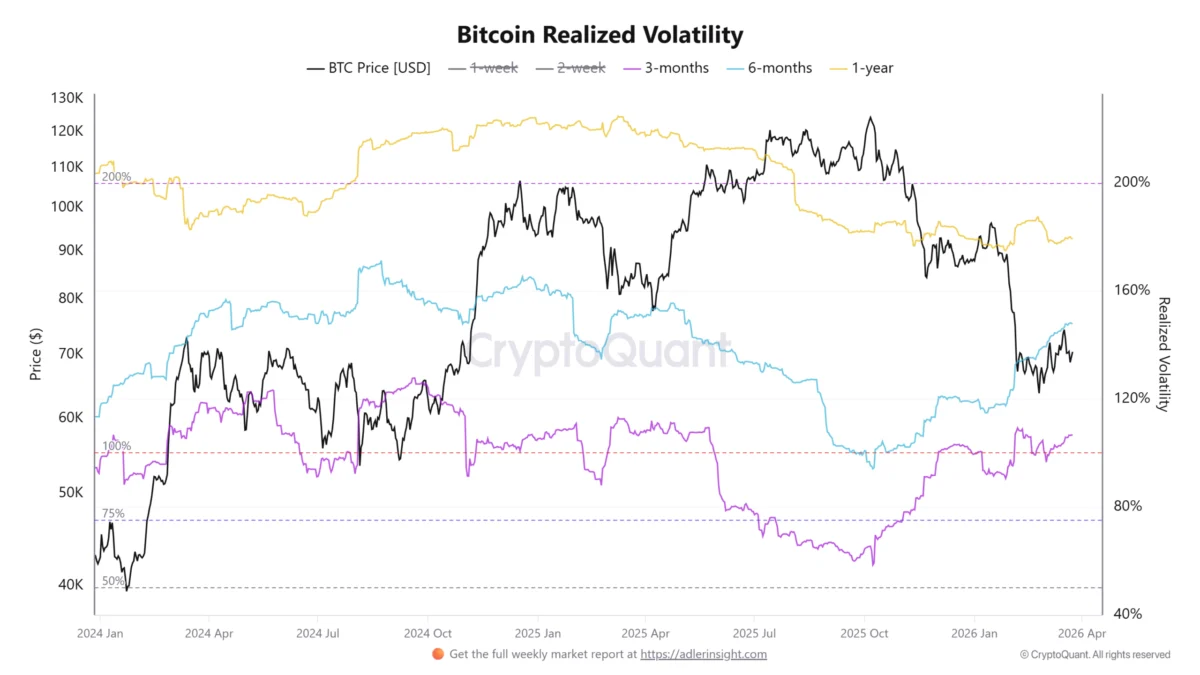
Bitcoin (BTC) investors are demonstrating a significant shift in behavior, increasingly moving away from panic selling in response to market downturns and instead strategically building substantial stablecoin reserves. This emerging trend suggests a more mature and calculated approach, where these "cash buffers" are earmarked for deployment during opportune moments of price depreciation. On-chain analytics provide compelling evidence for this phenomenon, revealing an unprecedented surge in stablecoin activity, with combined transfers of USD Coin (USDC) and Tether’s USDt (USDT) reaching an astounding $440 billion on March 22 alone.
This notable evolution in investor psychology coincides with a broader market sentiment characterized by a "risk-off" approach, largely influenced by macroeconomic and geopolitical headwinds. The United States Federal Reserve recently tempered expectations for near-term interest rate cuts, citing persistent inflationary pressures. This stance, coupled with escalating energy prices exacerbated by ongoing geopolitical conflicts, specifically the US and Israel-Iran tensions, has injected a degree of caution across global financial markets, with the cryptocurrency sector being no exception.
Navigating Volatility with Strategic Calm: The Bitcoin Market’s New Posture
The recent price trajectory of Bitcoin vividly illustrates a period of heightened market volatility. For instance, the cryptocurrency experienced a sharp decline of 3.75% on a recent Sunday, dropping to approximately $67,300, before executing a robust rebound to above $71,700 by Monday. This rapid fluctuation was predominantly attributed to the evolving news cycle surrounding the US and Israel-Iran geopolitical landscape, highlighting the immediate sensitivity of crypto markets to global events.
Consequently, Bitcoin’s realized volatility, a crucial metric that quantifies the actual magnitude of price movements over a specific timeframe, has notably expanded across various short to medium-term horizons. Analysis indicates that the three-month and six-month realized volatility measures have ascended to 107% and 148% respectively. This marks a substantial increase from the 60% and 94.5% levels recorded over the preceding six months, underscoring the intensified short-to-medium-term price swings observed in the market.

However, a critical distinction emerges when examining the long-term perspective. The one-year realized volatility for Bitcoin has remarkably held steady, hovering near the 180% mark throughout this period of heightened short-term fluctuations. This divergence between short-term expansion and long-term stability in volatility metrics provides crucial context. It strongly suggests that despite the immediate price gyrations and the prevailing uncertainty, the broader market is not succumbing to widespread panic. Instead, investors appear to be processing complex information and navigating the current environment without resorting to broad-based, forced selling, which typically characterizes a true market capitulation. This observed resilience signals a potentially more mature investor base capable of distinguishing between transient market noise and fundamental shifts.
The Stablecoin Deluge: A Glimpse into Investor Intent
The unprecedented surge in stablecoin activity on March 22 serves as a cornerstone for understanding the current market dynamics. On this pivotal day, the total volume of USDC tokens transferred experienced an astronomical increase, soaring to 368 billion. This figure represents an approximate 2,081% daily increase, establishing a new all-time high for USDC transfer volumes. Concurrently, USDT transfers on the Ethereum network also reached a substantial 72 billion, contributing to the combined $440 billion stablecoin transfer total.
These extraordinary stablecoin flows are not merely isolated data points; they offer profound insights into rapid capital rotation and strategic repositioning within the cryptocurrency ecosystem. Market participants are actively and decisively moving significant portions of their capital into stablecoins. This action signifies a conscious decision to utilize stablecoins as a temporary, liquid store of value, effectively creating what analysts refer to as a "cash buffer." The primary utility of such a buffer lies in its ability to be swiftly redeployed into risk assets like Bitcoin when perceived buying opportunities arise, particularly during price dips.
This strategic accumulation of stablecoins is a characteristic behavior frequently observed during periods of elevated market uncertainty and volatility. In such environments, traders and investors often prioritize capital preservation and flexibility over maintaining high exposure to volatile assets. By holding stablecoins, they position themselves to monitor price action from the sidelines, ready to enter or re-enter the market at more favorable valuations without the immediate risk of further depreciation associated with holding volatile cryptocurrencies. This mechanism allows for agile responses to market shifts, distinguishing it from outright capital flight.
Macroeconomic and Geopolitical Undercurrents Shaping Crypto Sentiment

The prevailing macroeconomic landscape, dominated by the Federal Reserve’s monetary policy and global geopolitical tensions, has played a pivotal role in shaping the current "risk-off" sentiment permeating financial markets, including cryptocurrencies. The Fed’s decision to hold interest rates steady and dismiss near-term rate cut expectations stemmed from a careful assessment of inflation data and economic growth. Higher-for-longer interest rates generally increase the cost of capital, making riskier assets like cryptocurrencies less attractive compared to traditional, less volatile investments that offer competitive yields.
Adding another layer of complexity are the rising energy prices, a direct consequence of the ongoing US and Israel-Iran geopolitical friction. Energy costs are a significant component of inflation, and their increase can pressure central banks to maintain a tighter monetary policy stance for longer. This creates a challenging environment for growth assets, as investors become more cautious, favoring liquidity and stability. The interconnectedness of global finance means that events in one sector or region can rapidly cascade across others, influencing investment decisions even in seemingly disparate markets like cryptocurrency. The market’s reaction to the weekend’s geopolitical news, which directly triggered Bitcoin’s price fluctuations, underscores this sensitivity. Investors are factoring in potential escalations, supply chain disruptions, and broader economic instability when making allocation decisions.
Futures and Spot Markets Signal Caution, Not Conviction
Further reinforcing the narrative of cautious capital positioning is the activity observed in both Bitcoin futures and spot markets. Futures data, particularly the open interest in BTC (measured in USD), has seen a steady reduction, declining by $19 billion over the past six months. Open interest represents the total number of outstanding derivatives contracts that have not been settled, and a decrease typically signifies an unwinding of leveraged positions. This reduction in leveraged exposure points towards a market actively de-risking, rather than aggressively building new positions based on strong directional conviction.
Accompanying this decline in open interest, aggregated funding rates for perpetual futures have cooled significantly. They have dropped to approximately 0.01% from previously "overheated" levels near 0.1% observed in July-August 2025. Funding rates are periodic payments exchanged between long and short traders in perpetual futures markets, designed to keep the contract price close to the underlying asset’s spot price. Positive funding rates indicate that long positions are paying shorts, suggesting bullish sentiment and high demand for leverage. The current low and occasionally negative funding rates imply a subdued demand for leverage and a market lacking strong bullish conviction, sometimes even exhibiting a slight bearish tilt as shorts pay longs. Moreover, the perpetual futures premium continues to trade at a discount to the spot price, further underscoring a lack of speculative fervor and a preference for immediate, physical assets over leveraged derivatives.
The spot market activity paints a remarkably similar picture of reduced engagement. Cointelegraph previously reported that Binance, one of the world’s largest cryptocurrency exchanges, was on track to record its lowest monthly spot volume since September 2023, with volumes hovering near $52 billion. Spot market volumes are a key indicator of genuine buying and selling activity, particularly from retail investors and institutions looking for direct asset ownership. Low spot volumes suggest a lack of active participation and reduced liquidity in direct asset exchanges.

These current participation levels in the spot market bear a striking resemblance to periods of reduced engagement that characterized prior bear market cycles, notably throughout 2022-2023. During those times, investor enthusiasm waned, and trading activity contracted significantly. The convergence of these signals – reduced open interest, cooled funding rates, and diminished spot volumes – collectively indicates a market that is largely on the sidelines, observing rather than actively participating with strong directional bets.
Implications and the Path Forward: A Resilient but Hesitant Market
The confluence of these on-chain and market data points paints a nuanced picture of the contemporary Bitcoin market. There is undoubtedly strong underlying liquidity, evidenced by the massive capital flows through stablecoins. This capital is actively moving, repositioning, and preparing, but it is not yet being decisively deployed into Bitcoin or other risk assets. Instead, BTC holders and broader market participants appear to be in a watchful mode, carefully observing the ongoing market developments, macroeconomic indicators, and geopolitical shifts.
This posture suggests a degree of maturity in the investor base that was perhaps less prevalent in earlier cycles. Rather than capitulating at the first sign of trouble, investors are strategically preserving capital, ready to pounce on perceived discounts. This "dry powder" held in stablecoins represents significant potential buying pressure that could be unleashed once clarity emerges regarding interest rate policies, inflation trends, or de-escalation of global conflicts.
However, the sustained caution in futures and spot markets also highlights a collective hesitancy. While the long-term one-year realized volatility remaining stable indicates a lack of widespread panic, the reduced trading volumes and leveraged positions suggest that investors are not yet ready to commit heavily. They are awaiting clearer signals or a more compelling narrative that can overcome the current uncertainties.
The immediate future of Bitcoin’s price action will likely be heavily influenced by these external factors. A definitive shift in the Federal Reserve’s dovishness, a de-escalation of geopolitical tensions, or a clear signal of global economic recovery could trigger the deployment of these stablecoin reserves, potentially fueling a new upward trajectory. Conversely, continued uncertainty or exacerbation of existing challenges could prolong the current period of consolidation and cautious accumulation, keeping Bitcoin within a volatile yet ultimately range-bound environment. The market is not in a state of crisis, but rather one of strategic patience, with significant capital poised for action when the conditions align.