Nila Kartika Wati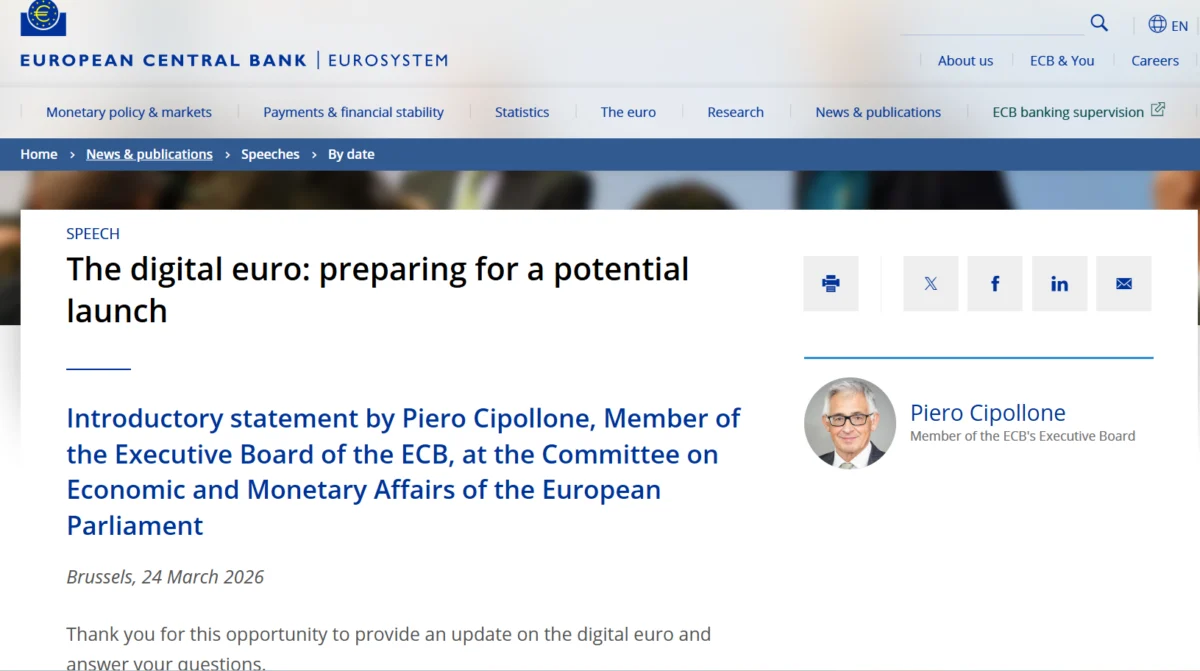
The European Central Bank (ECB) is poised to announce by this summer the specific European standards it intends to employ for a potential digital euro. This crucial step, confirmed on Tuesday by ECB Executive Board member Piero Cipollone, is designed to provide clarity and enable payment providers and merchants across the Eurozone to begin preparing and adapting their systems well in advance of any final decision on the digital currency’s issuance. The proactive disclosure of these technical specifications underscores the ECB’s commitment to a meticulously planned and collaborative rollout, ensuring that the necessary infrastructure is robust and ready should the digital euro move from concept to reality.
The Strategic Imperative: Why a Digital Euro?
The pursuit of a digital euro by the ECB is not merely a response to technological trends but a strategic imperative driven by several core objectives. At its heart, the initiative aims to safeguard European monetary sovereignty in an increasingly digitalized global economy, providing a public money alternative to private digital currencies and stablecoins, which could otherwise fragment the monetary landscape and potentially undermine financial stability. The rise of large tech companies and non-European payment solutions has highlighted a growing reliance on external infrastructures, posing risks to data privacy, transaction costs, and overall strategic autonomy. A digital euro would offer a pan-European payment rail, reducing dependence on international card schemes like Visa and Mastercard, thereby keeping more merchant fees within the European economy and fostering greater competition and innovation among European payment service providers.
Furthermore, the ECB views a digital euro as a means to foster innovation in payments, enhance efficiency, and ensure that all citizens and businesses have access to safe, reliable, and efficient digital payment methods. It is designed to complement, rather than replace, physical cash and existing bank deposits, offering an additional choice for digital transactions. This "complementary" nature is critical to addressing concerns about financial exclusion or the potential erosion of cash, a widely cherished and inclusive means of payment. The initiative also seeks to prepare the Eurozone for future developments in digital finance, ensuring that the euro remains at the forefront of global currency innovation.
A Phased Approach: Key Milestones and Timeline
The journey towards a potential digital euro has been meticulously structured into distinct phases, each with specific objectives and timelines. The ECB formally launched its investigation phase in October 2021, a two-year period dedicated to exploring the design and distribution of a digital euro, analyzing its potential impact on the market, and gathering feedback from stakeholders. This phase concluded in October 2023, paving the way for the current preparation phase.
The preparation phase, initiated in late 2023, focuses on developing the necessary technical framework and business model for a digital euro. Cipollone’s announcement about releasing the European standards by this summer marks a significant milestone within this phase. These standards are crucial for fostering interoperability and ensuring that various payment systems and devices can seamlessly integrate with the digital euro infrastructure. Following the announcement of these standards, the ECB will work closely with market participants – including banks, payment service providers, and technology firms – to facilitate their integration into existing and new payment terminals, point-of-sale systems, and mobile applications.
The legislative process is anticipated to be a key determinant of the digital euro’s future. The ECB expects European Union legislation to be in place by 2026, providing the necessary legal framework for its potential issuance. Concurrently, a 12-month digital euro pilot program is slated to commence in the second half of 2027. This pilot, for which the ECB opened a call for licensed payment service providers earlier in March, will rigorously test person-to-person (P2P) and point-of-sale (POS) payments in a controlled environment. The objective is to ensure technical readiness for a possible issuance around 2029, contingent upon the successful completion of the pilot and the formal endorsement of the legal framework by EU lawmakers. This structured timeline underscores the ECB’s cautious and methodical approach, prioritizing thorough testing and regulatory clarity over rapid deployment.
Designing the System: Interoperability, Infrastructure, and Inclusivity
The design principles for the digital euro emphasize its role as a public payments infrastructure, a foundational layer upon which private intermediaries can build innovative services. Cipollone reiterated that the digital euro is not envisioned as a direct-to-consumer product from the ECB but rather a central bank-backed asset accessible through private financial institutions. Banks and payment service providers (PSPs) would be responsible for offering digital euro wallets and value-added services to end-users, much like they do with traditional bank accounts today. This two-tiered approach aims to leverage the private sector’s innovation and customer-facing expertise while ensuring the safety and stability of central bank money.
The finalization of the rulebook, a critical component of the preparation phase, will allow new payment terminals and applications to be shipped with the necessary digital euro rails already embedded. This forward-looking strategy is intended to give European companies a significant head start, enabling them to offer digital euro services immediately once the legislative framework is established. The announcement of technical standards this summer is integral to this process, providing clarity on aspects such as transaction protocols, security measures, and data handling. These standards are paramount for ensuring broad interoperability across the diverse payment ecosystem of the Eurozone.
Inclusivity is another cornerstone of the digital euro’s design. Cipollone highlighted that accessibility features, such as voice commands and large-font displays, are being incorporated into the reference app design from the outset. This commitment ensures that the digital euro will be usable by a wide range of individuals, including the elderly, those with disabilities, and individuals with varying levels of digital literacy. The aim is to make the digital euro as accessible and user-friendly as cash, upholding the principle that public money should be available to everyone. Furthermore, considerations for offline functionality are being explored to ensure continued payment access even in situations without internet connectivity, mirroring the resilience of physical cash. Privacy is also a paramount concern, with the ECB committed to designing the digital euro to ensure a high level of privacy for users, differentiating it from private digital payment solutions which often involve extensive data collection.

Economic Considerations: Costs, Benefits, and European Independence
While the strategic benefits of a digital euro are considerable, the financial implications, particularly for the banking sector, have been a subject of careful analysis. Earlier ECB assessments, as reported by Reuters in February, estimated that implementing a digital euro could cost EU banks between 4 billion and 6 billion euros over a four-year period. This amount, while substantial, was characterized by the central bank as roughly 3% of their annual information technology maintenance budget. Cipollone addressed these concerns directly, urging lawmakers to weigh these upfront costs against the significant long-term benefits for the European economy.
The anticipated benefits include the potential to retain more merchant fees within the Eurozone. Currently, a substantial portion of interchange and transaction fees from card payments flows to international payment networks, many of which are based outside Europe. A digital euro, by providing a pan-European public infrastructure, could significantly reduce these outflows, strengthening the European payments ecosystem and boosting the competitiveness of domestic payment schemes. This aligns with the broader European agenda to foster strategic autonomy in critical economic sectors.
Moreover, the digital euro is expected to facilitate the scaling of European payment schemes. By offering a unified, widely accepted digital payment instrument, it could help overcome the fragmentation that has historically characterized the European payment landscape. This standardization and broader adoption could lead to economies of scale, lower transaction costs for businesses, and more innovation in payment services. The goal is to provide "co-badged cards and bank wallets able to switch between domestic schemes and the digital euro across the euro area," thereby enhancing consumer choice and efficiency. The economic analysis thus frames the initial investment as a necessary cost for securing future economic resilience, fostering innovation, and strengthening the Eurozone’s position in the global digital economy.
Beyond Retail: The Broader Vision of Digital Central Bank Money
The ECB’s vision for digital central bank money extends beyond a retail digital euro for everyday transactions. Cipollone highlighted the central bank’s commitment to maintaining central bank money as the "anchor" for future wholesale markets, particularly in the context of emerging distributed ledger technology (DLT) and tokenized finance. This involves exploring wholesale CBDCs, which are digital forms of central bank money used by financial institutions for interbank settlements and other wholesale transactions.
Two key initiatives underscore this broader strategic objective: the Pontes project and the Appia roadmap. The Pontes project is an experimental initiative testing the settlement of tokenized securities in central bank money across various distributed ledger technology platforms. This exploration aims to demonstrate how DLT-based financial markets could operate with the foundational security and trust provided by central bank money, potentially streamlining settlement processes and reducing counterparty risk in the burgeoning world of tokenized assets.
The Appia roadmap outlines the ECB’s strategy for fostering a comprehensive tokenized European financial ecosystem. This long-term vision seeks to leverage DLT to revolutionize financial market infrastructures, enabling more efficient, transparent, and resilient operations. In this ecosystem, tokenized central bank money could serve as the ultimate settlement asset for a wide array of tokenized financial instruments, including stablecoins and tokenized deposits. As Cipollone articulated in a separate speech, this would ensure that the integrity and stability of central bank money underpin the entire digital financial landscape, providing a crucial element of trust and safety amidst the proliferation of private digital assets. This dual focus on both retail and wholesale digital central bank money illustrates the ECB’s comprehensive approach to adapting the euro for the digital age, ensuring its relevance and stability across all facets of the financial system.
The Road Ahead: Legislative Journey and Future Impact
The path to a fully operational digital euro is complex and multifaceted, hinging significantly on the legislative journey within the European Union. While the ECB is diligently working on the technical and operational frameworks, the ultimate decision on issuance rests with EU lawmakers. The anticipated establishment of EU legislation by 2026 is a critical prerequisite, providing the necessary legal clarity and democratic mandate for such a fundamental shift in the monetary landscape. This legislative process will involve extensive debates on crucial aspects such as privacy safeguards, legal tender status, potential caps on holdings, and the exact roles and responsibilities of both the ECB and private intermediaries.
Public acceptance will also be paramount. The ECB has consistently emphasized that the digital euro is designed to complement, not replace, cash and existing bank deposits. This reassurance is vital to addressing potential public concerns about privacy, government control, or the displacement of traditional payment methods. The ongoing communication efforts by the ECB aim to educate the public about the benefits and features of a digital euro, fostering trust and understanding.
Looking ahead, the digital euro has the potential to reshape the European payment landscape, driving innovation, enhancing efficiency, and bolstering the Eurozone’s strategic autonomy. It could stimulate new business models for banks and payment service providers, foster greater competition, and provide consumers with a secure and inclusive digital payment option. However, challenges remain, including managing the transition costs for financial institutions, ensuring robust cybersecurity measures against evolving threats, and continuously adapting the design to meet future technological and societal needs. The careful, phased approach adopted by the ECB, with its emphasis on collaboration, thorough testing, and legislative clarity, aims to navigate these complexities and pave the way for a resilient and future-proof digital euro.