Nila Kartika Wati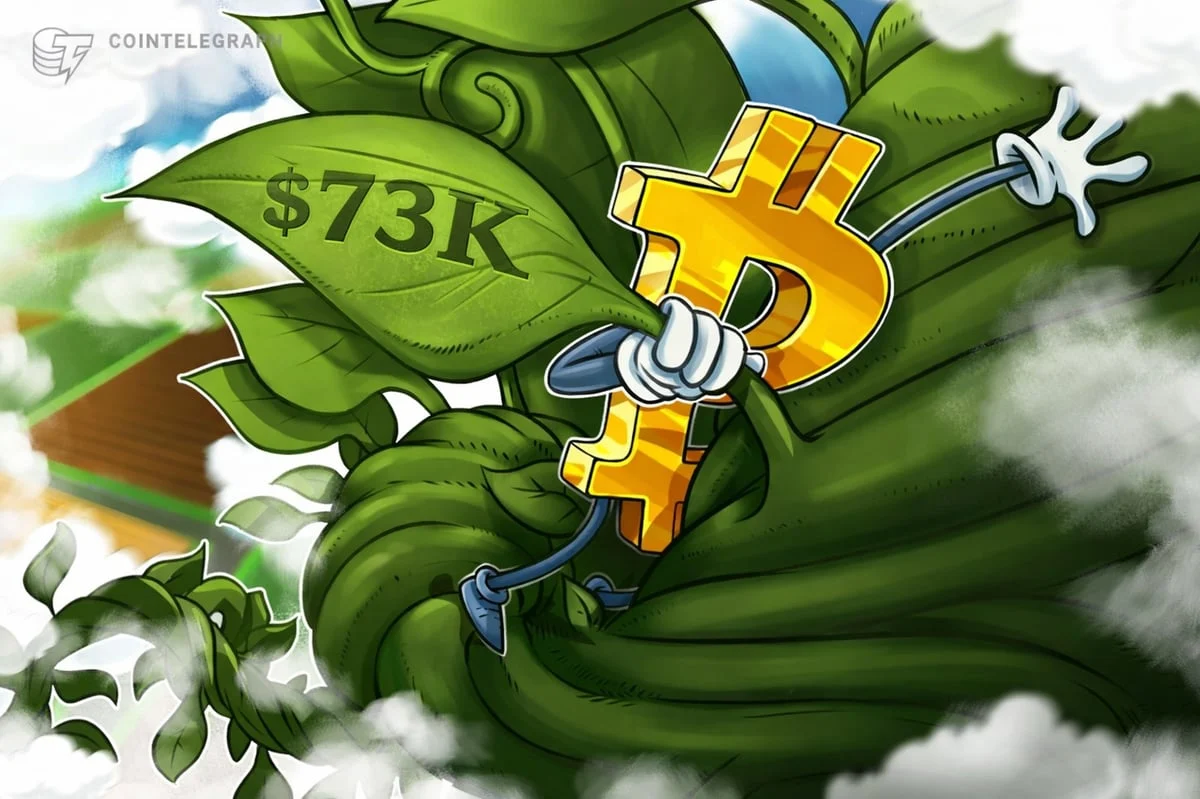
Bitcoin (BTC) decisively reclaimed the $74,000 level on Monday, a significant move that coincided with slight gains in the S&P 500 index. This uptick followed a dramatic weekend of geopolitical uncertainty, ignited by reports of US President Donald Trump ordering a US blockade of the Strait of Hormuz. While the initial reaction saw risk assets, including Bitcoin, falter, market sentiment appears to be gradually firming. This renewed confidence is underpinned by robust net inflows into US-listed spot Bitcoin exchange-traded funds (ETFs) and the continued aggressive accumulation strategy by Strategy (MSTR US). However, the critical question remains: is the prevailing bear market truly over, or are these merely temporary relief rallies?
Geopolitical Undercurrents and Market Volatility
The weekend’s events served as a stark reminder of Bitcoin’s increasing sensitivity to global macroeconomic and geopolitical shifts, challenging its long-held narrative as a purely uncorrelated "digital gold" asset. The Strait of Hormuz, a narrow waterway between the Persian Gulf and the Gulf of Oman, is a critically important chokepoint for global oil shipments. Approximately one-fifth of the world’s total oil supply passes through this strait daily. A US blockade order, even if temporary or symbolic, would represent a severe escalation of tensions with Iran, potentially disrupting global energy markets, sending crude oil prices soaring, and triggering widespread economic instability.
Initial market reactions reflected this acute uncertainty. Bitcoin, like other risk assets, experienced a dip, falling to $70,500 over the weekend. This decline was exacerbated by the news of failed US-Iran ceasefire negotiations, which dashed hopes for a swift de-escalation of regional conflict. The prospect of prolonged instability in the Middle East typically prompts investors to flee riskier assets in favor of safe havens. However, by Monday, Brent crude oil prices showed signs of retreating, settling around $99 per barrel. This easing of oil price pressure, often a key indicator of geopolitical risk perception, paved the way for a broader recovery in risk assets, including Bitcoin and equities. The S&P 500’s modest gains on Monday morning further underscored this shift in investor sentiment, suggesting that fears of an immediate, full-blown conflict had somewhat subsided, allowing capital to flow back into growth-oriented investments.
Institutional Momentum: ETFs and Corporate Accumulation

A primary driver behind Bitcoin’s resilience and recent price surge is the undeniable institutional interest, particularly evident in the performance of US-listed spot Bitcoin ETFs. These investment vehicles have continued to attract substantial capital, signaling a growing acceptance of Bitcoin within mainstream finance. Between Thursday and Friday of the previous week, these ETFs collectively accumulated an impressive $615 million in net inflows. This strong performance marked a significant reversal from the preceding two days, which had seen outflows, and highlighted the fluctuating but ultimately positive demand trajectory.
Since their launch earlier in the year, these ETFs have collectively brought billions of dollars into the Bitcoin ecosystem, providing a regulated and accessible gateway for institutional investors, wealth managers, and retail investors alike. Funds like BlackRock’s IBIT and Fidelity’s FBTC have consistently led in terms of inflows, often offsetting outflows from Grayscale’s GBTC, which was converted from a trust to an ETF. The sustained net positive flows indicate that the institutional appetite for Bitcoin exposure remains robust, viewing it as a legitimate asset class for portfolio diversification and potential long-term growth.
In parallel to the ETF phenomenon, Strategy (MSTR US), a prominent business intelligence firm, has continued its aggressive Bitcoin acquisition strategy. The company announced it had acquired an additional 13,927 BTC over the past week, bringing its total holdings to an unprecedented level. This latest tranche of purchases, valued at approximately $1 billion, was notably funded through its innovative yield-bearing instrument, Stretch (STRC US). Strategy’s unwavering commitment to Bitcoin, often leveraging capital markets to expand its reserves, serves as a powerful testament to corporate belief in Bitcoin’s long-term value proposition and acts as a significant demand sink in the market. Its consistent buying, regardless of market volatility, provides a strong psychological anchor for other investors.
Macroeconomic Correlation and Diverging Performance
Despite the burgeoning demand from institutional investors and the narrative of Bitcoin as an independent asset, its price movements remain highly correlated with the S&P 500 and the broader macroeconomic currents of the US economy. This correlation underscores Bitcoin’s evolution from a niche, uncorrelated asset to one increasingly integrated into the global financial system, making it susceptible to the same risk-on/risk-off dynamics that govern traditional equities. When broader economic sentiment is positive, and investors are willing to take on more risk, Bitcoin tends to benefit. Conversely, periods of economic uncertainty or tightening monetary policy often see Bitcoin decline alongside other risk assets.
The failed US-Iran ceasefire negotiations over the weekend, which initially saw Bitcoin drop to $70,500, perfectly illustrate this correlation. As global stability was threatened and oil prices surged, the market repriced risk, leading to sell-offs across the board. However, the subsequent retreat of Brent crude oil prices to $99 on Monday provided a crucial relief, allowing investors to re-enter risk assets. This pattern highlights that while Bitcoin possesses unique characteristics, its short-to-medium-term trajectory is still heavily influenced by external economic and geopolitical factors, particularly those affecting liquidity and investor sentiment in major global markets.

Interestingly, while Bitcoin displayed strength in reclaiming the $74,000 level, its year-to-date performance in 2026 presents a stark contrast to the S&P 500. Bitcoin is currently down 18% since the beginning of the year, indicating a significant correction from its earlier highs. In comparison, the S&P 500 has remained relatively flat year-to-date, suggesting a more stable, albeit subdued, performance in traditional equities. This divergence raises questions about the sustainability of Bitcoin’s recent rally and whether it can decouple from the broader market’s more conservative trajectory.
Derivatives Market Lags Bullish Sentiment
While spot market activity, particularly through ETFs, indicates strong buying pressure, derivatives metrics have yet to fully flip bullish, suggesting caution among sophisticated traders. Analyzing the Bitcoin monthly futures market reveals a critical insight: Bitcoin monthly futures traded at a modest 2% annualized premium relative to regular spot markets. This premium, often referred to as the "basis" or "contango," represents the cost of carrying a futures position.
Under neutral market conditions, where there is a balanced demand for both long and short positions, this annualized premium typically hovers between 4% and 8%. This range is generally considered healthy, as it compensates for the cost of capital, time value, and other associated risks. A premium below this range, like the current 2%, indicates a lack of aggressive demand for bullish leverage. It suggests that while some investors are buying Bitcoin in the spot market (via ETFs), futures traders are not rushing to open leveraged long positions, nor are they willing to pay a high premium to do so. This can be interpreted as a sign of underlying skepticism or a cautious approach, where traders are not yet convinced that the current rally has strong, sustainable momentum to justify higher leverage. This disparity between spot buying enthusiasm and derivatives market caution often precedes periods of consolidation or further volatility, as it reflects an incomplete conviction in the market’s bullish direction.
The Quest for Regulatory Clarity: A Pivotal Factor
Beyond market mechanics, the broader regulatory landscape in the United States plays a crucial role in shaping investor confidence and Bitcoin’s long-term trajectory. While pinpointing the exact rationale for Bitcoin’s sharp correction in late January is complex, the prevailing lack of comprehensive regulatory support from US lawmakers likely played an important, if not central, role. Regulatory uncertainty often deters institutional investors and innovation, creating a challenging environment for growth.

US Senator Cynthia Lummis, a vocal advocate for clear cryptocurrency regulations, has consistently urged her colleagues to approve the CLARITY Act. This proposed legislation is designed to bring much-needed legal definitions to the digital asset space, specifically aiming to define how stablecoin issuers operate and establish clear thresholds for tokens to be deemed sufficiently decentralized. The bill’s passage would be a landmark event, providing a framework that could significantly de-risk the crypto market for institutional participants and foster innovation within a regulated environment.
The CLARITY Act is currently navigating a critical window in the Senate Banking Committee, a key legislative bottleneck. The legislative process has been fraught with challenges, as major cryptocurrency exchanges and industry stakeholders have recently voiced significant concerns. These concerns primarily revolve around late-stage additions to the bill, particularly those pertaining to decentralized finance (DeFi) restrictions and the exact scope of tokenized assets. Industry players worry that overly broad or restrictive clauses could stifle innovation in the burgeoning DeFi sector and create an onerous compliance burden. US Securities and Exchange Commission (SEC) Chairman Paul Atkins has also publicly stated that "it is time" for Congress to advance with meaningful crypto regulation, underscoring the urgency from a regulatory enforcement perspective. The lack of a clear legal framework continues to be a major impediment to broader adoption and capital inflow into the US crypto market.
The impact of this regulatory friction is subtly reflected in stablecoin markets. USD stablecoins traded at a 0.4% discount relative to the official US dollar-to-yuan exchange rate on Monday. This discount, while seemingly small, is a typical sign of excessive demand to exit cryptocurrency markets. Under balanced demand conditions, USD stablecoins usually command a 0.5% to 1.5% premium. This premium compensates for the costs associated with traditional foreign exchange (FX) remittance and the regulatory friction imposed by China’s stringent capital controls, which make it difficult to move funds in and out of the country. A discount, therefore, suggests that participants are willing to accept less than parity for their stablecoins, indicating a desire to convert crypto assets back into traditional fiat, often driven by uncertainty or profit-taking.
Miner Sell Pressure and Lingering Uncertainty
Adding another layer of complexity to the market dynamics is the behavior of Bitcoin miners. Despite the strong institutional inflows and corporate accumulation, publicly listed miners have recently reduced their Bitcoin positions, introducing a degree of sell pressure into the market. This trend is a crucial consideration when assessing the sustainability of any bullish rally.
Over the past 30 days, several major mining operations have significantly divested from their Bitcoin holdings. MARA Holdings (MARA US), a prominent player in the mining sector, sold a substantial 15,133 BTC. Similarly, Riot Platforms (RIOT US) reduced its exposure by 2,325 BTC, and Cango (CANG US) sold 2,000 BTC. These sales, totaling nearly 20,000 BTC from just these three entities, represent a considerable amount of supply entering the market. Miners often sell Bitcoin to cover operational expenses, invest in new equipment, or manage their balance sheets, particularly in the lead-up to or aftermath of Bitcoin halving events (though the article specifies 2026, implying a future halving might have recently occurred or is anticipated, prompting strategic asset management). Such large-scale sales can absorb significant demand and potentially cap price upside, especially if the broader market sentiment is not overwhelmingly bullish.

The Path Forward: A Confluence of Factors
Given the strong correlation with traditional markets, the cautionary signals from derivatives metrics, and the persistent sell pressure from miners, there is no definitive basis to claim that Bitcoin’s bear market is definitively over based solely on ETF inflows and accumulation from a handful of companies. The market is still navigating a complex interplay of forces.
Bitcoin’s immediate path to the psychologically significant $80,000 mark is largely dependent on a more favorable risk perception across global markets. This, in turn, hinges on the de-escalation of geopolitical tensions, particularly regarding the status of the US and Israel-Iran War. Any further escalation or prolonged conflict in the Middle East could quickly reverse recent gains, sending risk assets tumbling once again. Beyond geopolitics, sustained institutional interest, robust ETF inflows, and positive macroeconomic indicators are essential for building a durable foundation for growth.
Crucially, the long-term health and growth of the Bitcoin market, especially within the United States, will be heavily influenced by progress on the regulatory front. The passage of comprehensive and clear legislation, such as the CLARITY Act, could unlock further institutional capital, reduce uncertainty, and foster a more stable and predictable environment for all participants. Until then, Bitcoin’s journey remains intertwined with global events and the ongoing evolution of its regulatory landscape. Investors will need to remain vigilant, as the cryptocurrency market continues to respond to a complex mix of on-chain fundamentals, institutional adoption trends, macroeconomic headwinds, and geopolitical developments.