James Watt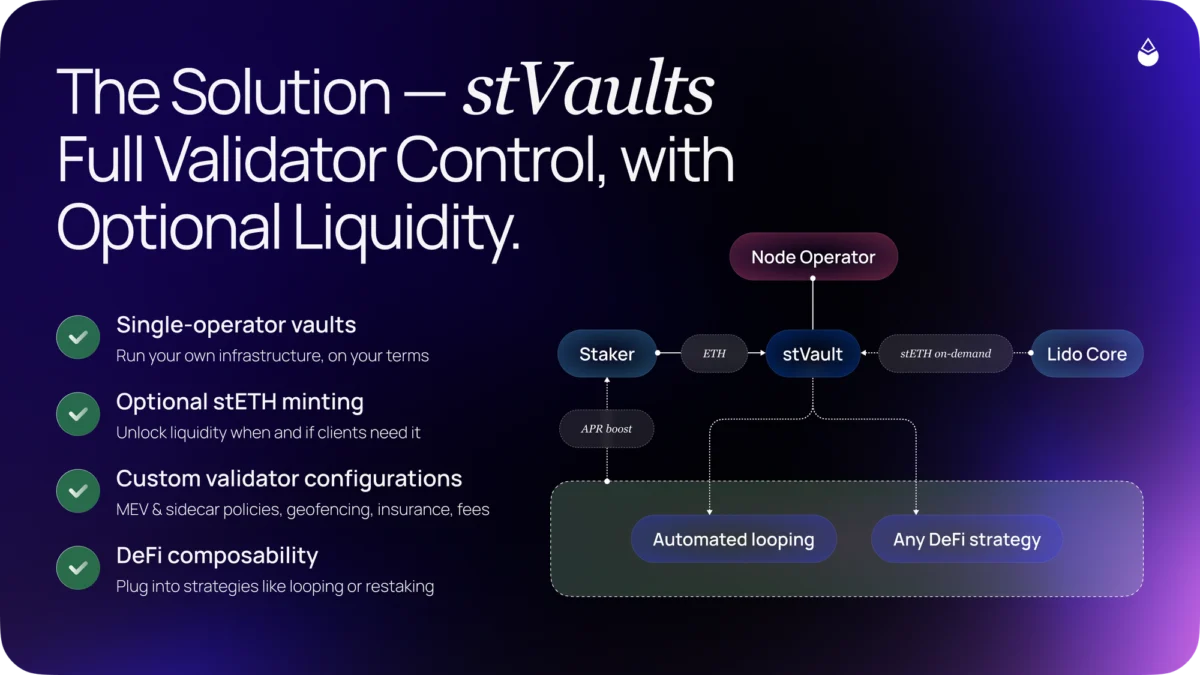
Lido Finance, a leading liquid staking protocol, has officially launched Lido V3 on the Ethereum mainnet, marking a significant evolution in the landscape of decentralized finance (DeFi) and Ethereum staking. This major upgrade introduces stVaults, a modular staking primitive designed to offer unprecedented customization and flexibility to stakers, transcending the limitations of the traditional single-pooled model while retaining the crucial benefits of stETH’s liquidity and extensive network integrations. The deployment follows a rigorous validation process, emphasizing security, community collaboration, and open-source principles, which have been foundational to Lido’s durable core protocol.
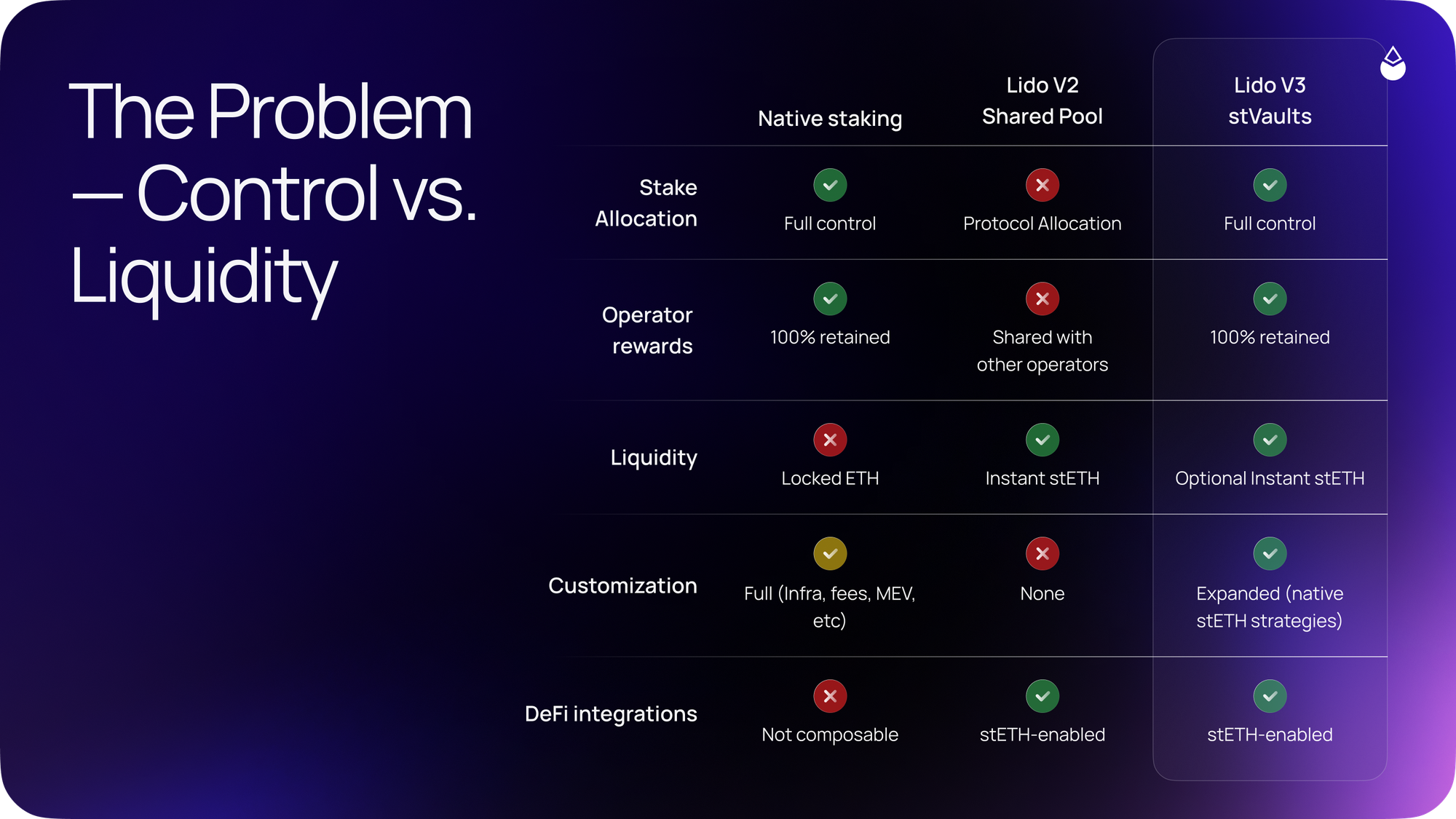
The introduction of stVaults addresses a long-standing challenge faced by various participants in the staking ecosystem: the structural trade-off between granular control over staking parameters and access to liquid utility. Historically, stakers have often had to choose between highly customized, self-managed staking solutions that offer control but lack liquidity, or pooled liquid staking models that provide liquidity and ease of access but sacrifice specific operational or risk controls. Lido V3’s stVaults are engineered to resolve this dilemma, enabling customization across critical areas such as operator selection, fee structures, reward logic, and risk parameters, all while maintaining access to a shared liquidity layer via stETH. This innovation ushers in a new paradigm for Ethereum staking, empowering diverse entities, from institutional investors to specialized node operators and DeFi builders, to construct tailored staking businesses leveraging the robust network effects inherent in the DeFi ecosystem.
The Evolution of Staking: From Pooled Liquidity to Composable Infrastructure
Lido Finance initially established its prominence by demonstrating the powerful market forces unleashed when staking is paired with a liquid token. stETH, Lido’s liquid staking token, revolutionized Ethereum staking by making staked ETH usable across a myriad of DeFi applications, including lending, collateralization, and liquidity provision. This eliminated the restrictive constraint of being locked into withdrawal queues, providing stakers with unprecedented flexibility and capital efficiency. Lido V3 extends this foundational principle, broadening the scope of staking models beyond the original pooled approach.
With stVaults, the protocol moves towards becoming a truly composable staking infrastructure. It allows for the creation of multiple distinct staking strategies, each underpinned by stETH as the unified liquidity layer. This architectural shift means that various entities can now integrate customized staking solutions into their existing frameworks, rather than being confined to a single, monolithic offering. This structure is particularly conducive to a new class of staking businesses, including regulated financial institutions demanding specific compliance and operational controls, node operators seeking to differentiate their offerings, and developers requiring precise configurations for their innovative DeFi products. The upgrade signifies Lido’s ambition to evolve from a leading liquid staking provider into a versatile platform that facilitates a wide array of staking-driven services and products across the Ethereum ecosystem.
A Rigorous Path to Mainnet: Security and Community at the Forefront
The journey to Lido V3’s mainnet launch was characterized by a meticulous and multi-stage validation process. This included extensive testing on multiple public testnets, where the protocol underwent thorough stress tests and simulated real-world conditions. Integral to this process were comprehensive security reviews and multiple public audits conducted by independent blockchain security firms. Lido contributors have consistently prioritized a relentless focus on security, reflecting the critical importance of safeguarding user funds in decentralized protocols. This commitment extends to fostering community input throughout the development cycle and maintaining a dedication to open-source software, ensuring transparency and collaborative development. The soft-launch on mainnet prior to the full public release provided an additional layer of validation, allowing for real-world testing under controlled conditions. This rigorous approach underscores Lido’s commitment to delivering a robust, secure, and resilient staking infrastructure.
Empowering Institutional Staking Without Compromising Liquidity
The institutional adoption of liquid staking has been on a steady rise, yet traditional models often fall short in meeting the stringent requirements of modern asset managers and financial institutions. These entities frequently demand bespoke setups characterized by segregated vault structures for enhanced security and regulatory compliance, dedicated validator infrastructure to meet specific operational policies, granular control over risk parameters, and sophisticated reporting capabilities for auditing and compliance. The inherent illiquidity risks and long exit queues associated with conventional staking models are often incompatible with institutional treasury and fund management requirements, which prioritize capital efficiency and rapid access to funds.
stVaults directly address these challenges by enabling segregated vault structures that can be linked to dedicated validator infrastructure. Crucially, these customized vaults still offer the option of stETH liquidity, allowing institutions to manage their staked ETH with greater flexibility. Early deployments of stVaults highlight this new design space: Blockdaemon, a prominent blockchain infrastructure provider, is utilizing stVaults to offer institutional-grade staking solutions with tailored controls. Similarly, Coinbase Institutional is exploring bespoke staking products leveraging stVaults, catering to the unique needs of their institutional clientele. P2P.org, another leading staking provider, is building dedicated stVaults that provide institutional clients with segregated vault structures and transparent performance reporting, directly linked to their validator operations. The result is a powerful combination: institution-grade staking controls without forcing a hard choice between customization and liquidity, thereby lowering the barrier for traditional finance to engage with Ethereum staking.
Catalyzing Operator-Led Products and Enhanced Differentiation
Lido V3 fundamentally redefines the business case for Node Operators within the liquid staking ecosystem. In the pre-stVaults era, operators primarily navigated a binary choice: either to offer generic, pooled staking services with limited differentiation or to pursue independent, bespoke solutions that often lacked the powerful network effects and liquidity of a protocol like Lido. This often led to commoditization and intense competition based primarily on price.
stVaults create significant room for operator-led products, allowing node operators to design and offer vaults mapped to their specific validator infrastructure, complete with customized operational policies, performance guarantees, and unique service level agreements. This empowers operators to compete on factors beyond just price, such as specialized performance, enhanced security measures, geographic distribution of validators, or specific vault configurations tailored to niche market segments. The example of P2P.org developing dedicated stVaults for institutional clients illustrates this shift, enabling them to provide tailored services that showcase their operational expertise and infrastructure. This foundation also supports a broader spectrum of products, ranging from conservative staking exposures for risk-averse clients to more advanced, curator-driven DeFi vault strategies built around the versatility of stETH. By providing new levers for differentiation, stVaults are poised to foster greater innovation and specialization among node operators, ultimately benefiting the entire ecosystem.
Expanding the Design Space for Staking Strategies and Developer Tooling
Beyond institutional and operator-led offerings, stVaults significantly expand the design space for diverse staking strategies. This includes the development of multi-operator vaults, allowing stakers to distribute their funds across a curated selection of node operators, enhancing decentralization and mitigating single-point-of-failure risks. Furthermore, permissioned vaults can be created, restricting access to specific whitelisted addresses or entities, addressing compliance and regulatory requirements for certain users. Specialized risk-tiered vaults can also emerge, catering to stakers with varying risk appetites by offering different levels of yield or protection based on the underlying validator set or operational policies.
A crucial accompanying novelty with Lido V3 is the introduction of tooling designed to reduce time-to-market for teams aiming to launch user-facing staking products. The "DeFi Wrapper" toolkit is a low-code deployment solution, simplifying the creation of end-user staking products. This comprehensive toolkit includes essential components such as an SDK for seamless integration, smart contract templates for rapid deployment, and a curated set of pre-integrated strategies. Builders now have the flexibility to either leverage these pre-integrated strategies to quickly ship differentiated products without the need to develop curation strategies from scratch, or to integrate custom strategies that provide unique competitive advantages for specific market segments. This developer-centric approach is expected to catalyze a wave of new staking products and services built atop Lido V3, fostering innovation across the DeFi landscape.
Embedded Staking for Layer 2 Solutions: Bringing Native Yield to Users
The modularity inherent in stVaults also facilitates a groundbreaking concept: embedded staking for Layer 2 (L2) networks. This innovation allows staking functionality to move closer to where users already hold their ETH, seamlessly integrating yield generation into the L2 experience. L2s can now route bridged ETH into staking vaults, utilizing the resulting yield to support ecosystem incentives, fund liquidity programs, or even offset transaction costs, all without requiring users to navigate a new, complex staking journey.
Pioneering work in this direction, exemplified by L2 implementations from projects like Linea, demonstrates how staking can become an intrinsic part of network economics. This approach treats staking not merely as a standalone action users must explicitly take, but as fundamental infrastructure—a yield-bearing base layer that protocols can integrate directly. By abstracting away the complexities of staking, L2s can enhance user experience, drive adoption, and create more capital-efficient ecosystems. This shift positions staking as a core utility within the broader Ethereum scaling narrative, further solidifying its importance beyond direct yield generation.
Start Building on Lido V3 Today: A New Era for Staking Businesses
Lido V3 represents a pivotal moment, transforming liquid staking from a singular product category into a expansive infrastructure layer for a diverse range of staking businesses. The introduction of stVaults makes it possible to launch customized institutional staking products with tailored controls, develop differentiated operator-led offerings that leverage specific expertise, create structured DeFi vaults with unique risk-reward profiles, and integrate L2-native staking solutions that bring yield directly to users within scaling networks.
Recognizing the potential for rapid adoption and innovation, Lido contributors are actively encouraging engagement from teams building these next-generation staking products. An early adopter campaign is currently underway, offering a significant incentive: until March 31st, 2026, the Lido Infrastructure fee for identified stVaults with a Total Value Exceeding 250 ETH will be reduced from 1% to 0%. This promotional period is designed to accelerate the development and deployment of new stVault-based offerings, fostering a vibrant ecosystem of innovation. Teams interested in building on Lido V3 are encouraged to contact the stVaults team to participate in this campaign and explore the vast possibilities offered by the new protocol. Comprehensive resources, including the stVaults Documentation Center and the Lido V3 Whitepaper, provide detailed information on key concepts such as Reserve Ratios, risk tiers, and forced rebalancing, empowering developers and businesses to fully leverage this groundbreaking infrastructure. Lido V3 is poised to redefine the future of Ethereum staking, opening new avenues for growth, customization, and broad market participation.