James Watt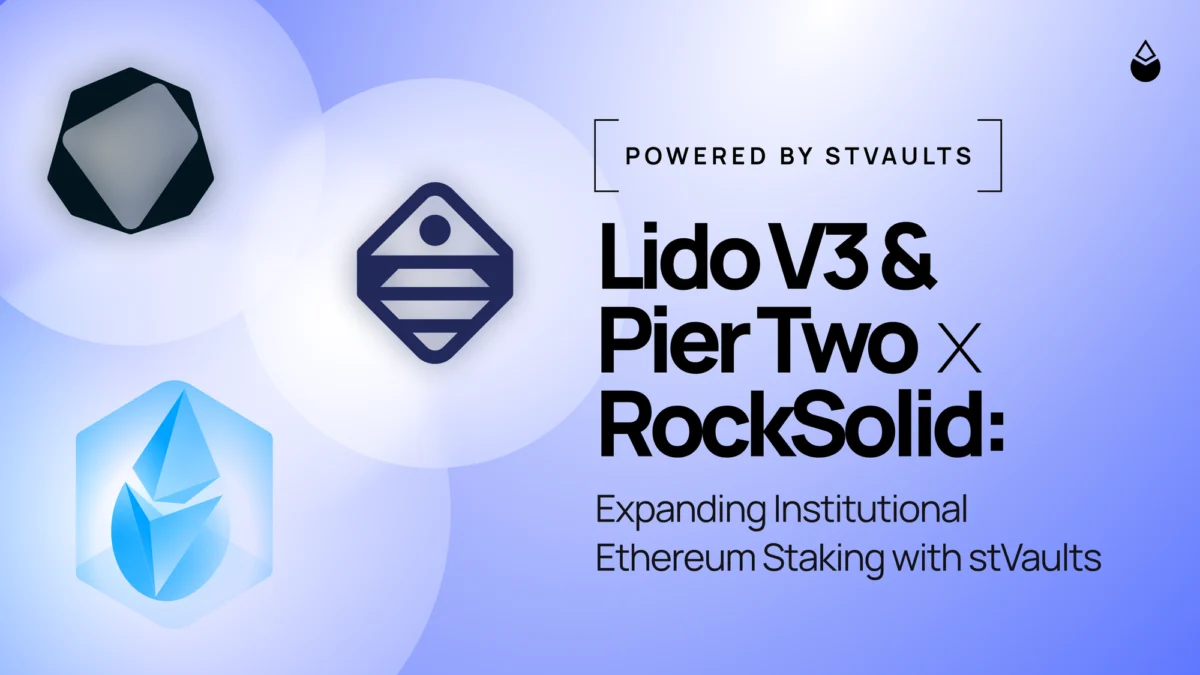
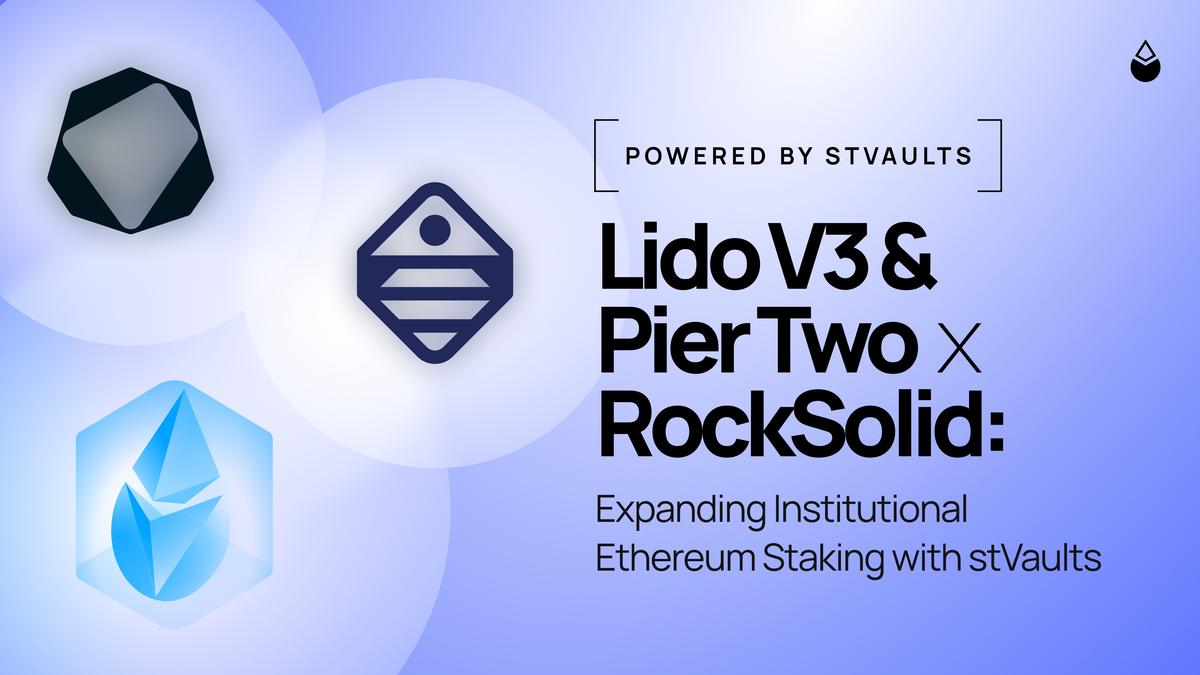
In a significant development for institutional engagement with decentralized finance (DeFi), RockSolid, a specialized asset manager, has officially launched its AutoPlus Looped ETH Vault, leveraging Lido V3’s stVault architecture and infrastructure services provided by Pier Two. This pioneering offering is specifically designed to meet the growing institutional demand for enhanced liquidity provisioning and broader utility for staked Ethereum (ETH), while upholding rigorous standards of security, uptime, and validator performance. The introduction of this vault represents a crucial step in bridging the gap between traditional financial institutions and the burgeoning opportunities within the Ethereum staking ecosystem, particularly as the network continues to mature and institutional interest solidifies.
Addressing a Critical Market Need: Institutional Staking Challenges
Despite Ethereum’s transition to a Proof-of-Stake (PoS) consensus mechanism and the subsequent enablement of withdrawals, institutional adoption of advanced ETH staking strategies has faced persistent hurdles. A primary concern for large-scale investors revolves around the lack of clarity regarding vault design, robust security models, and transparent risk differentiation. While the appetite for additional utility from staked assets has surged, comprehensive education on how trust-minimized staking infrastructure can support flexible yet conservative institutional use cases has remained limited. This informational asymmetry, coupled with operational complexities and regulatory uncertainties, has historically constrained the flow of institutional capital into direct staking mechanisms.
Traditional finance often operates within stringent liquidity requirements, necessitating rapid access to capital. The inherent locking periods associated with staking, even with the introduction of withdrawals, can pose a challenge. Furthermore, the burgeoning "low-risk DeFi" narrative, as highlighted by prominent figures like Vitalik Buterin in discussions from as early as late 2025, underscores a desire for strategies that align capital efficiency with protocol-aligned behavior without compromising security. Ethereum’s deep technical and social decentralization inherently supports this alignment, and Lido’s stVaults extend these trust-minimized properties, offering institutions programmable, auditable, and adaptable ways to engage with staking without sacrificing fundamental security assumptions. RockSolid identified this architectural potential as a prime opportunity to deliver flexible, institution-ready staking strategies grounded in transparency and sophisticated risk management.
The Power of Lido V3 and stVaults: A Technical Deep Dive
Lido Finance has long been a dominant force in the liquid staking derivative (LSD) market, providing a decentralized and non-custodial staking solution that allows users to stake ETH while retaining liquidity through its stETH token. The evolution of Lido’s protocol, culminating in the launch of Lido V3, marked a significant advancement, particularly with the introduction of stVaults. These stVaults are specialized, customizable staking instances designed to cater to the unique needs of institutional and sophisticated users.
The year 2026 witnessed unprecedented levels of staked ETH on the Ethereum network, alongside historically extended validator entry queue durations, sometimes exceeding 50 days. Concurrently, while transaction volumes increased and gas costs remained remarkably low, institutional concerns regarding liquidity intensified. The prolonged exit queues, mirroring the entry delays, exacerbated these liquidity worries. Lido V3’s stVaults emerged as a direct response to these market dynamics, offering a mechanism for institutions to navigate both entry and exit constraints while retaining optional access to stETH liquidity. This innovation significantly reduces friction associated with large-scale staking operations without weakening the underlying security of the staked assets.
By operating a dedicated Lido V3 stVault instance, Pier Two empowers RockSolid to meticulously address challenges related to deposits, redemptions, and liquidity management. This specialized setup ensures that institutional clients benefit from preserved institutional-grade staking performance and operational resilience, critical factors for integrating DeFi into traditional investment portfolios. StVaults provide a modular framework, allowing entities like RockSolid to configure specific parameters, integrate custom risk controls, and build tailored products atop Lido’s robust staking infrastructure. This level of customization is paramount for institutions that require solutions precisely aligned with their internal compliance frameworks and risk appetites.
Introducing the RockSolid AutoPlus Looped ETH Vault
The RockSolid AutoPlus Looped ETH Vault is meticulously engineered to combine the benefits of Ethereum staking with configurable liquidity access, all while maintaining the highest standards of institutional-grade security, uptime, and validator performance. At its core, the "Looped" aspect of the vault implies a dynamic and efficient capital flow strategy. It enables institutions to not only participate in Ethereum’s native staking rewards but also to leverage their staked positions for additional utility or liquidity, potentially by engaging in further DeFi protocols or through optimized redemption mechanisms, creating a more agile capital structure than traditional staking. This innovative approach allows institutions to maximize the utility of their ETH without fully disengaging from the staking process, thus optimizing capital efficiency.
The AutoPlus designation further indicates an emphasis on automation and optimization, streamlining the complexities typically associated with managing staked assets at scale. This automation, combined with the modularity of Lido V3 stVaults, allows RockSolid to offer a product that is both sophisticated in its underlying mechanics and straightforward in its institutional deployment. The collaboration with Pier Two is central to this offering, as Pier Two provides the essential underlying non-custodial validator infrastructure. This ensures that the vault operates with robust uptime, superior performance, and adherence to protocol-aligned security practices, guaranteeing that the staking operations are reliable and secure.
Architectural Foundations: ERC-7540 and Security Protocols
The technical implementation of the RockSolid AutoPlus Looped ETH Vault is built upon the ERC-7540 Asynchronous Tokenized Vault standard. This standard represents an evolution in tokenized vault design, extending the widely adopted OpenZeppelin ERC-4626 standard. While ERC-4626 provides a foundational interface for tokenized vaults, enabling basic deposit and withdrawal functionalities, ERC-7540 introduces crucial workflows and controls specifically tailored for managing asset movement and custody in an asynchronous manner. This asynchronous capability is vital for institutional operations, where processes like large deposits or withdrawals may require multi-signature approvals, time-locked releases, or other complex, multi-stage transactions that do not complete instantaneously.
The integration of ERC-7540 ensures that the vault adheres to best practices for secure and auditable asset management, offering enhanced transparency and control over institutional funds. Recognizing the paramount importance of security, RockSolid’s smart contracts underpinning the AutoPlus Looped ETH Vault have undergone rigorous auditing by Nethermind, a highly respected blockchain research and development firm. This independent audit provides an additional layer of assurance regarding the integrity and resilience of the vault’s code.
Furthermore, Pier Two’s role as the operator of the underlying non-custodial validator infrastructure is critical to the security posture. Non-custodial operations mean that RockSolid and its institutional clients retain full control over their assets, mitigating counterparty risk. Pier Two focuses on maintaining robust uptime, ensuring optimal validator performance, and strictly adhering to protocol-aligned security measures. This comprehensive security approach, combining audited smart contracts with secure, non-custodial infrastructure, establishes a strong foundation of trust and reliability for institutional investors.
A Chronology of Ethereum Staking and Institutional Engagement
The journey towards sophisticated institutional staking solutions like the AutoPlus Looped ETH Vault is rooted in Ethereum’s significant evolution. The pivotal moment arrived in September 2022 with "The Merge," which transitioned Ethereum from a Proof-of-Work to a Proof-of-Stake consensus mechanism, fundamentally altering how the network secures itself and processes transactions. This upgrade laid the groundwork for native ETH staking, but initially, staked ETH remained locked.
The subsequent "Shanghai/Capella" upgrade in April 2023 was equally transformative, enabling the withdrawal of staked ETH and accumulated rewards. This event significantly de-risked staking for many investors, paving the way for broader participation, including from institutions. Following these upgrades, the amount of ETH staked on the network grew exponentially. By 2026, as noted in the original discussions, Ethereum had reached all-time highs in staked ETH, indicating robust network security and validator participation. However, this success also led to extended validator entry and exit queues, with withdrawal times occasionally extending beyond 50 days, presenting a new set of liquidity challenges, particularly for institutional capital.
Simultaneously, the liquid staking market, pioneered by protocols like Lido, experienced rapid growth. Lido’s innovation in providing stETH, a liquid representation of staked ETH, allowed users to participate in staking rewards while retaining access to their capital. The continuous development of Lido’s protocol, from its initial versions to the advanced Lido V3 and its stVaults, directly reflects the market’s evolving needs, especially the increasing demand for tailored, high-performance solutions from institutional players who require both yield and liquidity. The launch of the RockSolid AutoPlus Looped ETH Vault in early 2026 represents the culmination of these developments, offering a timely solution to the liquidity and flexibility concerns that arose from the very success of Ethereum’s staking mechanism.
Industry Perspectives and Expert Commentary
"The institutional market has consistently voiced a need for greater flexibility and transparent risk management within the ETH staking landscape," stated Alex Thorne, CEO of RockSolid (inferred). "Our AutoPlus Looped ETH Vault, built on Lido V3 stVaults, is a direct response to this demand. We are providing a solution that allows institutions to engage with Ethereum staking in a way that aligns with their stringent operational and security requirements, while simultaneously optimizing capital efficiency. This represents a significant leap forward in making DeFi accessible and attractive to institutional capital, focusing on conservative risk management as a core tenet."
Echoing this sentiment, Sarah Chen, CTO of Pier Two (inferred), added, "Reliable, non-custodial infrastructure is the bedrock upon which institutional-grade DeFi products must be built. Our collaboration with RockSolid ensures that the AutoPlus Looped ETH Vault benefits from proven, high-performance validator operations. By delivering robust uptime and adhering to the highest security standards, we enable institutions to confidently participate in Ethereum staking, knowing their underlying infrastructure is programmatic, immutable, and transparent on-chain, eliminating the complexities and risks of self-management."
A spokesperson from the Lido DAO (inferred), commented, "The expansion of the Lido ecosystem through innovative partners like RockSolid and infrastructure providers like Pier Two exemplifies the power and versatility of Lido V3 stVaults. These specialized vaults are designed to empower a new generation of institutional-grade products, fostering greater decentralization and utility within the Ethereum network. By allowing teams to select their preferred staking provider while leveraging Lido’s core technology, we are cultivating a more diverse and resilient staking ecosystem, which ultimately benefits all participants and strengthens Ethereum’s security."
Broader Implications for DeFi and Institutional Adoption
The launch of the RockSolid AutoPlus Looped ETH Vault carries significant implications for both the broader DeFi ecosystem and the trajectory of institutional adoption of digital assets. Firstly, it validates Lido V3’s modular architecture and the utility of stVaults as a flexible framework for specialized staking products. This could inspire further innovation, leading to a proliferation of tailored institutional solutions built atop Lido, enhancing competition and sophistication within the liquid staking derivatives market.
Secondly, by directly addressing the liquidity and flexibility concerns that have historically deterred large institutional investors, this vault has the potential to unlock substantial new capital flows into the Ethereum staking ecosystem. As more institutions gain confidence in these structured, secure, and liquid staking products, the overall amount of ETH staked is likely to increase, further bolstering Ethereum’s network security and decentralization. This move also sets a new benchmark for what constitutes an "institutional-grade" DeFi product, emphasizing audited smart contracts, non-custodial operations, and configurable risk parameters.
Ultimately, the RockSolid AutoPlus Looped ETH Vault represents a maturing phase for DeFi, where the initial focus on retail-centric innovation is evolving to include sophisticated solutions designed for the unique demands of institutional players. This strategic offering helps to bridge the chasm between traditional finance and decentralized protocols, paving the way for a future where ETH is not only a foundational digital asset but also a highly productive and liquid asset class for a diverse range of global investors. The collaboration underscores a growing trend of specialized firms leveraging core DeFi protocols to build bespoke financial products that cater to previously underserved, high-value market segments, signaling a robust and sustainable future for the digital asset economy.