admin
admin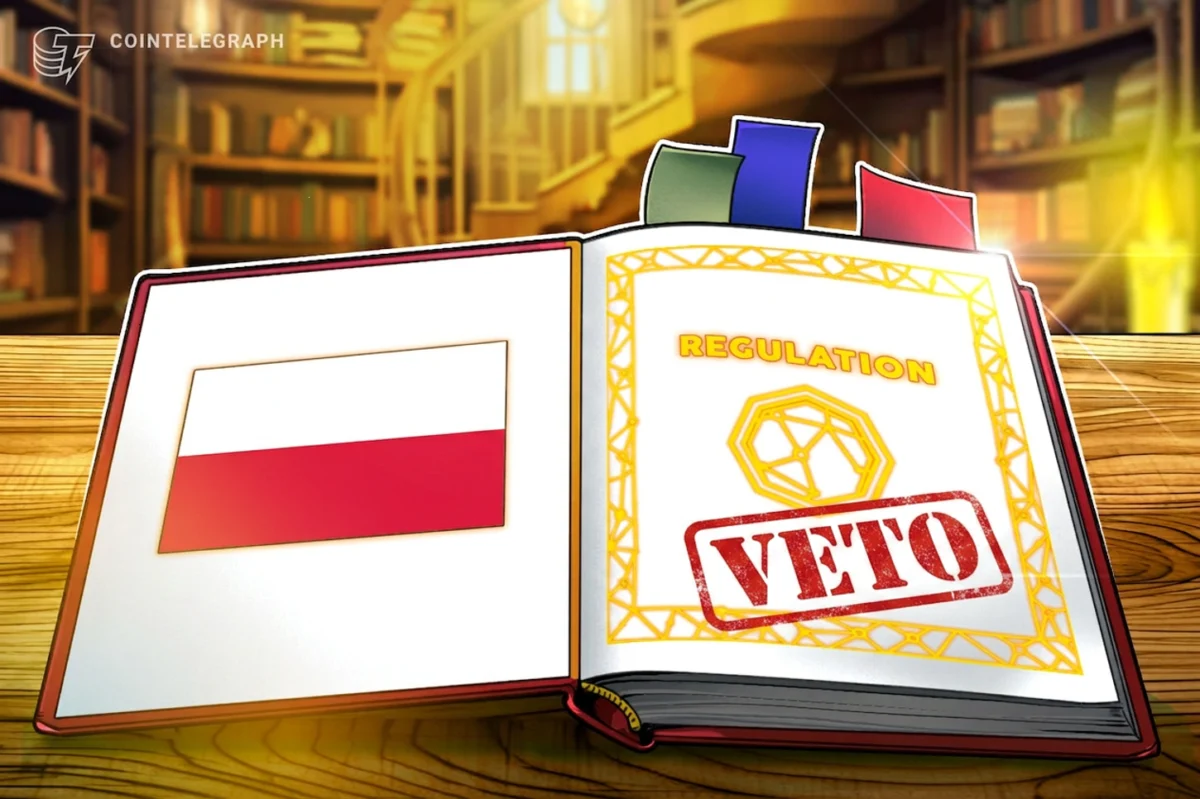
The Polish Sejm, the lower house of the national parliament, has failed for the third consecutive time to secure the legislative majority necessary to override a presidential veto on a critical bill designed to regulate the nation’s burgeoning cryptocurrency market. In a high-stakes vote held on Friday, lawmakers gathered 241 votes in favor of overturning the veto issued by President Karol Nawrocki, while 198 members voted against the measure and three abstained. Under the Polish constitution, a three-fifths majority is required to bypass a presidential rejection; in this instance, the governing coalition fell 25 votes short of the 266-vote threshold needed to enact the legislation into law. This legislative stalemate leaves Poland in a precarious position as the European Union’s landmark Markets in Crypto-Assets (MiCA) regulation begins to take effect across the continent, potentially leaving the Polish market without a designated domestic supervisor or a clear legal framework.
The failure to pass the bill marks a significant setback for the administration of Prime Minister Donald Tusk, which has sought to fast-track the legislation in response to a widening criminal investigation into the defunct cryptocurrency exchange Zondacrypto. The legislative impasse is the latest chapter in a protracted conflict between the executive branch and the legislature over the scope of digital asset oversight. While the government argues that the bill is essential for national security, consumer protection, and alignment with European standards, President Nawrocki has consistently maintained that the proposed rules represent a form of "regulatory overreach" that would stifle innovation and place an undue financial burden on domestic financial technology firms.
The Legislative Impasse and Constitutional Hurdles
The recurring failure to override the presidential veto highlights the deep political divisions currently characterizing the Polish legislative landscape. The bill in question was drafted primarily to harmonize Polish law with the European Union’s MiCA framework, which represents the first comprehensive set of rules for the crypto industry on a supranational level. The Polish version of the bill proposed granting extensive oversight powers to the Polish Financial Supervision Authority (KNF), the body responsible for regulating the country’s traditional banking and capital markets.
President Nawrocki’s opposition is centered on several specific provisions within the bill. Chief among these is a clause that would grant the KNF the unilateral authority to block websites associated with crypto-asset service providers deemed to be operating in violation of national regulations. The President’s office has argued that such powers are overly broad and lack sufficient judicial oversight, posing a potential threat to digital freedoms. Furthermore, the President has expressed concerns regarding the "regulatory costs" associated with the new framework, suggesting that the compliance requirements would favor large international corporations at the expense of small and medium-sized Polish enterprises.
Poland’s Compliance Gap with EU MiCA Standards
The rejection of the bill creates a significant regulatory vacuum. Although the EU’s MiCA regulation is already being implemented across member states, the actual enforcement and licensing of service providers rely on national competent authorities. Following the vote on Friday, the KNF issued a formal statement clarifying that Poland currently lacks a legally designated authority responsible for the direct supervision of the crypto-asset market under the MiCA regime.
This lack of a designated supervisor places Polish cryptocurrency firms in a difficult position. Without a domestic framework, these companies may struggle to obtain the "passporting" rights that MiCA provides, which allow a firm licensed in one EU member state to operate across the entire 27-nation bloc. Industry analysts suggest that this regulatory uncertainty could lead to a "capital flight" of Polish crypto startups to more welcoming jurisdictions, such as Lithuania, Estonia, or France, where the MiCA implementation process is more advanced. The KNF has warned that the absence of a clear legal basis for supervision not only hampers market development but also limits the agency’s ability to protect retail investors from fraudulent schemes.
The Zondacrypto Scandal: Fraud, Bankruptcy, and Missing Persons
The urgency behind the government’s push for tighter regulation is fueled by the ongoing collapse of Zondacrypto, once one of the largest cryptocurrency exchanges in Central and Eastern Europe. The exchange, which originally operated under the name BitBay before rebranding, has become the center of a massive criminal probe involving suspected fraud, money laundering, and organized crime.
In April, Polish prosecutors estimated that the losses linked to Zondacrypto’s operations totaled at least 350 million Polish zlotys (approximately $95 million). The situation worsened in August when an Estonian court officially declared the exchange’s operator, BB Trade Estonia, bankrupt. This bankruptcy has left thousands of creditors, many of them retail investors in Poland, in a state of financial limbo. The first meeting of creditors is currently scheduled for September 17, but legal experts warn that the recovery of assets will be a complex and lengthy process, particularly given the cross-border nature of the company’s operations.
Adding a layer of mystery to the financial scandal is the disappearance of Sylwester Suszek, the founder of BitBay. Suszek vanished in 2022, and his whereabouts remain unknown. In July, Polish prosecutors merged the investigation into the disappearance of Suszek with the broader probe into Zondacrypto’s financial irregularities, suggesting a potential link between the founder’s absence and the exchange’s collapse. The merger of these cases indicates that authorities are treating the Zondacrypto affair not merely as a corporate failure, but as a high-level criminal conspiracy.
Political Allegations and the "Shadow" of Corruption
The debate over the crypto bill has taken on a highly partisan tone, with Prime Minister Donald Tusk using the Zondacrypto investigation to level serious allegations against the previous government. Shortly before the Friday vote, Tusk disclosed excerpts from testimony provided by a key witness in the Zondacrypto probe. According to Tusk, the witness alleged that a 2 million Polish zloty ($550,000) payment arrangement was established involving a foundation linked to the former Justice Minister, Zbigniew Ziobro.
The Prime Minister further claimed that testimony suggested an unnamed individual had promised to secure a presidential pardon for the witness in the event of a criminal conviction. These allegations have been used by the current administration to frame the crypto regulation bill as a "national integrity" issue. Tusk argued that the lack of oversight in the crypto market allowed "bad actors" to exert influence over political figures, suggesting that the previous administration’s reluctance to implement strict crypto rules was motivated by self-interest rather than a desire to promote innovation.
Opponents of the bill, including members of the Law and Justice (PiS) party, have dismissed these claims as politically motivated "theatrics" intended to distract from the government’s own legislative failures. They maintain that the President’s veto is a principled defense of economic freedom and a rejection of the "repressive" administrative powers the bill would grant the KNF.
Market Implications and the Future of Crypto in Poland
The continued lack of a regulatory framework has immediate practical consequences for the Polish financial sector. Currently, the Polish crypto market operates in a "grey zone" where firms are registered as "virtual currency activities" but are not subject to the rigorous prudential supervision that MiCA envisions. This creates a disparity between the level of protection offered to crypto investors compared to those in traditional equity or bond markets.
Supporting data suggests that Poland has one of the highest rates of cryptocurrency adoption in the European Union, with a significant portion of the population holding or trading digital assets. The KNF’s inability to intervene in the market means that if another platform were to follow the path of Zondacrypto, the state would have few tools to mitigate the damage or freeze assets in real-time.
Furthermore, the "overregulation" argument cited by President Nawrocki highlights a broader debate within the EU. While MiCA provides a unified rulebook, individual nations have some leeway in how they set up their domestic supervisory fees and enforcement mechanisms. If Poland eventually adopts a framework that is perceived as more punitive than its neighbors, it risks losing its status as a regional tech hub. Conversely, the current state of "no regulation" makes it difficult for legitimate businesses to secure banking relationships, as Polish banks remain wary of servicing an industry that lacks a clear supervisor.
Chronology of the Legislative Dispute
The path to the current impasse has been marked by several key events:
- 2022: Sylwester Suszek, founder of BitBay (Zondacrypto), disappears.
- Late 2023: The EU finalizes the MiCA framework, giving member states a timeline for implementation.
- Early 2024: The Tusk administration introduces a bill to the Sejm to align Polish law with MiCA and empower the KNF.
- April 2024: Prosecutors announce that losses in the Zondacrypto case have reached 350 million PLN.
- June – July 2024: President Nawrocki vetoes the crypto bill twice, citing concerns over website-blocking powers and compliance costs.
- August 2024: BB Trade Estonia is declared bankrupt by an Estonian court.
- September 2024: The Sejm fails for the third time to override the presidential veto, leaving the bill dead in its current form.
Conclusion and Outlook
The failure of the Sejm to override the veto signals that a compromise between the Tusk government and President Nawrocki is unlikely in the near term. The government now faces two primary options: it can attempt to draft a new, watered-down version of the bill that addresses the President’s concerns regarding website blocking and regulatory costs, or it can wait for a shift in the political landscape.
In the meantime, the Polish crypto market remains in a state of flux. The KNF has encouraged investors to exercise "extreme caution," noting that the absence of a designated supervisor means there are no formal mechanisms for dispute resolution or deposit insurance for crypto-assets. As the MiCA deadlines approach at the end of the year, the pressure on Polish lawmakers to find a solution will only intensify. The Zondacrypto investigation continues to expand, and as more details of the alleged political connections emerge, the push for transparency and oversight is likely to remain at the forefront of the Polish political agenda. For now, however, Poland stands as a notable exception in the European Union—a major market with a vibrant crypto community but no legal authority to govern it.