admin
admin
The landscape of global cryptocurrency regulation shifted significantly this week as major developments unfolded across three continents, highlighting the ongoing tension between legislative ambitions, law enforcement concerns, and sovereign financial strategies. In Warsaw, the Polish government’s attempt to establish a comprehensive regulatory framework for digital assets hit a significant roadblock, complicated by a widening criminal investigation into one of the region’s most prominent exchanges. Simultaneously, in Washington D.C., a pivotal piece of crypto market structure legislation cleared a major political hurdle as the National Sheriffs’ Association withdrew its long-standing opposition. Further south, the International Monetary Fund (IMF) provided a rare moment of clarity regarding El Salvador’s controversial Bitcoin holdings, potentially smoothing the path for a massive multi-billion dollar financing arrangement.
Poland’s Regulatory Gridlock and the Zondacrypto Fallout
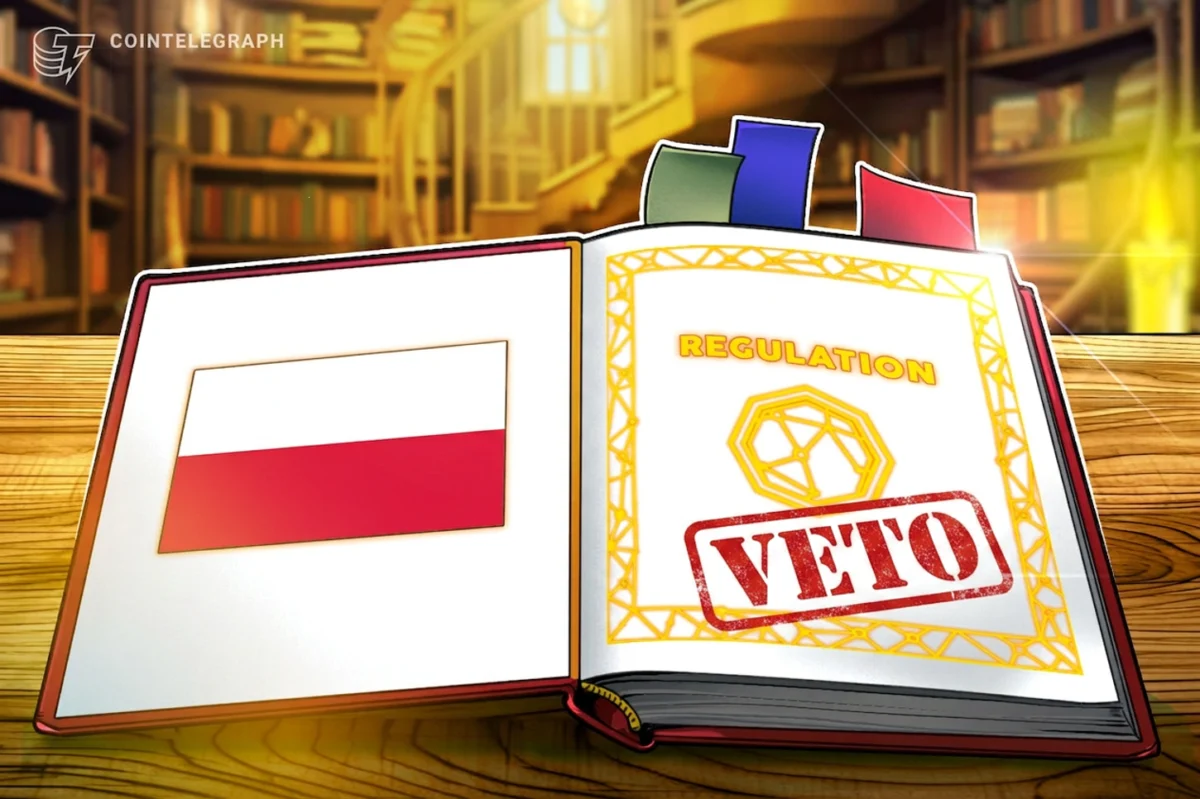
The Polish Sejm, the lower house of the nation’s parliament, failed to gather the necessary momentum to override President Karol Nawrocki’s veto of a landmark crypto oversight bill. The legislation was designed to bring Poland into closer alignment with the European Union’s Markets in Crypto-Assets (MiCA) framework while granting domestic regulators broader powers to monitor transactions and enforce compliance.
The final tally in the Sejm stood at 241 votes in favor of overturning the veto and 198 against, with three members abstaining. Under Polish constitutional law, a three-fifths majority is required to override a presidential veto when at least half of the statutory number of deputies are present. Falling 25 votes short of the required threshold, the bill has been effectively shelved, leaving the Polish digital asset market in a state of regulatory limbo at a time when financial crimes involving virtual currencies are under intense scrutiny.
The political standoff is inextricably linked to the escalating scandal surrounding Zondacrypto, formerly known as BitBay. Once a dominant player in the Central and Eastern European crypto markets, the exchange has become the focal point of a massive investigation involving fraud and money laundering. Prime Minister Donald Tusk has taken a hardline stance on the matter, recently citing witness testimony that suggests a deep-rooted web of influence between the exchange’s operators and officials from Poland’s previous government.
Tusk’s administration has alleged that Zondacrypto’s leadership attempted to buy political protection and influence legislative outcomes through illicit payments. This narrative gained further weight following the bankruptcy of BB Trade Estonia, the Estonian-based operator of Zondacrypto, which was officially declared insolvent in August. Polish prosecutors are currently working in tandem with Estonian authorities to trace the flow of funds, with current estimates suggesting that millions of euros in retail investor capital remain unaccounted for.
The failure of the crypto bill is seen by many as a victory for the opposition, who have argued that the proposed oversight was too heavy-handed and granted the government excessive surveillance powers. However, proponents of the bill argue that without it, Poland remains a "grey zone" for crypto operations, potentially attracting bad actors while the rest of the EU moves toward a standardized, transparent regime.
The CLARITY Act: A Breakthrough in the United States Senate
In a development that could redefine the regulatory environment in the United States, the National Sheriffs’ Association (NSA) has officially moved to a "neutral" position regarding the CLARITY Act. This shift is viewed by political analysts as a watershed moment, as law enforcement opposition has historically been one of the most significant barriers to passing crypto-focused market structure bills in the Senate.
The CLARITY Act, which aims to establish a clear jurisdictional boundary between the Securities and Exchange Commission (SEC) and the Commodity Futures Trading Commission (CFTC), passed the House of Representatives with bipartisan support in July 2025. However, it had stalled in the Senate due to concerns from the NSA and other law enforcement bodies. The sheriffs’ primary grievance centered on provisions related to decentralized mixers and privacy-enhancing technologies, which they argued would facilitate money laundering and hinder the recovery of stolen digital assets.
In a formal letter addressed to Senate leadership, the NSA noted that extensive negotiations with the Trump administration, key members of Congress, and industry stakeholders had addressed their most pressing "legal and enforcement concerns." The association stated it would now "step back," allowing the legislative process to proceed without the friction of a law enforcement lobby.
The timing of this shift is critical. Senate Majority Leader John Thune filed for a cloture vote on September 15, a move intended to limit debate and force a final vote on the legislation. The bill still faces hurdles, including internal disputes over the treatment of stablecoin rewards and the classification of tokenized equities. Additionally, some Democratic lawmakers have raised concerns regarding potential conflicts of interest involving President Trump’s family members and their involvement in decentralized finance (DeFi) projects.
Despite these remaining points of contention, the SEC and CFTC have indicated that they are preparing to implement several provisions of the act through administrative rulemaking if the legislative process faces further delays. The goal is to provide the "clarity" the act promises, ensuring that US-based crypto firms have a predictable regulatory roadmap to follow, thereby preventing further "regulation by enforcement" which has characterized the last several years.
El Salvador’s Bitcoin Strategy: The IMF’s Verification
In Central America, the long-running saga of El Salvador’s Bitcoin adoption took a constructive turn as the International Monetary Fund (IMF) released findings from its second and third reviews of the country’s Extended Fund Facility (EFF) arrangement. The IMF confirmed that El Salvador did not use public funds to purchase Bitcoin during its most recent accumulation phase, which occurred after the initial review in June 2025.
According to the IMF’s statement, Salvadoran authorities provided comprehensive documentation verifying that the increase in the nation’s Bitcoin treasury was the result of private donations rather than government expenditure. This distinction is vital for El Salvador’s ongoing negotiations for a $1.4 billion financing program with the IMF. The lender has historically been a vocal critic of President Nayib Bukele’s decision to make Bitcoin legal tender, citing risks to financial stability, consumer protection, and fiscal integrity.
The IMF report also highlighted a major structural change in El Salvador’s crypto infrastructure: the Chivo wallet. The government has reportedly transferred majority ownership and operational control of the state-sponsored wallet to a private operator. While the Salvadoran government retains a minority stake and continues to oversee custodial responsibilities, the day-to-day management is now in private hands. This move is seen as an attempt to address transparency concerns and technical inefficiencies that have plagued the Chivo platform since its launch in 2021.
The clarification comes after a period of intense speculation in November 2025, when reports surfaced that El Salvador had acquired an additional 1,090 BTC, valued at approximately $100 million at the time. Critics and international observers questioned how these purchases were being financed amidst the country’s precarious fiscal position. The IMF’s confirmation that these assets were donated—possibly through the country’s "Adopting El Salvador" freedom visa program or from high-net-worth Bitcoin advocates—alleviates immediate concerns regarding the misappropriation of state resources.
Analysis of Global Implications and Market Sentiment
The convergence of these three events illustrates a broader trend in the global digital asset economy: the transition from an era of "wild west" experimentation to one of institutional and state-level integration.
In Poland, the Zondacrypto scandal serves as a cautionary tale of the risks inherent in under-regulated markets. The failure to pass oversight legislation not only delays European integration but also highlights the political volatility that can arise when crypto scandals intersect with national governance. The "Zondacrypto investigation" is likely to remain a fixture of Polish politics for months to come, potentially leading to a more stringent, perhaps even punitive, regulatory proposal in the future.
In the United States, the softening of law enforcement’s stance on the CLARITY Act suggests that the crypto industry is successfully navigating the corridors of power. By addressing the concerns of sheriffs and local police, the industry has removed a powerful "moral" argument against crypto: that it is primarily a tool for criminals. If the Senate passes the CLARITY Act, it would represent the most significant piece of financial legislation in a generation, providing a blueprint for other nations to follow.
Finally, the IMF’s softened tone toward El Salvador suggests a pragmatic shift. While the Fund remains skeptical of Bitcoin’s role as legal tender, it appears willing to work with the Bukele administration as long as "public resources" are protected and transparency is maintained. This could pave the way for other developing nations to explore digital asset treasuries, provided they can demonstrate that such moves do not compromise their fiscal responsibilities to international lenders.
As the September 15 cloture vote in the US Senate approaches, and as Polish prosecutors dig deeper into the Zondacrypto books, the crypto market remains at a crossroads. The drive for legitimacy is gaining ground, but as these events show, the path is fraught with political, legal, and economic complexities that defy simple solutions. The coming weeks will be instrumental in determining whether 2025 and 2026 are remembered as the years the industry finally found its footing within the global financial establishment.