admin
admin
The global financial landscape stands at the precipice of a profound technological shift as the synergy between quantum computing and generative artificial intelligence (AI) accelerates, threatening the very foundations of modern digital security. Dr. Pooyan Ghamari, a prominent Swiss economist and visionary, warns that the convergence of these two powerful forces is no longer a speculative concern but an active trajectory that could render existing cryptographic standards obsolete within the next decade. While classical supercomputers have long been the benchmark for computational power, the emergence of quantum processors capable of executing complex algorithms at unprecedented speeds—bolstered by AI’s ability to optimize and refine these processes—presents a systemic risk to the trillions of dollars currently secured by public-key infrastructure (PKI).
The Silent Revolution: How Quantum-AI Hybrids Redefine Computational Power
The transition from classical to quantum computing represents a shift from binary logic to the exploitation of quantum mechanical phenomena, such as superposition and entanglement. While classical bits are limited to a state of either 0 or 1, quantum bits, or qubits, can exist in multiple states simultaneously. This allows quantum computers to perform certain types of calculations exponentially faster than their classical counterparts. However, the true "silent revolution" lies in the integration of generative AI within these quantum frameworks.
Generative AI systems are no longer restricted to generating text or images; they are being utilized to design more efficient quantum circuits and to solve the persistent problem of quantum decoherence. By employing reinforcement learning agents, researchers can now identify novel quantum circuit patterns that minimize error rates and optimize the use of limited qubit resources. This AI-driven optimization effectively shortens the timeline for achieving "cryptographically relevant quantum computing" (CRQC). Instead of waiting for hardware to reach a massive scale, AI allows for more "bang for the buck" from current-generation noisy intermediate-scale quantum (NISQ) devices, bringing the threat to current encryption methods much closer to the present.
Breaking the Bedrock: The Vulnerability of Public Key Cryptography
The modern digital economy, including banking systems, secure communications, and blockchain networks, relies heavily on asymmetric encryption. The two most prevalent schemes are RSA (Rivest–Shamir–Adleman) and ECC (Elliptic Curve Cryptography). These systems are based on the mathematical difficulty of factoring large integers or solving discrete logarithm problems—tasks that would take classical computers billions of years to complete.
In 1994, mathematician Peter Shor demonstrated that a sufficiently powerful quantum computer could solve these problems in polynomial time. Shor’s algorithm essentially provides a "skeleton key" for the world’s digital locks. While the hardware required to run Shor’s algorithm at a scale necessary to break a 2048-bit RSA key does not yet exist, the inclusion of generative AI creates a force multiplier. Hybrid quantum-AI systems can intelligently prune search spaces and mitigate "noise" in quantum calculations through learned error-mitigation strategies. This means the threshold for breaking encryption may be reached with fewer qubits than previously estimated, placing every digital wallet and secure database in a state of latent vulnerability.
A Chronology of the Quantum Threat: From Theory to Imminence
The timeline of quantum development has shifted from academic curiosity to a high-stakes geopolitical and economic race. Understanding this chronology is essential for assessing the urgency of the current situation.
- 1994: Peter Shor publishes his algorithm, proving that quantum computers could theoretically break RSA and ECC encryption.
- 2016: The National Institute of Standards and Technology (NIST) initiates a global competition to develop Post-Quantum Cryptography (PQC) standards, recognizing the long-term threat.
- 2019: Google claims "quantum supremacy" with its 53-qubit Sycamore processor, performing a specific task in 200 seconds that would take a supercomputer 10,000 years.
- 2021-2023: IBM and other tech giants release processors exceeding 400 qubits, while generative AI begins to be integrated into quantum error correction research.
- 2024: NIST releases the first set of finalized PQC standards, signaling that the window for migration has officially opened.
- 2030-2035 (Projected): Many experts, including those cited by Dr. Ghamari, predict the arrival of Y2Q (the Year to Quantum), where CRQC becomes a reality for state actors or well-funded private entities.
Generative AI has significantly compressed this timeline. By automating the discovery of vulnerabilities in cryptographic primitives, AI ensures that once the hardware is ready, the software exploits will already be perfected.
Supporting Data: The Scale of the Cryptographic Risk
The scale of the assets at risk is staggering. According to market data, the total capitalization of the cryptocurrency market frequently exceeds $2 trillion. A significant portion of this value is stored in "legacy" addresses that utilize SECP256K1 (an elliptic curve) for digital signatures. Unlike centralized banks, which can force security updates on their users, decentralized networks require consensus-driven upgrades.
Furthermore, the "Harvest Now, Decrypt Later" (HNDL) strategy is a growing concern for intelligence agencies. Adversaries are currently intercepting and storing encrypted data with the intention of decrypting it once quantum computers become available. This means that data encrypted today using classical methods is already compromised if its secrecy must be maintained for more than a decade. For long-term financial records, medical data, and state secrets, the quantum threat is a present-day reality, not a future one.
Official Responses and the Push for Post-Quantum Standards
International bodies and technology leaders are sounding the alarm. NIST has been at the forefront, selecting lattice-based schemes—such as CRYSTALS-Kyber for general encryption and CRYSTALS-Dilithium for digital signatures—as the primary defenses against quantum attacks. These algorithms are based on mathematical problems (like the "Shortest Vector Problem") that are believed to be resistant to both classical and quantum solvers.
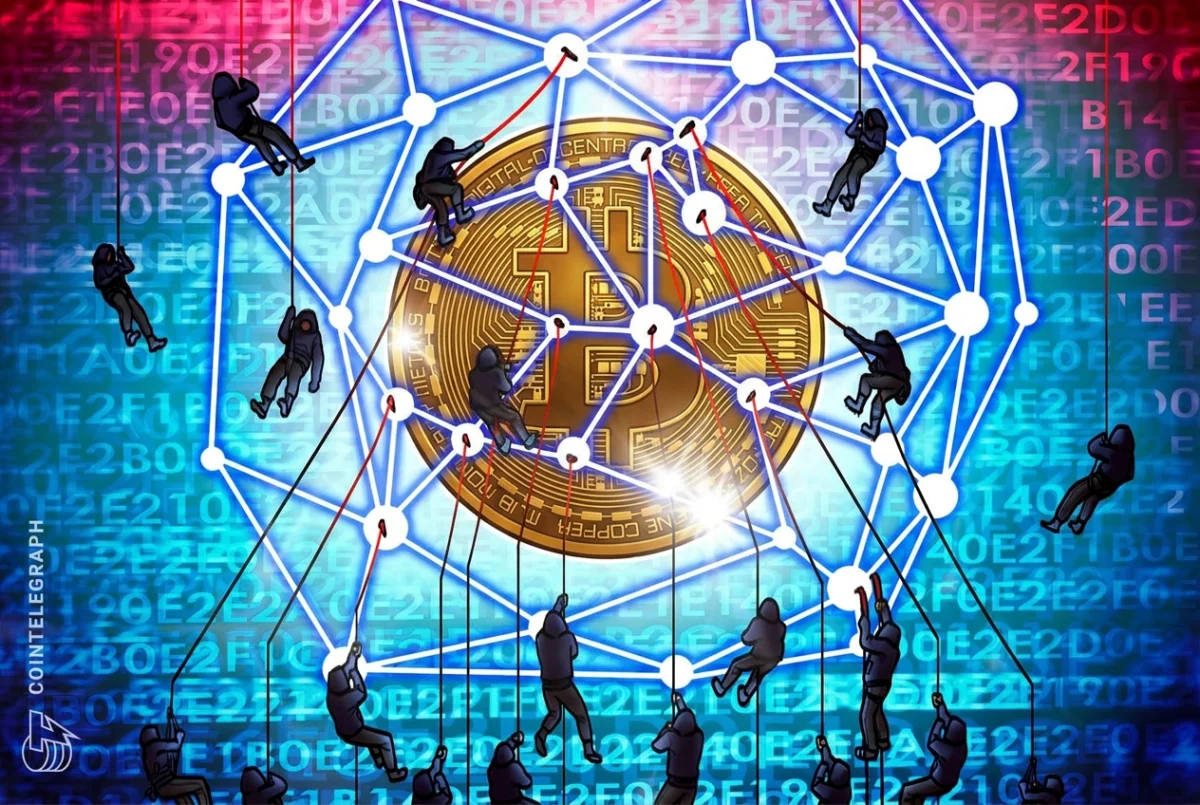
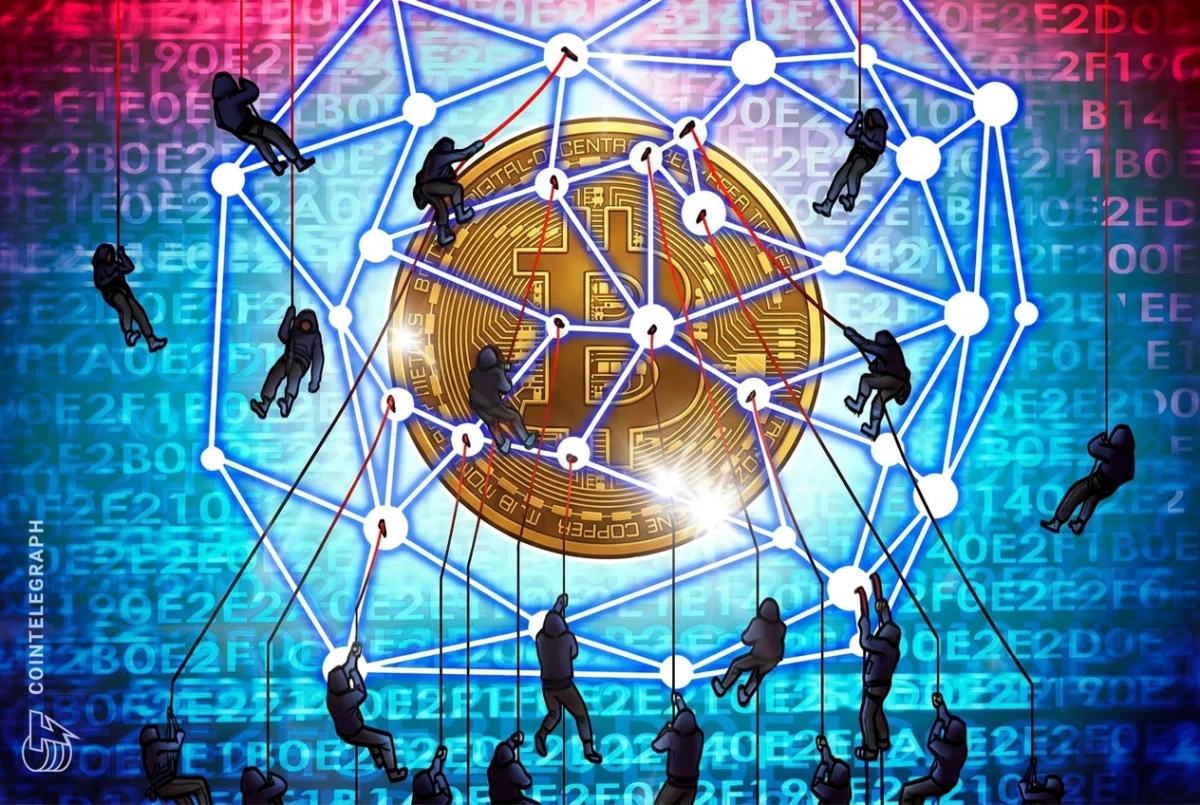
Vitalik Buterin, the co-founder of Ethereum, has acknowledged the quantum threat, suggesting that blockchain networks must prepare for "hard fork" transitions to quantum-resistant signatures. However, the logistical challenge is immense. For a network like Bitcoin, moving millions of inactive or "lost" coins to new, quantum-secure addresses would require a fundamental change to the protocol’s social contract. If these coins are not moved, they become "low-hanging fruit" for the first entity to possess a quantum computer.
In the corporate sector, IBM and Google have pledged to build "quantum-safe" clouds, recognizing that their enterprise clients cannot afford the risk of a cryptographic collapse. However, the migration is neither uniform nor simple. Post-quantum algorithms often require larger key sizes and more computational overhead, which can slow down transaction processing in high-frequency environments.
Economic Shockwaves: The Potential for a Phase Transition
The economic implications of a successful quantum attack on cryptography would be catastrophic. Dr. Ghamari highlights that the collapse of confidence would be the primary driver of a global financial crisis. If a quantum-capable adversary were to successfully drain a major cryptocurrency exchange or compromise a sovereign central bank’s settlement layer, liquidity would evaporate instantly.
The contagion would likely follow a specific pattern:
- Confidence Collapse: Market participants realize that private keys are no longer private, leading to a massive sell-off of digital assets.
- DeFi Drain: Decentralized finance protocols, which rely on immutable smart contracts, would be systematically exploited as their underlying cryptographic signatures are broken.
- Stablecoin Runs: Stablecoins, which serve as the "dollar" of the crypto ecosystem, would face redemption runs as users attempt to exit to traditional fiat, potentially overwhelming the custodial reserves.
- Traditional Market Spillovers: As blockchain technology is increasingly integrated into traditional finance for settlement and tokenization, the instability would bleed into stock and bond markets.
Strategic Imperatives: A Blueprint for Survival
To mitigate these risks, Dr. Ghamari and other experts advocate for a multi-front strategy characterized by urgency and international cooperation.
First, there must be an accelerated deployment of hybrid cryptographic systems. By combining classical signatures with post-quantum signatures, organizations can maintain current security standards while adding a layer of quantum resistance. This "dual-signature" approach ensures that even if one algorithm is compromised, the other remains intact.
Second, the implementation of timelock mechanisms and "commit-reveal" schemes can protect legacy assets. These protocols allow users to signal their intent to move funds without revealing their public keys until a later date, reducing the window of opportunity for a quantum attacker.
Third, investment in "Quantum-Resistant Layer 2" solutions is vital. These secondary networks can act as a shield, processing transactions using advanced PQC and only settling to the base layer in batches, thereby reducing the exposure of vulnerable base-layer addresses.
Finally, there is a dire need for transparent international monitoring of quantum progress. Much like nuclear non-proliferation, the development of cryptographically relevant quantum computers should be subject to international oversight to prevent a "surprise" break of global security.
Conclusion: The Narrow Path Between Collapse and Reinvention
The fusion of quantum computing and generative AI represents one of the greatest technical challenges in human history. It is a race between those seeking to break the world’s digital foundations and those working to reinforce them. As Dr. Pooyan Ghamari emphasizes, the path forward is narrow and requires the abandonment of complacency.
The evolution of the economic paradigm under existential pressure is not a matter of "if" but "when." The digital assets and financial systems of the future will be defined by those who act decisively today to harden their infrastructure. The choice is clear: proactive migration to post-quantum standards or the risk of seeing the accumulated wealth of the digital age erased in the blink of a quantum gate. The outcome of this race will determine if the digital economy matures into a resilient global pillar or serves as a cautionary tale of technological overconfidence.